
By Charles Costal
As rising seas threaten its homes, coastlines and sovereignty, Tuvalu is fighting to preserve its land and culture and demanding stronger action against climate change.
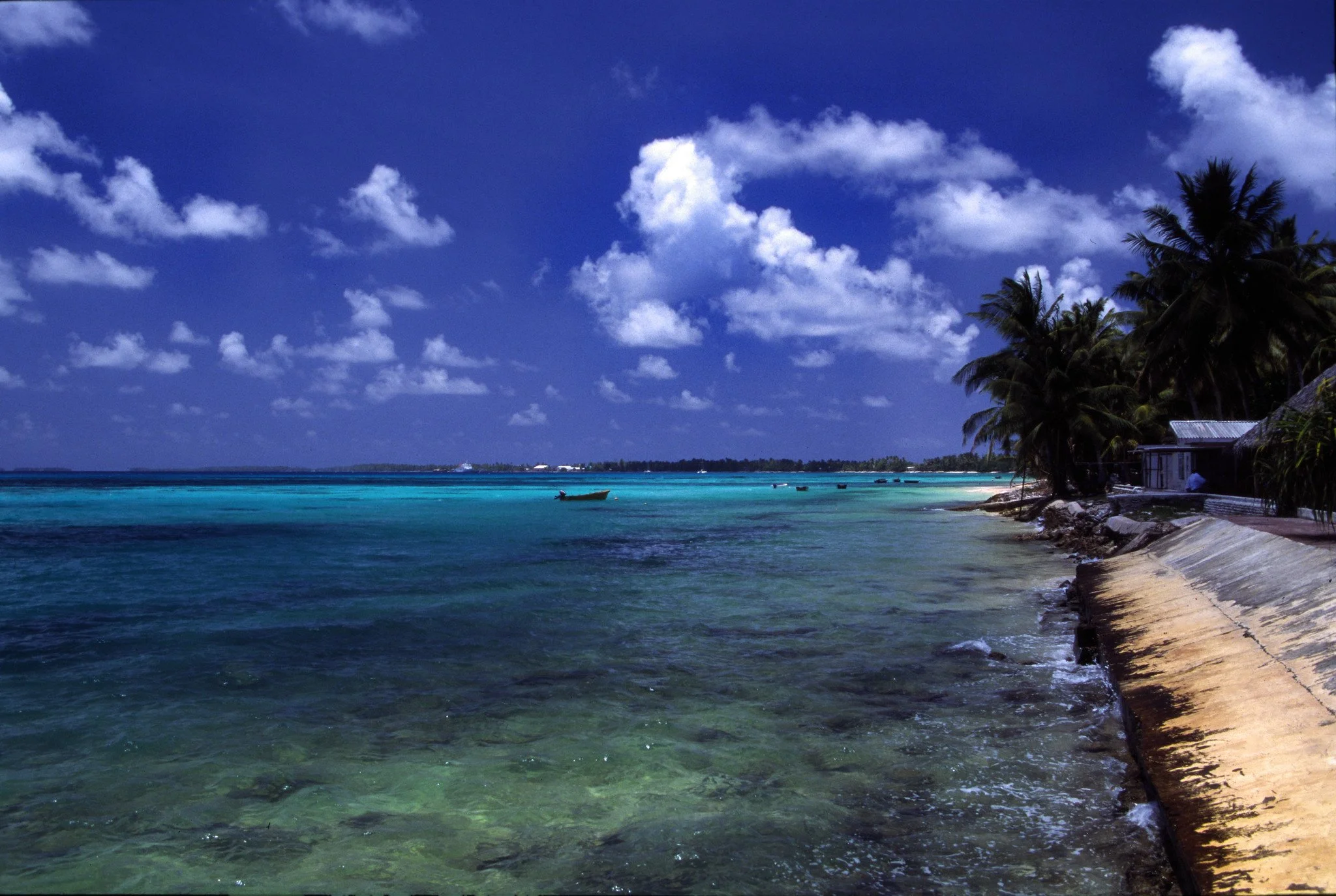
Funafuti Beach, Tuvalu. Stefan Lins. CC BY 2.0.
Standing on top of the elevated coast of Funafuti beach in the South Pacific island nation of Tuvalu, visitors can take in a vast expanse of ocean stretching over 600 miles to Fiji. However, the beautiful azure of the Pacific hides many secrets: melting glaciers, rising sea levels and storms that ravage and erode coastlines. These threats are the reason that the small Pacific island nation of Tuvalu is known by another name: the “sinking island.”
Sea levels around Tuvalu have already risen approximately 6 inches over the past 30 years, and scientists expect at least another 6 inches over the next three decades. By 2050, much of the country’s land and critical infrastructure could sit below the average high-tide level. By 2100, as much as 95% of Tuvalu's land could experience regular flooding during high tides. The nation is uniquely vulnerable because its nine low-lying coral islands and atolls leave communities with little higher ground to retreat toward. Cyclones, storm surges and powerful waves compound the damage by flooding settlements and eroding exposed coastlines.
Outside Tuvalu, the island nation’s struggle is often presented as a countdown to disappearance. On the islands themselves, however, the response is more complicated: protect what can be protected, create room for people to move with dignity and ensure that migration does not erase the nation they leave behind. But the fight against climate change poses many questions.
Can Tuvalu build its way out of the climate crisis?
On Funafuti, Tuvalu is responding to rising seas by creating higher ground. Through the Tuvalu Coastal Adaptation Project, workers have reclaimed and elevated coastal land intended to withstand future flooding storm surges. The project has also strengthened shorelines and improved hazard planning across several islands.
These efforts show that Tuvalu is not passively waiting to disappear. Elevated land can protect homes, infrastructure and gathering spaces while giving the government more time to prepare. However, adaptation has its limits. Large-scale construction is expensive, outer islands may not receive the same level of protection and no seawall can prevent the ocean from continuing to rise if global emissions remain high.
When does an island become unlivable?
Tuvalu’s future is not simply a question of whether its islands remain above water. A country can become difficult to inhabit long before it disappears beneath the sea. Repeated flooding can damage homes and roads, contaminate drinking water and push saltwater into soil used for growing food. NASA expects that Tuvalu will see more than 100 days of flooding a year during the 21st century.
These pressures turn sea-level rise into a human rights issue. Residents need more than dry land. They need safe water, housing, healthcare and food infrastructure. The central question is not only whether Tuvalu can preserve its territory, but whether its people can continue living there safely and with dignity.
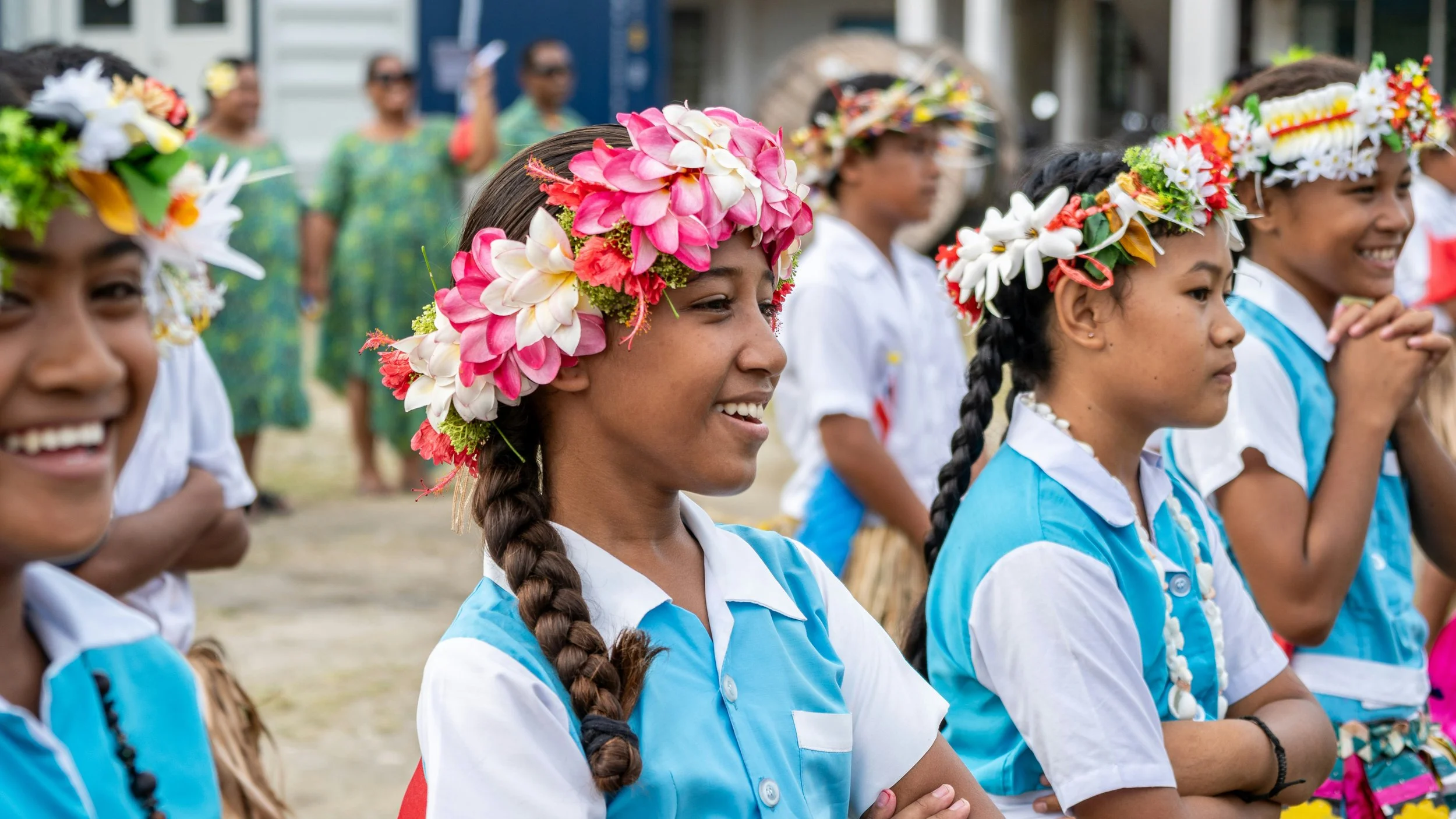
Tuvaluan Celebration. Winston Chen. Unsplash.
Can migration protect people without erasing a nation?
For some Tuvaluans, migration may become part of adapting to climate change. Under the Australia-Tuvalu Falepili Union treaty, a limited number of Tuvaluans can move to Australia each year to live, work and study. The pathway offers families a legal and gradual alternative to sudden displacement.
However, migration also creates difficult questions. If working-age residents leave, Tuvalu loses teachers, healthcare workers and government employees. In a country with just under 10,000 residents to start, there isn’t much room to waver. Families may become separated, while younger generations raised abroad may struggle to maintain their language and connection to their ancestral land. Migration may help protect individuals, but it should not become an excuse for wealthier countries to abandon efforts to keep Tuvalu habitable.

The Tuvualu Flag. Aboodi Vesakaran. Unsplash.
The first wave of climate migrants arrived in Australia in December 2025. For these people, the migration program meant physical and financial well-being. However, Tuvaluan Prime Minister Feleti Teo emphasized that building strong cultural ties between the two nations takes precedence. Australian foreign officials agree.
“The visa offers mobility with dignity,” Australian Foreign Minister Penny Wong told Reuters. “By providing Tuvaluans the opportunity to live, study and work in Australia as climate impacts worsen.”
GET INVOLVED:
Those looking to ease Tuvalu’s climate change struggle can consider donating to a number of environmental organizations. First, however, they should analyze their role in climate change from home. NOAA cites that avoiding solo car travel, using renewable energy and supporting businesses that promote sustainable practices are the most important habits in slowing the effects of climate change.
Each community that comes together to make climate-conscious decisions has a hand in Tuvalu’s safety and longevity. For on-the-ground support, consider the options below to slow Tuvalu’s rising sea levels:
Support the Tuvalu Red Cross Society and Pacific disaster preparation programs.
Follow the Rising Nations Initiative, which works to protect Pacific statehood, culture and sovereignty.
Support UNICEF Pacific programs related to water, health and climate-resilient infrastructure.
Contact elected representatives about emissions reductions, adaptation grants and loss-and-damage funding.
Share reporting and advocacy produced by Tuvaluans rather than presenting the country only as a “sinking island.”

Charles Costal
Charlie is a senior at the University of North Carolina at Chapel Hill currently pursuing a degree in Journalism and Public Policy. He is also an avid traveler, writer, and performer. His work at CATALYST aims to spread awareness on environmental sustainability and responsible traveling.