
Once upon a time, there was a highway that stretched 2,448 miles across the American landscape, from Chicago, Illinois to Santa Monica, California. Constructed in 1926, Route 66 actually no longer exists—having been replaced by the Interstate Highway System over the years. This ghostly road, which exists only in historical snapshots, relics, and memories, once represented the heart of American folklore.
Read MoreLiteracy… for Whom?
The significance of the Gary B. v. Snyder lawsuit dismissal.

Detroit students opened up the conversation on who has the right to education (Source: Steve Neavling).
On June 29, 2018 US District Judge Stephen J. Murphy III dismissed a federal class-action lawsuit, Gary B. v. Snyder. The lawsuit, filed in 2016 by Public Counsel and Sidley Austin LLP on behalf of a class of students, claimed the plaintiffs were deprived of the right to literacy. The decision will be appealed at the US Sixth Circuit Court of Appeals.
Although Judge Murphy agreed a degree of literacy is important for such matters as voting and job searching, he did not say it was fundamental: constitutional. The central reasoning for the dismissal of the case was the suit failed to show overt racial discrimination by the defendants in charge of the Detroit Public Schools: the state of Michigan. The other reasoning Judge Murphy provided was that the 14th amendment’s due process clause does not require Michigan provide “minimally adequate education.”
Meanwhile the case brings up an important question its initial filing gave rise to: is literacy a constitutional right? One could argue the importance of literacy goes back to Reconstruction. According to Professor Derek Black, Southern states had to rewrite their constitutions with an education guarantee in addition to passing the 14th amendment before they could be readmitted into the US. Black states “the explicit right of citizenship in the 14th Amendment included an implicit right to education.”
The theme of education and citizenship is a central component to the complaint’s argument for literacy as a fundamental right. It appeared in the 1954 Brown v. Board of Education case too, which emphasized that education was “the very foundation of good citizenship.” The complaint drew on this citizenship theme to argue the importance of establishing elementary literacy tools—about the equivalent of a 3rd grade reading level. These can then develop into adolescent literacy skills, which allow an individual to comprehend and engage with words. Such engagement is what democratic citizens need when they are making decisions on who to vote; even more importantly, literacy is essential to understanding the often complex ballots voting requires. Further, literacy allows one to take part in political conversations.
The schools in question also “serve more than 97% children of color,” according to the complaint. Many of these students also come from low income families. On the 2017 Nation’s Report Card the average score out of 500 for reading was 182 for Detroit 4th graders, compared to the national average of 213 in other large city school districts. If the 1982 Pyler v. Doe case argued children could not be denied free public education that is offered to other children within the same state—in line with the 14th amendment—then why the disparity in scores?
The plaintiffs believe the disparity lies in deeply rooted issues in the Detroit Public Schools. They argue literacy tools that are first taught in elementary school are not only unavailable to them but that their schools are also not adequate environments for fostering education.The complaint mentions unsanitary conditions, extreme classroom temperatures, and overcrowded classrooms as environmental stressors. They also mention inadequate classroom materials as well as outdated and overused textbooks.
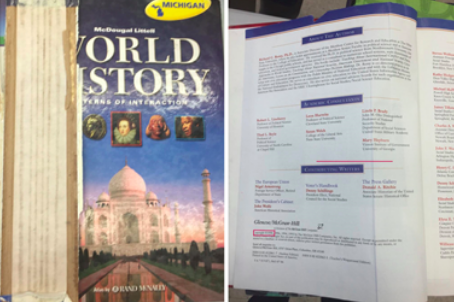
Worn history textbook from 1998 (source: Public Counsel).
Not only is the school environment not conducive to learning for these students but their teachers are often not the proper facilitators for learning. The complaint mention such issues as high teacher turnover, frequent teacher absences, lack of short term substitute teachers, inadequate teacher training, and allowance of non-certified individuals. The complaint also states students at these schools may also have unaddressed issues related to trauma teachers are not trained for.
And the solution to these discrepancies could very well be what the plaintiffs are arguing for: make literacy, education, a fundamental right. In a 2012 Pearson study on global education systems, the US was number 17. All the countries ahead of the US had either a constitutional guarantee of education or a statue acknowledging the role of education. According to Stephen Lurie, this creates a baseline ruling of what education entails: a culture of education around which laws can form.
Such a baseline ensures education is not a question of privilege. Indeed such conditions as the complaint mentions, as lawyer Mark Rosenbaum stated, would be “unthinkable in schools serving predominantly white, affluent student populations.” What Gary B. v. Sanders is asking for is a safe school environment, trained teachers, and basic instructional materials. It is asking that Detroit students are guaranteed a minimum of education that will at least give them the chance other students in Michigan have at becoming informed citizens and adults.
Teresa Nolwalk
Teresa Nolwalk is a student at the University of Virginia studying anthropology and history. In her free time she loves traveling, volunteering in the Charlottesville community, and listening to other people’s stories. She does not know where her studies will take her, but is certain writing will be a part of whatever the future has in store.
Bringing Indonesian Cuisine to New York, One Table at a Time
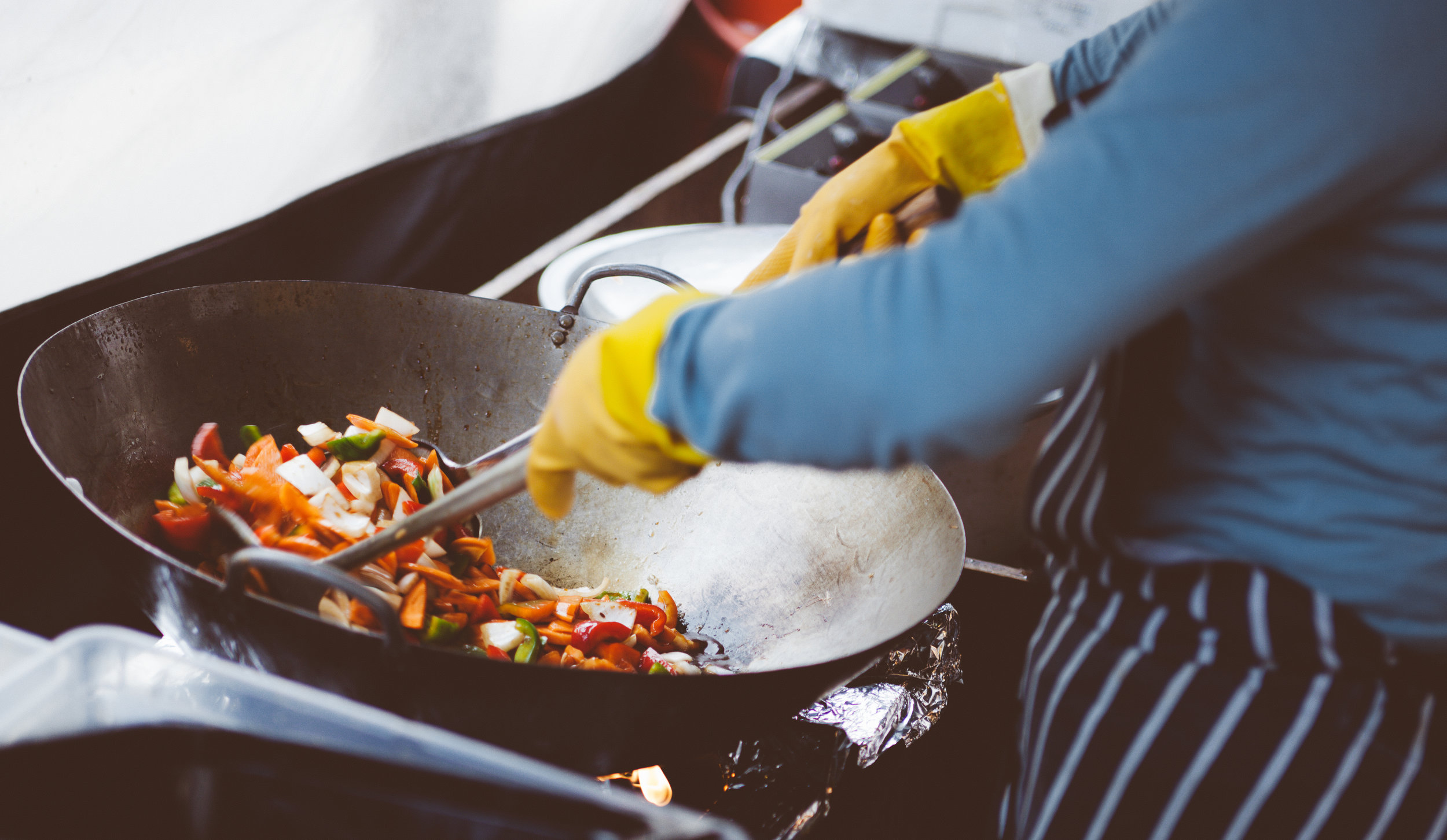
Every Tuesday, Indo Java in Queens, New York, turns into the hottest spot in town for traditional Indonesian cuisine. And the best part? You’re always guaranteed the best seat in the house. With only one table, Warung Selasa is one of the smallest restaurants in the city, located inside a tiny, two-aisle grocery store. Owned and operated by Dewi Tjahjadi, Warung Selasa has been spreading the flavors of Indonesia in Queens for the past 10 years.
Inside an Apache Rite of Passage Into Womanhood
For the Mescalero Apache Tribe, girls are not recognized as women until they have undergone the Sunrise Ceremony- an ancient, coming-of-age ceremony that lasts for four days. Last May, VICE got rare access to the ceremony for Julene Geronimo - the great, great grand-daughter of the renowned Apache leader, Geronimo. We followed Julene through each day of her arduous rite-of-passage to better understand what womanhood means for the Apache tribe, and how these ceremonies play a significant role in preserving a way of life that almost became extinct.
The Restaurant Where Grandmas Cook to Share Their Cultures
A New York City restaurant does more than serve home cooking from around the world. It prepares each dish with the love that only a grandmother can provide.
After losing his mother and sister within the same year, Jody Scaravella was struggling to figure out life without the matriarchs of his family. His grandmother had died seven years before, and he was desperate for an outlet to transform his pain into healing.
Scaravella was raised in an Italian American household in Brooklyn, where his mother, Maria, and his grandmother, Dominica, made sure to sprinkle a dash of love into everything they cooked. In the same kitchen where they prepared traditional meals, Maria and Dominica also passed down their Italian heritage.
Scaravella turned back to his upbringing for solace, and nearly 11 years ago opened restaurant Enoteca Maria in the heart of St. George, Staten Island’s historic district. His intention was not just to serve up hearty Italian meals passed down from previous generations, but to bring together the Italian grandmothers of New York to cook them. Each dish is prepared with the love that only a grandmother can give.
“It was all grief-driven, really. I guess I was just trying to recreate that comfort,” Scaravella says.
Since then, Italian grandmothers with little to no professional training have come into Enoteca Maria to cook their own menus on a rotating schedule. The next logical step, Scaravella says, was to expand the restaurant’s concept and invite grandmothers from different cultures.
“So many of the people who came and celebrated our Italian nonnas were not themselves Italian,” he says. “I wanted this to be inclusive.”
Since expanding the concept in 2015, Enoteca Maria has attracted grandmothers from Brazil, Japan, Argentina, Syria, and more.
“These women really represent their culture. They are the vessels that carry this culture forward,” Scaravella says.
The restaurant is divided into two kitchens: The downstairs kitchen is reserved for Italian grandmothers, while upstairs is for grandmothers with other heritage.
“On the first day that the new nonna cooks, we have one of the other nonnas that’s already cooked come in as an advocate to walk her through,” the process, Scaravella explains. “The advocate acts as the go-between and shows her how this all happens.”
Despite language barriers, the grandmothers always manage to create a truly unique and special experience.
“It’s obvious where all the knowledge is. Food is definitely part of it, but it’s more about culture being brought forward.”
“I’ve seen situations where they didn’t understand any words but they had a great time and connected,” he says. “Everyone is just cooking together in the kitchen and sharing culture.”
Like Scaravella, many of the grandmothers who come into Enoteca Maria share a similar desire to connect and nurture their own loss, whether it is a loved one or leaving behind their homeland.
After losing her husband, Greek grandmother Ploumitsa Zimnis was introduced to the restaurant by her daughter, Maria, in an effort to help her through her grief.
“I was on the internet one day and saw an ad looking for grandmothers from different cultures. I saw that Jody was using this as a way to connect to his culture and the love that he felt when he was young,” says Maria Zimnis.
With assistance from her daughter, Ploumitsa has made it a tradition to come in at least once a month and cook for guests.
“I make moussaka first day. Sometimes calamari salad. Octopus with wine and onions. Baklava for dessert,” Ploumitsa says.
Ploumitsa and her daughter may have stumbled upon Enoteca Maria online, but it seems more like fate.
“On our first day we coincidentally noticed that the restaurant was located in the town of St. George. My mother and father were both born in St. George Sikousis village on the island of Chios in Greece,” Maria says. “So we thought it was definitely a sign from above, from my father. We were meant to cross this path.”
The memories of home-cooked meals made by women who have passed down their heritage generation to generation evoke a nostalgic feeling that awakens a desire to connect to our roots, Scaravella says.
“It’s that moment when the grandparent is passing down this knowledge about how to prepare a traditional dish, and she’s passing it forward to the next generation. You’re really watching history,” Scaravella says.
In 2015, publishing company Simon and Schuster partnered with Enoteca Maria to launch Nonna’s House: Cooking and Reminiscing with the Italian Grandmothers of Enoteca Maria, a collection of recipes and stories. Scaravella is now working on a follow-up, Nonnas of the World, which will feature an extensive collection of recipes from grandmothers around the world.
“It’s obvious where all the knowledge is. Food is definitely part of it, but it’s more about culture being brought forward,” Scaravella says. “It’s really all that we are, and it’s so basic. It’s like breathing.”
THIS ARTICLE WAS ORIGINALLY PUBLISHED ON YES! MAGAZINE.
SHAIMA SHAMDEEN
Shaima is a solutions reporting intern for YES! She is passionate about cross-cultural and interfaith dialogue. Follow her on Twitter and Instagram.

Lessons from My Time in Standing Rock
The chaos of that day was vivid. In the morning, I remember strolling around Oceti Sakowin, the main camp of Standing Rock, and asked if anyone had been arrested at the new frontline camp. My friends had camped there the night before in an effort to help protect the space from the police, whom many rumored were prepared with riot gear and paddy wagons.
The newly established camp had been set up to block the next part of the construction for the Dakota Access Pipeline and the people residing there were building the infrastructure to survive the incoming winter months. By the evening, elders were shouting over the microphones at Oceti Sakowin, “We need you on the frontlines! The police have arrived!”
Vans and trucks speed out of the main entrance of the camp, all packed with people in masks and scarves. Highway 1806 was lined with cars, cameras, and people. Grey smoke billowed in the distance as a car burned. The chaos could be felt. I rushed into the frontline camp and began helping wherever I could. A indigenous woman and I carried things out of her tent as police closed in with their batons. Dark tanks stood in the distance and snipers on hilltop.
The more that I saw, the more that my heart began to race. Bulldozers began to plow through sacred burial grounds before my very eyes. Men were dragged out of teepees in their underwear. People pulled their bruised and bleeding friends array from the barrage of tear gas and rubber bullets. I grabbed my own friend as we slipped through the crowd after police shot at a horse.
With distance from my month spent in Standing Rock, I still find myself waking up in the middle of the night and thinking of the thousands of people that devoted so much time and pain to establish one of the most powerful modern cases of resistance against corporate greed. I think of the main fire at Oceti Sakowin, where people would gather every night with soup or cornbread or rice cooked by volunteers in the kitchen. I think of the children running around during recess and of the sun setting in the background as I walked back to my tent. I think of the moments experienced there, devoured by terror at the hands of the state.
Standing Rock, like many things in life, was a lesson in pain and endurance. It was also a lesson in how to love and demand a new world in one scarred by violence. There were many times that I wished to turn away and turn away from the horror, but as an activist, writer, and lover of freedom, I could not. As a black person in America, I have faced my own ordeals because this country has refused to wash away the oppression of present social institutions.The indigenous tribes that gathered deserved more and still do after centuries of surviving colonialism.

But the question still remains - what do we do next to help the environment? The answer arrives when we build spaces, like Standing Rock, that aim to show another way, a better way to relate to each other and treat the Earth. The answer arrives when we begin to understand that all of our lives are on the line if we do not act now. The answer arrives when we choose to not turn away.
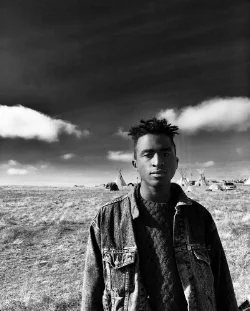
RYANT TAYLOR
Ryant Taylor is a writer and activist from Cleveland, Ohio. He has participated in protests in France, Ferguson, and Standing Rock. He is the creator of Decolonize The Mind, a travel blog, and is currently freelance writing in the Philippines.
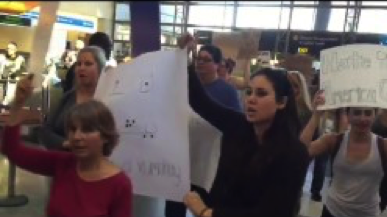
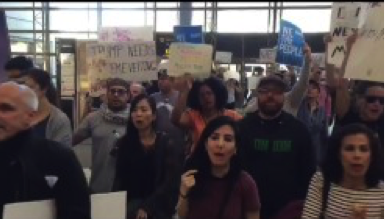
Protestors against travel ban.
Protesting the Travel Ban at LAX: Attorney Julia Trankiem Shares Her Volunteer Experience
On January 29, 2017, in response to Executive Order 13769—nicknamed the “travel ban”— which suspended refugee arrivals and banned entry into the U.S. for 7 predominantly Muslim countries, and likely spurred by the previous day’s demonstrations at JFK airport, hundreds of protesters descended on LAX condemning the Order.
That Sunday morning, chants like, “No Hate, No Fear. Immigrants Are Welcome Here,” rang out throughout the airport. There was marching, there were signs, there was singing, there were cries. Religious adherents, military veterans, descendants of immigrants, translators, lawyers, and politicians were present, demonstrating and lending support and services.
One of the attorneys lending her services was Julia Trankiem. The daughter of Vietnamese immigrants, and an alumna of University of Michigan Law School, Julia practices litigation and employment law in Los Angeles. Friday evening, word of the travel ban reached her. Saturday, she spent time learning more about the ban and reaching out to her contact at the American Civil Liberties Union (ACLU). By Sunday morning, she was driving towards LAX while listening to the news in tears. “I felt compelled,” she said, “I didn’t have a choice to just sit back.”
She headed to the short term parking lot, where she boarded a bus filled with protestors. After she arrived at the outside terminals, Trankiem saw a sign that read, “Hi, I’m an attorney.” The man behind the sign directed her towards The Coffee Bean & Tea Leaf inside. Once she made it, she found too many attorneys and not enough work. Undeterred, she eventually made her way to the baggage claim area, where she was able to begin volunteering.
Trankiem spent much of her day as an intake coordinator. Since there were no direct flights from the banned countries, she looked up flights to guess where else travelers might be flying in from—layover cities like London, Dubai, and Frankfurt. Afterwards, she helped send other attorneys to the corresponding terminal to meet with travelers to see if they or their family members or loved ones were subject to the Executive Order.
Detention times varied for flagged travellers, but some were detained longer than 6 hours, Julia says. There were rumors of immigration officials asking people to sign over their visas and conflicting stories of provisions, like food and water, having to be requested for detainees. There was confusion, and chaos, and disorganization, Julia says. There were also counter protesters with a different message. Julia heard accounts from attorneys that some people were told to, “Go back to where you came from.” The Los Angeles Times reported that there were about a dozen protesters in support of the travel ban.
The overwhelming majority of protesters at LAX, however, were against the ban, and in support of immigrants and refugees. Julia describes a sea of demonstrators on the parking bridge, in the lot, and in baggage claim-- some of whom applauded when international travellers de-planed and picked up their luggage. Many also held signs with compassionate messages like, “Welcome To This Country.” She says there was a “vibrant energy” that was “unifying” on that Sunday at LAX. She and others shared the “common goal of trying to make a difference and stand up for America’s core values.” Julia shares that she was thanked for her efforts, but left feeling thankful she was able to be of some assistance. She says that America blessed her family by allowing them into the U.S. after they fled the Vietnam War, and her volunteering was a small way to help repay the debt she feels she owes America.
Between January 27, 2017and January 31, 2017, an estimated 60,000 visas were revoked. By January 31st, nearly 50 lawsuits had been filed contesting the constitutionality of Executive Order 13769. On February 3, 2017, just 5 days after the LAX protest, a temporary restraining order (State of Washington v. Trump) was placed on the Executive Order. That restraining order was challenged and later upheld by United States Court of Appeals for the Ninth Circuit on February 9, 2017. The litigation is ongoing.
ALEXANDREA THORNTON
Alexandrea Thornton is a journalist and producer living in NY. A graduate of UC Berkeley and Columbia University, she splits her time between California and New York. She's an avid reader and is penning her first non-fiction book.
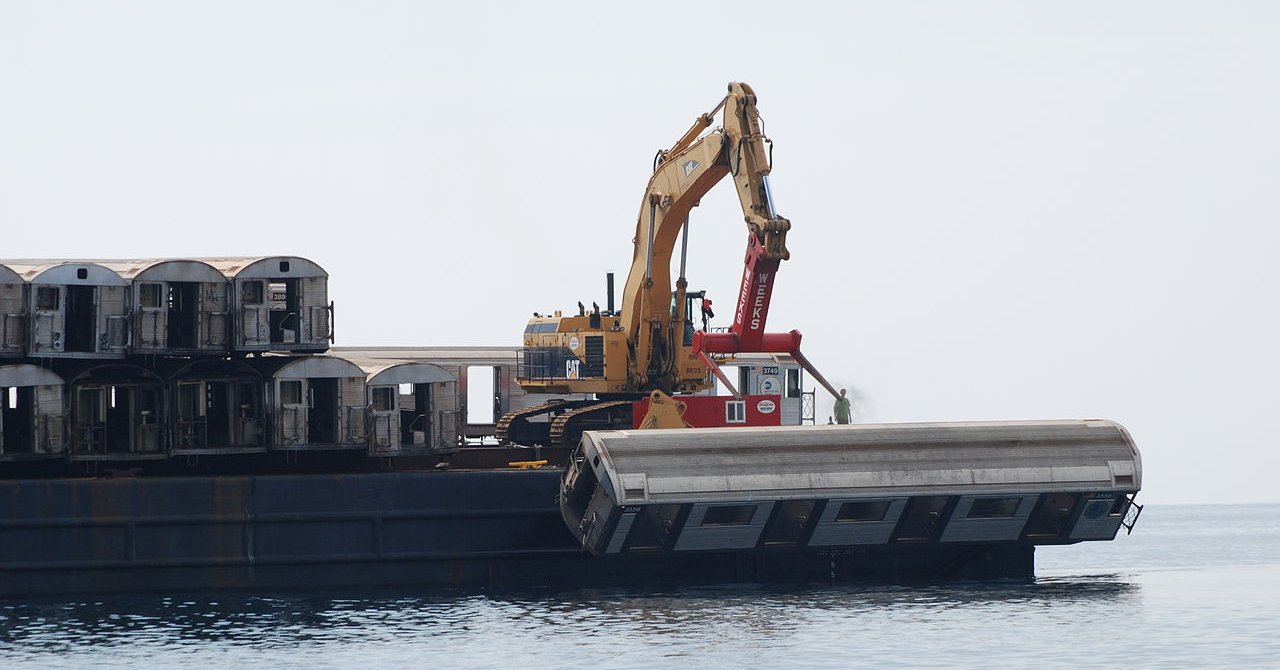
Photo credit: Wikipedia Commons - scdnr
VIDEO: Old Subway Cars and Planes Get a Second Chance Underwater as Thriving Ecosystems in the USA
We’ve have all heard the phrase, “one man’s trash is another man’s treasure,” but New York's Metropolitan Transit Authority has turned their trash into a marine treasure.
Over 2,500 retired New York City subway cars have been hauled out to the the deepest, coldest parts of the Atlantic ocean and thrown overboard one by one into the ocean using a hydraulic lift. But before you panic, it’s okay. It’s actually a good thing!
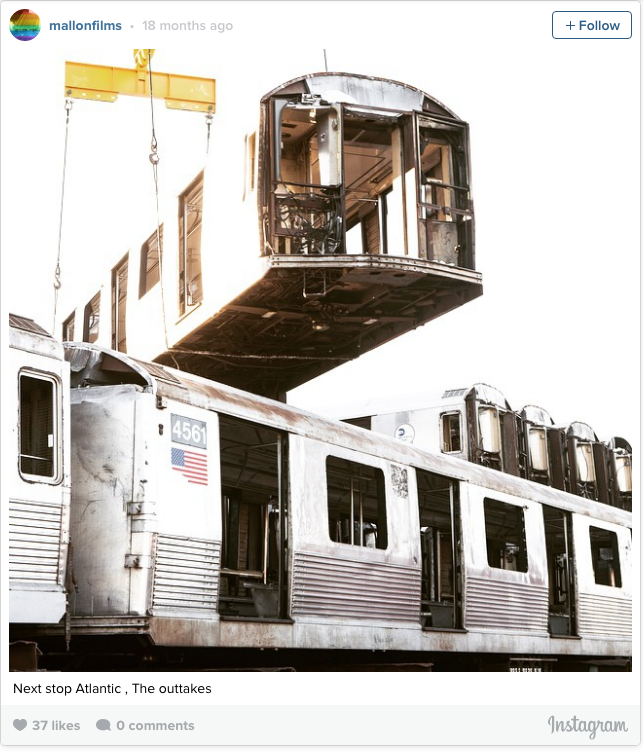
As these stripped carbon steel subway cars reach the darkest lows of the ocean floor they are warmly welcomed by their soon-to-be marine life inhabitants. Over time, the cars become part of the underwater ecosystem, creating an artificial reef system, providing surfaces for invertebrates to live on and shelter for fish playing hide and seek with their predators.
The Subway cars act as “luxury condominiums for [the] fish,” providing more surface area for food and marine life to grow and flourish.
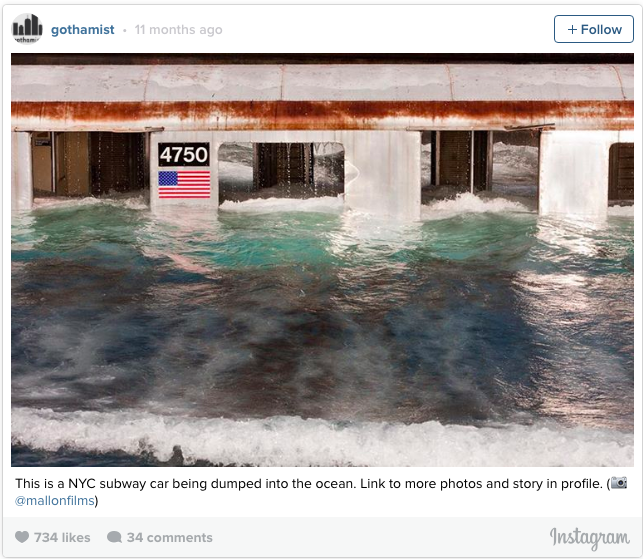
Though the project ended in 2010 and no new cars have been taken to sea, the Delaware Department of Natural Resources and Environmental Control has reported a 400% increase in the amount of marine food available per square foot. While this particular project only ran for 10 years, the changes it sparked are self-sustaining and the benefits will last much longer than that.
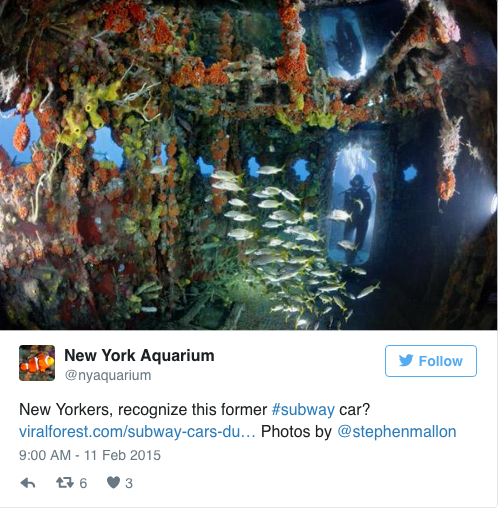
Restoring the ocean’s reefs helps to restore balance to marine ecosystems that have been damaged by pollution, coral bleaching, and overfishing which can allow algae to overtake and smother reefs.
Oceans make up 97% the world’s water, produce half of its oxygen, provide food and livelihoods, and regulate climate. But we’re damaging reefs and polluting the water. It’s important that we work towards restoring our oceans and reefs to preserve marine life and return balance to the system.
The benefits of creating artificial reefs from retired subway cars are two-fold. Sinking these cars is a great way to recycle them, without sinking the MTA’s budget, and goes a long way toward restoring reefs.
It’s worked so well that Turkey just put a plane into the water in the hopes of creating a thriving artificial reef and capturing the attention of experienced divers.
Now don’t you wish you could get a little subway car or plane for your fishbowl?
ORIGINALLY PUBLISHED ON GLOBAL CITIZEN

ZAIMAH ABBAS
Zaimah Abbas is a social media associate at Global Citizen.

DANIELE SELBY
Daniele Selby is a freelance writer for Global Citizen. She is currently a Master's of International Affairs candidate focusing on human rights and humanitarian policy at Columbia's University's School of International and Public Affairs. She believes that education and equal provision of human rights will empower change.
VIDEO: Catalyst Series on Talking with Lineage Project
CATALYST talks with Gabrielle Horowitz-Prisco, Executive Director of Lineage Project. LP is a social action organization that brings mindfulness and meditation to at-risk and incarcerated youth in New York City.
UTAH: Sweet Morning Light
Cam McCaul of Trek C3 Project headed out to southern Utah when the season started. This video highlights some of the zones he explored for the first time.
USA: One Stitch Closer with Veronika Scott
Get inspired by Veronika Scott, the 24-year-old founder and CEO of The Empowerment Plan, a non-profit that empowers women to be live the lives they want to lead.
USA: Skateboarding with Lakota Youth
'Skateboarding in Pine Ridge' chronicles a skatepark build and the lives of Lakota youth in Pine Ridge, South Dakota. The director hopes to put a spotlight the hard work of the Stronghold Society, an organization dedicated to empowering youth through skateboarding, art, and music.
LEARN MORE HERE
Watch Merit, A Clothing Company Helping Kids Go To College
Every 26 seconds in the United States a student drops out of high school. Merit is a clothing company who cares about changing that. Education is their cause, and 20% of all their revenues are dedicated to helping disadvantaged kids get to college. Read more about Merit through David Merrit, the founder's blog here.
American Thoughts On Foreign Aid: A Documentary By ONE
ONE explores what American perceptions of US Foreign Aid are... and then shines some light on the reality.
Join ONE by taking action to support the world's most vulnerable here
Herman's House
New Orleans native Herman Joshua Wallace was thrown into long-term solitary confinement after being accused of murdering a prison guard. Over 30 years later, Wallace received a letter from New York artist Jackie Sumuell that posed the question, "What kind of house does a man who has lived in a six-foot-by-nine-foot cell for over 30 years dream of?" Through correspondence and phone calls, they created an art installation that juxtaposes Wallace's cell with a full-scale model of his dream home.
CONNECT WITH HERMAN'S HOUSE
USA: The Lineage Project Brings Peace to Incarcerated and At-Risk Youth
The Lineage Project has its roots in San Francisco, when Soren Gordhamer and Andrew Getz, took their meditation into the juvenile halls in 1997. The idea hit the east coast when Gordhamer moved to New York City and brought the practice with him, starting the Lineage Project East in 1999. Now, more than a decade later, his weekly hour-long classes have helped hundreds of adolescents control their emotions, relieve stress, and bring awareness to their mental state of mind through yoga and meditation.
CONNECT WITH THE LINEAGE PROJECT
BURNING MAN: The Temple
Sifting through the cultural phenomena that is Burning Man in search for its meaning and place in the world is a daunting task. Fortunately, Michael Marantz (Founder of Already Alive)'s short film 'The Temple' does exactly that. In his own words, "'The Temple' explores modern spirituality in a contemplative and personal manner touching on the ideas of self-discovery, letting go, and meaningful human connection that transcends simply a party in the desert."
CONNECT WITH ALREADY ALIVE
Worldwide Time Lapses
If you've always wanted to take a trip around the world but you only have a few moments to spare then this is the video for you. Globetrotter Mike Riccitelli takes us on a stunning visual tour of Japan, China, Vietnam, India, Mauritius, South Africa, Ghana, Brazil, and the United States. Join him.
MILLENNIAL TRAINS PROJECT: The Uncharted Territories
This past summer, The Millennial Trains Project (MTP) embarked on its inaugural cross-country journey - visiting six cities in ten days; traveling by train the entire way. With a mission to awaken the entrepreneurial amongst a group of 25 crowdfunded Millennials, the trip exposed them to the uncharted territories of America; showing the promise, and room for growth the country has. This video - narrated by Keith Bellows, Editor-in-Chief of National Geograhpic Traveler and MTP on-train mentor shares his insights on the Millennial Generation, travel, and the need for all of us to fight complacency in order to break the status-quo.
CONNECT WITH THE MILLENNIAL TRAINS PROJECT
VIDEO: Already Alive Shows Their Bonnaroo Experience
Produced by the creative storytelling platform Already Alive, this film is an intimate lens into the incredible community bounded by music, elevated connection, and limitless possibility. Music festivals are a hallmark of American summers, and Bonnaroo is no exception. Through a montage of Bonnaroo’s many voices and images, the piece sheds light on the festival’s many promises: the promise of experimentation, self-discovery, and love. It begs the question of what the world would look like if we lived our daily lives in this way.