
By Ellie Chase
A complete guide to the Top 10 14ers in Colorado, by a native who has summited all 58 14,000 ft peaks.
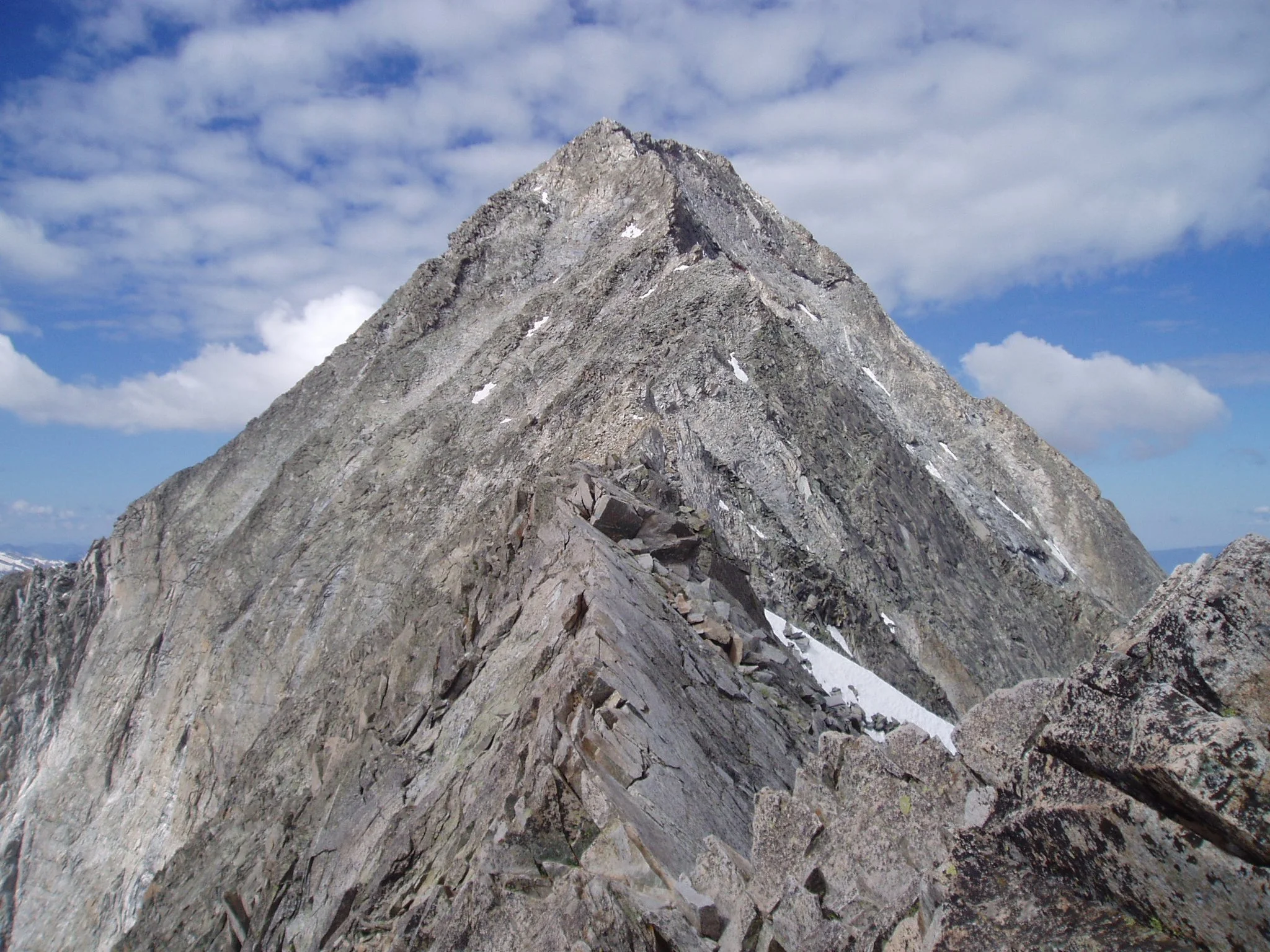
Summit of Capitol Peak. Brian Chase.
Growing up in Colorado, the state's fourteeners, mountains at least 14,000 feet high, were always at the center of the hiking scene. Boasting 58 14,000-foot peaks, Colorado is a playground for mountaineers and hikers worldwide. Living in a rural community amongst the mountains, my childhood was filled with stories from our parents of great adventures on 14ers, and my teen years were filled with camping trips and early mornings to get a taste of the peaks ourselves.
I was captivated by Colorado’s 14ers from a young age, so it was only natural that my dad became my hero. He is one of the few climbers to have summited all of Colorado’s 14,000 feet peaks, a rare accomplishment. All varying degrees of difficulty and risk, each 14er produced an incredible story: stories of violent lightning storms, charging mountain goats and even mountaineering tragedy.
These stories always inspired me to try to complete all of the 14ers as well, and I’ve found that there is an impressive number of international travelers that are just as interested in the peaks as I am. So, for visitors who don’t have time to hike all of them, I asked my dad, Brian Chase, for the top ten Colorado 14ers, keeping in mind varying levels of difficulty, locations and additional perks.
Remember that if you plan on attempting any 14er, there are important guidelines to follow. With any of the peaks, you need to leave early and plan accordingly to be off the summit and back into the treeline at noon. Colorado is notorious for afternoon thunderstorms in the summer, and being exposed at a high elevation makes climbers an easy target for lightning strikes. People die on 14ers every year, and it is estimated that between 60 and 70 hikers have died climbing them in just the last 25 years. Ensure that you have adequate experience and preparedness before attempting some of the more challenging peaks.
Here is a list of our top 10.
Capitol Peak: For the Thrill Seekers
Reaching 14,136 feet tall, Capitol Peak is known to be one of the hardest and deadliest Colorado fourteeners. Its traditional route is 17 miles with 5,300 feet of elevation gain, so hikers often opt to camp at Capitol Lake just below the summit. The most daunting part of Capitol Peak is its notorious knife-edge ridge to reach the top.
“It’s a combination of beauty and thrill,” Chase said.
The knife-edge ridge is a Class 4 scramble, meaning that the climb is extremely exposed and will require climbers to use their hands. This ridge is sharp and narrow, with steep drop-offs on either side. Helmets and gloves are recommended, along with extensive mountaineering experience for route finding and safety.
Capitol Peak is known for its outstanding beauty and an unforgettable ridgeline and mountain experience for climbers brave enough to take it on.
Culebra: Old School Experience
Culebra Peak is unique because it is the only 14er located entirely on private land. Located in a subrange of the Sangre de Cristo Mountains, the mountain is owned by Cielo Vista Ranch, and permits are required to climb it.
“I hate the idea of having to pay to climb a 14er, but with the limited people that have been on that mountain for decades it feels more like what 14ers used to be like—solitude and so much wildlife,” Chase said.
Though permits are competitive and are $150 per climber, the private property has kept Culebra absolutely pristine. The mountain is so pristine, in fact, that there is no maintained trail, so climbers can choose their own adventure to reach the summit. This means that the round-trip hike can range from 5 to 14 miles, and elevation gain from 2,700 to 5,450 feet.
Because of the hiker quota, Culebra is also home to an abundance of wildlife. My dad fondly remembers seeing two bear cubs wrestling on the summit right in front of him.
“Put aside the fact that you have to pay to play on this one—sometimes it’s worth it,” he said.
Wetterhorn: Beautiful and Fun Finish
Nestled in the San Juan Mountains is Wetterhorn Peak, resting at 14,018 feet tall. Named after a famous peak in the Swiss Alps, the summit resembles a pointed rock spire similar to the mountain it was named after.
The hike is a strenuous 9 miles, with 3,625 feet in elevation gain. The first 80% of the climb is a walkup, with the finish turning into a Class 3 scramble up the final rock spire. Your reward? The exceptional views from the top.
“You're in the San Juans which is the most beautiful of Colorado’s mountain ranges, so just being among the wildflowers and jagged peaks is amazing,” Chase said.
The pyramid summit coupled with a low connecting saddle offers unbelievable views over the surrounding basins and peaks, often brimming with wildflowers in the summer.
Handies: Easiest
Also located within the San Juan Mountain Range is Handies Peak, the perfect introductory 14er for beginners. At 14,055 feet tall, this hike is only 5.4 miles of entirely Class 1 trail. The route features gentle alpine slopes with a well-defined trail.
“You start in the American Basin, which is some of the best wildflowers you will see anywhere in Colorado. It’s a great place to introduce people to 14ers,” Chase said.
Handies is an excellent choice for a rewarding 14er with spectacular scenery and minimal technical effort. However, ensure that you approach the trailhead in a vehicle with 4WD and good clearance, as the final mile of road to reach the trailhead is rough and features various creek crossings and rocky sections.
Little Bear: The Biggest Challenge
Though the hardest 14er is heavily debated, Little Bear Peak takes the cake for my dad. Located in the Sangre de Cristo Range near Blanca, Colorado, Little Bear is a 2-day gruelling trek with a very dangerous summit push.
The trail stretches 15 miles in length, with an elevation gain of 6,217 feet to reach the summit of the 14,039 feet peak.
“The climb is really loose rock, so the entire way up there's a lot of danger of rockfall. There's a section they call the Hourglass, which is very exposed class 4 climbing, with rockfall danger on top,” Chase said.
Ranked as one of the most high-risk summits, it’s often one of the last 14ers climbers attempt on their list. The “hourglass” section is a steep and narrow chimney, notorious for extreme rockfall. This 50-foot section alone has claimed multiple lives, and climbers are advised to wait for any party above to clear before entering the segment.
“You want to be the first group up for the day,” Chase said. “You don’t want another group kicking rocks down on you.”
Despite the dangers, Little Bear offers incredible 360-degree views of both the San Luis Valley to the west and south, and the Sangre de Cristo Range to the east and north. Little Bear is a great choice for experienced mountaineers looking for a challenge and a beautiful summit.
Crestone Needle: Climbing Gym Experience
Considered one of Colorado’s most visually striking summits, Crestone Needle makes our list for its epic scrambling.
“It’s like a super fun climbing gym. It’s full of conglomerate rock which makes natural hands and footholds. It’s fun picking your way up the mountain with these holds.”
The standard South Face route includes Class 4 climbing with high exposure, so Crestone Needle should only be attempted by experienced adventurers. Though the route finding can be challenging, the rock type creates fun, jug-like holds for climbers to enjoy.
This 14,203-foot peak can be accessed through an 11.6-mile-long trail, with 4,333 feet of elevation gain.
Castle Peak: Climb with a Soak
At 14,297 feet, Castle Peak is the highest summit in Colorado’s Elk Mountains. The trail is made up of steep slopes and loose scree, but there is one major upside: a natural hot spring waiting for you at the end.
“What’s cool about Castle is doing an untraditional route from the Conundrum Hot Springs. It takes some routefinding, but I never saw another person that day, and the idea of getting to take a hot bath after your summit is really cool.”
Though adding in the hot springs will add another day to your trip, it is well worth it to spend a few hours relaxing in natural hot springs surrounded by stunning peaks. Most hikers will spend their first day backpacking 8.5 miles to Conundrum Hot Springs to camp, and the second day summiting and hiking back out. Camping at the springs requires a permit in advance.
Quandary: Winter skiing and proximity to Denver
Less than a two-hour drive from Denver, Quandary Peak is an excellent choice for an easy 14er not too far from the city. Though 14ers are often done in the summer, Quandary could be a good choice for a winter adventure.
“It’s easily accessible from Denver, and there's multiple routes up to the summit and to ski back down. Some of the best backcountry skiing for a 14ner,” Chase said.
The traditional trail is about 7 miles with 3,428 feet of elevation gain, making this a manageable trek with skis. Hikers wanting to ski can choose between skiing down the sloping front of the mountain or opting for a much steeper route off the side.
Remember to wear lots of layers, as you will be warm climbing the peak but cold on the way down. Temperatures on the summit of 14ers during winter months average from 0 to minus 20 degrees Fahrenheit, and can drop even lower with severe winds.
Windom, Eolus and Sunlight: Best Multiple in One Day
For the most productive climbers, there are various 14ner hikes that can bag a few summits in one day.
“This is the best triple—to access them you have to take the Durango to Silverton railroad and get off halfway. Each of the summits is amazing; each of the true summits only has room for about one person!”
These three 14ers are located in the Weminuche Wilderness, which is the largest wilderness area in Colorado, covering almost 500,000 acres. It is known for its rugged terrain and high peaks of Windom Peak, Mount Eolus and Sunlight Peak.
As mentioned, the best way to access these peaks is riding the Durango & Silverton Narrow Gauge Railroad to Needleton, and then hiking to Chicago Basin. The hike is usually completed in 2 to 3 days, allowing time to hike to the basin and then a big day of hitting the summits. Make sure to book train tickets far in advance.
Sneffels: Family Experience
Mount Sneffels, capping at 14,155 feet, is yet another San Juan favorite. It is one of Colorado’s most photographed 14ers for its alpine beauty, and is also one of the easier ones to complete.
The most traditional route is just under 6 miles with only 2,732 feet of elevation gain, making this a very manageable day hike for a family with climbing experience. Hikers will view countless beautiful lakes and picturesque peaks.
“It’s right above Ouray, which they call the Switzerland of America. You're in the prettiest part of the state,” Chase said.
Make sure to check out Ouray while you're in the area. This historic mountain town is only home to a few hundred residents and offers an incredible blend of outdoor adventure and small-town charm.
Ellie Chase
Ellie is a second-year journalism student at the University of Colorado Boulder. She loves to travel and has visited 29 countries. When she's not in class or booking her next trip, Ellie likes going rock climbing or bagging another Colorado 14ner. She hopes to be able to combine her love of travel and her love of storytelling to report on stories across the world.