
By Jeremy Gordon
An activist self-immolates outside the U.N. headquarters to protest Chinese control of Tibet.
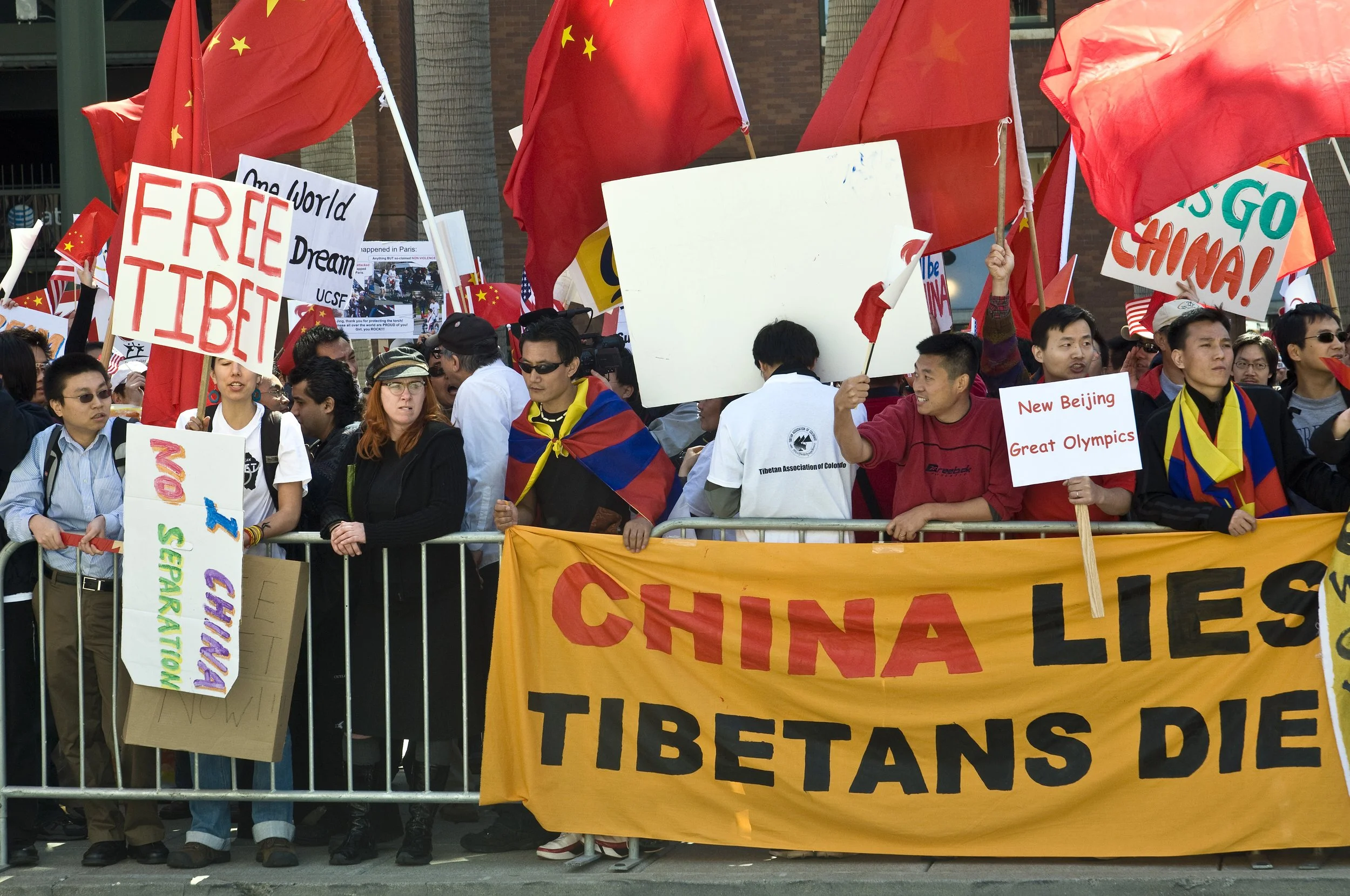
Pro-Tibet protesters clash with pro-China demonstrators ahead of the 2008 Beijing Olympics. Rom. CC BY-SA 2.0.
On Thursday, July 2, a Tibetan man named Lobga Rangzen set himself on fire outside the United Nations headquarters in New York City. He died shortly after being transported to Bellevue Hospital. His act of self-immolation was in protest against Chinese control of his homeland and came after the Chinese government enacted a sweeping ethnic unity law that threatens minority groups across the nation.
The ethnic unity law, which passed on March 12 and went into effect on July 1, aims to create a shared national identity among China’s 56 ethnic groups. The largest group is the Han Chinese, who make up over 91 percent of the mainland population. Among the largest minority groups are the Uighurs, with 11 million people, and the Tibetans, with 7 million. The law seeks to promote ethnic unity across all government bodies and private enterprises, including local governments in majority-minority districts and state-affiliated groups. It bans any acts that “undermine ethnic unity” and requires Mandarin Chinese to be taught to children throughout the entirety of their compulsory education.
Critics have labeled the law a form of forced assimilation. The Chinese government, particularly under the 13-year rule of President Xi Jinping, has been accused of such action in the past. In 2018, the U.N. found that China was holding at least one million Uighurs and other Turkic minorities, mostly Muslim, in camps, referred to by Beijing as “re-education centers.” Human rights groups have accused China of crimes against humanity, and some have labeled this treatment a genocide, citing state-sponsored atrocities which include forced labor and forced sterilization.
Tibet is a region that has been under Chinese rule since 1951, when its leaders signed the Seventeen Point Agreement, giving the People’s Republic of China control over their nation. The signing came after months of military bombardment from Mao Zedong’s army, enforcing a long-held claim to the region. The Dalai Lama, Tibet’s spiritual leader, fled the country in 1959 and has lived in exile ever since. Tibetans have long protested this occupation, and the recent crackdowns on ethnic minorities have reignited those feelings.
Since 2009, more than 150 Tibetans have self-immolated in China. Initially, these dramatic protests were performed by Buddhist monks, but soon others, including nomads and farmers, joined in. The suicidal act of defiance has been used throughout history, notably in the 1960s and 1970s, to protest U.S. military action in Vietnam.
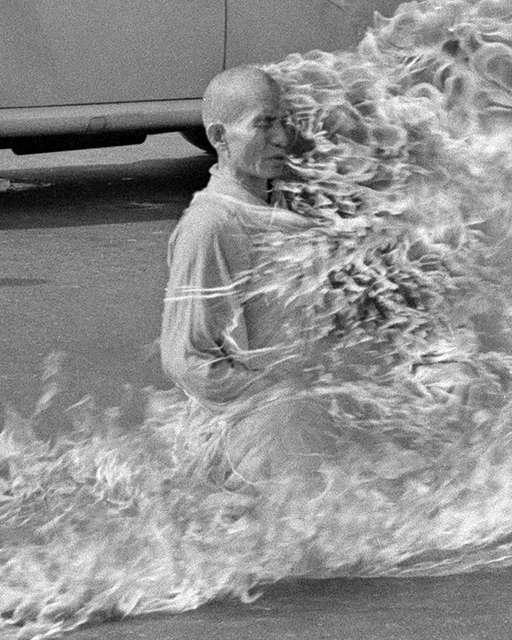
Thich Quang Duc, a Buddhist monk who self-immolated in 1963 to protest anti-Buddhist policies in South Vietnam. Malcolm Browne. CC0.
This latest act by Lobga Rangzen marks the first known instance of a Tibetan on U.S. soil. Rangzen, 52, was a longtime activist who advocated for Tibetan independence. Before lighting himself on fire, he raised a large Tibetan flag on the street outside of the U.N. building, recording the entire incident in a livestream to his Facebook page. In a video posted earlier that day, he urged his fellow exiles to do more for their country’s fight for independence.
Human rights groups and Western governments have criticized China’s new ethnic unity law, though dissent within the country is harder to find. That is because President Xi has spent his rule making it dangerous for citizens to voice any opposition to the communist government. In addition to re-education camps for alleged extremists, Xi’s administration has created a massive surveillance network throughout the country, using advanced facial recognition software and artificial intelligence to identify dissidents. Cohesion is the name of the game in China, and this law is one more step toward achieving that goal.

Jeremy Gordon
Jeremy is a graduate student at Johns Hopkins University studying Creative Writing. He graduated from the University of Maryland with a bachelor's in Criminology and Criminal Justice and worked for four years as an Investigative Specialist with the Public Defender Service for DC.