
By Grace Williams
Social media is amplifying migration from Morocco by turning economic frustration and misinformation into pressure at Spain’s border.
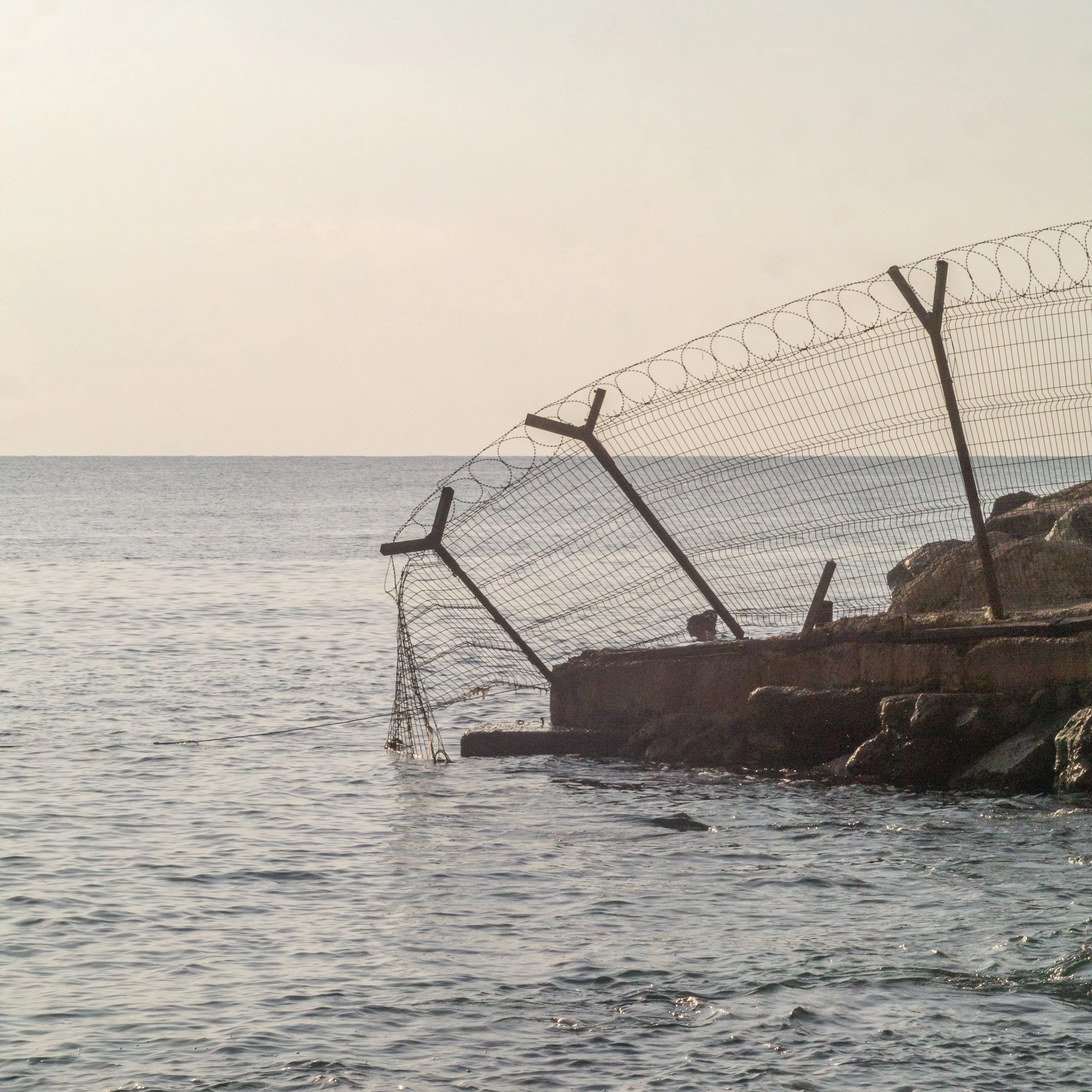
Coastal fence extending into the sea under a clear sky. Aysegul Aytoren. Pexels.
For years, young Moroccans have looked across the Mediterranean toward Spain in search of better opportunities. But this past July, that desire became more evident when over 60,000 people attempted to cross into the Spanish enclave of Ceuta from the northern tip of Morocco.
But why a sudden surge in migration now?
There are many reasons: Morocco and Spain’s complicated history, ongoing political tensions and the spread of misinformation online.
Ceuta itself is a product of that complicated history. Spain has controlled the enclave for centuries, and Morocco continues to claim the cities of Ceuta and Melilla as its own territories since gaining its independence in 1956. Today, the border is a representation of where Africa meets the European Union, and where economic frustration, migration policy and longstanding geopolitical tensions collide.
Social media, however, is one of the significant factors. Many were drawn by messages circulating across social media platforms, including TikTok, Instagram and WhatsApp, claiming that Spain’s border had opened and that migrants who reached Spain would be allowed to stay. The result was one of the largest migration surges Ceuta has experienced, leaving dozens dead from drowning and prompting Spain and Morocco to significantly reinforce border controls.
The New York Times reported that a TikTok video showing two young women walking in wetsuits in Ceuta drew widespread attention. The women were shown smiling and sporting peace signs as they walked the streets.
The posts that circulated online were not simply inaccurate. They were built around fragments of truth. A Spanish Supreme Court ruling concerning the return of migrants was interpreted online as meaning that people who reached Ceuta by sea would not be immediately expelled. Videos and messages spread rapidly, with some explicitly encouraging people to head toward the border and accounts laying out travel routes. Researchers examining the online activity found that social media played a significant role not only in the movement itself, but also in some cases the logistics surrounding potential crossings. According to the BBC, Haraga, an Arabic word for those who burn, is trending online and is said to be a colloquial name for migrants who are “burning” their identification documents to avoid enforcement. The term has been linked to anonymous accounts that advertise transportation for migrants. Thus, social media is not only boosting the rumors but also being used in organizing and facilitating migration.
However, for some young people, social media was not the reason they wanted to leave Morocco in the first place.
Morocco has experienced significant economic development in recent years, investing heavily in infrastructure, manufacturing, transportation and tourism. Yet that growth has not reached everyone equally. Youth unemployment remains particularly high, and many Moroccans struggle to find stable employment or meaningful opportunities for upward mobility. The Financial Times recently profiled young Moroccans who, despite the country’s visible economic progress, continue to feel the negative effects of the prosperity growing around them.
This disconnect helps explain why the perception of Europe can be so influential online.
On social media, Spain can appear only a few miles away and impossibly far at the same time. Young people can see Moroccan migrants living in Europe, see European cities through influencers’ posts and communicate with people who have successfully migrated. The boundary between information, aspiration and misinformation can become increasingly difficult to distinguish.
The July crossing demonstrated just how powerful that dynamic can be. When thousands of people encountered the same messages online, individual decisions suddenly became collective action. Morocco has since increased security around Ceuta and Melilla after additional online calls for new crossings circulated, expressing that the digital campaign did not simply disappear once the original crisis ended.
Social media helped spark the movement, but it did not create the longstanding desire behind it. For young Moroccans facing unemployment, economic insecurity or limited social mobility, the possibility of reaching Spain represents more than a social media trend. It represents independence, employment and the chance to build a life that feels unavailable at home. The danger comes when that hope is filtered through online rumors that obscure the realities of migration, including the risks of attempting dangerous crossings and the complicated legal process awaiting those who arrive.
The Ceuta crisis therefore raises a question that extends far beyond one Spanish enclave: What happens when social media becomes the bridge between economic frustration and migration?
Combating this misinformation requires more than taking down posts. It means addressing the conditions that make those posts appealing in the first place.
GET INVOLVED:
For travelers visiting Morocco or Spain, the crisis offers another reason to look beyond the tourist experience. The Mediterranean is not simply a setting for beaches, resorts and European cities. It is also a border separating two very different economic realities, and a route that thousands of people are willing to risk their lives to cross. Travelers can support the youth of Morocco by looking into Moroccan-based social programs and career development organizations like the Moroccan Association for Support to the Promotion of Small Business (AMAPPE), which focuses on socio-economic integration and vocational training, and CARE Morocco, which concentrates on youth and disadvantaged groups in rural and peri-urban areas
The digital road to Europe may begin on a phone, but the reasons people choose to follow it, including economic hope, migration policy and historical tensions, are far more complicated.
Grace Williams
Grace is a rising junior at Wake Forest University, where she is majoring in Politics and International Relations with minors in Spanish and Latin American Studies. She is passionate about political pluralism, human rights, culture, and journalism. In her free time, Grace enjoys playing tennis, watching movies, and reading.