
By Nina Esteghamat
300 miles away from the Arctic Circle sits the coldest city in the world, Yakutsk, but its environmental history, natural features and rich culture are just as interesting as its extreme weather.
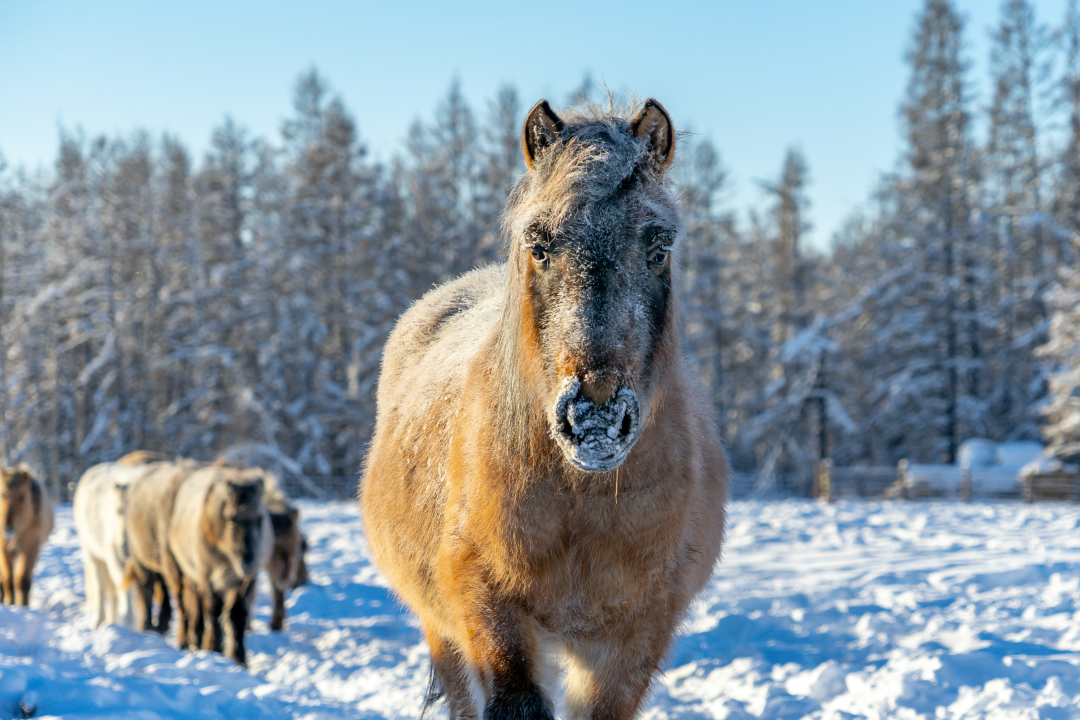
Yakut horse in the famous winter weather. Hans-Jurgen Mager. Unsplash.
Yakutsk is located in Siberia, one of the coldest inhabited regions in the world. If you’ve heard of the city, you’ve likely heard of the extreme cold temperatures. According to Weather Spark, an average day in January can range from minus 44 F to minus 33 F. The lowest temperature, recorded in 1891, was minus 83.9 F.
These below-freezing temperatures mean that more than 300,000 residents have had to adapt. To start, people wear thick layers of clothing, including face and hand coverings. Cars in Yakutsk are equipped with engine heaters or are left running for long periods, keeping the engines from completely dying. Due to the deep layer of permafrost, pipes are elevated on stilts to prevent water and other liquids from immediately freezing and to avoid disturbing the frozen soil.
Who Lives There?
Yakutsk, like much of Siberia, is populated by several Indigenous groups. The majority of citizens are Yakuts, or Sakha in their native language, a Turkic people originally from northern Siberia. Besides the Yakuts, there are also Evenks and Evens, other Indigenous peoples in the area. Russians didn’t arrive until 1632, during an extended campaign to colonize the Arctic.
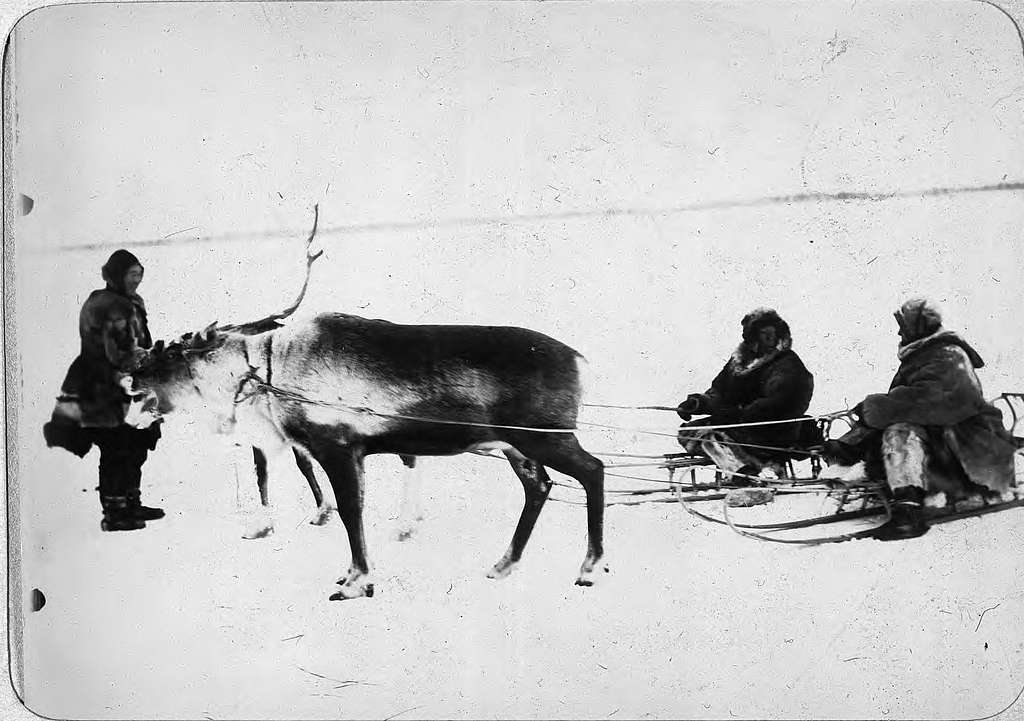
Sakha people and reindeer, 1890s. University of Washington Special Collections. PDM.
Despite the Sakha’s uprisings against Russian rule, Yakutsk was used as a resource colony since the 1600s. It was a hub of fur trading and cattle raising. Much of this development was caused by Russian colonialism and cultural suppression. There are also current resistance movements to Russian influence. Most notably, there have been calls for independence as well as anti-mobilization protests against Russia’s invasion of Ukraine in 2022.
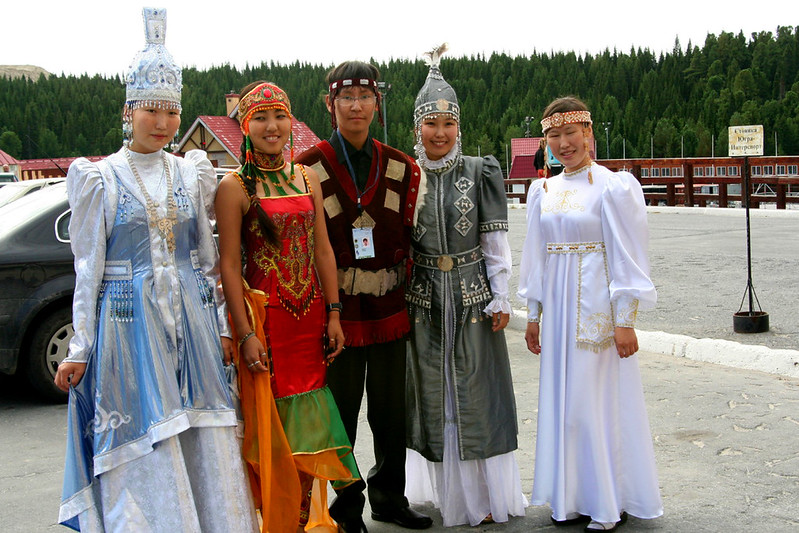
Modern-day Sakha people in traditional clothing, 2006. Amanda Graham. CC BY-NC-ND 2.0.
Keeping the Yakut culture alive is extremely important. Some traditional arts include beadwork, ivory carving and mouth harp music. Travelers can see traditional artwork and more at the National Art Museum of the Republic of Sakha.
The Stunning Natural Features
The most famous feature of Yakutsk is the weather, but in the summer months, it regularly reaches 70 F. More importantly, in the summer months, Yakutsk lights up with the “white nights,” when twilight lasts through much of the night. This is a uniquely summer phenomenon where the sun sits just below the horizon, never fully setting.
There is also a deep ecological history in Yakutsk. The best-preserved mammoth in the world, Yana, was found in the Yakutia region and is being studied in Yakutsk.
Specific breeds of horse and cattle have adapted to the extreme temperatures, like the aptly named Yakut horse and Yakut cattle. These cattle, a primary source of nourishment and income in Yakutia, grow thick winter coats and store fat during the summer to prepare for the winter.
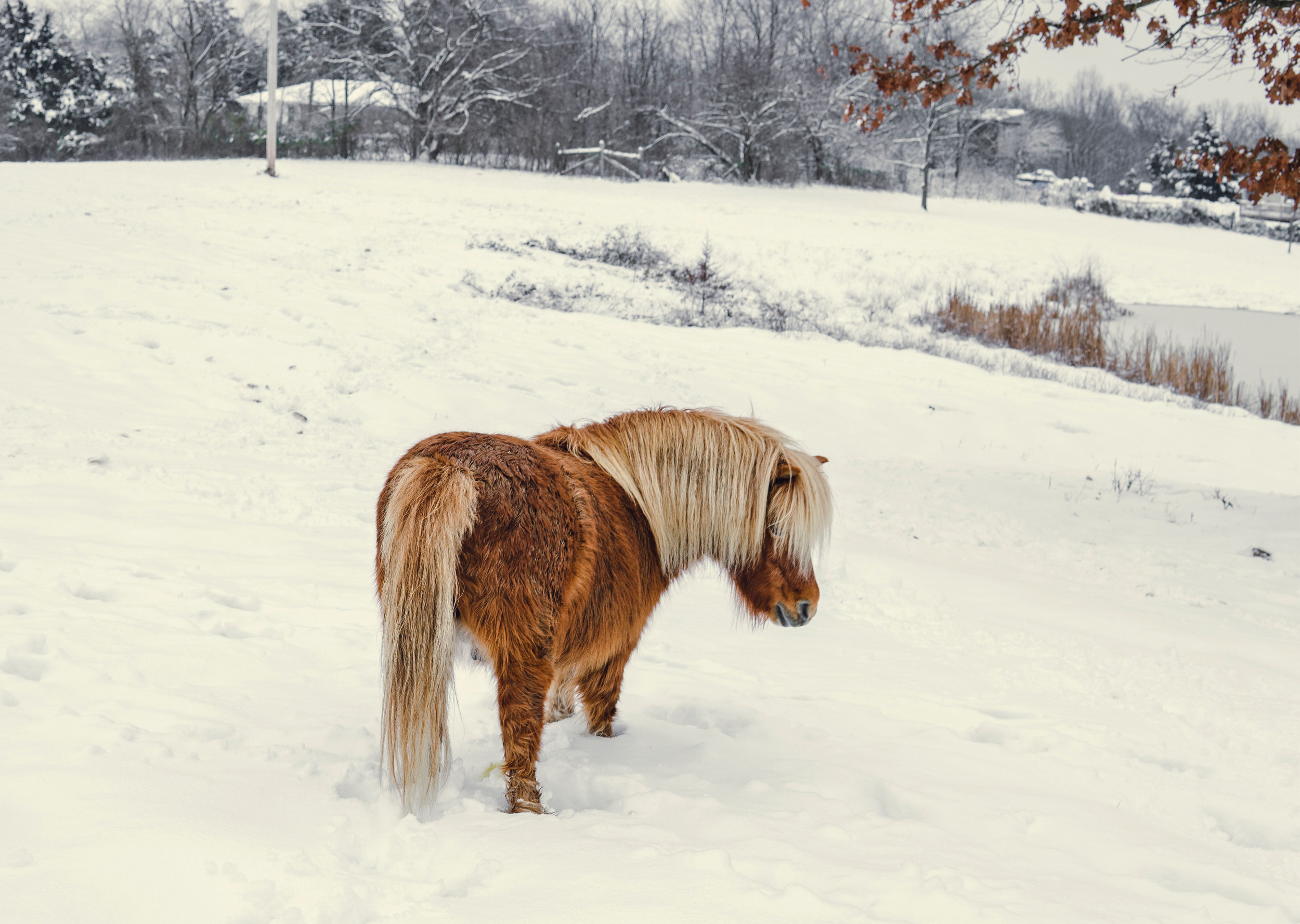
Yakut horse in the snow. Sarah Dietz. Pexels.
There is also a stunning UNESCO World Heritage Site called the Lena Pillars Nature Park. The nature park, around a three-hour drive from Yakutsk city center, is famous for its massive rock pillars. Not only are the rock pillars incredible, but they are also scientifically important, dating back to the Cambrian Explosion, a rapid period of evolution 500 million years ago. Travelers can take a boat cruise or, in the winter, ride over the ice.
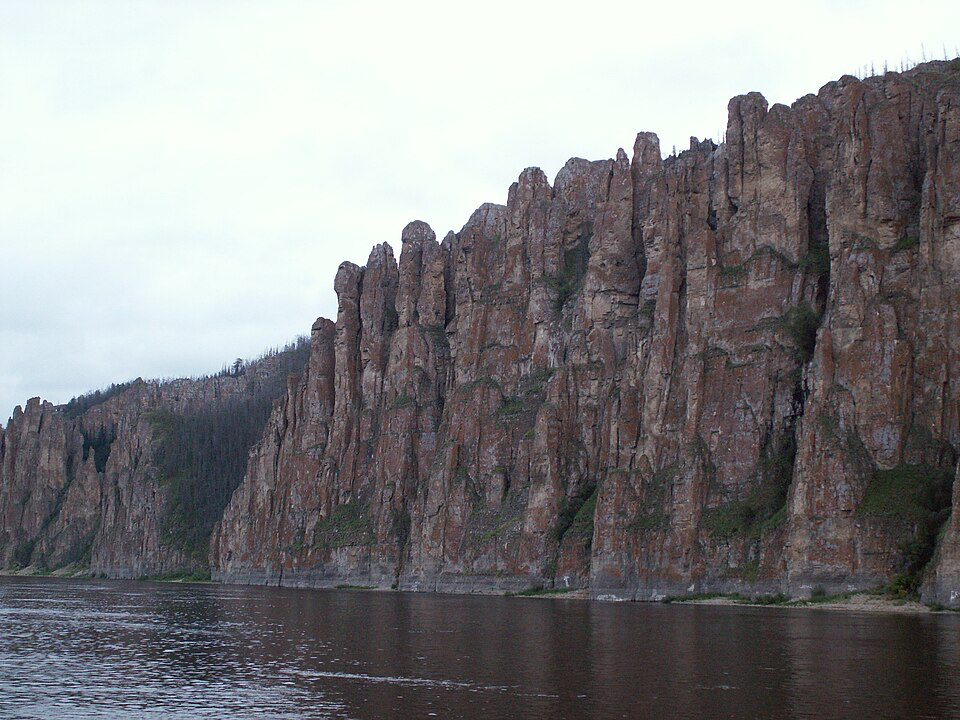
Lena Pillars, 2005. ZankaM. CC-BY-SA-3.0.
GET INVOLVED:
To read more about Russian colonization of Siberia, the Arctic Institute’s website has an article titled “Russia's Colonial Legacy in the Sakha Heartland” as a part of its “Colonialism Series”. There is also an anti-war foundation called Free Yakutia that supports Yakutia and Ukraine’s sovereignty against Russia.
Yakutsk is an incredible city with so much history and natural beauty hidden beneath its frigid reputation. Its preservation of Indigenous culture is extremely important considering Russia’s legacy of colonization. Whether you want to visit and experience extreme temperatures or read about the day-to-day life of a Yakutsk resident, there is so much to discover about the coldest city in the world.

Nina Esteghamat
Nina is a student at Smith College, where she is double-majoring in English Literature and the Study of Women, Gender & Sexuality. She is passionate about bringing global awareness and a human lens to storytelling.