
By Jeremy Gordon
Two Dutch nationals were barred from re-entering Indonesia after holding a running event that excluded Indonesians.
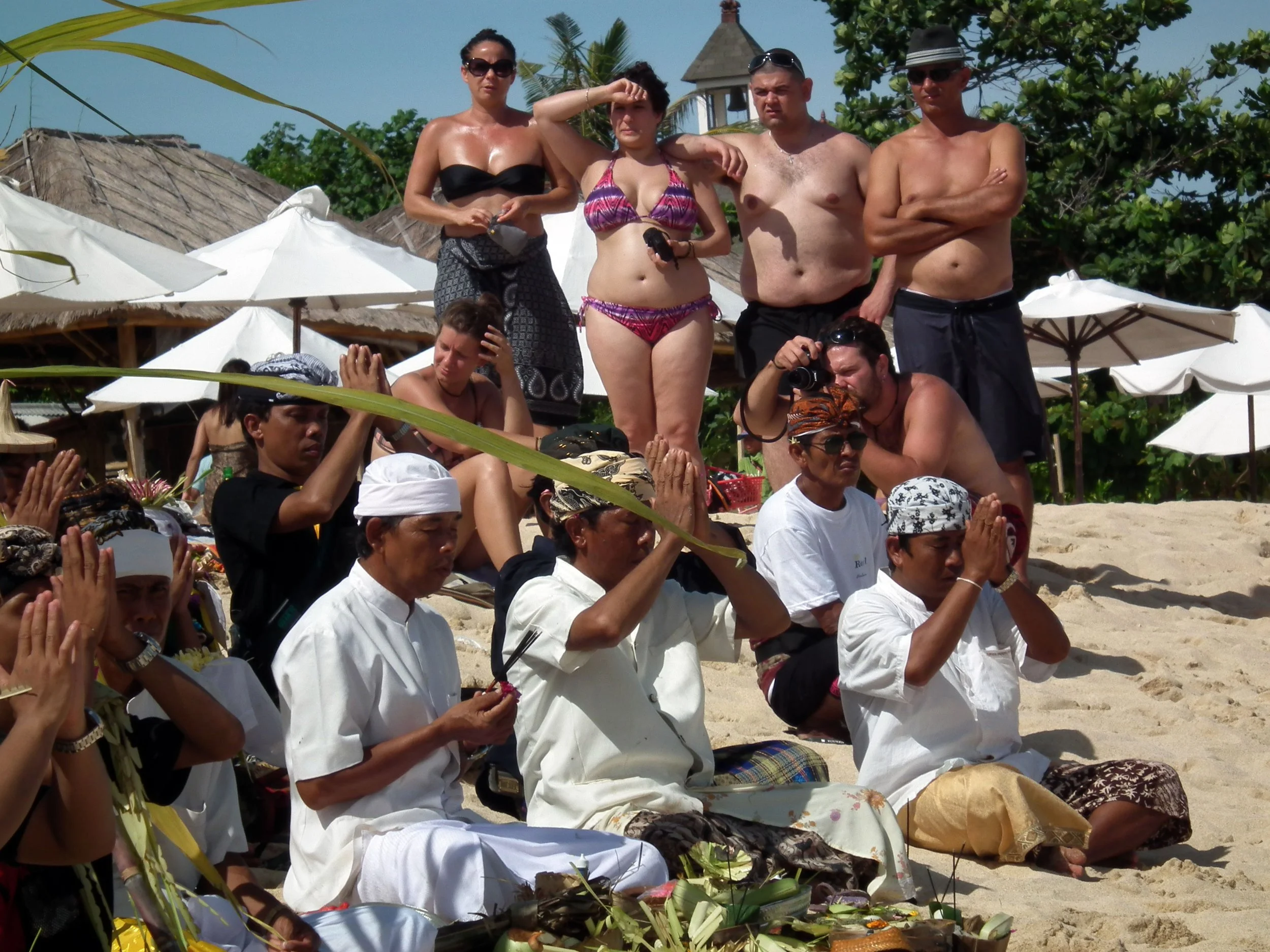
Tourists in Bali watching a local religious ceremony. Bair175. CC BY-SA 3.0.
With its lush green mountains and tropical beaches, the Indonesian island of Bali has long been a draw for tourists. This has become especially true in the 2020s with the advent of digital nomads, people with location-flexible, well-paying jobs who live from stint to stint in different destinations. But the increase in international attention comes with an ugly downside for the host cities: the locals can get priced out and are often excluded from the fun. A potent distillation of this relationship came this summer when two Dutch nationals organized a social event network for digital nomads that excluded Indonesians who wanted to join.
The two Dutch nationals, identified by Indonesian authorities as JAS and HQV, were the organizers of Entourage Bali, a social community that promised to “bring together travellers, nomads, and expats through well-curated experiences at Bali’s best spots.” These experiences included silent disco runs, ticketed events where hordes of participants dance and jog through the streets wearing bright headphones and pumping music.
One of these runs, held in May and beginning at 5:30 a.m., drew huge crowds and sparked interest both online and from Indonesians who wanted to participate. A follow-up run was organized for July 22. Locals soon discovered that they were not welcome.
Applicants were asked whether they were from Bali or elsewhere in Indonesia. Many who responded yes were rejected. Applicants with Indonesian phone numbers were rejected. In one case, an Indonesian woman was rejected while her German husband was accepted. In a leaked chat between a local applicant and an organizer, the organizer said the automatic system was trained to reject Indonesians because Entourage Bali was a platform specifically for digital nomads.
These revelations and the backlash from locals came to the attention of Indonesia’s director general of immigration, Hendarsam Marantoko, who opened an investigation into Entourage Bali. Per the country’s immigration rules, foreigners are not permitted to organize activities that fall outside the scope of their residence permits. On July 24, immigration officials announced that they were barring the two Dutch nationals, JAS and HQV, from re-entering the country after they had left for Singapore the previous day.
Entourage Bali issued an Instagram post apologizing to those who felt “offended and hurt,” blaming “errors in the automated approval process” for the exclusions. It announced it would be pausing all activities and events for now. Several other running clubs, including Rise Run Bali and Far Ubud Run Club, announced similar pauses in the days that followed.

Bali rice fields. Dezalb. Pixabay.
The case of Entourage Bali is the latest indication of Indonesia’s growing impatience with the swarms of tourists and digital nomads who disregard local laws and customs. In 2025, Bali received almost 7 million tourist arrivals, more than the 4.5 million residents who actually live there. In the first half of 2026, Bali authorities deported 342 foreign nationals, up from the 335 deported in all of 2023. Earlier in 2026, Bali Gov. Wayan Koster introduced new rules for foreign tourists and urged the public to report suspected violations.
The primary issue Bali locals seem to have with these tourists is not their sheer numbers but their blatant disrespect for local laws and culture. For many foreigners, the island is simply a tropical backdrop against which they can go about their lives much as they would anywhere. They appear more interested in the island for its aesthetics and affordability than in its culture, history and people. The Dutch organizers of Entourage Bali might have avoided the investigation that led to their banning if not for their discriminatory practices.
Jeremy Gordon
Jeremy is a graduate student at Johns Hopkins University studying Creative Writing. He graduated from the University of Maryland with a bachelor's in Criminology and Criminal Justice and worked for four years as an Investigative Specialist with the Public Defender Service for DC.