Efforts to Preserve the Irish Language

After years of decline, the Irish language has seen a recent resurgence.
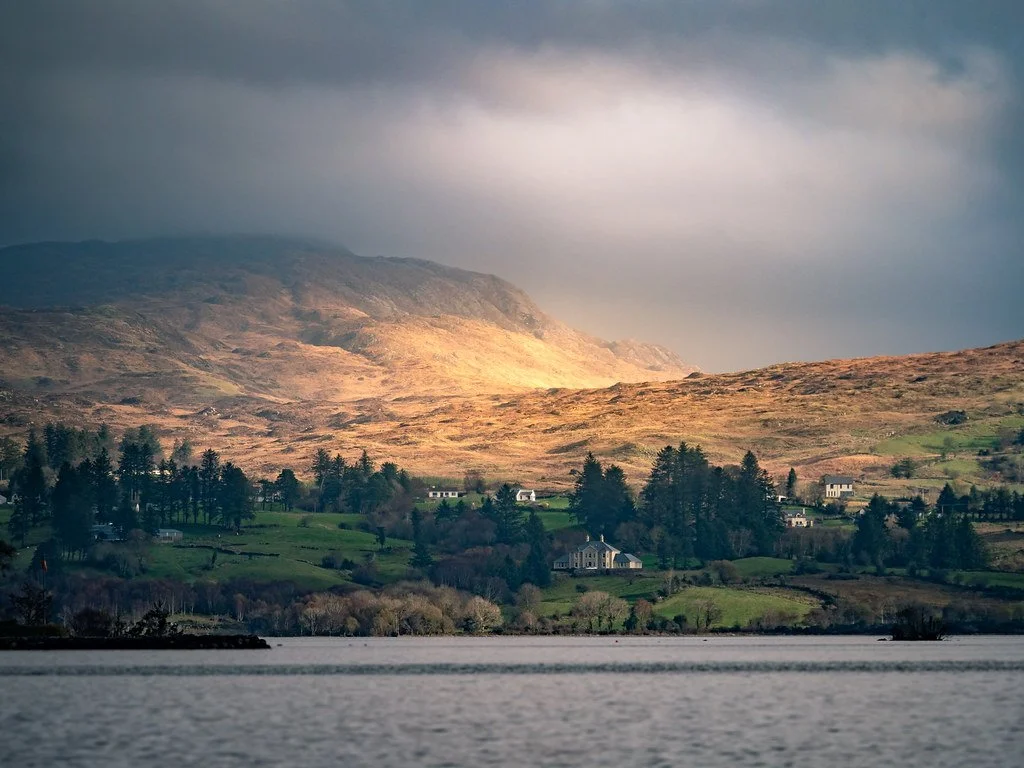
County Donegal in Ireland, home of one of the largest concentrations of Irish speakers on the island. Giuseppe Milo (www.pixael.com). CC BY 2.0.

Before the 1800s, the Irish language dominated Ireland. Irish, or Irish Gaelic, is in the Celtic language group, related to Scottish Gaelic and Breton, and is one of the oldest languages still in existence today. However, as England gradually conquered Ireland over many centuries, the Irish language began to diminish. Under the dominion of the British crown until 1922, English was the language of the imperial administration. When the Republic of Ireland was founded, only a scattering of people in rural areas of the island could speak Irish. 

Today, the Irish language has seen a reversal of fortune. It is now spoken by 1.2 million people, with 98% of them located within the Republic of Ireland. 42% of the Irish population reported to be able to speak Irish in the 2006 census. There is even a part of Ireland called the Gaeltacht where Irish is the primary language in use. How did this resurgence occur?

The interest in the Irish language re-emerged in the late 19th century as Ireland was struggling for independence. Irish nationalists wanted to use the Irish language as a means to differentiate themselves from the English. To “de-anglicize” Ireland, the Gaelic League was founded in 1893 to promote the Irish language. During this Gaelic Revival, as it was soon called, writers started to produce literature in the Irish language while others such as W.B. Yeats produced literature in English but in a distinctively Irish style.

By the mid 20th century, the Irish government, now fully independent from Britain, took on the mantle of the preserver of the Irish language. The government made the Irish language a compulsory subject in school and attitudes toward the language changed.  No longer was it seen as a backwards language; the Irish population began to take pride in their language. There are even some schools where Irish is the primary language of instruction.

A sign in both Irish and English representing Irish pride. jodimarr. CC BY-NC 2.0.

Irish was declared an official language of Ireland, requiring the government to provide services and resources in the language. In 2007, it was declared a working language of the European Union. Having official status in Ireland, most public signs are now written in both English and Irish.

But, it is not all good news. While much of the resurgence of the Irish language is occurring largely in urban areas, the Gaeltacht, the area designated by the Irish government as areas where the Irish language predominates, is diminishing. Always having been a rural area with small populations, Gaeltacht, and the youth in the area, is preferring to use English as their primary language rather than Irish. 

Irish is now a language of the urban elite, and its turnaround is a linguistic revival unparalleled in modern times except for the case of modern Hebrew, according to Reg Hindley. Visitors to Ireland can tune in to the radio station Raidió na Gaeltachta to hear traditional Irish tunes and watch TG4, the Irish language television station. While there is still work to be done to revive the language even further, the Irish language has grown considerably since Irish independence.



Bryan Fok

Bryan is currently a History and Global Affairs major at the University of Notre Dame. He aims to apply the notion of Integral Human Development as a framework for analyzing global issues. He enjoys hiking and visiting national parks.

Is Macau the Gambling Capital of the World?

A small Chinese territory near Hong Kong, Macau’s gambling industry has grown exponentially in the past few decades.

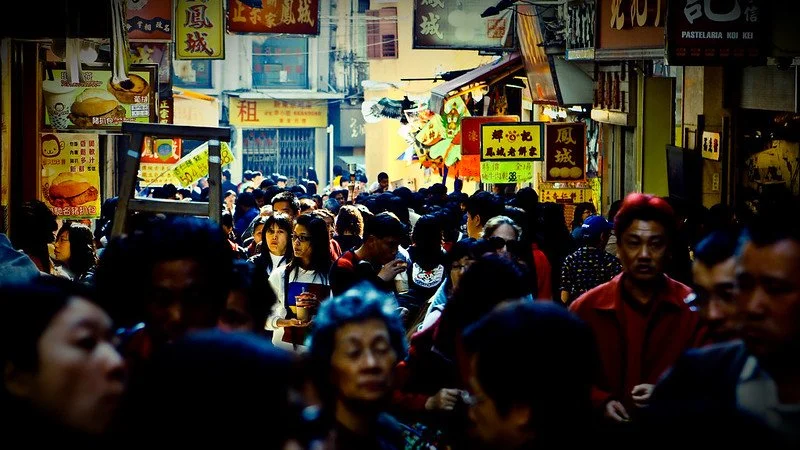
Nightlife in Macau. Trey Ratcliff. CC BY-NC-SA 2.0

Macau is a former Portuguese Colony located next to Hong Kong. It was considered a Special Administrative Region of China since 1999, which means that it has different laws than mainland China. For example, gambling in China is illegal everywhere except Macau, allowing it to climb the ranks and become the gambling capital  in the world. The actual city isn’t very large in terms of size, but with its numerous casinos and hotels for its gambling tourists, it has become extremely wealthy. Its population size (roughly 650,000) is small compared to the size of its tourism industry, but the GDP per capita is extremely high, which is why it is considered so rich. As Chinese millionaires continuously travel to Macau trying to become even richer, money keeps coming into the gambling industry. As Chineses economy grows, the more millionaires come to gamble, the more money the casinos earn. The city’s taxes on gambling make up around 70% of the government’s revenue, so the more money being exchanged, the richer Macau becomes. Despite all this, many of the city’s residents are struggling. While the casinos and the richest people thrive off the rampant gambling, many of the casino workers and their families aren’t as well off. A lot of the government’s money goes back to investing in the casinos rather than helping the poor.

In the gambling world, Macau is often called the “Las Vegas” of China, but that is not quite the case. Beyond the casinos, Vegas has a focus on shows and performances, while Macau  focuses more so on gambling. As such, even if someone doesn’t want to take risks with their money, they will still have large, sparkling shows in Vegas, whereas in Macau, people can go to museums and attractions to explore the culture when not in casinos. 

People in Macau. Kevin Jaako. CC BY-NC 2.0.

In 2021, Macau had 42 casinos running. Like the ones in Vegas, some casinos in Macau are based off of some Western places and take inspiration from Vegas itself. For example, much like the Venetian in Vegas, there is a Venetian Macau that dwarfs the one in the States. It is the world’s biggest casino and the seventh largest building in the world in terms of floor area. There are 640 gaming tables, 1760 slot machines, 3000 suites for guests and over 30 restaurants there alone. The Parisian Macau, much like the Paris-themed part of Vegas, has an Eiffel Tower replica and many other French-themed decorations. Another interesting casino in Macau is the MGM Cotai, designed to look like a jewelry box. Just like that implies, it has one of the largest art collections in the city with over 300 pieces of contemporary art. The collection combines both Eastern and Western art, as well as tradition and technology, making it even more intriguing. The actual casino inside, however, only takes up around 10% of the space inside the building, though it does have 177 gaming tables and 1500 slot machines. In 2019 before the COVID-19 pandemic, Macau reached 20.64 million tourists, whereas Vegas regularly receives roughly 40 million visitors per year. Despite this, since the amount of money exchanged in is much greater, Macau is considered the gambling capital. BeforeIn 2019, before  the pandemic, Macau earned $36 billion in gaming revenue. Vegas’ had a record of $1.23 billion in 2021, far less than Macau’s earnings before the pandemic, and the Vegas Strip didn’t even break 1 billion pre pandemic.

Looking at the games played in all the casinos, the most popular game in this city isn’t poker, blackjack or roulette; it’s baccarat. These games are also played with much higher stakes and with much more intensity. Wealthy people, mostly from China and all over East Asia, bet such large amounts of money that the games here have the highest stakes in the world, hence why it is considered the gambling capital. This part of Macau’s gambling culture goes beyond wealthy people having a lot of money to spend on gambling. In the west, people tend to see gambling as a fun but risky game. Chinese players see it as a financial opportunity. They hold their cards much tighter so that there are no chances of someone else leaning back and sneaking in a quick peak at their cards. This is an investment, an opportunity to get more money to be more financially stable, not a leisure activity. It’s extremely common to have hundreds of dollars exchanged within a couple of hands from the average person, not even from the high rollers. 

Though impressive, it’s because of all this that Macau suffered a lot from the COVID-19 pandemic. Almost their entire economy is based off of tourism, and when people stopped traveling, the city was hit with many losses. With China’s zero-COVID protocol, foreigners have not been allowed to travel into the city. The city survived with only Chinese tourists, but with COVID-19 slipping into the country anyway, Macau’s tourism and gambling industry has started falling apart once more. South Asian countries like Cambodia, the Philippines, Singapore, and Vietnam have been attempting to take over the gambling scene in Asia, which means that the Chinese territory will be struggling even more to regain its title as the gambling capital of the world.


Katherine Lim

Katherine Lim is an undergraduate student at Vassar College studying English literature and Italian. She loves both reading and writing, and she hopes to pursue both in the future. With a passion for travel and nature, she wants to experience more of the world and everything it has to offer.

5 Reasons to Travel Alone at Least Once in Your Lifetime

Whether it’s a yearlong round-the-world expedition or just a weekend getaway during a study abroad semester, there is something indescribably liberating about traveling to new places alone.

Solo travel abroad presents the kind of life experience that cannot be properly described without actually experiencing it for yourself. However far too often these types of adventures are stopped in their tracks by factors such plans for the future, the opinions of family and friends and simple fears about what traveling alone entails. 

What follows is a shortlist of five reasons to ignore each of those influences and to break away from the rat race—and instead find what can easily be one of the most formative experiences of a lifetime.

1. No Friends? No Problem

One of the biggest concerns of prospective solo travelers is the notion that there will be no one to talk to while traveling alone and that loneliness will quickly and inevitably set in. For the vast majority of solo travelers, this is entirely false. In fact, traveling with other people can often trap you within a social bubble that envelops your small band of travelers, and goes no further. 

The whole point of world travel is to see unfamiliar places, meet new people, and try different things—at least one major part of the reason you came all that way can be negatively impacted by bringing friends along for the ride. A nice compromise might be to consider booking a tour or traveling alone, where you’ll meet new people in a safer, more intentional space.

2. Hostels Can Help You Socialize

Socializing is always as easy or as difficult as you want to make it while traveling. If you are feeling particularly adventurous and want to make some new friends, hostels are some of the best places on earth to do so. Group bunk rooms are almost always the cheapest accommodations in town and provide a fantastic environment to meet and get to know fellow travelers, many times from countries all over the world. 

Regardless of where each person calls home, the simple fact that each of you is far away from that particular place provides a unifying experience around which you can easily and quickly start a conversation. Many encounters you have with strangers will last no longer than several hours, but it is also more than possible to make lifelong friends in the same types of situations. This means that solo travel combined with hostel living may possibly be the quickest and most effective way to diversify a Facebook friends list known to man! 

Pro safety tip: Never tell a stranger you’re alone! Find more important solo travel tips here.

3. No Compromising

Seeing and experiencing new places with old friends obviously has its advantages, but far too often these other people can delay, alter, or outright cancel even the best laid plans. Traveling alone means that none of these burdens are even a possibility. Trying to organize a trip around one life—yours—is hard enough, but doing so around several lives can often be nearly impossible. 

Even if you somehow manage to coordinate schedules and find an ideal time to travel with a group of friends, everyone will have slightly different goals for their time abroad, leading to logistics issues and disagreements on how time should be spent. If you were to travel alone, even just once, every possibility would remain open to you as you make your way around the places you visit. It is this freedom of choice in your movements that makes solo travel so liberating. You decide the course of your day and you write the story of your trip! Your adventure is entirely up to you and you get to make your experience exactly what you want it to be.

4. No Mountain Too Tall

To pretend that any kind of traveling can be done without its fair share of challenges is unrealistic. There will always be some kind of obstacle or adversity to face when you venture out from home, whether it’s to the other side of the world or to the grocery store down the street. These problems will simply have to be solved in order to move forward, but the sense of accomplishment one can achieve when facing them alone is indescribably empowering

The memories of “that one time I was completely lost in Madrid and still managed to make it back to my hotel by using broken Spanish and a rousing game of charades with a few locals” will stick with you for the rest of your life. These types of experiences leave you with a sense of being able to handle almost anything once you return from the trip, with vivid recollections of the challenges faced and subsequently defeated while traveling. If you can deal with your problems in a strange country where they speak an even stranger language, why wouldn’t you be able to overcome just about any issue at home? 

It is this empowerment through experience that makes travel so important in life, and solo travel is especially adept at forcing individuals to learn to solve problems as they come, a valuable and applicable life skill to say the least.

5. No Fear, Just Faith

Dorothy Thompson, perhaps the most influential woman in the history of American journalism, once noted that, “Only when we are no longer afraid do we begin to live.” This notion served her well as she broke down the gender barriers in journalism, and it is more than applicable to the idea of travelling solo as well. Dorothy had no idea what to expect as she made her way into the unknown realm of an industry consisting almost exclusively of men, much the same as a traveler embarking on a journey has no idea what challenges he or she may face in the coming days, weeks, or months. And that’s the fun of it. Leaving the comfort and familiarity of a place you know well in search of new and strange locales inherently involves a certain degree of fear.

Fear of the unknown and the unfamiliar is an emotion that has been found in humans for millennia. For our ancestors, traveling outside of the areas they knew well meant facing the very real dangers that may be present there—most notably the risk of being eaten by predators—and so they stayed close to home and close to their fellow humans. For them, it was their fear of the unknown that kept them alive. 

In today’s world, it is quite the opposite—just ask Dorothy Thompson. There are very few things out there that want to eat you. Rather, the lions and tigers and bears that fueled the fears of our ancestors have been replaced by less tangible things, things with metaphorically sharp teeth rather than literal ones. Concerns about family, friends, finances, and careers left behind will often deter potential solo travelers long before plans can even take shape. But like any good story, an ounce of courage will open up doors you didn’t even know were locked. Take a chance on travel, take a chance on the kindness of humanity, and most importantly, take a chance on yourself.

In conclusion...

While you don’t have to ignore these fears, do your best to acknowledge them without letting them deter you from your grand solo adventure. The collective voices of experience from hundreds of thousands of solo travelers who have faced these exact fears in the past will tell you that they are entirely unfounded. Jobs will be there when you return. Money issues can be handled with disciplined spending. And family and friends can either accept your decision to go or they can face the fact that it is your life to live and consequently not their decision to make. 

There’s a lot you can learn about solo travel from group travel and vice versa.

Instead of dwelling on the fears about what might happen, go into the experience with faith in the idea that you, and only you, can control what will happen. Having the proper mindset is the most important factor in the success of a solo trip, and it is perhaps the biggest hurdle you will face. However, once that hurdle is crossed, you will be fully prepared to make your trip exactly what it is meant to be: The adventure of a lifetime. 


Jake

Hanrahan

A Midwesterner born and raised, Jake recently graduated from Iowa State University with degrees in Kinesiology and International Studies and is currently pursuing a Master’s degree in Public Health at Colorado State. He is a writer for GoAbroad.com and loves inspiring future travel.

6 Ancient Lost Cities To Visit Today

These ancient cities hold generations of knowledge and secrets about those that inhabited them centuries ago. 

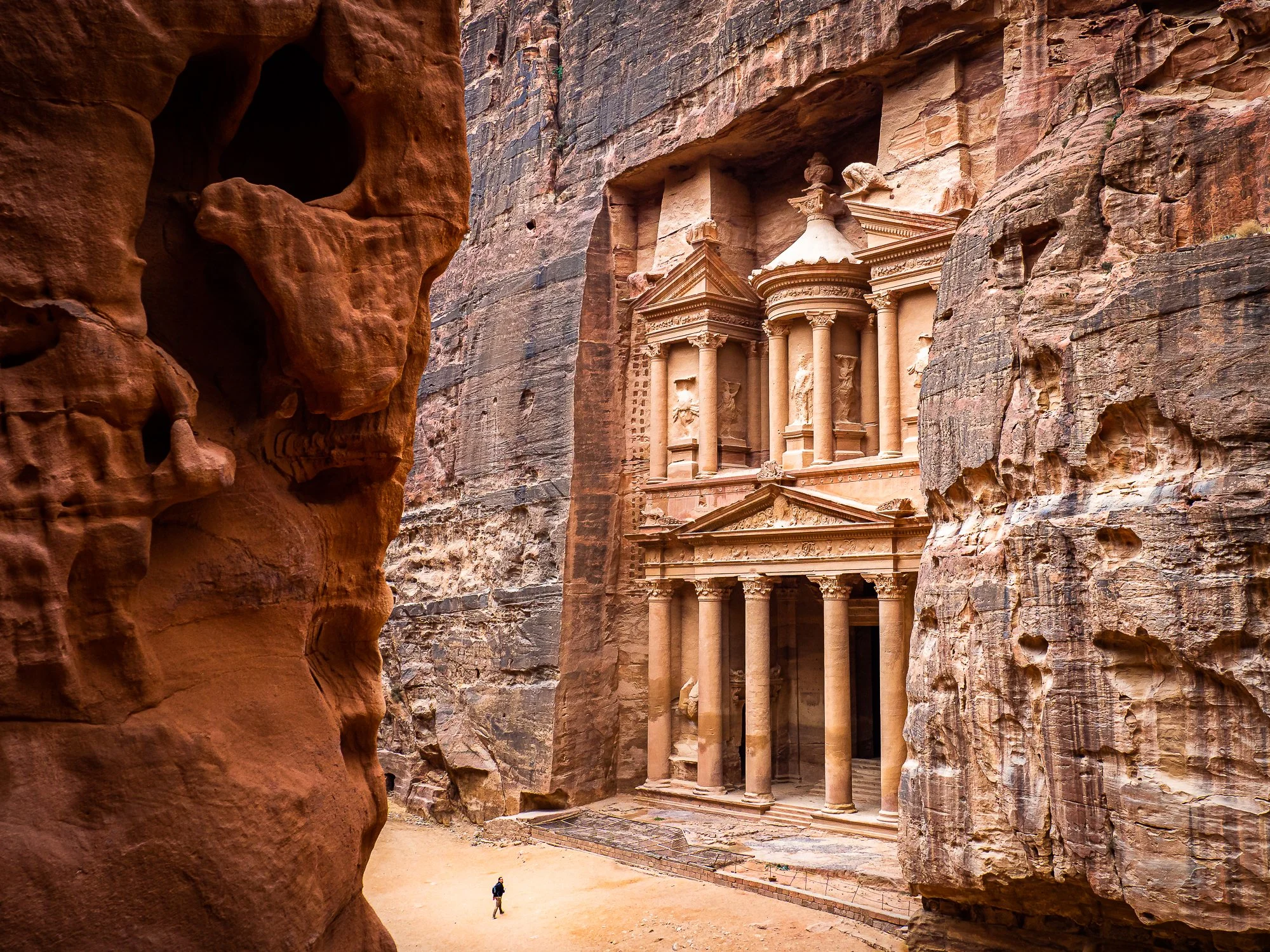
The ancient lost city of Petra in Jordan. Giuseppe Milo. CC BY 2.0.

From the incredible stone structures in Petra, Jordan to the geometrically revolutionary Mayan pyramids at Chichén Itzá, ancient civilizations around the world have long been of fascination to historians, scientists and travelers alike. Unfortunately, there are countless ancient cities — once thriving and metropolitan — that have been ravaged by time, war and nature. Here are six such ancient cities that now lie in ruin, but whose secrets are still available for you to enjoy.

1. Ctesiphon, Iraq

A view of the Tāq Kisrā at the ancient city of Ctesiphon in Iraq. Taisir Mahdi. CC BY-SA 2.0.

The Persian Empire began in 559 BCE and was revolutionarily metropolitan in their emphasis on the development of science, art and technology in the name of culture and religion. As the empire’s winter capital, the city of Ctesiphon located in central Iraq was often at the center of this progress. One of the most impressive remaining structures is the palace of King Khosrow I who ruled from 531 to 579 AD and was principally responsible for the construction of the vaulted brick vaults of the Tāq Kisrā. To this day, the hall is one of the largest brick arches in the world.

In 637 AD, an Arab invasion resulted in the successful conquest of Ctesiphon, using the site as a makeshift mosque. However, the newcomers soon chose to locate their capital at the northern city of Baghdad instead, leaving the abandoned city to become a quarry.

2. Mesa Verde, Colorado, USA

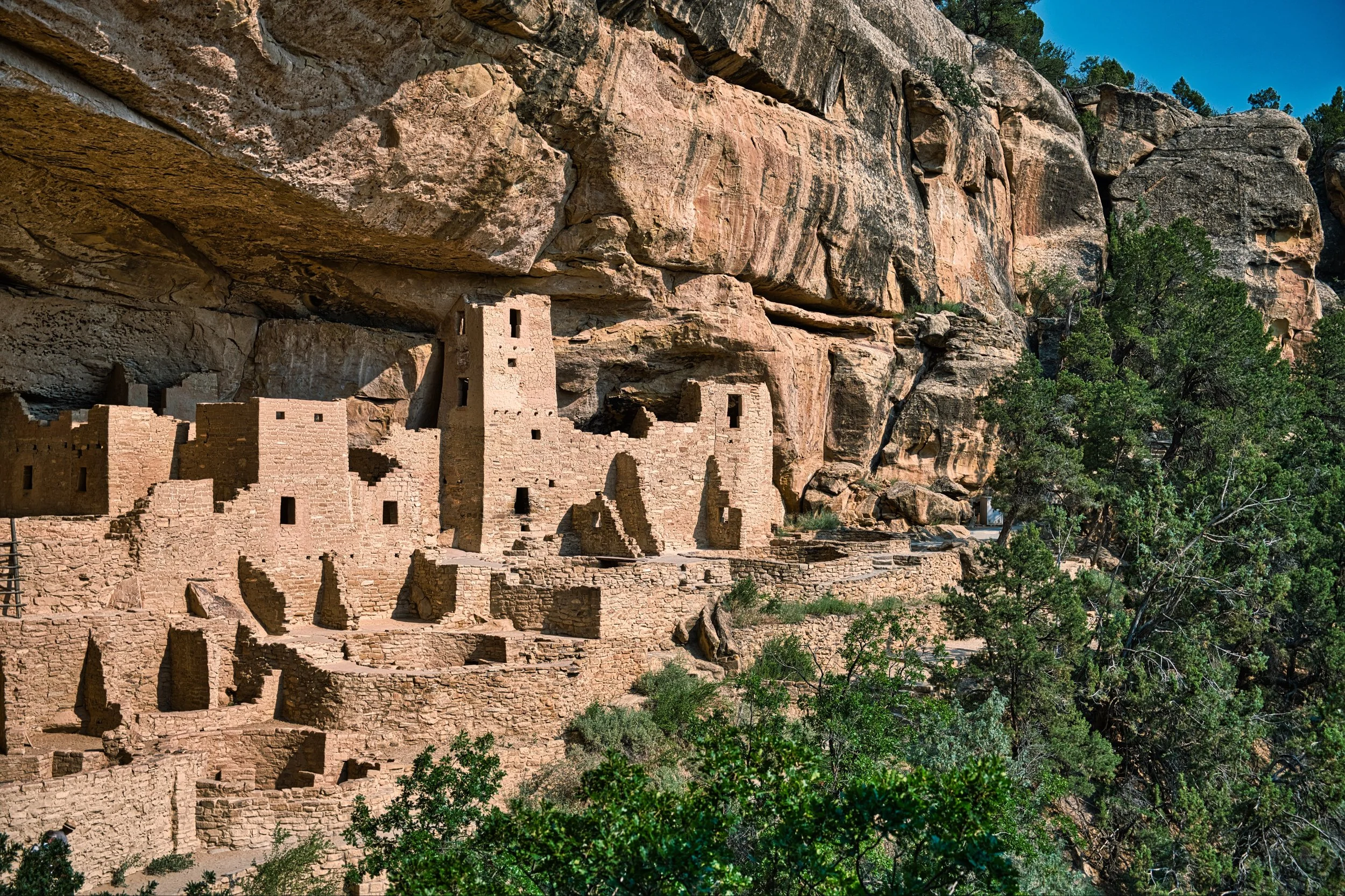
The cliff palaces in Mesa Verde National Park are the largest of their kind in North America. Scrubhiker. CC BY-NC 2.0.

Located within the bounds of Mesa Verde National Park in Montezuma County, Colorado, the prehistoric settlement of cliff palaces is the largest collection of its kind in North America. The plateau, which is almost 2,600 meters (roughly 8,530 feet) above sea level, was once inhabited by Ancestral Puebloans, whose community flourished from approximately 450 to 1300 BCE. Because of the incredible condition in which the 600 sandstone and mud mortar constructions were preserved, Mesa Verde was recognized as a UNESCO World Heritage Site in 1978, making it one of the first in America. These dwellings include a number of multi-story structures as well as small villages of up to 200 connected rooms, while other functional and ceremonial buildings, such as shrines, field houses, farming terraces and displays of rock art, are also scattered across the landscape.

This ancient city was completely abandoned by the Ancestral Puebloans by 1300 BCE. A devastating drought beginning in 1276 and lasting for over two decades brought an end to their once prosperous harvest, simultaneously driving away the animals they hunted for food.

3. Xanadu, Inner Mongolia, People’s Republic of China 

The giant rock carvings of Kublai Khan at the archaeological site of Xanadu in Inner Mongolia. China Discovery. CC BY-NC-ND 2.0.

The once magnificent palaces at Xanadu (Shangdu in Mandarin) were first made known to the western world by Marco Polo after his visit to the Mongol court in 1275 BCE. The city was the summer capital of the empire from 1274 to 1364 BCE and was made prominent by Kublai Khan who chose the site to construct his luxurious summer palace complete with gardens and gilded rooms. Xanadu stretched far beyond the palace, however, covering a grand total of 250 square kilometers (about 96.5 square miles) and housing roughly 200,000 people at the height of its activity. The city was unique for its blend of traditional Mongol and Chinese architectural elements which aligned with the empire’s desire to combine elements of the Mongolian nomadic hunting culture with the farming lifestyles of the local Chinese.

The city suffered significant neglect following the decline of the Mongol Yuan Dynasty in 1368 BCE, becoming completely abandoned around 1430. The site became a UNESCO World Heritage Site in 2012 in order to help preserve the few remaining temples, tombs and other ruins.

4. Great Zimbabwe, Zimbabwe

A view of the ancient stone complex in the medieval city of Great Zimbabwe. Christopher Scott. CC BY-NC-ND 2.0.

The ruins of Great Zimbabwe are one of the only remaining sites from the wealthy medieval African trading empires that largely controlled life on the continent’s eastern seaboard. Built in the eleventh century by the Shona people on a hilltop plateau, the city served as the capital of their trading empire for four centuries and was thus well protected by the five meter high (just over 16 feet) granite wall surrounding the inner settlements. The global prominence of the Zimbabwean trade is evidenced by the Arab coins and Chinese and Persian pottery fragments excavated by archaeologists among the ruins. Among the various sections that make up the site, the oldest is the hill complex which is believed to have been the religious center of the citadel and dates back to 900 BCE.

Though historians are not sure exactly why the site was abandoned in the fifteenth century, it was likely due to a combination of overpopulation in the area and the subsequent depletion of local resources.

5. Tikal, Guatemala

The Tikal ruins in Guatemala are a magnificent display of ancient Mayan architecture. chenisyuan. CC BY-SA 2.0.

Located within the aptly nicknamed “Maya Forest” in the northern Guatemalan province of Petén, Tikal National Park comprises 575 square kilometers (roughly 222 square miles) of tropical jungle and ancient Mayan ruins. This incredible collection of structures date back to the Preclassic Period of the Mayan empire which ran from 600 BCE to 900 AD. Of the spread, archaeologists have identified a more central urban concentration of temples, palaces, residential buildings, terraces and sports grounds. These, in addition to the countless monuments, stone carvings and mural paintings which have all been exceptionally well preserved, are testaments to an artistic and technical sophistication far beyond its time. These ruins, in addition to the amazingly biodiverse jungle that surrounds it, were designated a UNESCO World Heritage Site in 1979 in order to ensure the continued preservation of the ruins and to protect the thousands of plant and animal species that reside within the park.

Historians most widely believe that a sudden surge of overpopulation around the year 900 AD and the resulting strain on natural resources in the area led to widespread crop failure. This in turn forced the Mayan residents of Tikal to leave their homes, with the complete abandonment of the city coinciding with the end of the 10th century.

6. Ephesus, Turkey

The facade of the Library of Celsus still stands amongst the ruins of Ephesus in Turkey. H Weber. CC BY-SA 2.0.

The ancient harbor city of Ephesus sits on the western shore of modern day Turkey by the Aegean Sea, but was founded in the 11th  century BCE by an Ionian prince according to legend. While exact chronologies of the city’s history are up for debate, it is known that Ephesus changed hands a number of times over the course of its history, coming under the rule of the Persian, Roman and Ottoman empires, each leaving its mark on the city’s culture. These influences are evident in the varied architecture of the many remaining structures at the ruin site, from the famed Temple of Artemis that was said to be four times larger than the Parthenon, to the open air amphitheaters, agoras and aqueducts built in the traditional Roman style. 

Following a devastating earthquake in the mid-sixth century AD, Ephesus was left in extreme disrepair and vulnerable to the impending Arab invasions that would see most of the population leave the city. By the time the Ottoman Empire arrived in the 15th century, the city and its once prosperous harbor were practically already abandoned.


Tanaya Vohra

Tanaya is an undergraduate student pursuing a major in Public Health at the University of Chicago. She's lived in Asia, Europe and North America and wants to share her love of travel and exploring new cultures through her writing.

The Island of Sardinia

Located off the western coast of Italy, Sardinia is a beautiful island well known for its history, beaches, rock formations and caves.

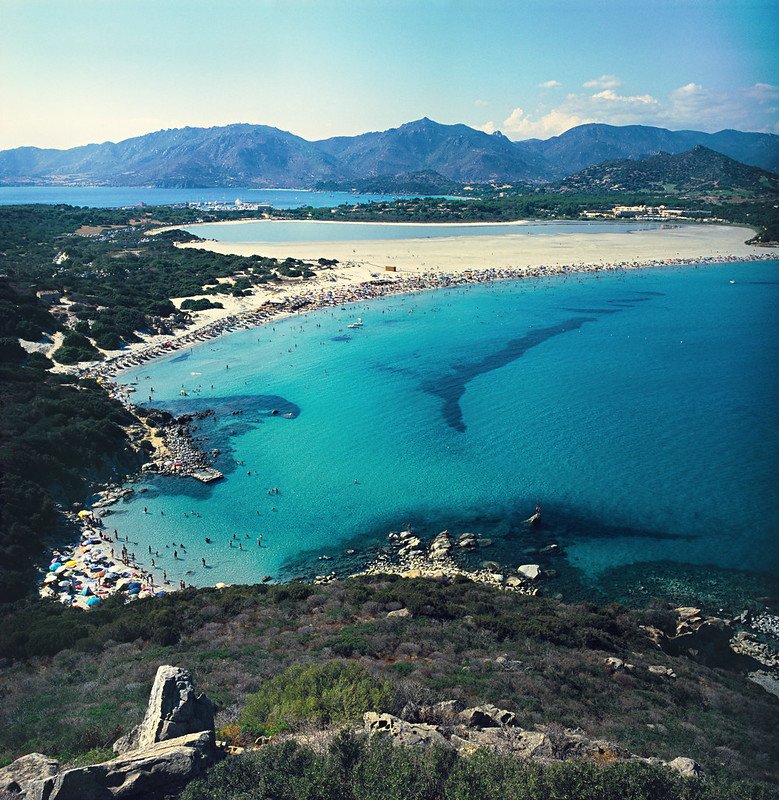
Porto Giunco in Sardinia. Tjshot. CC BY-NC-SA 2.0.

Among all the islands in the Mediterranean Sea, the two largest ones belong to Italy. Sicily is the largest and one of the most well-known for its beauty, but Sardinia, the second largest, is equally beautiful. Like the rest of Italy, it has its own rich history that goes back thousands of years that stretches back before the Roman Empire. Beyond that, the island is known for its beaches and rock formations, but apart from the coastline, the island is also very mountainous. Its highest point, Mount La Marmora, stands at 6,017 feet (1834 m). 

One of the most distinctive features of Sardinia are the nuraghes, which are small buildings built in the prehistoric times. There are no records of the people who built and lived in them, but archeological evidence seems to suggest that whoever lived there had an organized tribal system. The Phoenicians came to the island because of the mines, but it eventually passed into Roman rule. Since then, the island has been under the control of many nations. Because of that, Sardinia also has a unique Italian dialect known as Sardu. Interestingly enough, most Italians do not understand the Sardinian dialect and it sounds closer to Spanish than Italian. The language is also very articulate, so in the past, Italians considered it barbaric in comparison to their much softer sounding Italian.

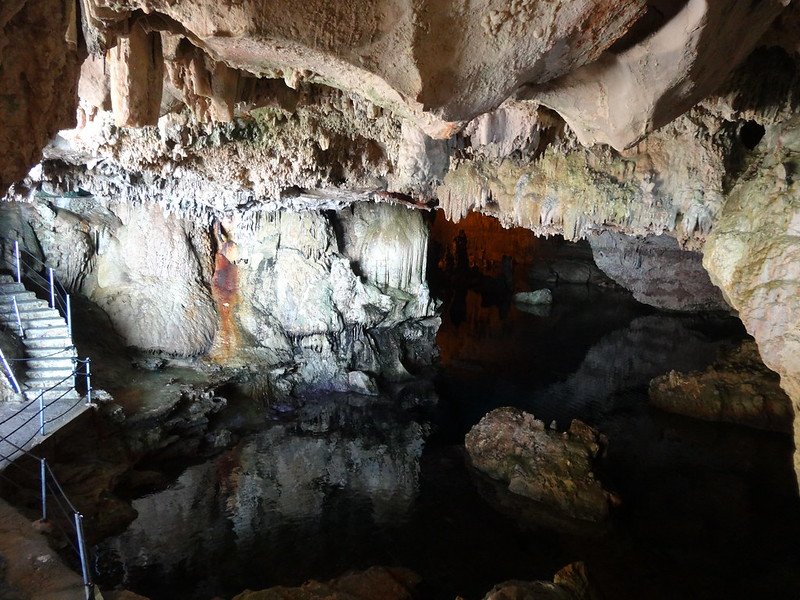
Many ruins from the past are found on Sardinia. The nuraghi are scattered across the island, as are other ancient settlements and towers dating back to the Bronze Age. There are also tombs known as tombe dei giganti, or tombs of the giants, and domus de janas, or fairy houses tombs. But beyond the ancient history, Sardinia’s beaches are also major attractions for the island. They are long and white, often compared to the beaches in the Caribbean, and they regularly make the polls for the best beaches in the world. Is Aruttas, Spiaggia di Piscinas, Spiaggia Rena Bianca and La Maddalena are some of the most popular beaches on the island. Near the sea, too, are the rock formations. Capo Testa is a popular spot to see them. It is near the water but as they are rocks, it requires some hiking, and it does not have the long stretches of white sand. Wind from the Mediterranean has smoothened the rocks over thousands of years, and it has been powerful and persistent enough to shape some of them, which is why the rocks at Capo Testa have such interesting forms. Lastly, the grottos across Sardinia are as equally beautiful and impressive as the beaches and rock formations. There are dozens of caves beneath the island and many are accessible for tourists to visit. The Grotto di Nettuno is one of the most famous caves, and inside it lies an entire lake and large stalactites. Another impressive cave is Grotto Verde, literally translated to “Green Cave”, because of the moss that grows along the stalactites, turning it green.

Grotto di Nettuno. Klaus Nahr. CC BY-SA 2.0.

Like every region in Italy, Sardinia has its own food culture. They do have their own pasta specialities, like malloreddus that is made in a curved shape in order to better catch sauce and cheese. This particular type of  pasta is eaten with a sauce called Campidanese and it is made up of saffron, sausages with fennel seeds, tomatoes and Pecorino cheese. In fact, Pecorino cheese originated from Sardinia. It is  very popular and goes with many pasta dishes or melted in a sandwich. 

Of course, since Sardinia is an island, they are also known for their seafood. Their seafood pasta, fregola ai frutti di mare, is interesting because the noodles are cooked like a risotto. Sardinians also love sea urchins, so much so that they hold sea urchin festivals. The sea urchins are commonly eaten with spaghetti, but the festivals also serve other seafood such as swordfish, tuna carpaccio and fried fish. 


Katherine Lim

Katherine Lim is an undergraduate student at Vassar College studying English literature and Italian. She loves both reading and writing, and she hopes to pursue both in the future. With a passion for travel and nature, she wants to experience more of the world and everything it has to offer.

CATALYST Fall Reading List: Top 10 Books

Now that beach reads are back on the shelves, it’s time to cozy up with these fall titles. CATALYST provides ten of the hottest books right now to add to your bookshelf.

Finish your summer reading? Good, because CATALYST’s lineup of new books for the fall provides wondrous worlds to explore, without leaving the comfort of your favorite reading chair. From elegiac poetry to bracing memoir to transgenerational fiction, this list offers a diverse array of books that comprise a who’s who and what’s what of the literary world today. From some of literature’s biggest names to lesser-known geniuses, these books promise to widen your scope of what books can accomplish–and of where they can take you.

1. Young MungoDouglas Stuart

Douglas Stuart follows his worldwide sensation “Shuggie Bain” with this tender, brutal novel of young working-class love between two young men. Mungo and James are born on opposite factions of a sectarian divide- Mungo on the Protestant side and James on the Catholic side. Despite their differences, however, they forge a friendship – and something more – that simultaneously threatens life as they know it but promises to change it for the better. This heartbreaking novel ends with a search for both inner and outer peace that provokes thought as much as it does tears.

Colson Whitehead takes his reader back in time with his latest outing. “Harlem Shuffle” tells the story of the scrappy social climber Ray Carney, full-time furniture salesman and part-time crook, as he learns the true rules and rulers of his beloved New York City. When he takes part in a heist of Harlem’s most esteemed hotel, he puts his whole life in jeopardy. In lavish prose, Whitehead paints a vivid picture of Harlem in the 1960’s such that his novel becomes a love letter to a bygone era. But will Ray Carney be able to survive the twists and double-crosses that comprise his life-story and make it to the better neighborhood he has always dreamed of?

What do you get when you mix an audacious heist, a biting social commentary and a moving love story? You get Rahul Raina’s “How to Kidnap the Rich”. This hilariously chaotic novel follows Ramesh Kumar, a brilliant yet impoverished young man who serves India’s upper-class by acing SAT tests for children. When his client Rudi Saxena places first in the national university entrance exams, he seeks to capitalize on his success, only for both of them to be kidnapped. What follows is a thrilling page-turner replete with caustic barbs against India’s upper-class. A searing, incendiary novel, “How to Kidnap the Rich” will surely captivate any reader who delights in double-crosses and thought-provoking satire.

Living at the intersection of blackness and queerness, George M. Johnson is uniquely situated to perceive the injustices faced by queer Black youth. Perhaps that is why he wrote “All Boys Aren’t Blue” as a series of essays designed to advise and guide young adults, though the book’s messages resonate for readers of all ages. From being bullied as a young child, to his first sexual experiences, to the support network that saw him through his life’s worst travails, this book covers territory from which most authors shy away, but ultimately in the service of love, Johnson seeks to confront this territory. In telling his story, Johnson provides reader’s a mirror in which they can see themselves reflected. Hopefully, they will also see, as Johnson ultimately did, a path towards healing. 

This graphic novel explores the ambiguities of gender and sexuality, which is experienced at a young age in a political moment defined by anti-LGBTQ+ backlash. “Gender Queer” is the most banned book in the United States, according to the New York Times, thanks to conservative activist movements that object to its frank depictions of gender dysphoria, sex and sexuality. At heart, it is a compelling story of Maia Kobabe’s quest towards self-discovery as a non-binary person. Its gorgeous images and thoughtful meditations are the best alternative to a public debate around gender that grows more raucous by the day. 

From blue-bearded millionaires to ravenous wolves, the women of “How to Be Eaten” have survived some of fairy tales’ most devilish, nefarious men. Adelmann’s second book and first novel follows the female characters of some of the Brothers Grimm’s most famous yarns as they attend a trauma therapy group, where they process the immense harm done to them by their male counterparts. By turns wicked and uplifting, this book ultimately indicts the reader’s craving for a clear-cut happy ending. Sadly, love in Adelmann’s telling is not as easy as the Brothers Grimm would have us believe. 

Famed Nobel Prize winner Kazuo Ishiguro turns his incisive, writerly gaze to the sci-fi genre with “Klara and the Sun”. Lonesome yet insightful, Klara is a robot who watches the world pass by from her perspective in a shop that dispenses Artificial Friends. When her life stands to change forever, she finds that her hopes may have been misleading her all along. Told in Ishiguro’s subtle and revelatory voice, “Klara and the Sun” is an accomplished addition to the author’s already impressive body of work.

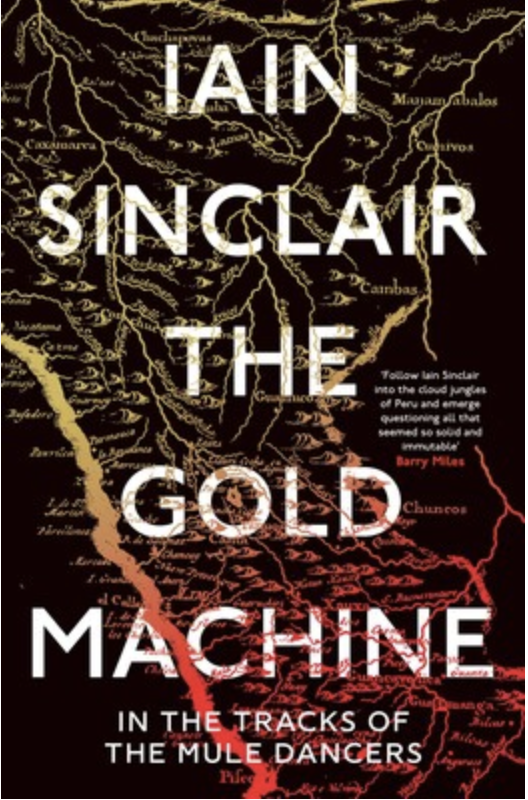
Author Iain Sinclair is famous for pushing and obscuring the boundaries between different media. In this book, he uses his multidisciplinary approach in the service of nonfiction. “The Gold Machine” relays his travels with his daughter through Peru following the trail of his great-grandfather. What he finds is the wreckage wrought by British colonialism and the still-open wounds of a country recovering from history. At once hypnotic and bracing, “The Gold Machine” charts colonialism’s legacy in the most personal of terms.

Ocean Vuong has catapulted poetry into the public spotlight with his arresting voice, palpable heart and his search for passion. He follows his autobiographical debut “On Earth We’re Briefly Gorgeous” with a second poetry collection, which continues the themes he has explored in his earlier poetry and fiction. Written in the wake of his mother’s death, Vuong captures the debilitating stagnation of grief but hints towards the means by which it is overcome. Inspiring, breathtaking and true, “Time Is a Mother” renews the reader’s faith in poetry to tell the heart’s most revealing secrets.

10. Homegoing Yaa Gyasi

As debut novels go, “Homegoing” is ambitious. It covers seven generations of a family’s history, tells that story from fourteen different perspectives and does it all in 300 pages. Despite the odds, the book soars. An almost impossibly moving novel about two sisters prohibited from knowing each other by the structures of British colonialism, Effie and Esi lead vastly different lives but are still in part defined by the racist eras they inhabit. From the Atlantic slave trade to the jazz clubs of Harlem, “Homegoing” captures the grief of the Ghanaian diaspora while illustarting  the beauty and love that emerged from tragedy.


Michael McCarthy

Michael is the CATALYST book editor and curator. His fiction, nonfiction, interviews, and book reviews have appeared in The Adroit Journal, Barzakh Magazine, Beyond Queer Words, and Prairie Schooner, among others. Currently, he is transferring from Haverford College to University of Carlos III in Madrid, Spain, where he intends to major in the Humanities. He is also seeking publication for his poetry chapbook Steve: An Unexpected Gift, written in memory of his late uncle. He can be reached at @michaelmccarthy8026.

Chasing Aurora: Where To See The Northern Lights

From Norway to New Zealand, these five spots are perfect for experiencing the elusive beauty of the Aurora Borealis.

The Northern Lights as seen from the southern coast of Iceland. Cameron Pickett. CC BY 2.0.

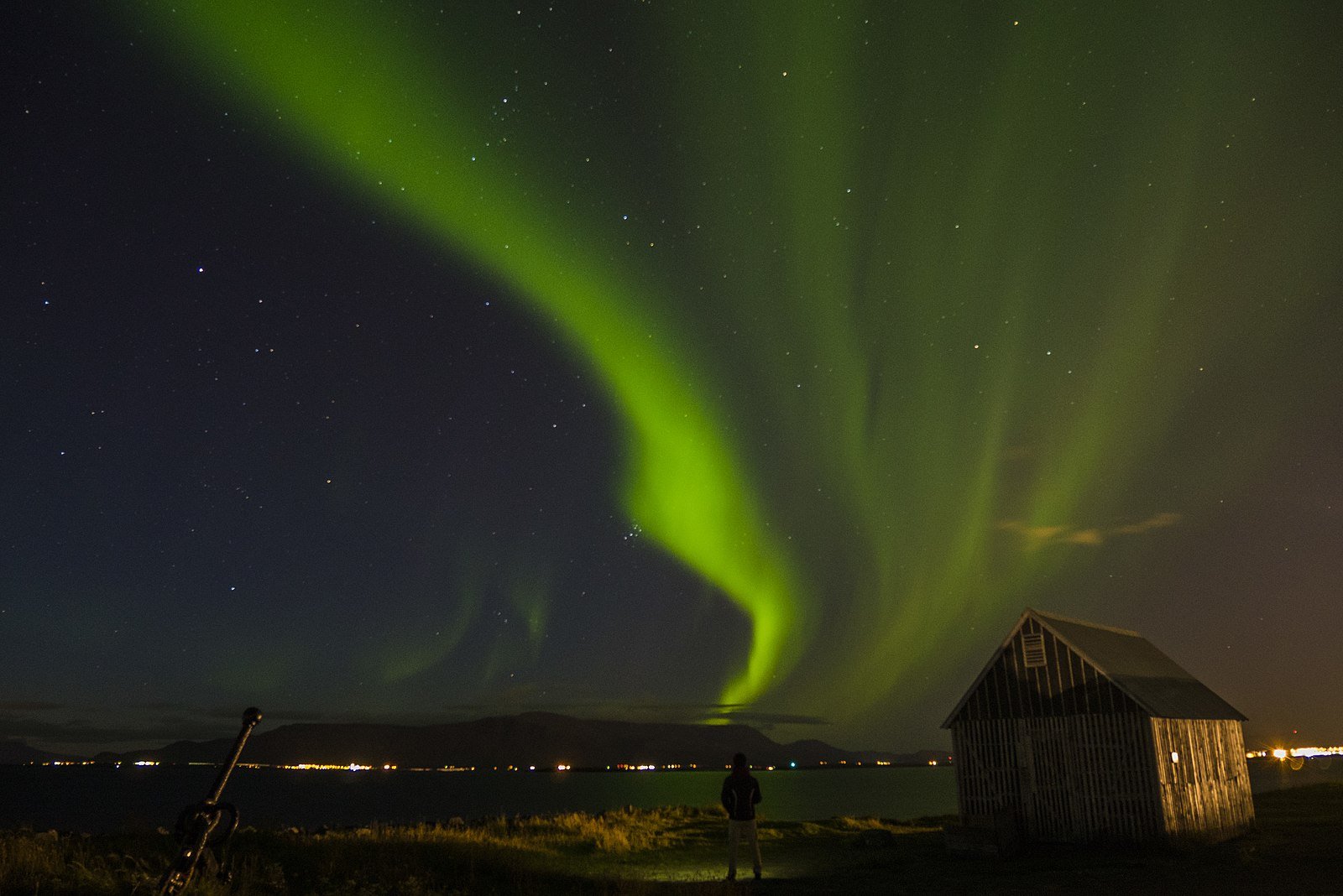
The Aurora Borealis, better known as the Northern Lights, is one of the most magical natural phenomena to witness in person. It is caused by electrical interactions in the upper atmosphere that release waves of normally green and yellow light depending on which elements have reacted. Environmental conditions need to be perfect in order to properly experience the true beauty of the elusive lights, but there are a few locations near the Arctic Circle from which they are easier to spot. Here are five locations with an exceptionally good view for those who are trying to catch a glimpse of the lights, adjusted for the current astronomical layout of the planets and stars.

1. Rovaniemi, Finland

The Northern Lights shining down on the Santa Claus Village in Rovaniemi, Finland. Santa Claus Village. CC BY-NC-ND 2.0.

The city of Rovaniemi is the capital of Lapland, and is also well publicized as being the hometown of Santa Claus. Situated right on the Arctic Circle, it is most easily reachable by plane from Helsinki, though it is also accessible by local trains and buses. Rovaniemi is famous for its natural beauty -- its northern latitude makes it perfect for those wanting to experience the ‘midnight sun’ phenomenon, where our star is visible for a whole 24 hours. The city is the perfect destination for travelers looking to enjoy the Northern Lights, with the optimum viewing times occurring between August and April.

2. Yukon, Canada

The Northern Lights over Kluane Lake, Yukon. Keith Williams. CC BY-NC 2.0.

Located in the north east corner of Canada, the Yukon territory is home to almost 22,000 square kilometers (around 8,500 square miles) of protected land as part of the Kluane National Park and Reserve. Visitors can reach the park by plane, boat or car to visit the country’s largest ice field, an incredible grizzly bear population, and even Mount Logan, Canada’s highest peak, which stands just under 6,000 meters (around 19,685 feet) tall. While the Northern Lights can be seen from most of Canada’s provinces, the display is visible to those in the Yukon from August to April, making it one of the longest viewing seasons in the country.

3. Reykjavík, Iceland

The Northern Lights seen from a small cabin just outside of Reykjavík, Iceland. Davide Cantelli. CC0.

The Icelandic capital of Reykjavík is by far the largest city in the country and is also one of the best places to watch the Northern Lights. Just a few degrees south of the Arctic Circle, many residents of the city claim to see the display from their windows on especially bright nights. Visitors can fly directly into the city’s airport and enjoy various other outdoor activities including icy glacier hikes, swimming in natural hot springs during the day and venturing to Thingvellir National Park, which is just a short drive from the city to see the aurora. Though brighter auroras can be seen from the city, avoiding light pollution makes it much easier to experience the full display between September and April.

4. Tromsø, Norway

The Northern Lights shining over the mountains in Tromsø, Norway. Maria Wulff Hauglann. CC BY-NC 2.0.

Located in the heart of the northern aurora zone, the Norwegian city of Tromsø is most well-known for its view of the Northern Lights. Visitors can book one of the many available aurora tours hosted by guides who have expert knowledge of the best local sites from which to watch the display. Many of these base camps offer excellent viewing of the lights from September all the way till April. Tromsø is just a quick 3.5 hour flight from London for those wanting to experience the local Sami culture, or for those simply looking to indulge themselves in the city with the most bars per capita than any other in Norway.

5. Kiruna, Sweden

The Northern Lights as seen from the town of Kiruna in Swedish Lapland. Martin Eklund. CC0.

The wilderness of Swedish Lapland is perfect for those looking to enjoy the Northern Lights away from other tourists. Additionally, the complete lack of light pollution allows for a particularly vibrant viewing. As the northernmost city in Sweden, Kiruna is located well within the Arctic Circle and is home to the largest underground iron ore mine in the world. The town also neighbors Jukkasjärvi, a town made recently famous for its hotel made entirely of ice. Visitors who stay here can typically enjoy the lights between September and March, though the season can often begin slightly earlier and end slightly later.

Bonus: Queenstown, New Zealand

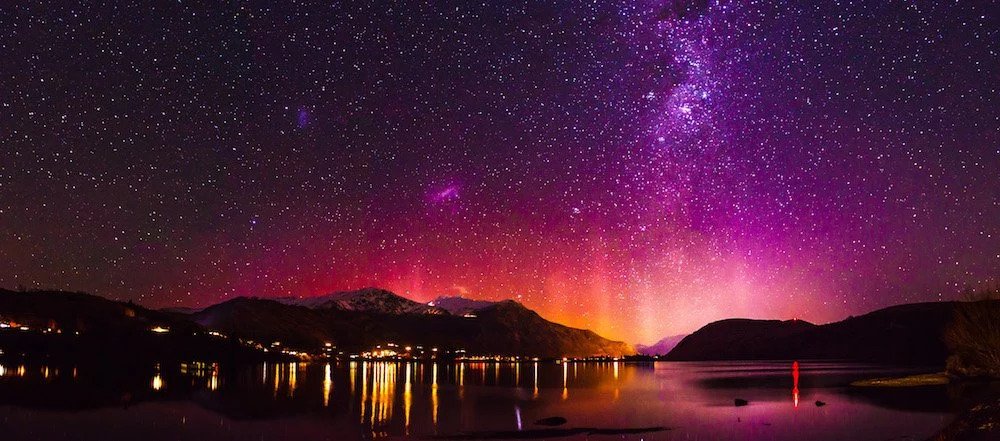
The Southern Lights captured near Queenstown, New Zealand. Bec Potter. CC BY-NC-ND 2.0.

This final destination highlights the resort town of Queenstown on New Zealand’s South Island. Unlike the other places on this list, it is a perfect place to experience the natural phenomena known as the Aurora Australis or the Southern Lights. This aurora is similarly caused by interactions between molecules in the upper atmosphere, which release waves of light across the night sky, though the Southern Lights tend to appear red and pink. This is due to the types of gas that are interacting and the atmospheric height at which the interactions take place. Visitors can fly straight into Queenstown’s international airport and enjoy the natural beauty of the nearby Lake Wakatipu during the day, before settling in to watch the display at night.


Tanaya Vohra

Tanaya is an undergraduate student pursuing a major in Public Health at the University of Chicago. She's lived in Asia, Europe and North America and wants to share her love of travel and exploring new cultures through her writing.

Crazy Rock Formations, Lofty Cliffs and Sea Views: 5 Sites to Visit in Ireland

Ireland has an endless array of once-in-a-lifetime natural sites to visit, and here are the top five to add to your list. 

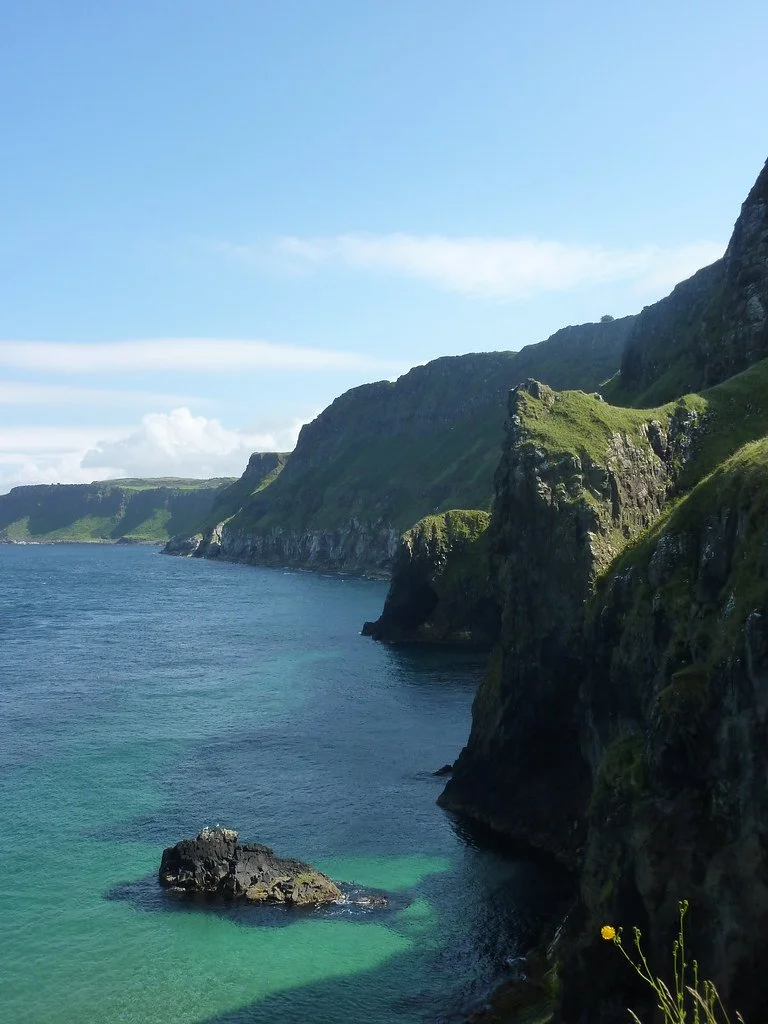
Giant’s Causeway, Northern Ireland. Sean MacEntee. CC BY 2.0. 

Ireland has several natural sites that beautifully reflect almost unbelievable geographical occurrences from hundreds to thousands of years ago. Some of these sites include towering cliffs overlooking the Atlantic Ocean and rock formations created by causes ranging from volcanic activity to major storms on the sea. Below are five of the most stunning natural sites that Ireland has to offer, and the unique features of each one. 

1. Giant’s Causeway

Giant’s Causeway. Sean MacEntee. CC BY 2.0.

Giant’s Causeway is the only UNESCO World Heritage site in Northern Ireland, boasting a cliff made up of around 40,000 basalt columns overlooking the sea. These columns are believed to have been formed 50-60 million years ago as the result of volcanic activity. The columns are especially impressive, as in certain places they line up almost perfectly to create the appearance of a flat pavement. While scientists know the true story of how Giant’s Causeway was formed, a famous legend attributes the columns to a feud between an Irish and Scottish giant. The legend states that the Scottish giant created a stone pathway to cross the sea to Scotland, and the Irish giant destroyed the pathway, creating Giant’s Causeway. In terms of accessibility to travelers, Giant’s Causeway is a good destination because it is free to hike, unless one wants to use certain visitor’s services such as parking. 

2. The Cliffs of Moher

Cliffs of Moher. Martin Abegglen. CC BY-SA 2.0. 

The Cliffs of Moher, spanning a massive 14 kilometers, are famous for their abrupt edge, which falls vertically into the Atlantic Ocean. The Cliffs of Moher offer many beautiful views and experiences such as stunning sunsets, a look-out tower from the 1800s and walking trails throughout. Some even recommend viewing the cliffs from below, by boat. Unlike Giant’s Causeway, the Cliffs of Moher are not free to enter, but only cost eight euros for adults. A fun fact about the Cliffs of Moher is that a scene in the sixth Harry Potter movie was shot there, which emphasizes how striking and magical these cliffs are.  

3. Sliabh Liag

Sliabh Liag. Greg Clarke. CC BY 2.0. 

Sliabh Liag (pronounced “sleeve league”) is another set of cliffs in Ireland overlooking the Atlantic Ocean. The Sliabh Liag cliffs are less famous than the Cliffs of Moher, but they are just as stunning. In fact, they are Ireland’s highest cliffs overlooking the sea — almost three times as tall as the Cliffs of Moher — despite being less well-known. The cliffs have both driving and hiking routes and are free to visitors

4. Carrauntoohil

Carrauntoohil. Tom Fahy. CC BY-NC-ND 2.0. 

Carrauntoohil is Ireland’s highest mountain, standing at 1038 meters (3,407 feet). Carrauntoohil is a popular destination for hikers and rock climbers, with several different trails of differing difficulty to choose from. Like Sliabh Liag, it is also a free destination. There are four main trails: Brother O’Shea’s Gully Trail, Devil’s Ladder Trail, the Caher Trail and Coomloughra Horseshoe Loop. These trails have combinations of climbing and hiking, and on average take between four and eight hours to complete. While Carrauntoohil is a popular destination, it is considered difficult to complete one of the trails, and hiking experience is recommended. Travelers are also advised to plan well for their hike, bringing ample food and water, checking the weather and going with a tour group or guide if they are inexperienced. 

5. Dun Briste

Dun Briste. Diego Sideburns. CC BY-NC-ND 2.0. 

Dun Briste is an incredible naturally occurring rock formation that stands straight up out of the sea. It is commonly referred to as a “sea stack” due to its unusual shape and is thought to have been formed in 1393, which is extremely recent for a rock formation to have been formed. It is believed that there was an archway connecting Dun Briste to land which collapsed. The rock formation is a one-of-a-kind naturally occurring site and is also a haven for birds, as animals that don’t fly aren’t able to reach it. Thus, birdwatching is one of the most popular activities for travelers viewing Dun Briste.


Calliana Leff

Calliana is currently an undergraduate student at Boston University majoring in English and minoring in psychology. She is passionate about sustainability and traveling in an ethical and respectful way. She hopes to continue her writing career and see more of the world after she graduates. 

The Trans-Siberian Railway and the Lost Art of Train Travel

The Trans-Siberian Railway, the longest railroad  line in the world, is an example of the joy that train travel can bring.

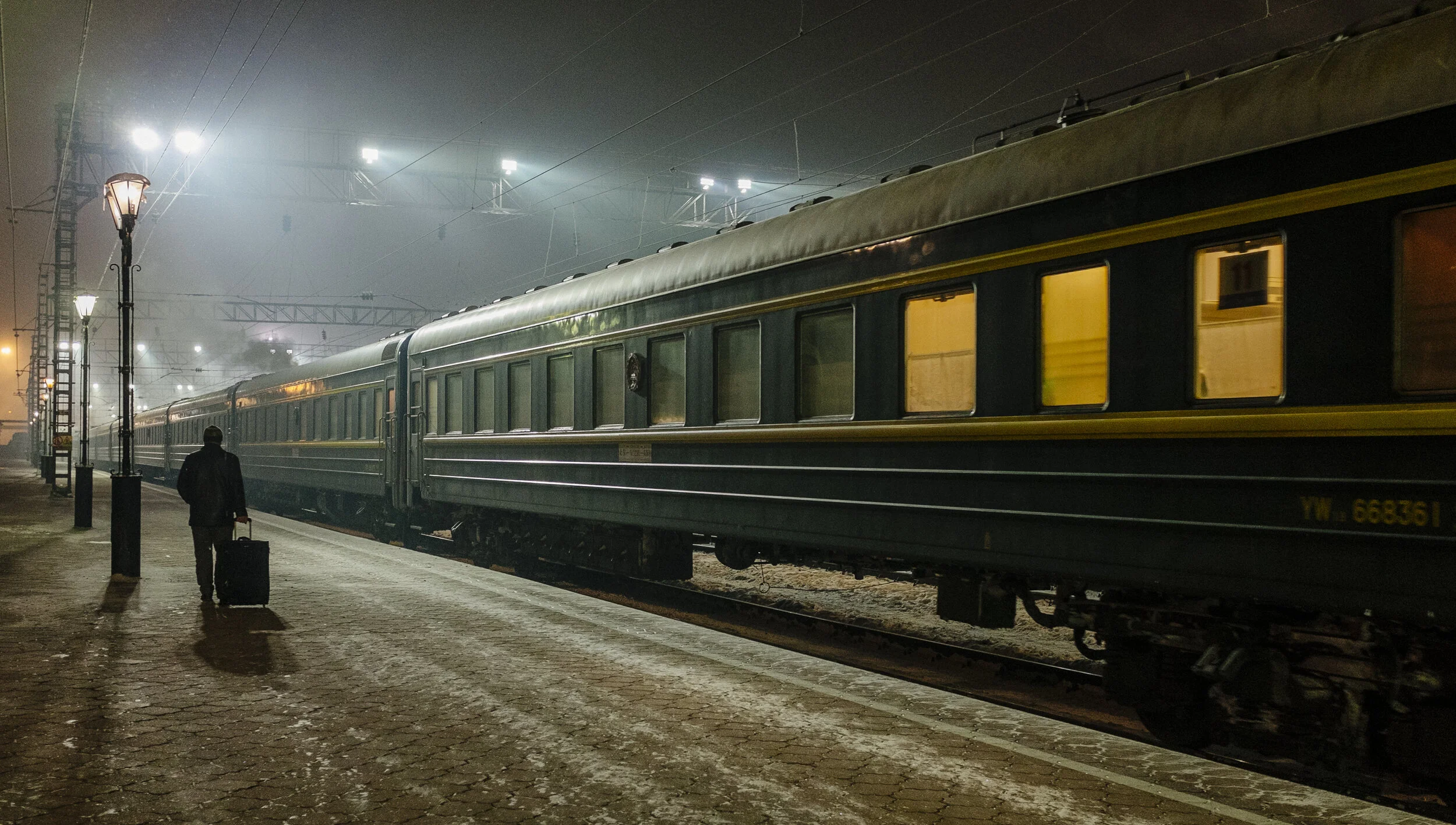
The Trans-Siberian Railway passes through Dornogovi, Mongolia. Boccaccio1. CC BY-NC-SA 2.0.

The popularity of railroad travel has diminished in the modern age. Cars allow for a freedom of movement that would be impossible on a train, and airplanes take the traveler farther and faster than railroads could dream of. The role of trains in the last 75 years has seemingly become filling in the gaps left by other forms of transportation. Stiff and awkward journeys of a few hours, connecting two cities with sterile cars and rusty tracks, are far too common, at least in the United States. But the beauty of a train trip is still attainable. Travelers can get a Eurail pass and travel across Europe, or take a private railway through rural Japan. Or they can do one better, and take the Trans-Siberian Railway.

Although it is actually a single collection of routes within the massive Russian rail network, the Trans-Siberian Railway is famous in its own right. It is the longest railway line in the world, with its longest route connecting Moscow and Vladivostok over 5,772 miles. It is also historic; the railway’s construction began in 1891 when Russia was still a Tsarist state, and it continues to be developed today.

Russia, especially Siberia, is not a place noted for its tourism. Yet the Trans-Siberian stands as a shining light in the nation’s wintery darkness. The railway is cheap, comfortable and most importantly, gives you that rollicking, adventurous spirit that only good train trips can.

A Trans-Siberian trip is also extremely flexible. One can start at St. Petersburg or Moscow and head east, or start in the east at Vladivostok or Beijing. Trains from Europe connect to the Trans-Siberian in St. Petersburg and Moscow, which means that it is possible to take a train trip from Paris all the way to the eastern coast of Asia.

The Trans-Siberian Railway in Irkutsk. Wazari Wazir. CC BY-NC-SA 2.0.

Something that differentiates railways from other modes of travel is that you can, and are supposed to, get off. The Trans-Siberian is no different. There are incredible landmarks at every stop on the journey; it’s easy to arrange to check out the ice lakes in Irkutsk or to visit the Naadam festival in Ulaanbaatar over the course of your trip.

Stepping off the train and seeing Siberia is part of the fun, and every traveler who rides the Trans-Siberian is encouraged to at least walk around a bit while the train is stopped at each station. But the train itself is an enjoyable space to live in. There are a few different options to choose from when buying tickets: most travelers choose second class (known as “kupé”), which reserves a spot in an air-conditioned car with four beds, but there is also the pricier first class (“spalny vagon”), a car with two beds, and third class (“platskartny”), an open car stuffed with fifty-four bunks. Travelers are sure to meet people in whatever class they choose, as late nights spent in the restaurant car playing cards and drinking vodka are common. Platskartny is probably the most genuine Trans-Siberian experience, as you will be surrounded by Russian commuters and travelers. But platskartny is also quite cramped and noisy, and the privilege of having a semi-private bathroom is lost. It is something to consider before you snap up a super-cheap ticket.

The Trans-Siberian Railway is not a tourist line; it is a real, historic railway that people around Asia use to see their families and take vacations themselves. As such, one should treat it and the people on it with respect. One should also do some more research about the train before planning a trip; there are many helpful websites with information about the Trans-Siberian, such as Seat 61’s extensive article

The Trans-Siberian Railway, overlooked to many outside Asia, is perhaps the last vestige of old-fashioned rail travel. As a consequence, it has a unique effect on the land it passes through. The secrets of Siberia would stay unseen on an airplane over 30,000 feet in the air. But n the railway, the place has no choice but to reveal itself. 


Finn Hartnett

Finn grew up in New York City and is now a first-year at the University of Chicago. In addition to writing for Catalyst, he serves as a reporter for the Chicago Maroon. He spends his free time watching soccer and petting his cat.

7 Real Life Locations In Great Works of Art

It is not necessary to go to a museum to experience the awe of a painting—try visiting the actual locations they were based on instead.

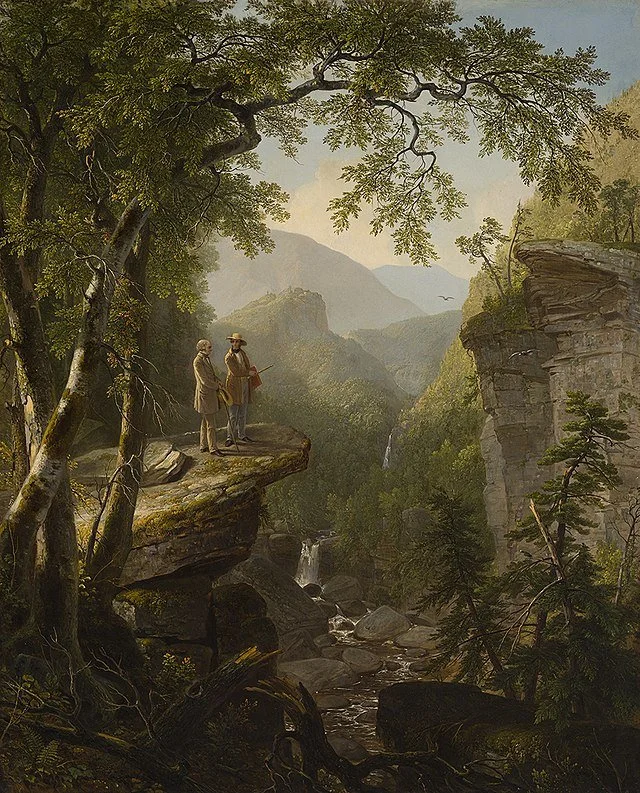
Kindred Spirits by Asher Brown Durand is a painting set in the Catskill Mountains of New York. Asher Brown Durand. CC0 1.0.

Museums and galleries are prime places to see great works of art. There are long lines at the Louvre in Paris, the Metropolitan Museum of Art in New York and the Uffizi Galleries in Florence. But you do not need to be in a museum to experience a painting. Many famous works of art are based on real life locations that visitors can explore for themselves.  It is often possible to experience the same emotions that the original artist felt when painting the subject. Here are 7 real life locations of famous paintings that you can visit.

1. The Dibble House, Iowa, United States

American Gothic. mark6mauno. CC BY 2.0.

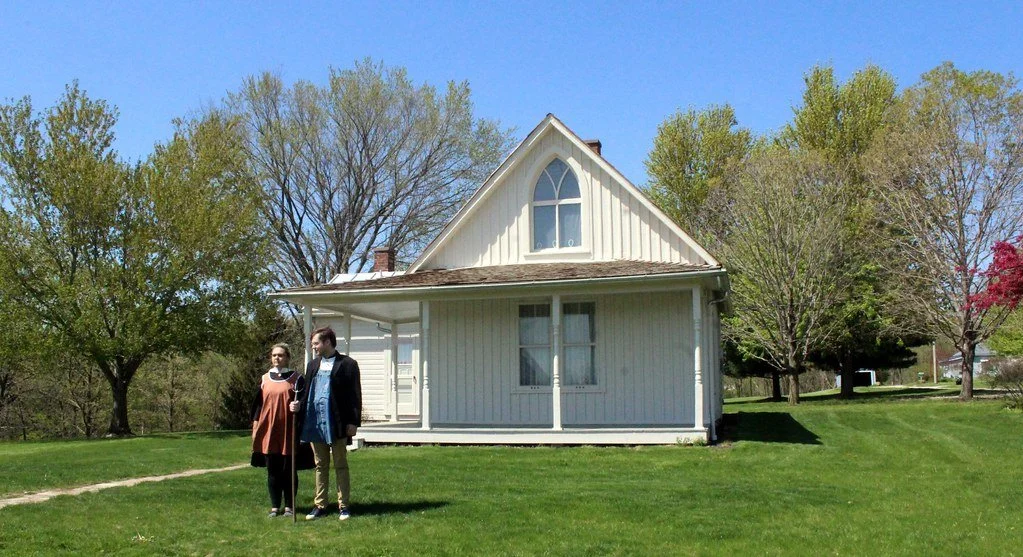
Dibble House. photo librarian. CC BY-NC-ND 2.0.

In the summer of 1930, Grant Wood was driving around Eldon, Iowa when he noticed the Dibble House. It was not a beautiful house to Wood, but he found it captivating due to the absurdity of putting a gothic-style window in such a flimsy house. He made a sketch of the house and the final product became “American Gothic”, a famed work illustrating small-town America. Today, visitors are welcome to visit the house and have their photo taken outside, usually with the provided jackets to make it look like a reenactment of the famous painting. Next door is also the American Gothic House Center, which hosts exhibits on the famous painting.

2. Arles Cafe, France

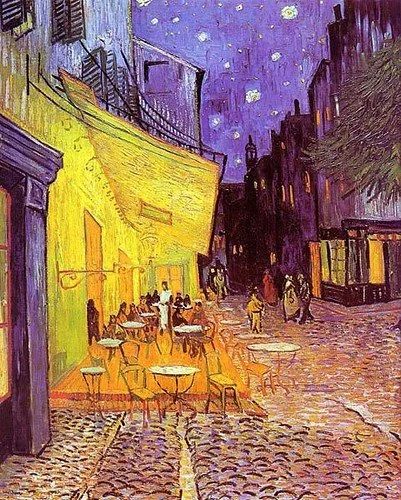
Cafe Terrace at Night. Greg_e. CC BY-NC-SA 2.0.

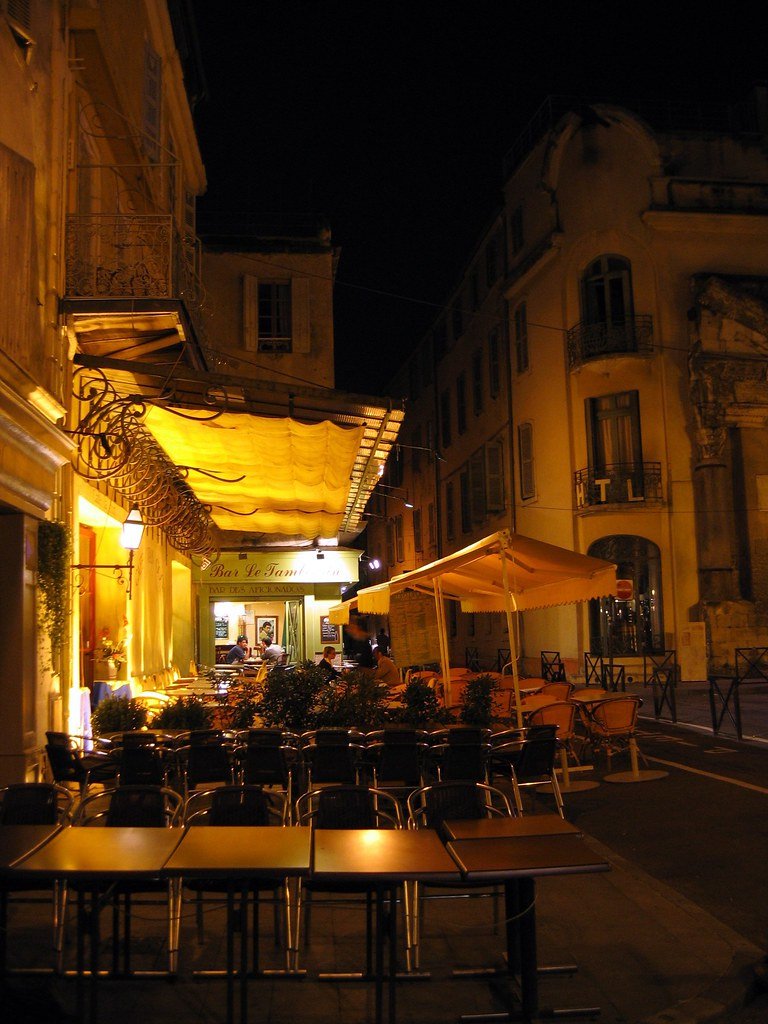
Arles cafe. Greg_e. CC BY-NC-SA 2.0.

Arles is the town most closely associated with Vincent Van Gogh. He lived there from 1888 to 1889, where he painted some of his most famous post-impressionist pieces, including the “Cafe Terrace at Night”. The setting of that work is the Cafe du Forum and is now called the Cafe La Nuit, which still exists today on the Place du Forum in Arles. That cafe was refurbished so that it looks exactly like how Van Gogh would have seen it. Gas lamps still light the site. Van Gogh also painted a companion piece of the interior of the same cafe. Today, visitors can experience the cafe and Arles much like how Van Gogh would have seen it.

3. Mount Holyoke, Massachusetts, United States

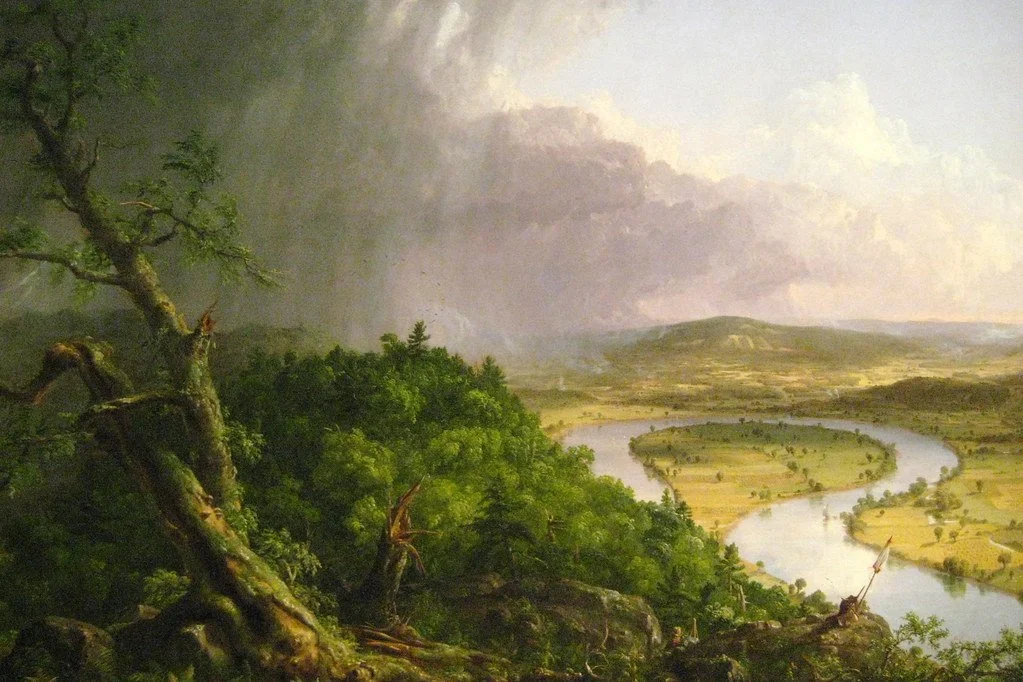
The Oxbow. wallyg. CC BY-NC-ND 2.0.

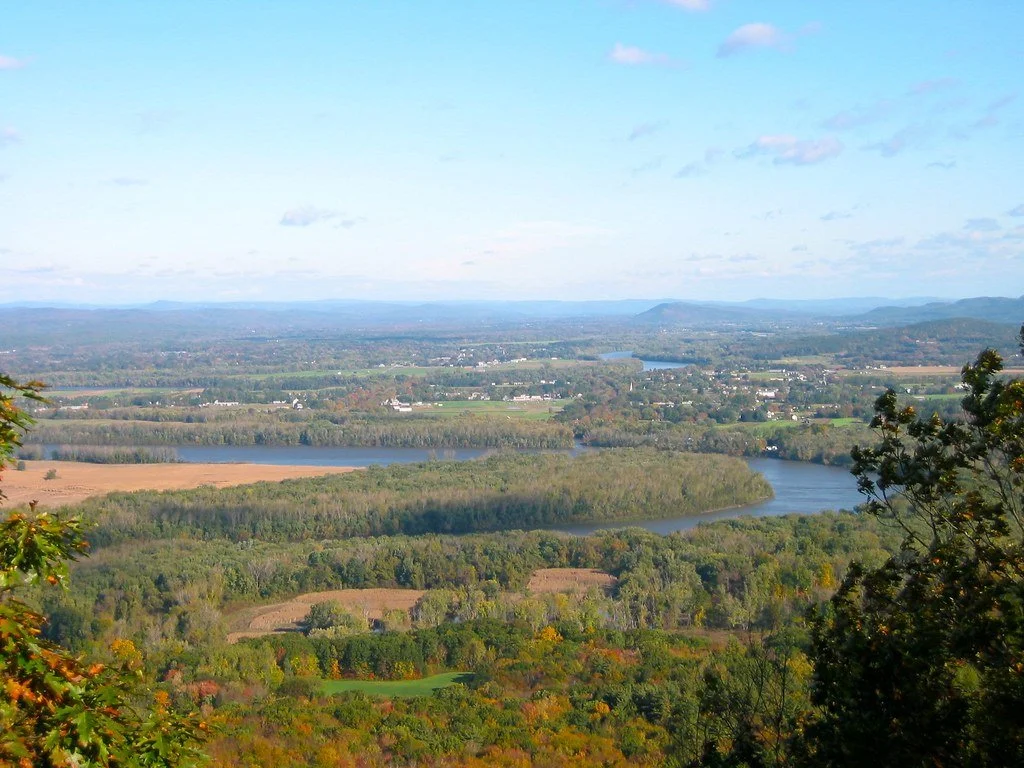
Mount Holyoke. pecooper98362. CC BY-NC 2.0.

Thomas Cole was one of the chief proponents of the Hudson River School, a school of art that specialized on landscape paintings in the early American republic. At that time, a uniquely American art-style was being created, and in his work “The Oxbow”, exemplifies that. That painting shows Mount Holyoke and a view that shows Americans conquering the wilderness. The view from the mountain today is much different than the one in Cole’s painting, as the area around it is much more built up, but the mountain itself is part of Skinner State Park. A road brings visitors up the mountain in the summer months and a number of hiking trails criss-cross the mountain.

4. Valley of Mexico, Mexico

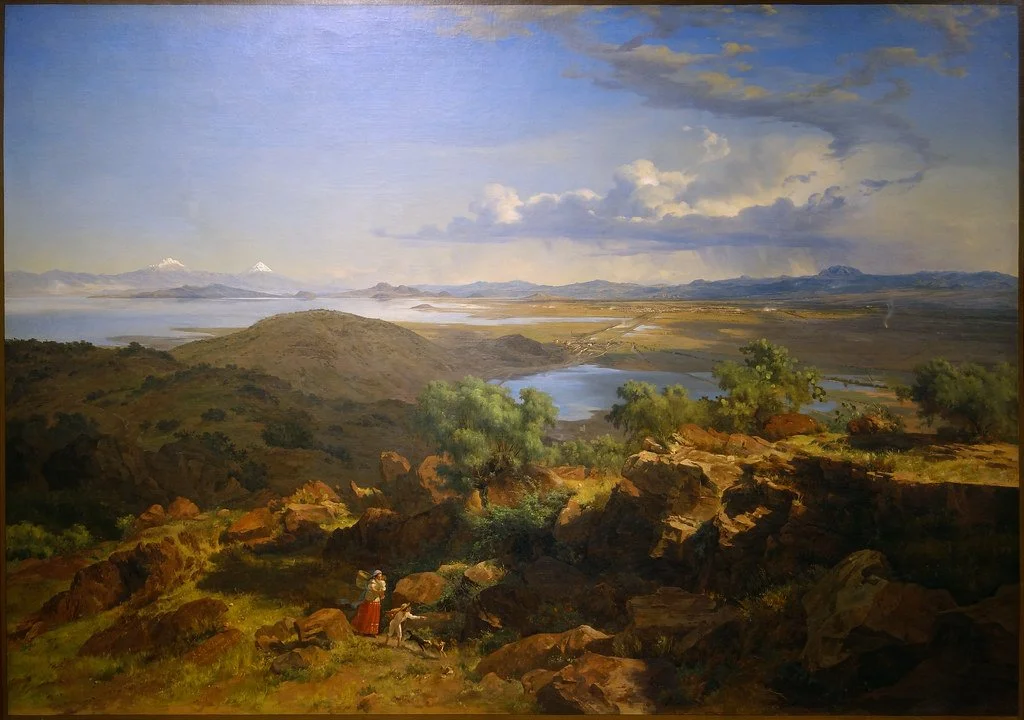
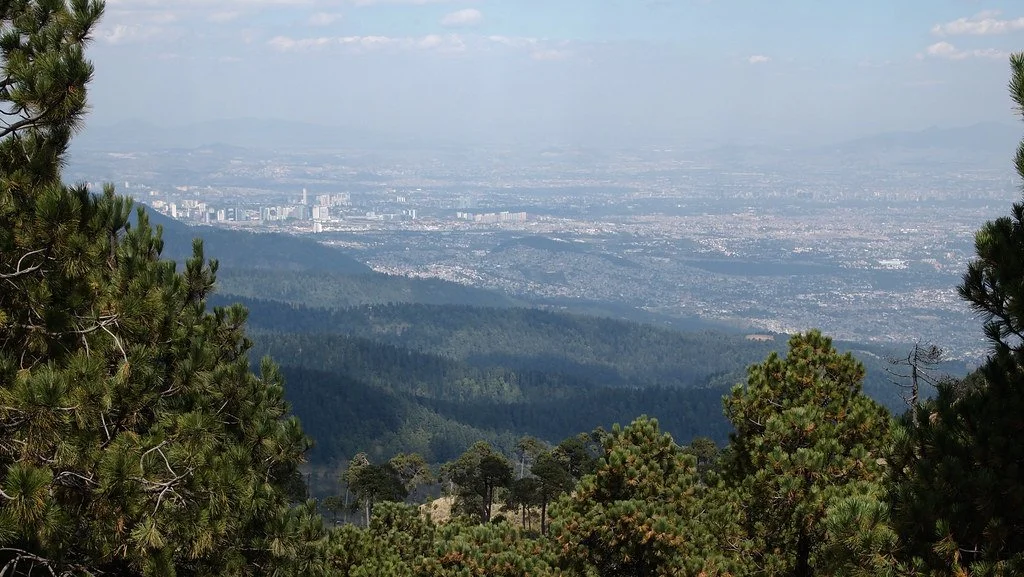
The Valley of Mexico from the Hillside of Santa Isabel. profzucker. CC BY-NC-SA 2.0.

The Valley of Mexico. Gary Denness. CC BY-NC-SA 2.0.

Similar to the Hudson River School, art in Latin America during the 19th century was also used to inspire nationalism. Jose Maria Velasco painted a landscape of the Valley of Mexico from the hillside of Santa Isabel to exemplify that nationalism. That landscape combines pre-Columbian symbols to represent a shared Mexican heritage. That valley today is built up as it is the location of the sprawling Mexico City. However, the hills above the valley offer stunning views of the area. Desierto de los Leones National Park, located 3.2 kilometers southwest of the city, offers panoramic views that gives a glimpse of what Velasco saw when he painted “The Valley of Mexico from the Hillside of Santa Isabel”.

5. Giverny Gardens, France

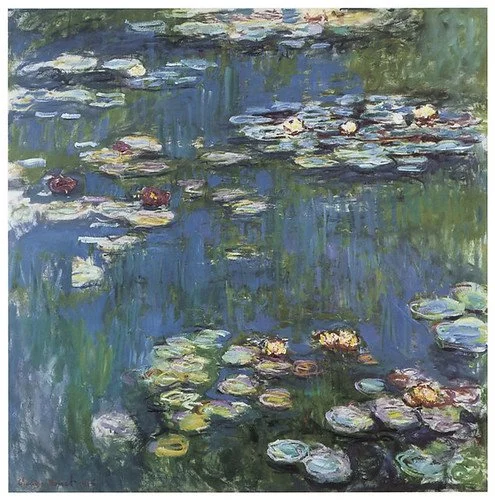
Waterlilies. Art That Inspires. CC BY-NC 2.0.

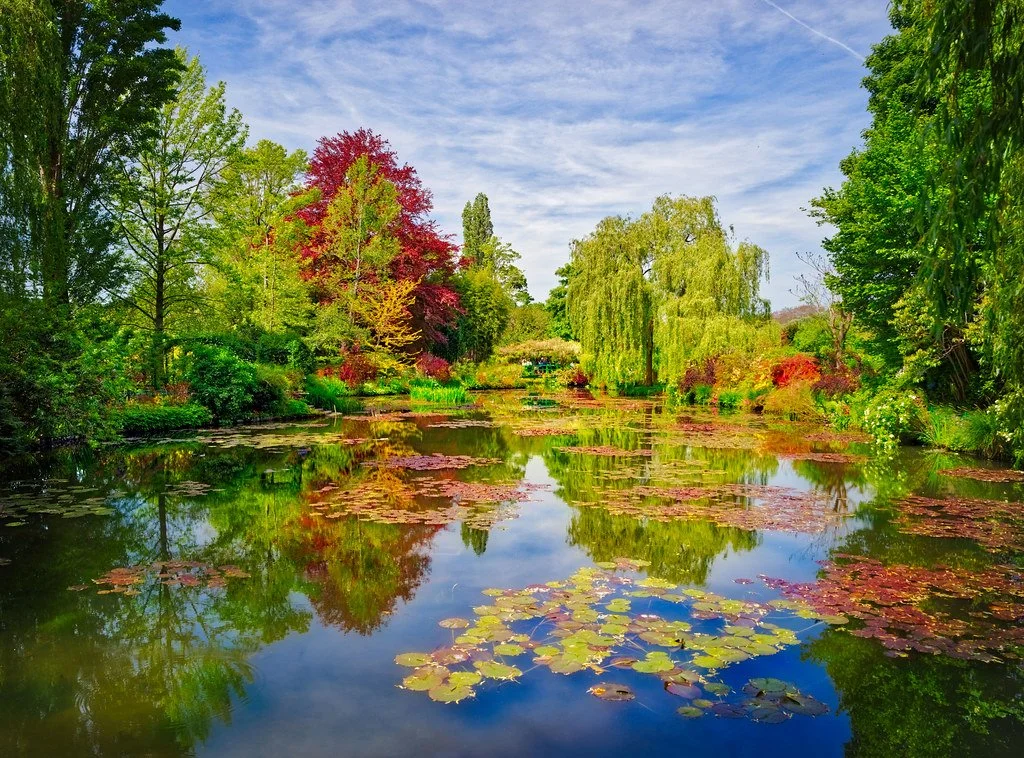
Giverny gardens. Trey Ratcliff. CC BY-NC-SA 2.0.

Claude Monet was the pioneering impressionist painter, shocking the art world with his visible brush strokes. One of his most famous works is “Water Lilies”, a collection of paintings of waterlilies in his garden in Giverny, France. Today, Monet’s home and gardens in Giverny can be toured by visitors. He had a garden called the Clos Normand in front of his home and a Japanese-inspired garden across the street, where visitors can admire its natural beauty. Much of his paintings from the “Water Lilies” series are based on his Japanese garden. 

6. Mount Fuji, Japan

The Great Wave Off Kanagawa. kendo_. CC BY-NC-ND 2.0.

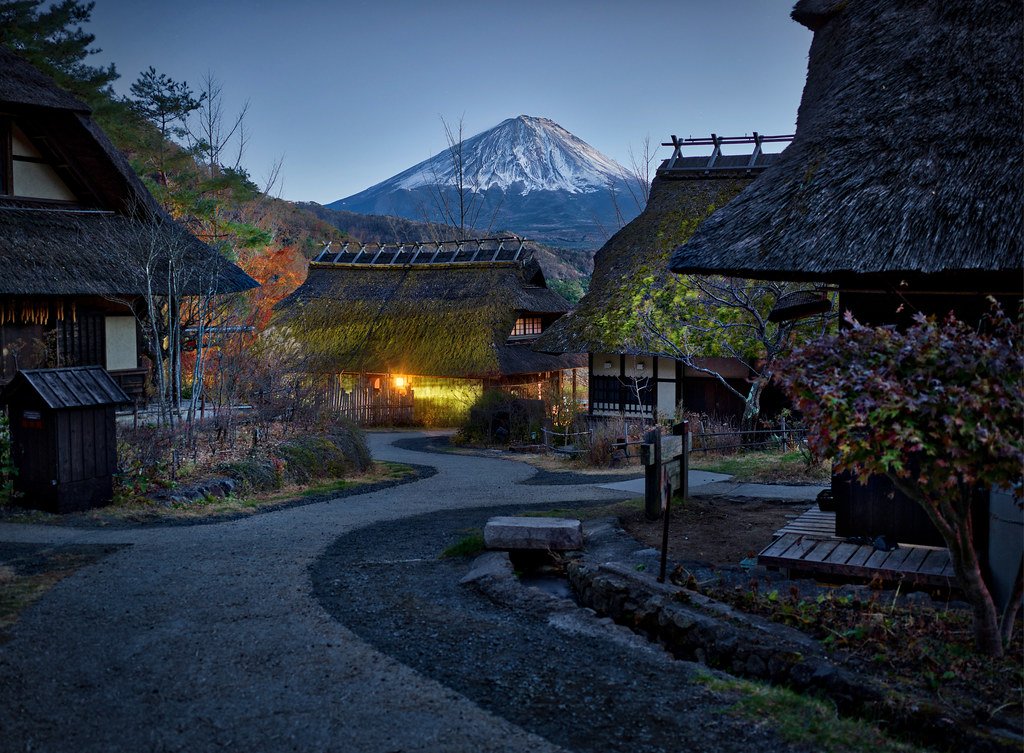
Mount Fuji. Trey Ratcliff. CC BY-NC-SA 2.0.

“The Great Wave Off Kanagawa” is arguably one of the most well-known Eastern works of art, but most people do not know that it is part of the series 36 Views of Mount Fuji by Katsushika Hokusai. While in “The Great Wave, Mount Fuji only appears as a small cone in the horizon, almost blending in with the other wave crests, in other prints of the series, Mount Fuji gets a more pronounced position. Being the highest mountain in Japan and holding a special place in Japanese culture, Mount Fuji is easily accessible to visitors. The mountain is easily viewable from the shinkansen between Tokyo and Nagoya, but for a closer look, visitors can head to the Fuji Five Lake region at the northern base of the mountain. Mount Fuji is open to climbing in the summer months on some seasonal routes.

7. The Delft House, Netherlands

The Little Street. Gandalf’s Gallery. CC BY-NC-SA 2.0.

Delft House. 1Veertje. CC BY-SA 3.0.

Johannes Vermeer only has less than 40 paintings still in existence, but he is still considered one of the greatest Dutch painters. His painting “The Little Street” attracted researchers trying to pinpoint its exact location for centuries. Now, art historians and other researchers believe that the site of 40-42 Vlamingstraat, in Delft, Netherlands, is the location of the work. Researchers used tax records to narrow down the location in Vermeer’s hometown of Delft. The original buildings in the painting no longer exist, but a gate still exists. It is not possible to enter the buildings, but visitors can still imagine what the area was like in the 17th century when Vermeer worked.


Bryan Fok

Bryan is currently a History and Global Affairs major at the University of Notre Dame. He aims to apply the notion of Integral Human Development as a framework for analyzing global issues. He enjoys hiking and visiting national parks.

Electric Planes: The Future of Air Travel?

United Airlines and Mesa Airlines are buying electric aircrafts from a Swedish startup, to make air travel more eco-friendly.

United ES-19. Wikimedia Commons. CC BY-SA 4.0.
In July, United Airlines announced that they would be buying ES-19 planes. They plan on purchasing 100 of these 19 seat, zero emission planes from a Swedish company called Heart Aerospace. United plans on being able to use these planes by 2026. Since they can only carry a small amount of people, these planes would be used mostly for short distance flights. They have routes planned from their major hubs, such as from Chicago O’Hare International Airport to Purdue University Airport and another route from San Francisco International Airport to Modesto City-County Airport. Heart Aerospace claims that around 4% of emissions around the world come from flights that are less than 200 kilometers (124 miles), and 9% are from flights less than 400 kilometers (250 miles). Using electric planes for these shorter distances would be beneficial in lowering these emissions, which is United Airlines’ plan. They have a goal to reduce 100% of their greenhouse gas emissions by 2050. They also want to achieve this without using the traditional carbon offsets, which are projects for reducing a person’s carbon footprint. These offsets are projects like planting a certain number of trees, improved forest management or capturing greenhouse gas emissions coming from a landfill. There are online calculators that calculate how much carbon dioxide a person is producing by going on a plane somewhere and estimating how much they need to do to cancel it out. United Airlines’ goal is to significantly reduce their carbon emissions without resorting to projects like these. 

They are not, however, the only airline that wants to reduce their emissions. Mesa Airlines, a regional American airline, has partnered with them and has purchased the same amount of ES-19s. The CEO of Mesa Airlines, Jonathan Ornstein, has spoken about the opportunities of the electric aircrafts and that it should cost less to operate. Some areas are too small and too close to large cities to have flights, but they  can operate profitably with electric planes.Since these electric planes are so small and will cost less to operate, it can become a viable method of transportation to these smaller cities, making it easier to bring people into these areas. 

Heart Aerospace, the company manufacturing the ES-19s, believes that electric aircrafts are the solution to lowering carbon emissions caused by air travel. Those emissions make up around 2% of global emissions overall, and by 2050, that number is expected to increase to between 12%-27%, and eliminating the emissions caused from short distance flights with electric planes can prevent that. Since the planes are small, they can use small runways that are more common in smaller cities, and it will be beneficial to them as it will be easier for people to travel. Also, like Ornstein said, the planes will be much cheaper to maintain as the electric motors reduce the cost of maintenance by 90%, and fuel costs will decrease between 50%-70%.

Beyond Heart Aerospace, there are other companies developing electric planes. Wright Electric is one of them, and they are developing a 100 seater plane to be released in 2026. They are also developing one that will have 186 seats and will be able to fly 800 miles, but that is estimated to be completed in 2030. Many other companies are researching electric aviation, as they believe it to be the future of air travel. Even NASA has been researching this, having developed and begun flying their X-57 electric airplane. Airline companies are conscious of their large environmental impact, and many large ones have agreed to participate in the UN’s plan to have net-zero carbon emissions by 2050. The use of electric aircrafts would help these companies a lot in reaching this goal, and because of this, the Swiss Bank USB believes that by 2035, a quarter of air travel will be electric.


Katherine Lim

Katherine Lim is an undergraduate student at Vassar College studying English literature and Italian. She loves both reading and writing, and she hopes to pursue both in the future. With a passion for travel and nature, she wants to experience more of the world and everything it has to offer.