
By Kate Dawson
A nation celebrated for hospitality and growth is being choked by the world’s discarded electronics and the dangerous labor they demand.
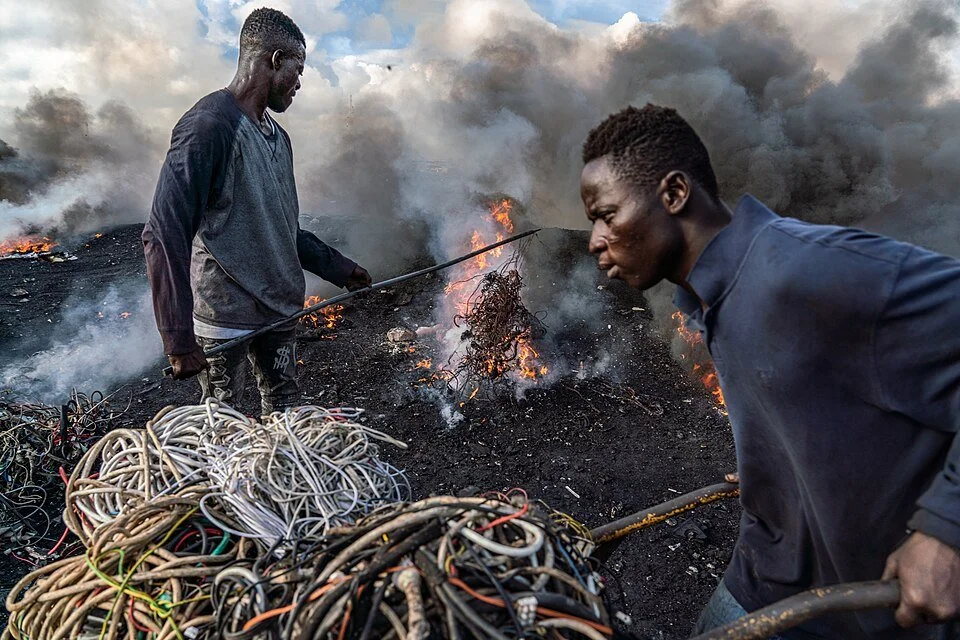
Two men collecting wires to burn in a scrapyard. Muntaka Chasant. CC BY-SA 4.0.
A vibrant West African nation, Ghana is globally renowned as the world’s second-largest producer of cocoa powder, a major exporter of gold and rich in cultural heritage.
It is difficult to imagine a country celebrated for its warm hospitality, with a flourishing economy and strong democratic stability facing devastation from massive electronic waste, also referred to as e-waste. E-waste is classified as any discarded electrical or electronic device, such as old smartphones, computers and televisions. These can be both broken and working items that are unwanted.
The problem with e-waste is that electronics contain dangerous heavy metals like lead, mercury and cadmium that have leaching properties. At the same time, they contain valuable precious metals like gold, silver and copper that can be recovered.
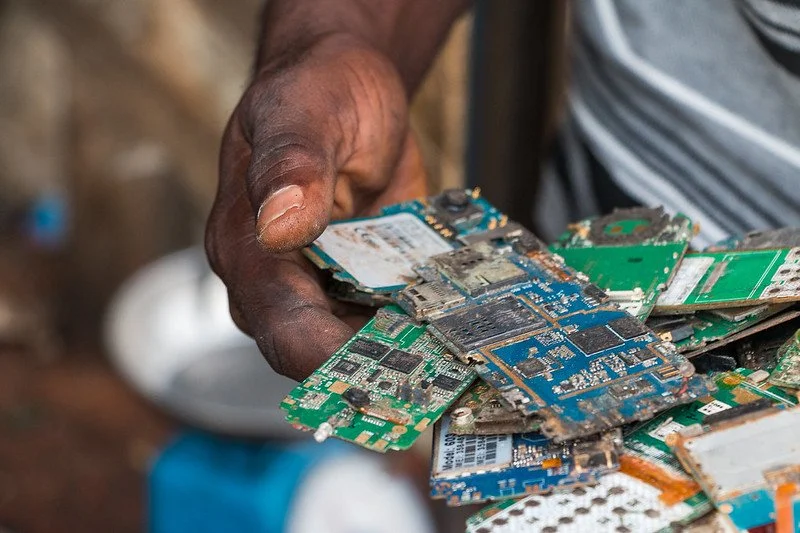
Man showing device chips collected from e-waste. Fairphone. CC BY-NC 2.0.
In Agbogbloshie, the e-waste is discarded in a massive open-air scrapyard. This location is one of the world’s largest sites for processing this kind of waste.
An open-air e-waste site undergoes informal and hazardous processing that often includes manual dismantling, open burning and acid bathing to extract valuable metals. It is these unsafe methods that release severe toxins into the air, soil and water. Since the Agbogbloshie location opened, workers face severe interconnected health, economic and social pressures due to the unsafe processing of global e-waste.
Workers burn plastic coatings from copper wires using car tires to keep fires continuously burning. This exposes both workers and residents to fine particulate matter at levels five times higher than the World Health Organization safety guidelines.
The toxic dust and chemical leaching leave residents with elevated levels of lead, mercury and cadmium in both their blood and urine. This significantly increases the risk of developing respiratory diseases, neurological damage and cancer.
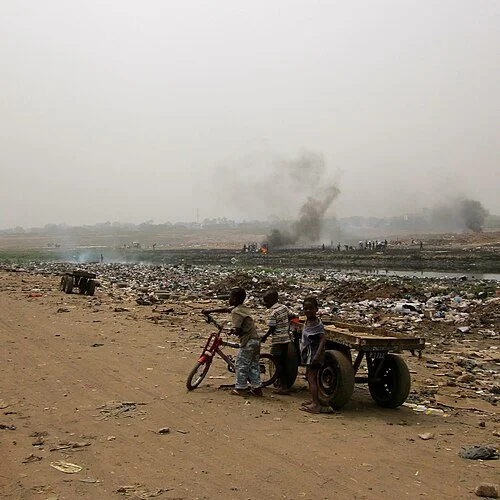
Children riding through Agbogbloshie landfill. Lantus. CC BY 2.0.
The challenge to this toxic cycle is that many workers are internal economic migrants fleeing extreme poverty and conflict in the northern parts of Ghana. Extracting metals like copper is often their only pathway to making a living, which leaves few choices for these individuals other than tolerating extreme toxicity.
Even global chains supported by wealthier nations are caught exporting damaged electronics by labeling them as charitable donations. It is then that local workers bear the brunt of the physical destruction, while international supply chains profit from the recovered minerals.
The vulnerable workforce is left burning waste in hopes of finding valuable parts.
Muhammad, 21, was interviewed in a 2023 documentary covering a week in Ghana’s toxic waste dump. He traveled from the north to come to the site and work with a team to split profits made from selling copper.
The days working in the scrapyard are long and grueling. They will burn wires for 9 hours a day, working close to fire and inhaling smoke constantly.
“It pays just enough to buy food and rarely more…the waste site is an assault on the senses–but it’s only half the story.”
In places like Agbogbloshie, the human cost of the global e-waste trade is impossible to ignore. What arrives as supposed donations turns into a cycle of extraction in which young men like Muhammad inhale the smoke, endure the burns and shoulder the danger so that distant supply chains can benefit from the value of this punishing labor.
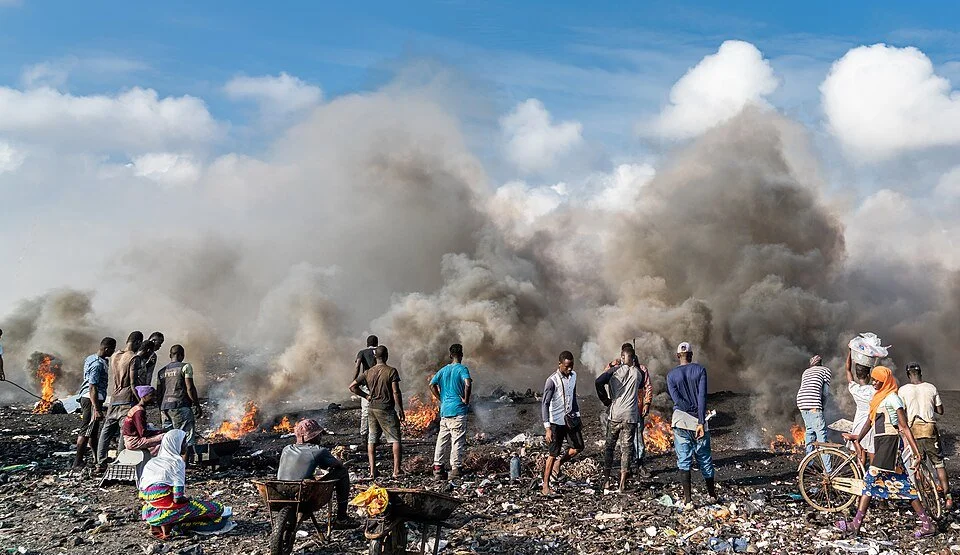
A group of men burning wires to recover copper. Muntaka Chasant. CC BY-SA 4.0.
GET INVOLVED
People can help solve the e-waste crisis in Ghana by supporting certified recycling programs, reducing their personal electronics consumption and advocating for stricter international trade rules.
Electro Recycling Ghana (ERG) is a private recycling company that dismantles and refurbishes old electronics. By doing so, they can extract valuable metals safely while training local workers.
Globally, organizations like Pure Earth and the United Nations Industrial Development Organization (UNIDO) help clean up toxic heavy metals and pollution around Agbogbloshie’s open-air site. They work directly with Ghana’s government and health services to help reduce risks from hazardous pollutants.

Kate Dawson
Kate is a student at the University of North Carolina at Chapel Hill, double majoring in Public Policy and Journalism. Her passion to share stories and love for environmental justice inspires her writing. She hopes to change the world by empowering others.