
By Cove Johnson Rabidoux
A severe fuel shortage is leaving millions of Cubans without reliable electricity, transportation and essential services.
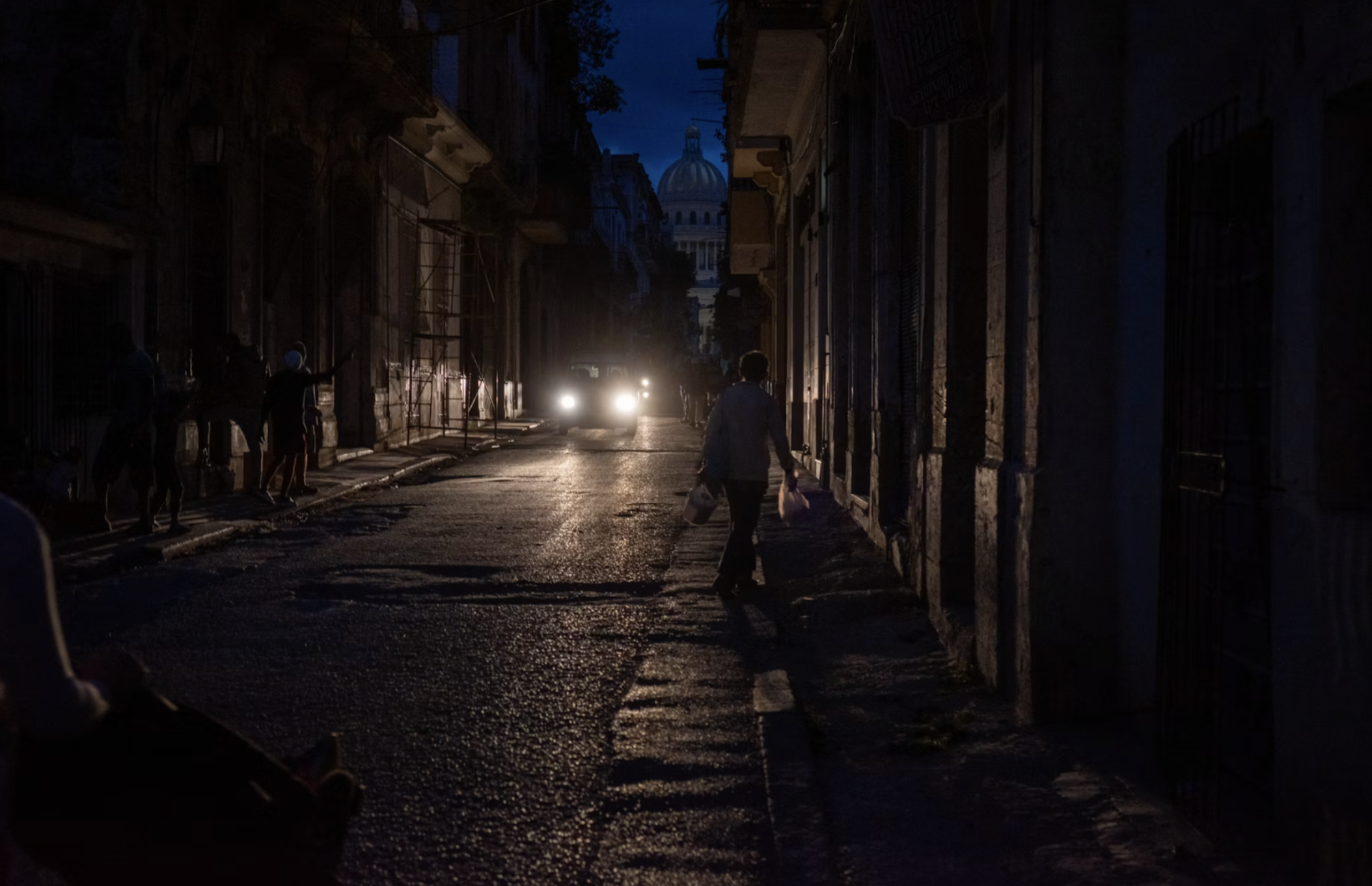
Walking through Cuba at night. Denny Rodriguez. Unsplash.
Cuba is a country renowned for its color and vibrancy, but a recent fuel shortage has plunged the island nation into darkness. Power outages have been common in the country since 1991, when the Soviet Union’s collapse cut off Cuba's supply of cheap oil. Yet, the Trump administration’s oil blockade has exacerbated Cuba’s fuel crisis.
In threatening to impose heavy U.S. tariffs on oil suppliers, the Trump administration has made it increasingly difficult for Cuba to obtain oil from other countries. And since Cuba relies on oil to generate over 80% of its electricity, the island’s power grid can’t operate at its full capacity.
In the seven months since Trump introduced the oil restrictions, Cuba has faced six nationwide power grid collapses, with additional localized outages occurring daily. These outages are unpredictable, with some lasting hours and others entire days.
Without reliable power, millions of Cubans now experience life shrouded in darkness. Homes have gone dark, food spoils more quickly and most public transportation is unavailable. Plus, without electricity, many residents don’t have an adequate water supply, as water can’t be pumped into tanks.
“We’re living in a country where it’s always Sunday. You go out into the street and practically everything is closed,” one resident told The New York Times.
With insufficient power, most medical centers are also unable to provide the care their communities demand. Medicine, for example, is running low without access to refrigeration. Lucelia Leyva Calderon, a doctor, told NBC News that hospital staff often must ask patients to find their own medicine, either from relatives or the black market. Additionally, many hospitals have had to reduce their hours to account for the limited power. As a result, Cuba’s healthcare system is backlogged with over 96,000 pending surgeries, 11,000 of which are for children.
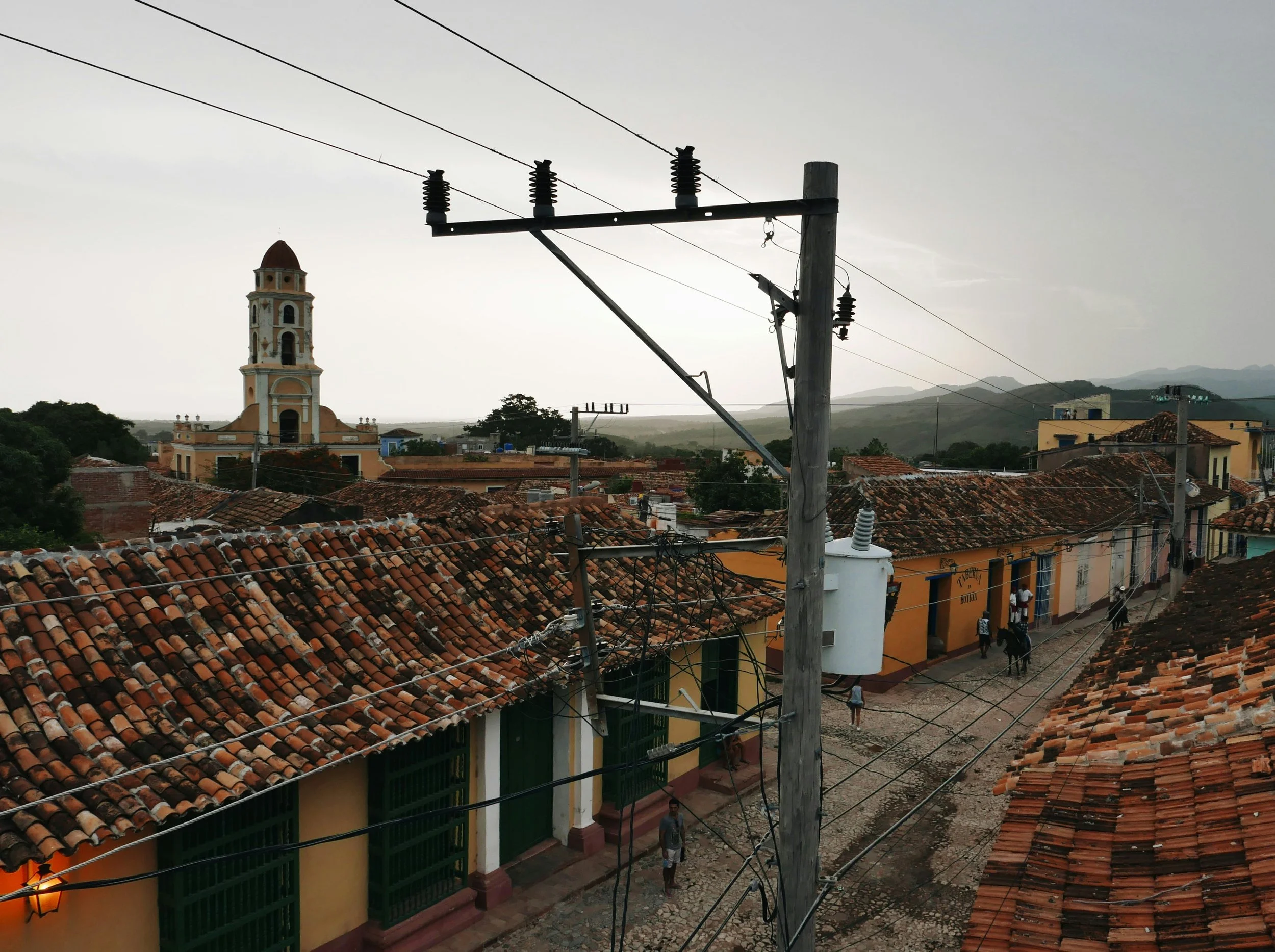
Power lines in Vinales, Cuba. Falco Negenman. Unsplash.
As the crisis continues, frustration among residents has grown. While the government’s strict vigilance and control have curbed outcry, some protests have taken place across the country. In some communities, people were reported to be “banging pots and pans and setting fire to trash cans” to voice their anger over the worsening conditions.
The Cuban government, meanwhile, has blamed the United States for adding to the crisis, arguing that Trump’s restrictions are deliberately cutting off the island's access to fuel. In a letter to the United Nations, Cuba also accused the Trump administration’s actions, warning the executive order constituted “a flagrant violation of international law” and a violation of the Proclamation of Latin America and the Caribbean as a Zone of Peace.
The Trump administration, however, maintains that its pressure is intended to advance U.S. national security and foreign policy goals.
But for Cubans experiencing the crisis firsthand, the political debate does little to change their daily reality. As blackouts continue and fuel supplies remain limited, many are left wondering when they will be able to return to a normal life.
One resident told The New York Times, “I can’t picture Cuba’s future. If we keep going the way we are now, it’s like being in the presence of a corpse.”
GET INVOLVED
Send solar panels and generators to Cuban hospitals with Let Cuba Live! Support Cuban medical care through Global Health Partners. Subscribe to the United Nations newsletter to remain informed on any new developments.

Cove Johnson Rabidoux
Cove is an English student at the University of California, Los Angeles. Her writing can be found in the Daily Bruin, The Teen Magazine, Piece of Cake Magazine, and other publications. In her free time, she enjoys reading and traveling.