
By Kaitlin Murray
From cities hidden in the jungle to the largest pyramids in the world, these are seven archaeological sites every traveler should add to their bucket list.
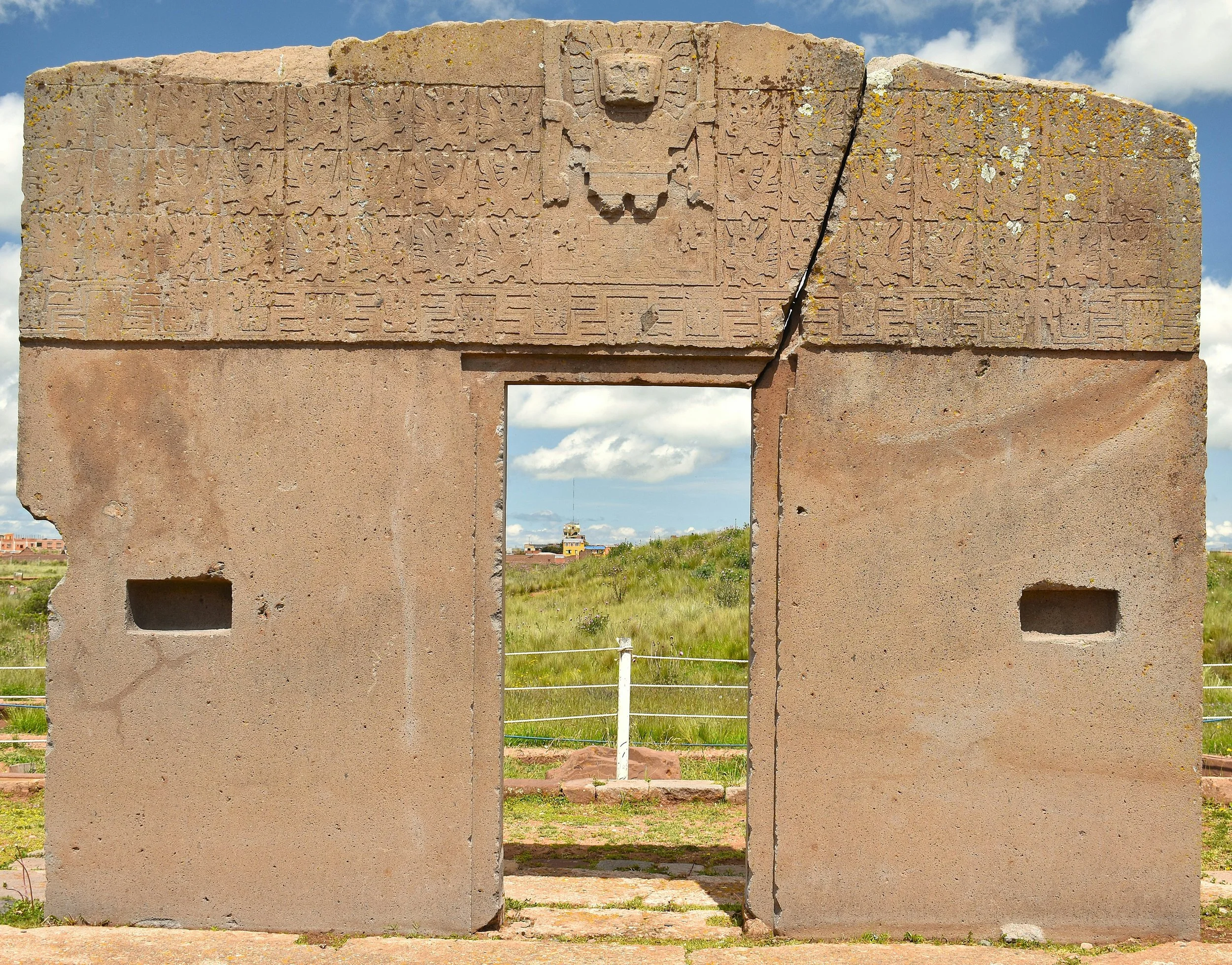
The Sun Gate at Tiwanaku, Bolivia. Matheus Oliveira. Unsplash.
Raised as a worldschooling kid, traveling the world instead of going to school, I visited countless archaeological sites in 129 countries. Yet it wasn't until I studied history and moved to Mexico that I truly understood how overlooked many archaeological sites are, especially those off the beaten path. From vast cities above 3,000 feet in altitude to earthen mounds and hidden geoglyphs buried deep in the jungle, these sites can open travelers’ eyes to an entirely new world of historical discoveries that are unjustly confined to small footnotes in the global consciousness of the ancient world.
When archaeological sites in the Americas are colloquially discussed, the conversation often focuses on trending social media locations, such as Machu Picchu and Chichen Itza, both named among the New Seven Wonders of the World. Others, such as Teotihuacan or the Nazca Lines, are the center of conspiracy theories that speculate they were constructed by ancient aliens or civilizations long forgotten by history, rather than the Indigenous people of those lands. Beyond aesthetic filters and scroll-stopping captions, the complex histories and cultures across the Americas are reserved for academic circles, history enthusiasts and local communities, often descendants of the people who lived there thousands of years earlier.
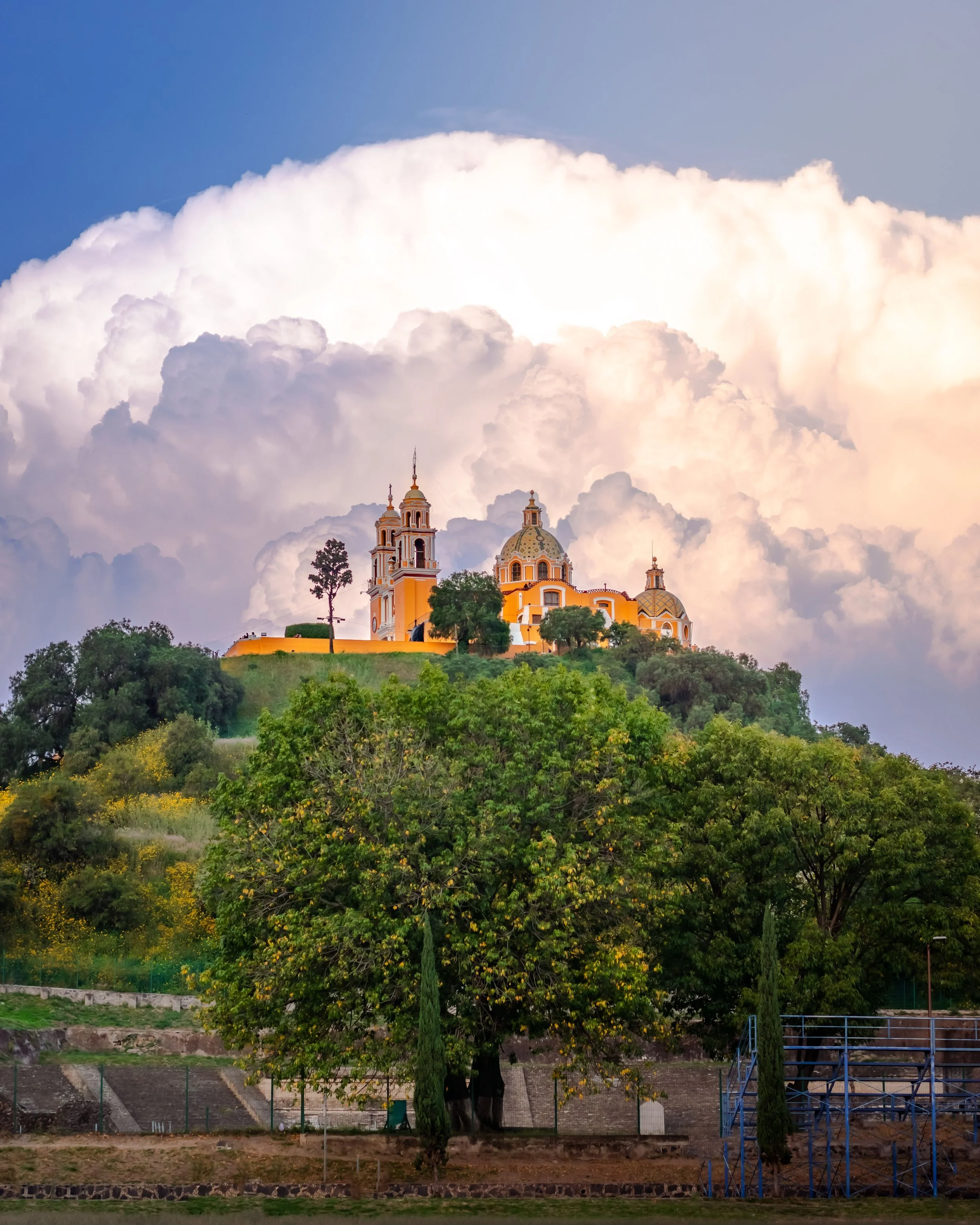
The Cholula pyramid and the Spanish church on top. Jorge Medina. Pexels.
The Cholula pyramid and the Spanish church on top. Jorge Medina. Pexels.
1. Cholula: The Largest Pyramid in the World by Volume | Mexico
The Cholula pyramid is the largest pyramid on Earth by volume, nestled in the central Mexican highlands against the background of Mexico’s most famous volcano. Founded in the fifth century B.C., the city’s main pyramid is a layered monumental structure called Tlachihualtepetl, or “handmade mountain” in Nahuatl. In Mexica mythology, it was crafted by Xelhua, a giant who survived a great flood by climbing the sacred mountain of the rain god Tlaloc. In gratitude, Xelhua ordered the structure to be built, only for it to be struck down by the gods in an apocalyptic story comparable to the biblical account of the Tower of Babel. With kilometers of tunnels inside and a Spanish church built on top, the site is a fascinating place to observe centuries of Mexican history one on top of the other.
Located only a few kilometers from the city of Puebla, which is famed for the chile en nogada, Cholula offers immersive cultural experiences for visitors seeking a trip beyond the usual Central Mexico itinerary.
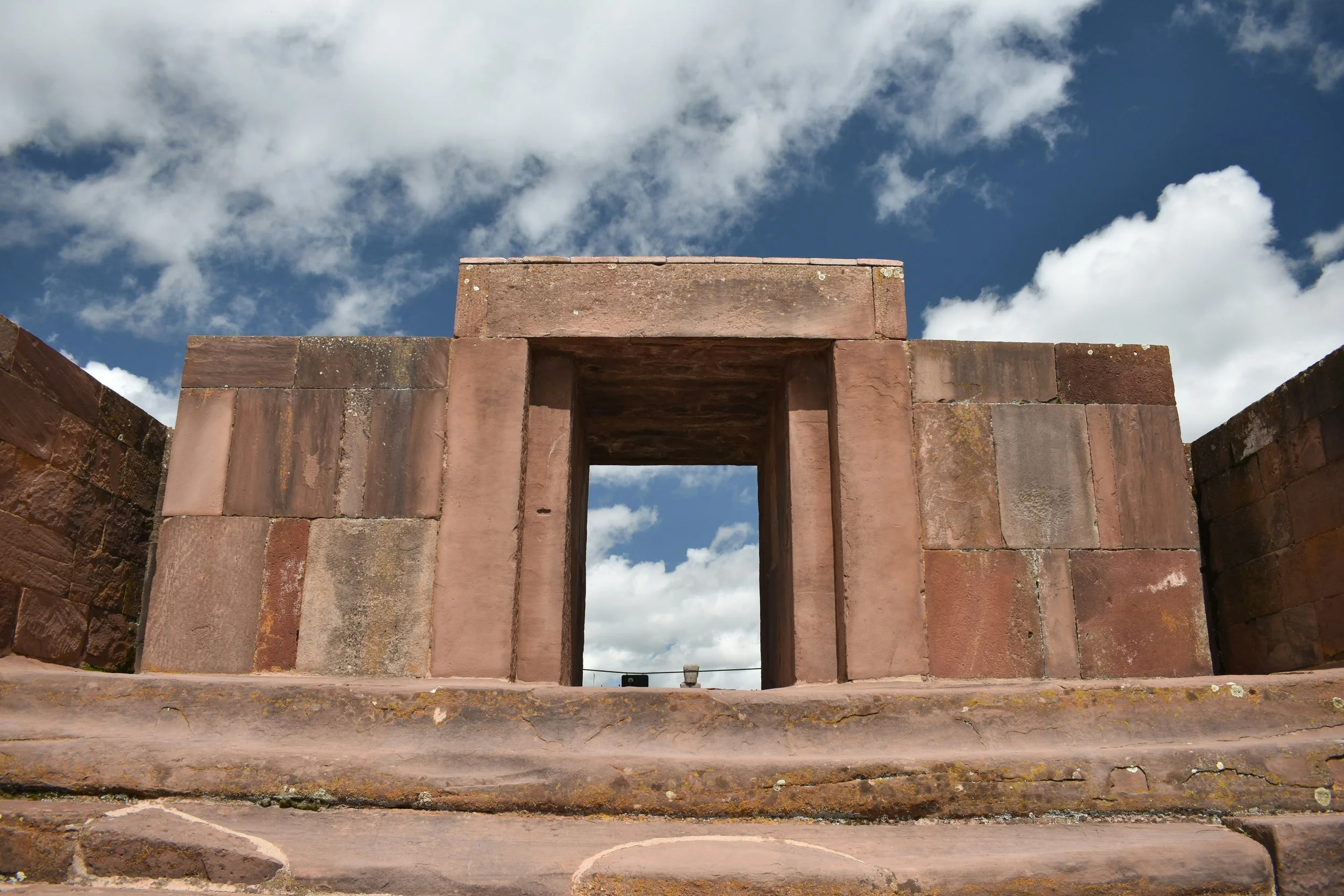
Ruins of Tiwanaku, Bolivia. Matheus Oliveira. Unsplash.
2. Tiwanaku: An Ancient City Built 12,600 Feet Above Sea Level | Bolivia
High in the Andes Mountains near the southern shore of Lake Titicaca sits one of America’s most emblematic yet often overlooked archaeological sites. As an early influence for much of Inca architecture and legends, this was the birthplace of Viracocha, the creator god who emerged from the waters of the lake and brought forth the sun, moon and stars before shaping humanity out of stone. At its height, the city ruled over a large kingdom across the altiplano, spanning Bolivia, Chile and Peru. Though central to conspiracy theories ranging from ancient aliens to pre-flood civilizations, Tiwanaku is a powerful example of pre-Columbian architectural knowledge and ingenuity.
Visitors can experience a partially reconstructed ancient city with stunning architecture on a day trip from La Paz, Bolivia.
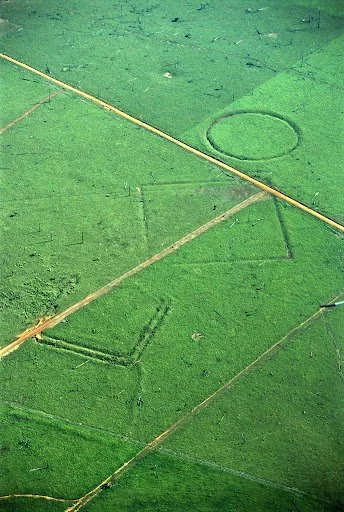
Large geoglyphs in the state of Acre, Brazil. Sanna Saunaluoma. CC BY-SA 3.0.
3. The Amazon Rainforest Geoglyphs: Giant Shapes Under the Canopy Redefining History | Brazil
For decades, it was believed that the Amazon rainforest had no monumental architecture because the rainforest environment simply didn't allow it. However, archaeologists and researchers today are proving that wrong.
During my visit to Manaus, Brazil, I met Alceu Ranzi, a geographer spearheading the surveys of more than 410 large geoglyphs that dot the landscapes under the canopy. Built between 300 B.C. and A.D. 1000, these geoglyphs are rewriting the history of South America, proving that the Amazon was not an untouched wilderness but a highly transformed terrain.
Mostly located in the Brazilian state of Acre, they are relatively difficult to reach and are best visited on a guided tour out of the regional capital, Rio Branco.
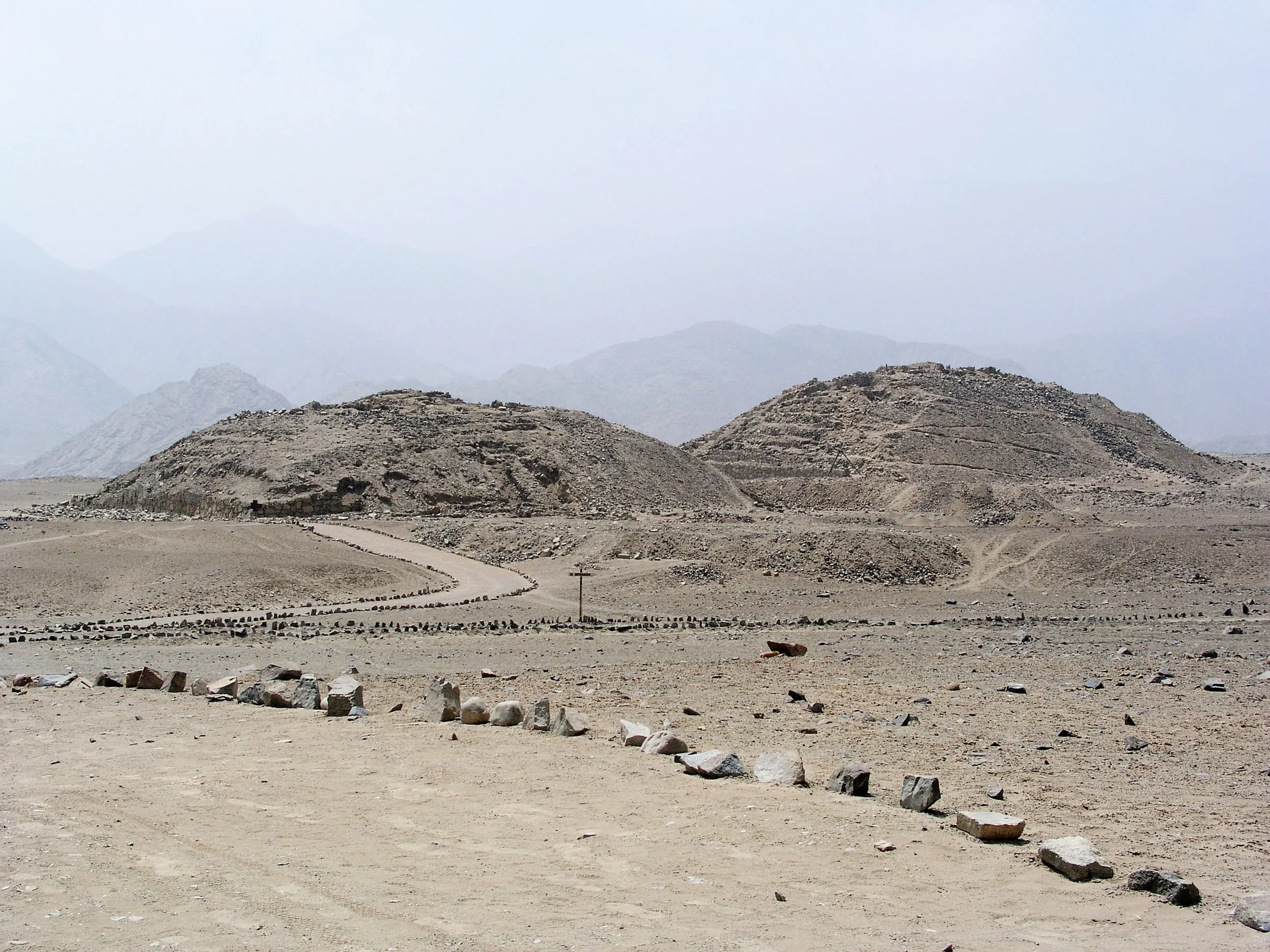
The ruins of Caral on the central coast of Peru. Hakan Svensson Xauxa. CC BY-SA 3.0.
4. Caral in Peru
Located along Peru’s central coast, Caral is one of the oldest cities in the Americas, spanning from 3000 to 1800 B.C., roughly the same time period as the earliest dynasties of ancient Egypt. Evidence of the quipu recording system, clay figures and ceremonial musical instruments has been discovered, even though Caral was long believed to be a pre-pottery society. However, there is no evidence of warfare, defensive walls or weapons, something almost unheard of in ancient societies.
For travelers seeking to explore another historical aspect of Peru beyond Machu Picchu, this is the ideal site to visit. Caral is three hours from the capital city of Lima, so the town of Barranca is the best base for a day trip.

La Danta pyramid in El Mirador National Park. Dennis G. Jarvis. CC BY-SA 2.0.
5. El Mirador: A Mayan City Swallowed by the Jungle | Guatemala
With the tips of pyramids poking out of the endless green canopy, El Mirador is an ancient Mayan site deep within Guatemala’s Peten jungle. It is believed that over 200,000 people once lived here thousands of years ago, with a complex society of cities that may have supported up to a million people. Its most famous pyramid is La Danta, one of the largest pyramids in the world. The structure stands approximately 230 feet tall and has an estimated volume of 99 million cubic feet. With no road access, arriving here is no easy task. Most visitors leave from the town of Carmelita to hike for a few days or take a helicopter ride to see it from above.
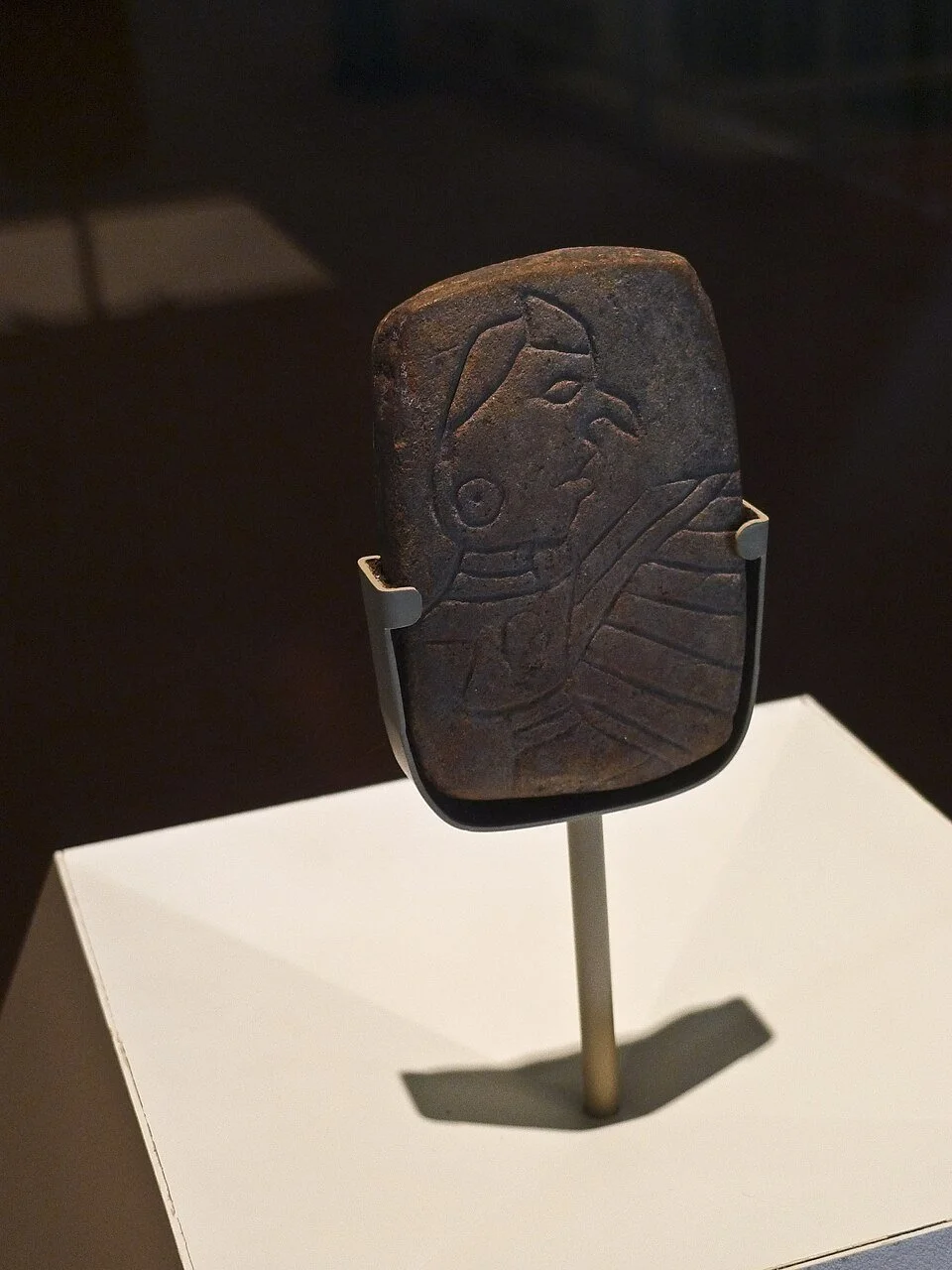
Birdman tablet from the Cahokia Mounds Historic Site. Flyover Hangover. CC BY-SA 2.0.
6. Cahokia: A Large Ancient City in Illinois | United States
The largest pre-Columbian Indigenous city north of Mexico sits just outside of St. Louis, Missouri. Cahokia, a city of the pre-Columbian Mississippian culture, flourished between A.D. 1050 and 1200, supporting as many as 20,000 people. Its most famous landmark is Monks Mound, measuring about 100 feet high, 955 feet long and 775 feet wide. Often sidelined in the historical narrative of U.S. history, this site showcases the architectural and cultural legacy of Indigenous societies in what is today the United States, long before the arrival of Columbus.
The easiest way to visit Cahokia is from St. Louis or other nearby towns by car.
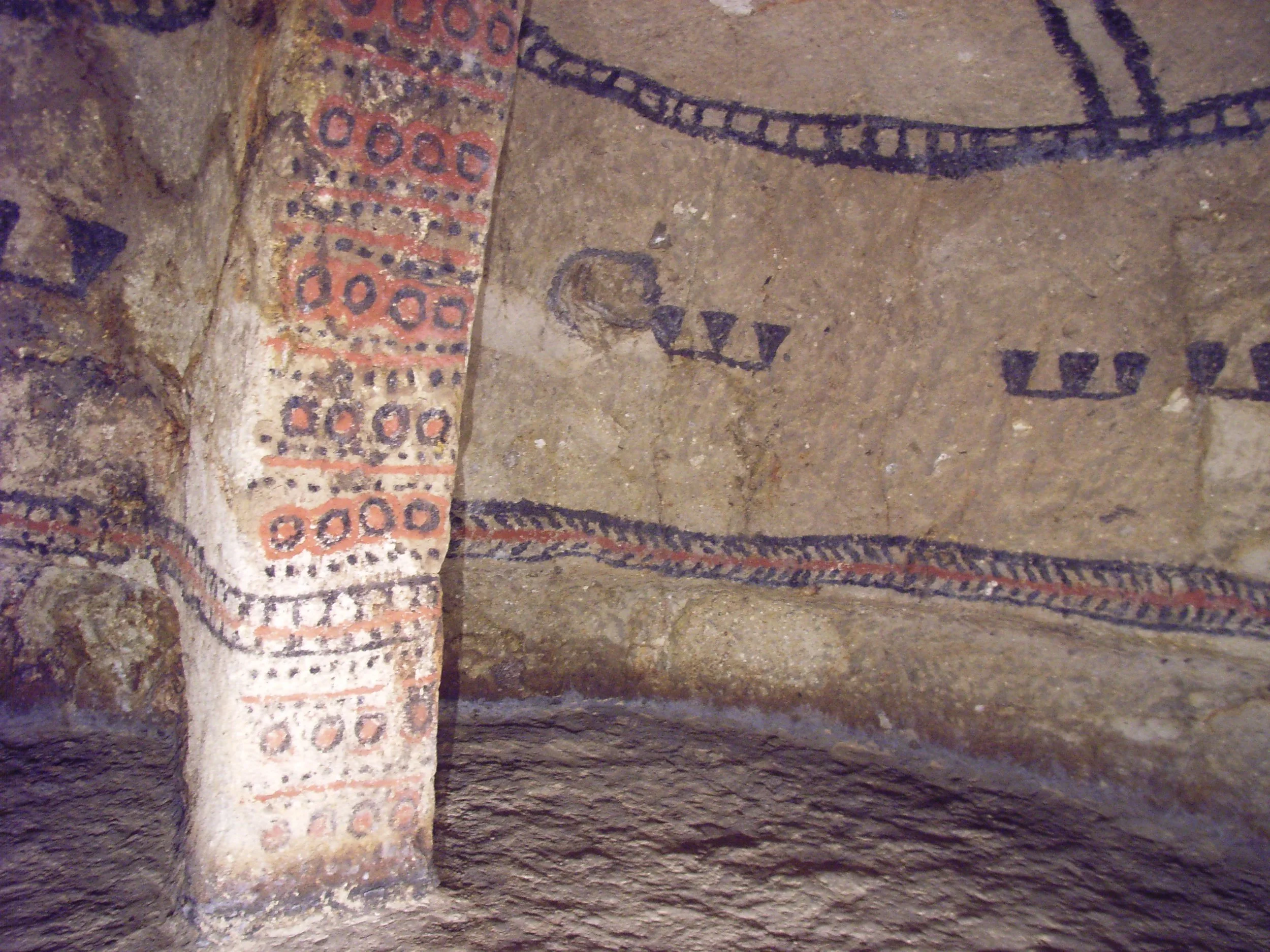
Inner chamber of tombs in Tierradentro, Colombia. Taco Witte. CC BY 2.0.
7. Tierradentro: An Ancient Colombian Necropolis | Colombia
Tucked high in the Colombian Andes is the UNESCO World Heritage Site of Tierradentro. The necropolis contains intricately decorated underground tombs, some measuring 40 feet in width, painted in red and white geometric patterns, with figures and designs that have survived for thousands of years. The patterns reflect the art discovered in the homes of elite members of society between the sixth and 10th centuries A.D., with columns, antechambers and decorated niches.
After decades of guerrilla warfare, the region is welcoming tourists back to visit the site and experience Colombian culture. Visitors can reach the site from the town of Popayan.
With new archaeological sites uncovered daily, there are endless avenues of curiosity to follow. From Aguada Fenix challenging preconceived notions of Mesoamerican archaeology to newly mapped settlements across the Beni lowlands of Bolivia, entire civilizations are still rising to the surface after years of being hidden.
Kaitlin Murray
Kaitlin Siena Murray is a travel journalist and global storyteller documenting cultures, historical places, and the people and social impact movements helping the world. Raised worldschooling across more than 129 countries with degrees in anthropology and history, her writing is driven by a commitment to global citizenship, capturing the diversity and beauty of the world through the lens of culture, history, and social change.