
By Jeremy Gordon
The General Assembly voted to phase out the traditional Mercator map, which diminishes the size of Africa, Latin America and Southeast Asia.

Trump addressing the UN General Assembly in 2017. John Gillespie. CC BY-SA 2.0.
On Friday, Sept. 4, the United Nations General Assembly endorsed a resolution that promotes more accurate world map projections, including the Equal Earth design. The resolution’s goal is for the world to phase out the traditional Mercator map, which depicts Africa, Latin America and Southeast Asia as smaller than their true dimensions. The resolution passed 164-1. The only country to vote against it was the United States.
The Mercator map was introduced by Flemish cartographer Gerardus Mercator in 1569 to help sailors navigate the seas. Because of the way the world is projected on this map, the equatorial regions appear significantly smaller relative to regions near the poles. One of the most egregious misrepresentations is the continent of Africa, which is shown as being about as big as Greenland. In actuality, Africa is 14 times larger than Greenland. Historians and geographers have decried these inaccuracies for years, arguing that the projections reinforce Western notions of superiority.
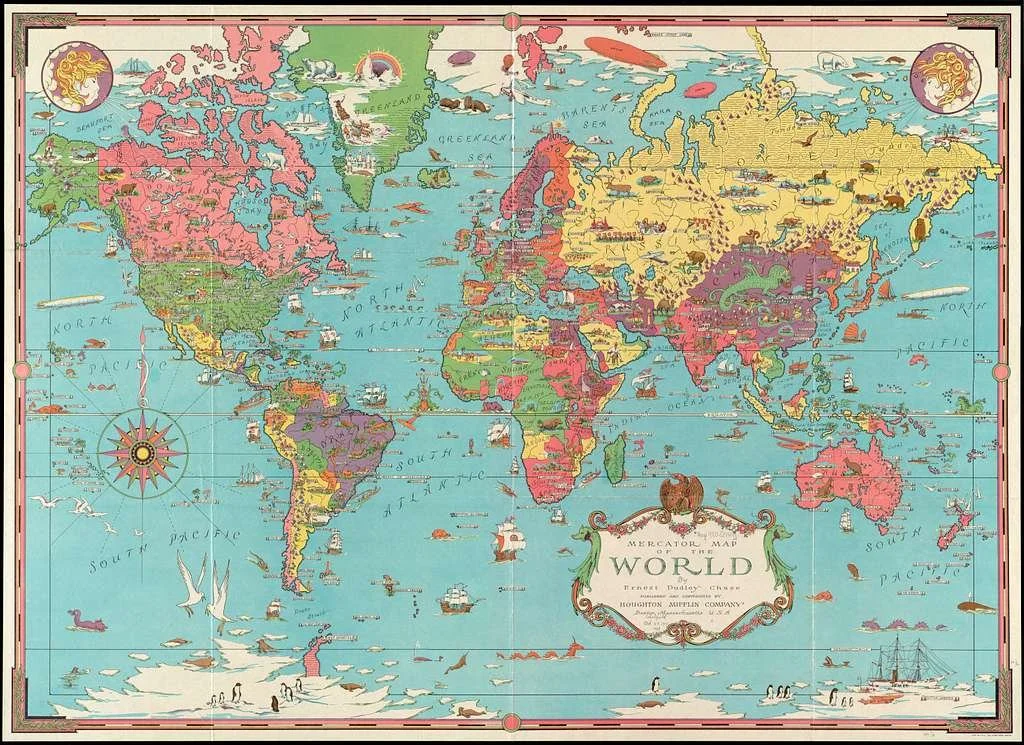
Mercator map, designed by Gerardus Mercator in the 16th century. Ernest Dudley Chase. CC0.
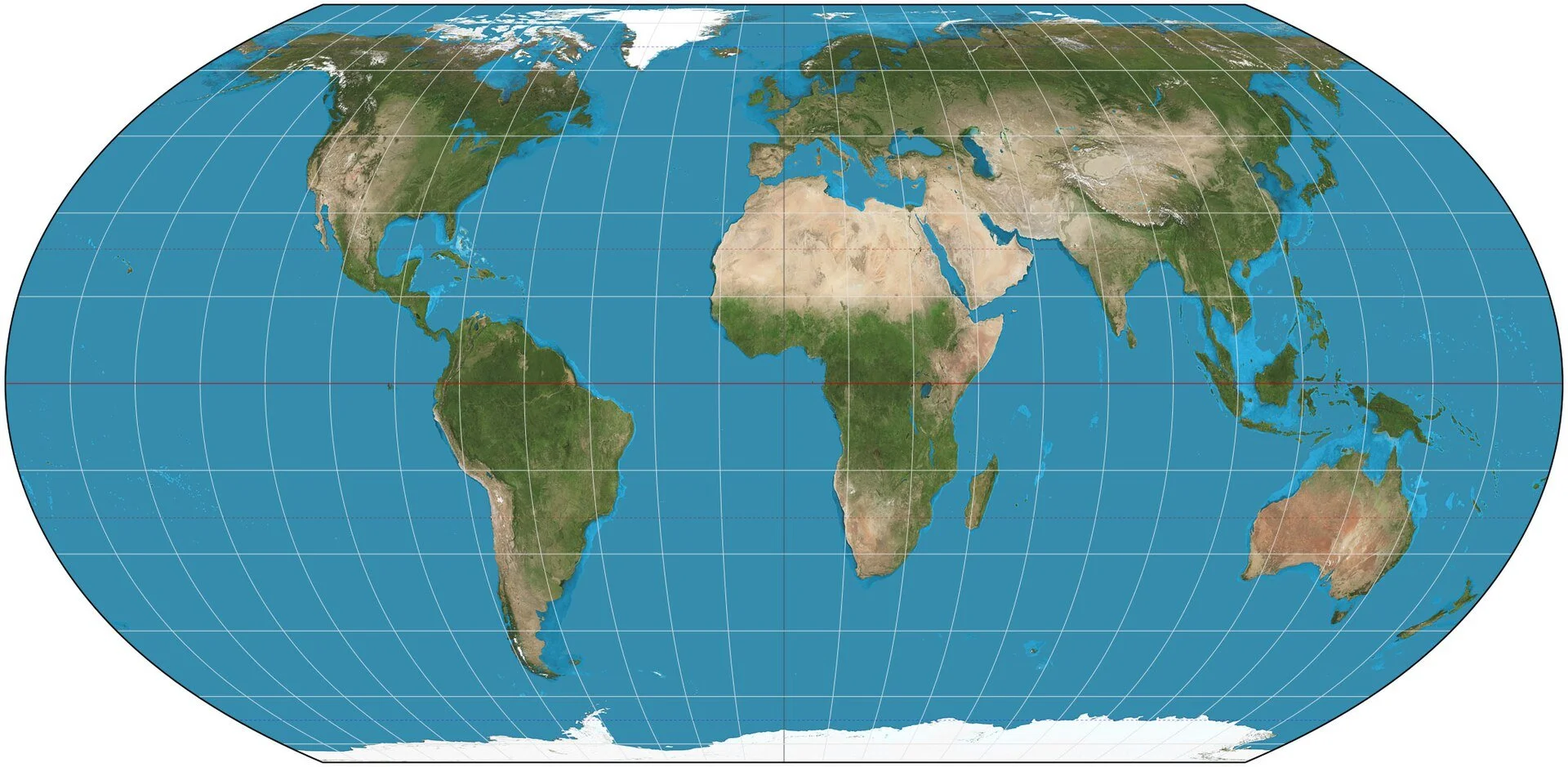
The Equal Earth map was designed by an international team of cartographers in 2018 to correct these geographic distortions. The campaign to forgo the problematic Mercator map in favor of this one was spearheaded by Togo, a country in West Africa, and backed by the African Union. Though nonbinding, the “Correct the Map” resolution will hopefully result in classrooms around the world replacing the distorted map with one that gives Africa, Latin America and Southeast Asia their proper dimensions.
The U.S. was the sole no vote on the resolution. Yaryna Ferencevych, the deputy U.S. representative to the U.N. Economic and Social Council, claimed it promoted an “ideological agenda” and was a distraction from the “genuine problems of international peace, prosperity, or good relations.” These statements reflect the Trump administration’s ongoing culture war on anything deemed “woke” or related to diversity, equity and inclusion. Last year, through the Department of Government Efficiency initiative, or DOGE, the administration slashed funding for a whole host of federal programs and agencies it claimed promoted a leftist ideological agenda. The vote against the “Correct the Map” resolution is in no way surprising or out of character.
But even with the United States voting against it and six countries abstaining, the resolution passed the General Assembly. The hope is that, in time, the world will be using maps rooted in scientific accuracy instead of past injustice.

Jeremy Gordon
Jeremy is a graduate student at Johns Hopkins University studying Creative Writing. He graduated from the University of Maryland with a bachelor's in Criminology and Criminal Justice and worked for four years as an Investigative Specialist with the Public Defender Service for DC.