
By Claire Park
Why are sunburns so scary? Uncover what they are, how they happen and what the likelihood of skin cancer really is.
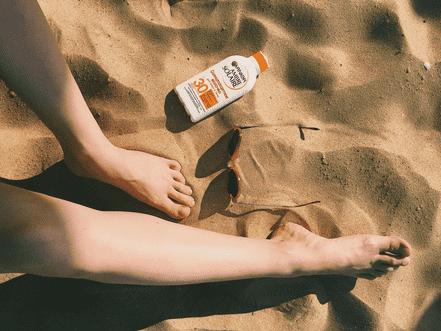
The protective beach day essentials. Daria Ponomareva. Pexels.
Summer is in full swing, beckoning crowds of people toward the beaches. Upon feeling the sand between your toes and hearing the waves crash against the shore, it’s like this trance overtakes you, making you forget all your worries, your stress and… your sunscreen. Fast-forward a couple of hours of lounging around, and you’re suddenly bright red, skin on fire and fearing for your life. You’re probably trying to bat back the voice in your head threatening the possibility of skin cancer or the million other harmful conditions linked to sun exposure. So what even is a sunburn, and what makes it so damaging?
Put simply, a sunburn is an inflammatory reaction to ultraviolet (UV) rays damaging the skin’s layers. Your body has a pigment called melanin, which gives your skin color and protects it against the sun’s rays. UV exposure can stimulate the production of additional melanin, effectively causing it to tan or darken. But too much sun exposure enables these UV rays to reach your inner skin layers, damaging DNA in skin cells and triggering a heavy immune response that widens blood vessels and rushes blood to the surface, ultimately producing a red, hot, blistering sunburn.
This DNA damage can cause changes to cells that may make them rapidly grow and divide abnormally, resulting in the formation of tumors and cancerous growths. Over time, this can develop into skin cancers like melanoma, the most serious form of skin cancer, or less deadly nonmelanoma skin cancers like basal cell carcinoma and squamous cell carcinoma. Just because you had one sunburn doesn’t mean you’ll get skin cancer. However, skin damage builds up over time. A history of severe, blistering sunburns in childhood is significantly associated with developing squamous cell carcinoma later in life, and five or more sunburns more than double your risk of developing potentially deadly melanoma.
Chronic sun exposure is also associated with other skin disorders and health conditions. Raised, reddish, rough-textured growths called actinic keratoses often occur on body areas exposed to the sun, and premature aging is common as the sun’s rays quicken the speed at which skin visibly becomes thick, wrinkled and leathery. Additionally, dark spots may appear as UV radiation stimulates skin cells to overproduce melanin in specific areas, creating flat, darkened patches of skin. Cataracts and other eye damage are additional health effects of UV radiation. Not only are cataracts a loss of transparency in the lens of the eye that clouds vision, but if left untreated, they can even lead to blindness. Other eye damage, like pterygium, tissue growth that can block vision; skin cancer around the eyes; and degeneration of the macula, the part of the retina where visual perception is most acute, are all possible results of inadequate sun protection. Lastly, overexposure to UV rays may suppress aspects of the body’s immune system and the skin’s natural defenses, as changes in DNA can trigger immune tolerance rather than defense.
Although everyone is exposed to the same sun and should fear its sear, certain conditions make some people more susceptible to sunburn and the harmful effects of UV radiation. Factors such as having lighter skin and spending time at higher altitudes or closer to the equator, frequently playing outdoor sports, partaking in water activities, tanning regularly, working outdoors and using tanning beds are factors associated with greater risk of damage.
To avoid this, take preventive measures like applying broad-spectrum sunscreen every day, being aware of the sun when taking medications increasing your skin’s sensitivity, limiting exposure between 10 a.m. and 4 p.m., wearing protective clothing, hats and sunglasses, and seeing a dermatologist for skin cancer checks based on your individual risk. On top of this, if you feel you’ve already been decently exposed, there are some methods of damage control. While deep, cellular DNA changes can’t be undone, targeted treatments for some visible signs of sun damage, such as retinoids and vitamin C antioxidant serums, can speed up cell turnover and neutralize free radicals. For precancerous lesions such as actinic keratoses, a dermatologist may recommend treatments such as photodynamic therapy, which combines light energy with a light-sensitive drug to target and destroy abnormal, precancerous or cancerous cells.
With all that said, this doesn’t mean you should hide indoors forever or think of the sun as the enemy. Instead, it’s about being mindful when spending time outside and being aware of the long-term effects of sun exposure by making sun protection a habit. So the next time you head to the beach, instead of brushing the sunscreen bottle aside and racing straight into the ocean thinking, “I’ll be fine!” remember to take regular breaks in the shade, keep your sunglasses on and be diligent about reapplying sunscreen throughout the day.

Claire Park
Claire Park is a sophomore at the University of California, Berkeley studying English and Media Studies with a minor in Music. Her experience writing lifestyle content for UC Berkeley's The Daily Californian newspaper has inspired her to expand her scope to the realm of travel, pursuing her aspirations of becoming a travel journalist. When not writing, Claire can be found singing, reading romance books, journaling at the beach, or acquiring a sweet, caffeinated beverage.