
By Kaitlin Murray
I’ve watched tourism reshape Venice. Here’s how the city is trying to change that.
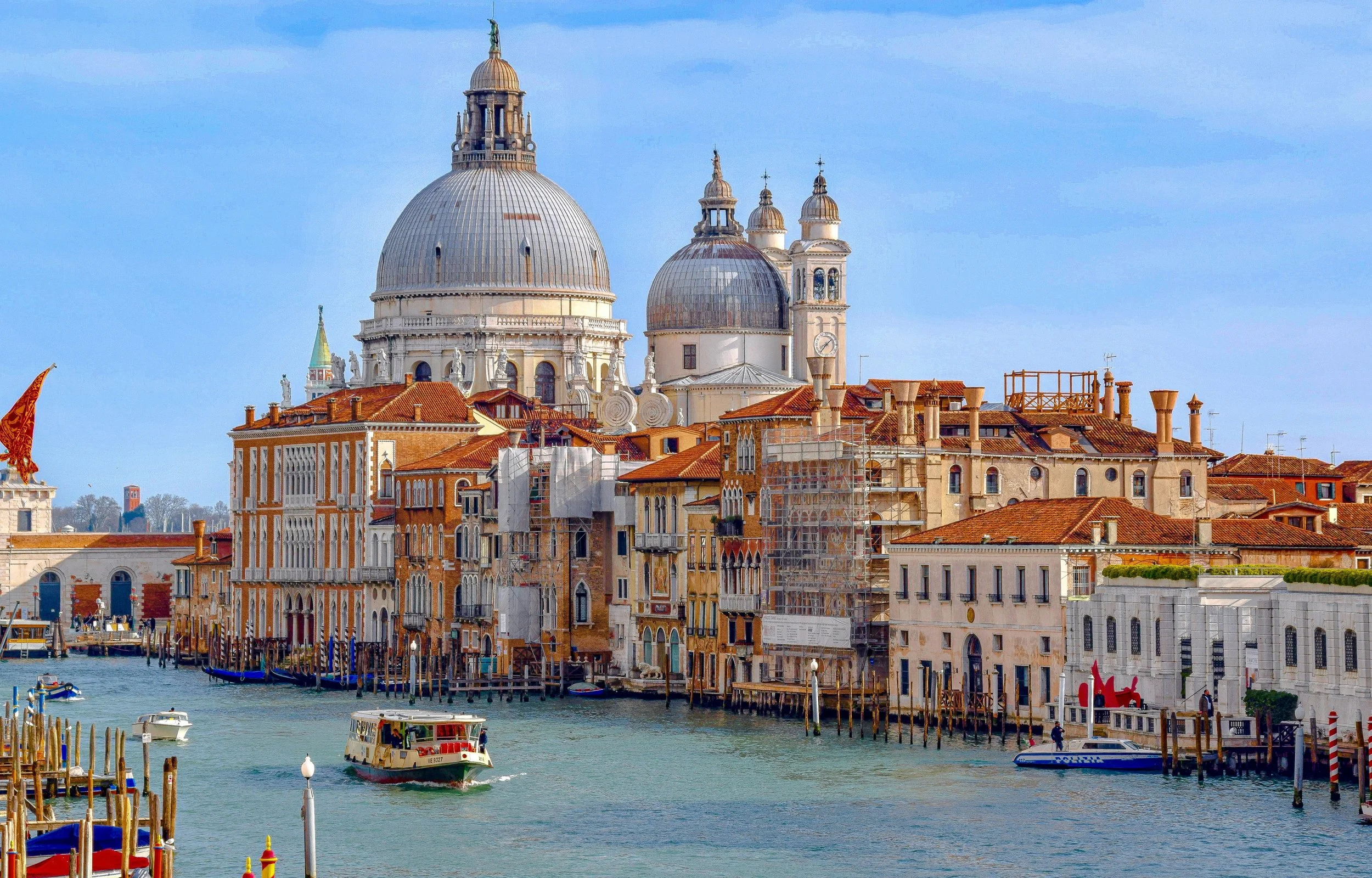
View of the Grand Canal and the Santa Maria della Salute church in the background. Tom Podmore. Unsplash.
In a pharmacy near the Rialto Bridge, a doomsday-style countdown clock shows the number of residents that live in the historical city center of Venice. As of 2025, it showed 47,461, a number that keeps falling. While around six million visitors come to the city center each year to experience its unique architecture and canals, residents are leaving in droves, struggling with rising rents and the closure of local businesses.
My family moved to Venice when I was 7, and I started Italian public school and integrated into Venetian life and culture. When we moved away in 2013, the population was 60,000.
Growing up, locals and tourists coexisted side by side, taking the same streets and crossing the same canals but living in entirely different worlds. As visitors marveled at the stunning city, locals went about their daily lives, going to school, coming home from work and playing with friends in the campos, or squares. As a child, I was constantly surrounded by people from different cultures and continents but lived in a completely different reality.
Today, Venice continues to receive more tourists, mostly day-trippers arriving from the mainland, including cruise passengers. While the city is inundated with crowds during the day, nights are much quieter, with the city emptying out like a closing amusement park. This phenomenon has led to an influx of businesses and shops that focus on day trippers' needs rather than preserving the city's cultural authenticity.
Shops have, in turn, focused on selling mass-produced trinkets rather than authentic pieces, and restaurant food quality has diminished to keep up with the high demand for quick turnaround that tourists crave on a limited schedule to explore the whole town.
Many locals are fighting back against overtourism, aiming to rekindle Venice's unique community and lifestyle.
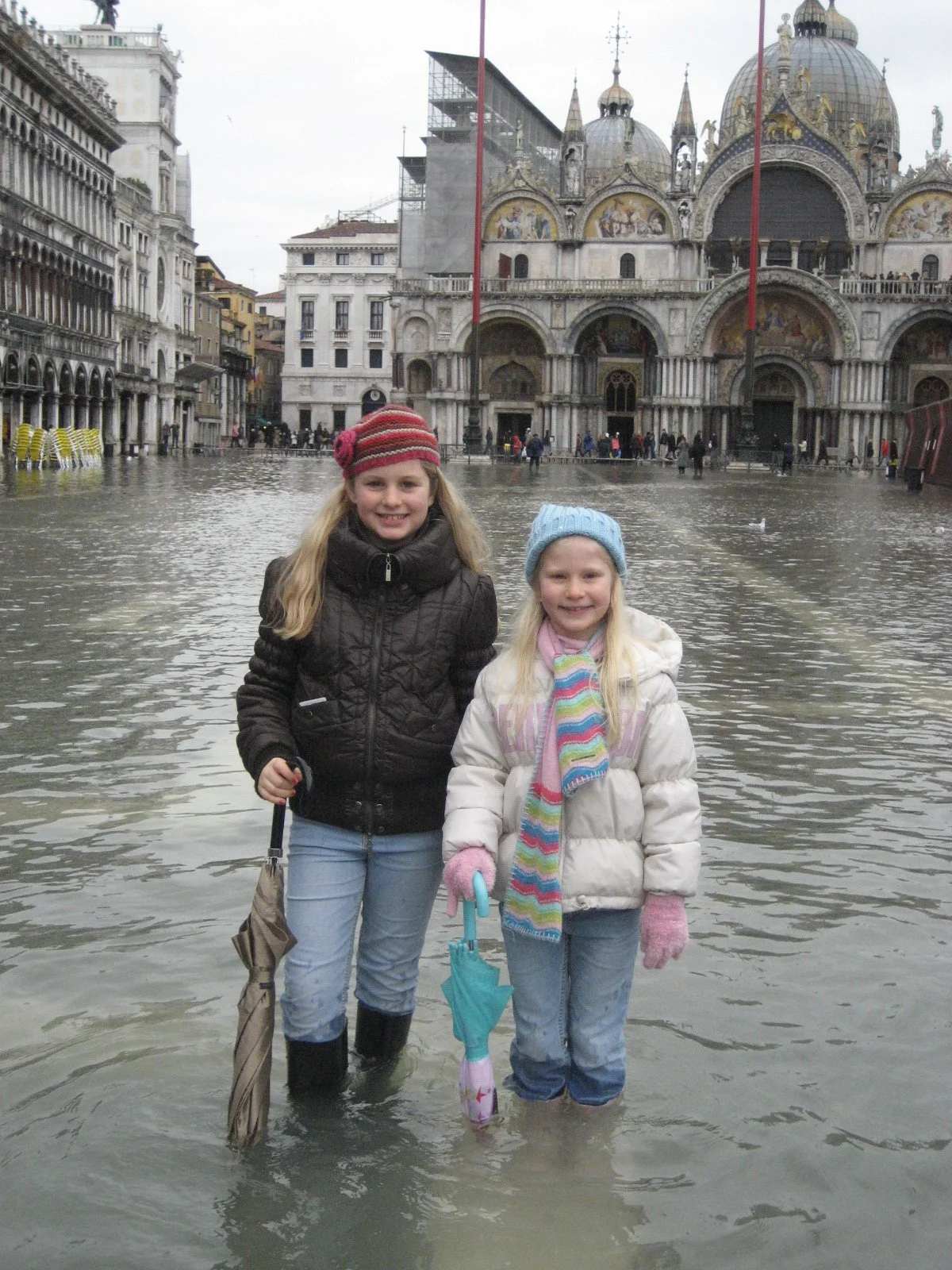
Me (left) and my sister walking through the acqua alta (high water) in Saint Mark’s Square. Kaitlin Murray.
Short-term Rentals and the Loss of Residents
Venice’s historic center is only 2.7 square miles, with no room to expand. This lack of space has pushed residents out to make room for Airbnbs and short-term rentals, driving up rental prices and forcing residents to move to the mainland towns of Mestre and Marghera and become pendolari, commuters who live on the mainland and work on the island. In 2025, residents numbered 47,000, while the island had 52,541 beds available for tourists as of May 2026.
As short-term rentals take over residential buildings, local businesses not involved in tourism, such as grocery stores and hardware stores, have gone out of business, being hit especially hard by the COVID-19 pandemic. Unable to bounce back, many became mass-produced trinket shops, often not locally owned.
While visitors get a “local experience” by staying in residential buildings and neighborhoods, those same areas are losing Venetians, which contributes to a decline in community activities and the passing down of cultural traditions to future generations.
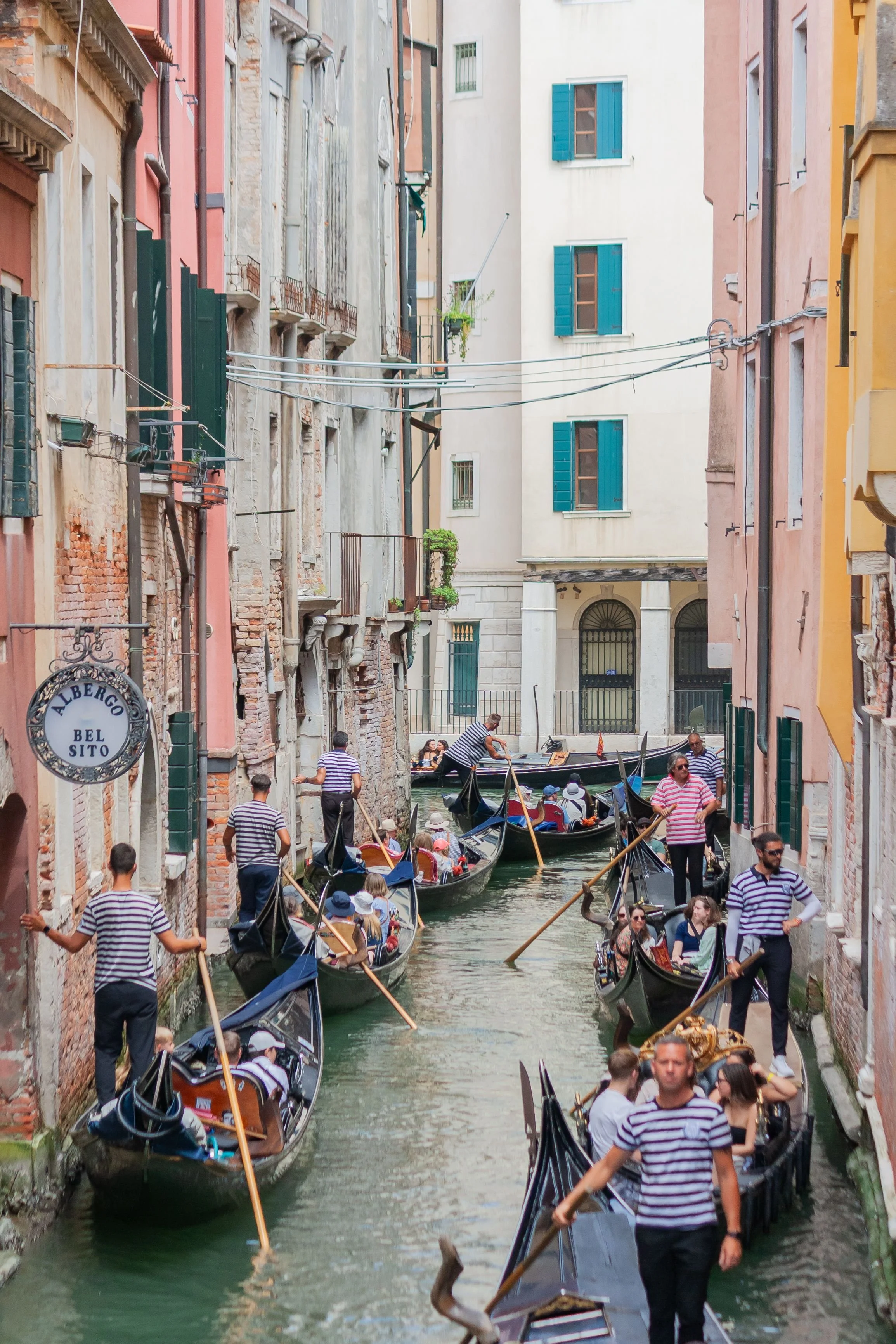
A Venice canal filled with gondolas for tourists. Cristian Loayza. Pexels.
The Shifting Culture of Venice
The island of Murano is world-renowned for its glassmaking and traditional artisanal techniques dating back centuries. While visitors can still find authentic Murano glass, many shops in Venice sell replica or “cheap” trinkets for high prices to scam tourists who can’t tell the difference.
Venice’s vaporetti, public transport boats equivalent to a bus, are often overcrowded, limiting locals’ movement around the city. Without a clear distinction between local and tourist transport, the vaporetti are at capacity, making daily life much more complicated for residents who have to walk long distances to reach school, work or their homes.
As a city with no roads or cars, Venice’s streets are small and narrow, with homes in almost every building. While tourists are on vacation, locals live day to day, leading to confrontations when groups are too loud or fail to show basic courtesy by littering, swimming in canals or partying in the streets.
Without a shift in tourism management, Venice risks becoming a tourist playground rather than a livable city. Protests have taken place for years, with locals demanding that their livelihoods and cultural traditions be protected over tourism’s interests. Already facing rising waters from climate change, locals are more concerned than ever about protecting their city and preserving its authenticity.
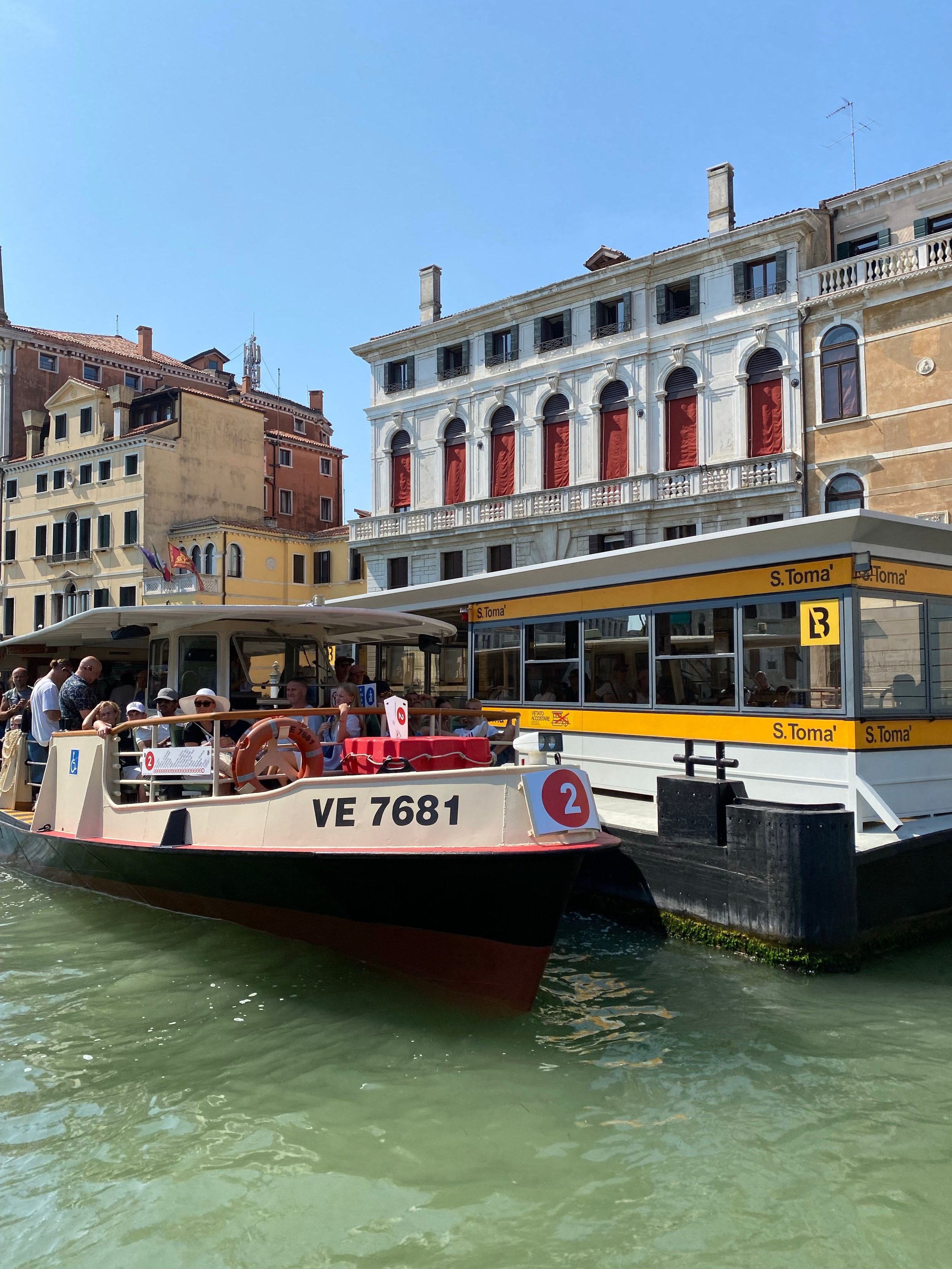
A vaporetto picking people up at the S.Toma stop along the Grand Canal. Eduardo Ortiz. Pexels.
Efforts in Place to Regulate Visitors
Today, the Venetian government has taken action to control tourism and reduce its impact on local life. In 2025, Venice expanded day-tripper entry fees and continued the program in 2026 from April to July. However, because the fee was only 5 to 10 euros, the program was heavily criticized for failing to deter visitors. Critics argued that if visitors traveled all the way to Italy to see the city and could afford airfare and accommodations, a small fee would not deter them.
In 2021, mass protests led to a ban on large cruise ships in the lagoon, and many were redirected to the mainland port of Marghera. During my childhood, cruise ships arrived through the Giudecca Canal, entered St. Mark’s Basin and docked along Riva degli Schiavoni, the city's main waterfront walkway. Today, cruise ships either dock in Mestre, about a 15-30 minute journey, or as far as Trieste or Ravenna, offering tours that take 2 hours each way to reach Venice.
While engine pollution in the city fell by 80% after the ban, some cruise ships still enter the lagoon, which has a fragile ecosystem of wildlife and islands.
Venice has also set a rule limiting tour groups to 25 people, and all guides must be licensed. In the past, large tour groups often created bottlenecks in narrow streets, making it harder for locals to take the most direct route to work or school. Additionally, the city prohibits tour guides from using loudspeakers, and tourists often wear headsets so guides don't have to shout through the streets.
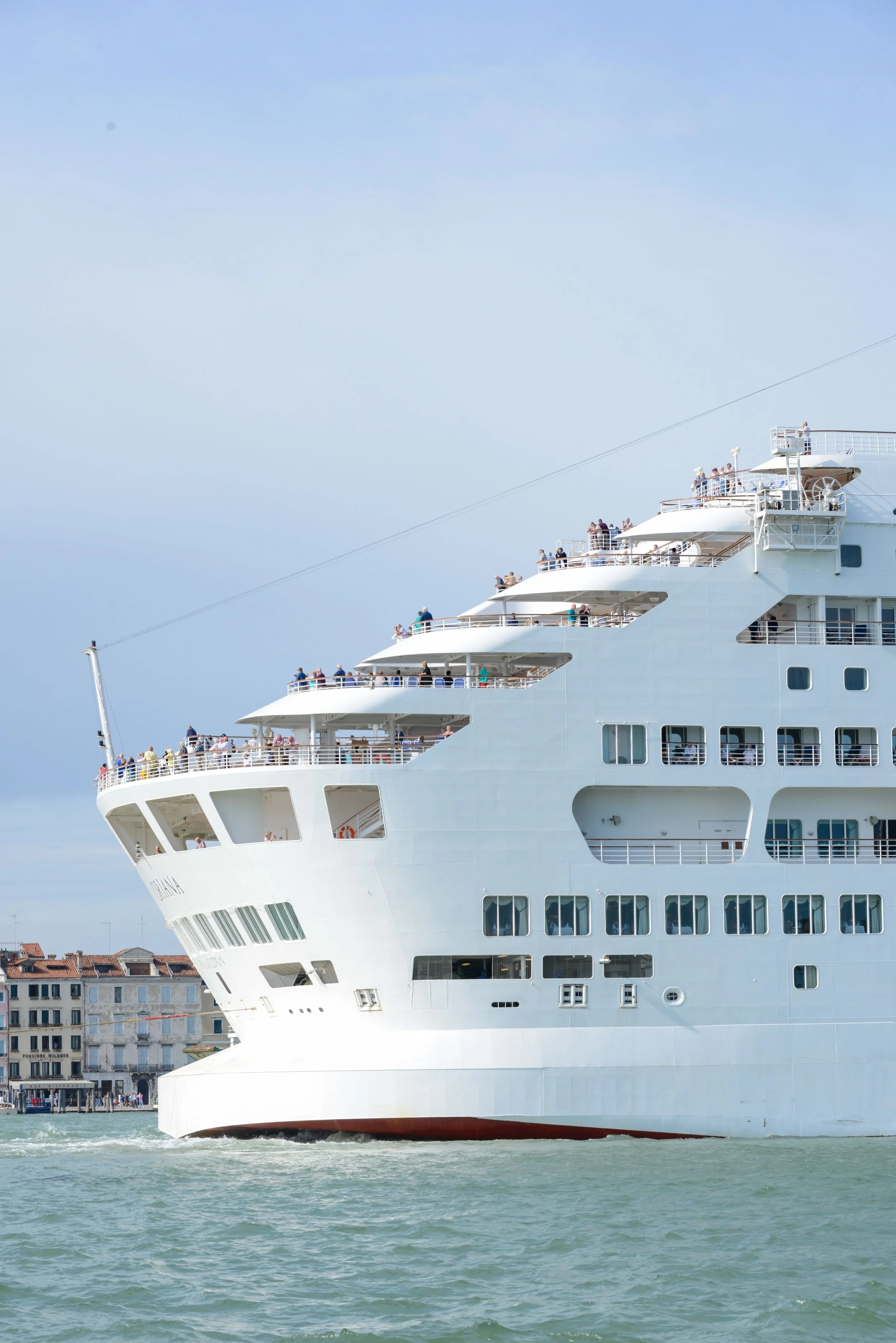
A luxury cruise ship docked in Venice. Note the size of the ship compared to the buildings below. Diego F. Parra. Pexels.
Want to visit Venice responsibly? Here are a few tips:
1. Stay at locally owned hotels or businesses
Instead of booking an Airbnb or short-term rental, look for a Venetian-owned boutique hotel. This not only puts money directly into the Venetian economy, but also helps reduce short-term rentals.
2. Eat at local restaurants off the tourist path
While many restaurants are on the main tourist path near Piazza San Marco or the Rialto Bridge, look for restaurants in local areas such as the backstreets of Castello, Cannareggio or Dorsoduro.
3. Visit during the off-season
If you can travel beyond June through August, definitely do! My favorite times to be in Venice are October, November, February and March, when the weather is still fresh and there are far fewer tourists.
4. Avoid taking a cruise ship
While cruise ships are a great way to visit many destinations in the Adriatic, I recommend avoiding them if you can. Even though large cruise ships no longer dock in the city, they still pollute the lagoon and surrounding waters.
GET INVOLVED:
To learn more about organizations working to protect Venice’s traditional way of life and cultural heritage, visit We Are Here Venice and Campaign For A Living Venice.

Kaitlin Murray
Kaitlin Siena Murray is a travel journalist and global storyteller documenting cultures, historical places, and the people and social impact movements helping the world. Raised worldschooling across more than 129 countries with degrees in anthropology and history, her writing is driven by a commitment to global citizenship, capturing the diversity and beauty of the world through the lens of culture, history, and social change.