
By Cove Johnson Rabidoux
At Senegal’s Lake Retba, thousands of salt miners endure dangerous conditions, often with few alternatives for earning a living.
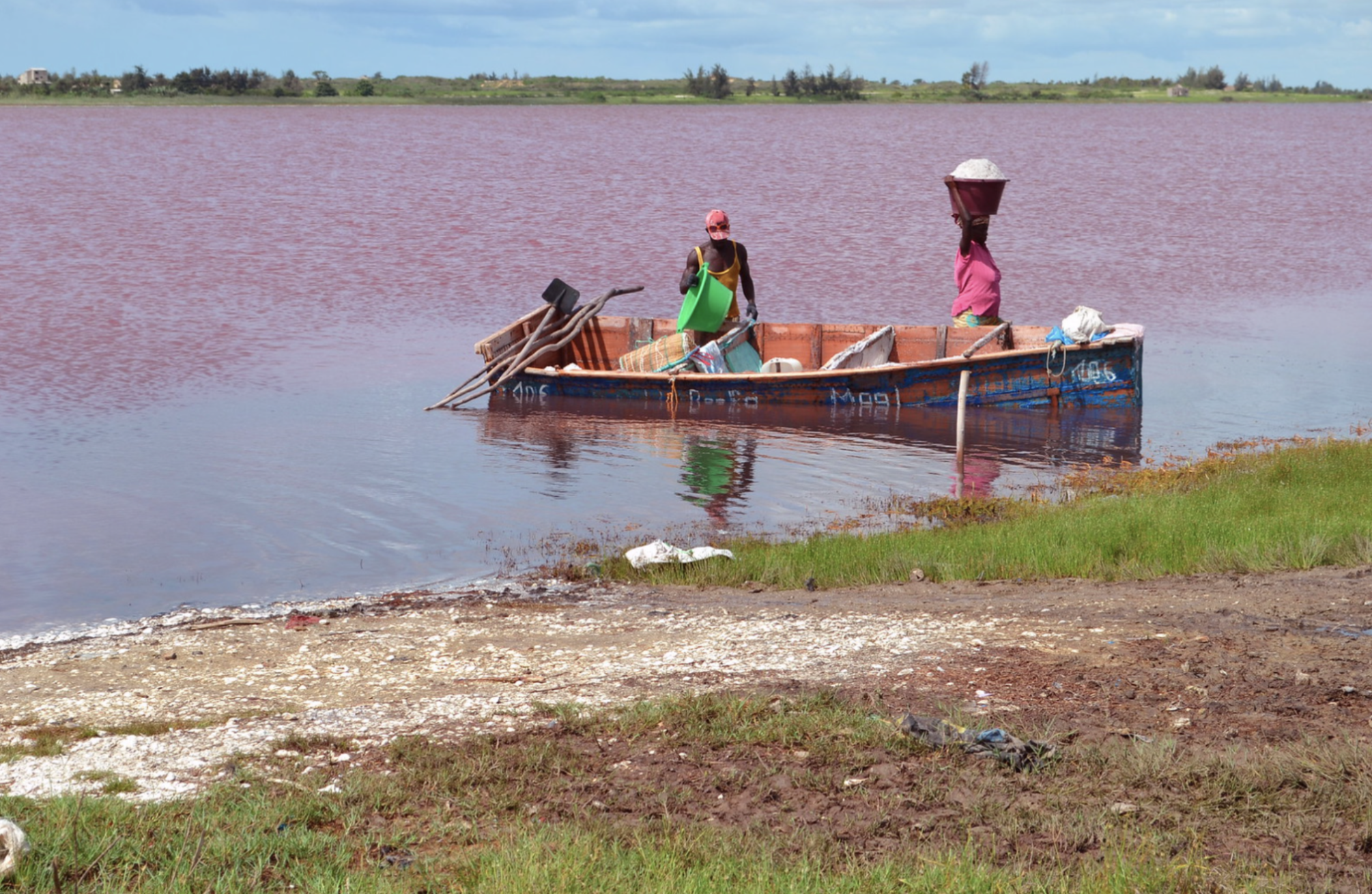
Salt miners in a boat on Lac Rose. Mireia Saenz de Buruaga. CC BY-NC-ND 2.0.
Located just outside Senegal’s capital of Dakar, Lake Retba, also known as Lac Rose, is famous for its striking pink waters. But beneath its colorful surface lies an important industry: salt mining.
In some areas, Lake Retba is nearly 40% salt, levels that rival even the Dead Sea. This allows salt to be harvested directly from the lake: nearly 60,000 tons of salt each year before the 2022 floods. However, the salinity poses significant risks to the roughly 3,000 people doing the extraction.
To gather the salt, miners must canoe into the middle of the water, where they jump in to scoop up the salt. Once the boat is full of salt, they return to shore. Once the salt reaches shore, some may make up to 200 trips a day carrying it from the boats to drying mounds
Prolonged exposure to the lake’s salty water takes a toll on one’s body. Primarily, the highly concentrated salt can scorch one’s skin, causing painful, searing wounds. As a result, most workers apply shea butter before entering the water to shield their skin.
However, shea butter can’t protect workers from the pain of physical strain. Salt harvesting is incredibly physically demanding, with many workers experiencing aches and sores.
“My entire body hurts. My head hurts. My knees hurt. Nothing is easy in this job,” one female worker told Business Insider.
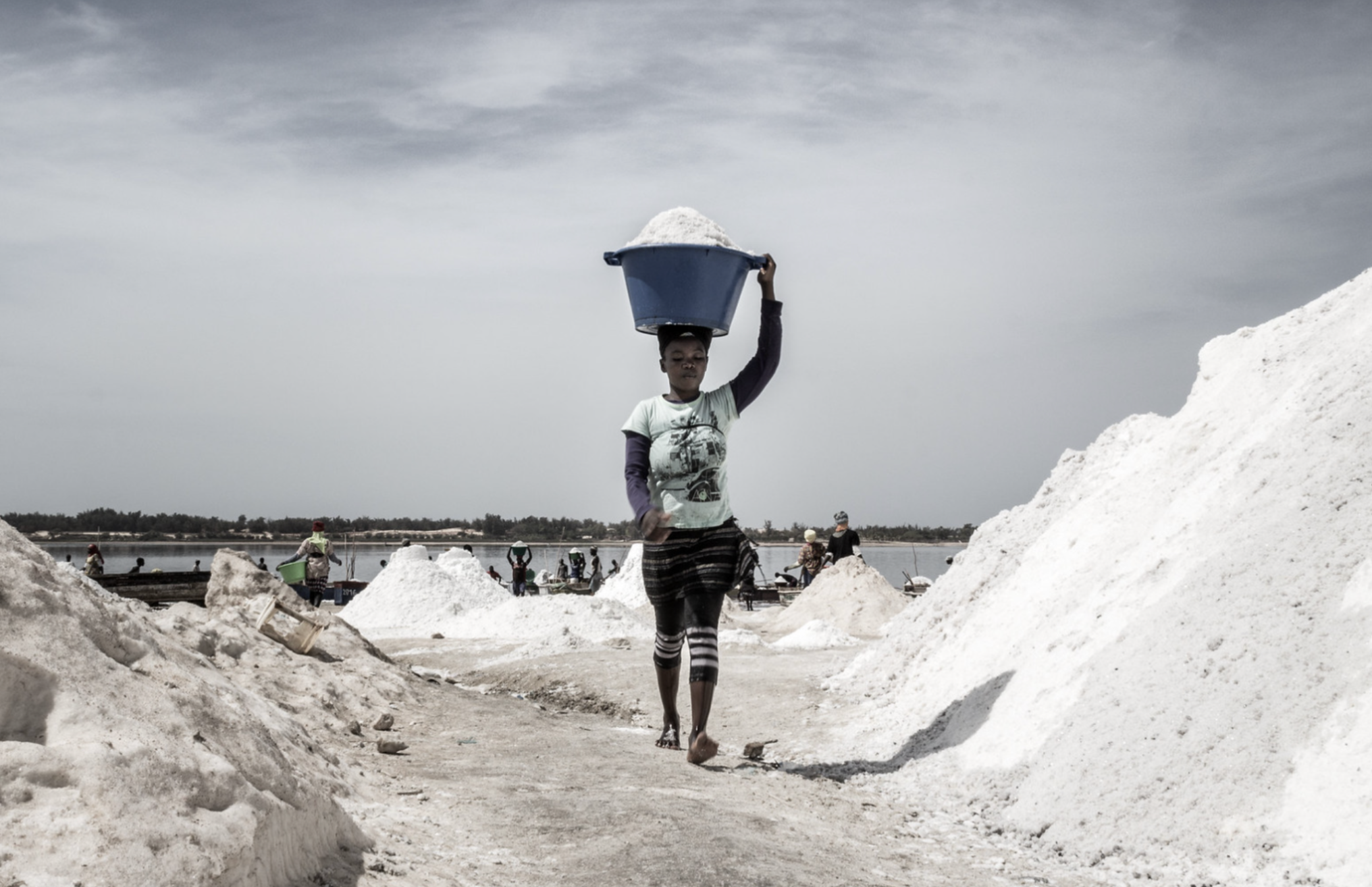
Female salt worker in Senegal. Yoann Gauthier. CC BY-NC 2.0.
Environmental factors only add to the dangers of the job. In August 2022, severe flooding diluted the lake’s salt water, disrupting the ecosystem and the incomes of those who depend on the lake.
While the lake regained its pink hue by July 2026, the flooding added another layer of uncertainty to an already precarious livelihood.
Despite these risks, leaving the industry is not always a realistic option. Salt harvesting provided an average of $20 per day in 2012, an income that can be difficult to replace in a region where employment opportunities are extremely limited. For workers without formal education, finding work is particularly challenging.
Boubacar Keita, a salt miner from Mali, told Atlas Obscura that due to his lack of education, he couldn’t find other job opportunities. “I’m at the bottom rung of life here,” he said.
As a result, the physical toll of salt harvesting can be difficult to escape. The lake’s future, then, is not just an environmental concern but an economic one: protecting the ecosystem also means protecting the livelihoods of the communities that depend on it.
GET INVOLVED:
Raise awareness about the environmental pressures facing the lake and the difficult conditions salt harvesters work under. For more information regarding the lake, read “How Senegal’s Iconic Pink Lake Lost Its Hue” from Atmos Earth.

Cove Johnson Rabidoux
Cove is an English student at the University of California, Los Angeles. Her writing can be found in the Daily Bruin, The Teen Magazine, Piece of Cake Magazine, and other publications. In her free time, she enjoys reading and traveling.