
By Carol Khorramchahi
In climate-vulnerable communities across the Global South, disasters can push girls out of school and into adult responsibilities long before they are ready.
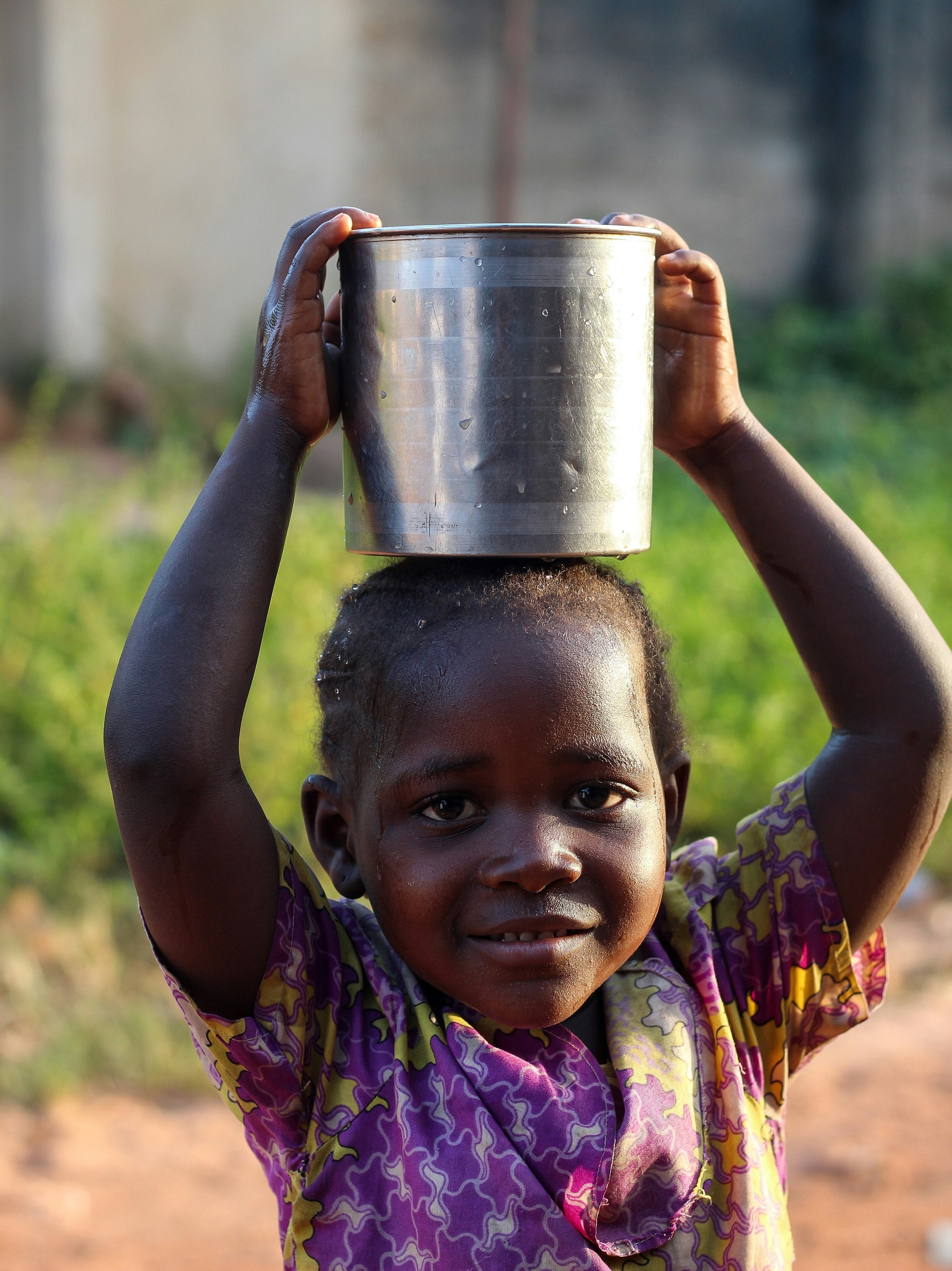
Young girl carrying water in Nigeria. Fatima Yusuf. Unsplash.
Climate disasters are usually measured in numbers: homes destroyed, people displaced, crops lost, schools closed. But in many climate-vulnerable communities across the Global South, the consequences can fall especially heavily on adolescent girls. The damage often continues long after the water recedes or the drought breaks. A climate shock can turn into a family crisis, and a family crisis can quickly become a girl’s burden.
That burden can look like walking farther for water, caring for younger siblings while parents search for work, missing class because a school is closed or damaged, or leaving school altogether because the family can no longer afford fees, transport or supplies. UNICEF reported that climate hazards disrupted schooling for at least 242 million children in 2024, with heat waves, cyclones, floods and storms hitting education hardest in countries including Bangladesh, Mozambique, Pakistan and the Philippines.
For girls in already vulnerable communities, those interruptions can become permanent. Plan International’s report on climate change and girls’ education warns that climate-related school disruptions can increase girls’ risk of child marriage, gender-based violence, early pregnancy and unpaid care work. When a disaster pushes a household into poverty, girls are often the first asked to sacrifice school and the last given a path back.
This is what makes climate policy incomplete when gender is treated as an afterthought. A government can rebuild a bridge and count that as recovery. A family can repair a roof and still decide their daughter will not return to class. The official disaster may end, while adolescence quietly narrows.
In Pakistan, that pattern has been visible since the devastating 2022 floods, which damaged or destroyed thousands of schools and affected millions of children. Humanitarian groups warned that girls faced increased risks of dropping out, child marriage and exploitation as families struggled to recover. The flood was an environmental disaster, but for many girls, the deeper crisis was social: safety diminished, school disappeared and childhood became more fragile.
In the Horn of Africa, drought has created another version of the same problem. As families lose livestock, income and food security, girls can be pulled from school to help at home or married earlier as a perceived way to reduce household pressure. UNFPA has warned that climate disasters and displacement expose women and girls to greater risks of gender-based violence, harmful practices like child marriage and preventable maternal health risks.
The solution is not to treat girls only as victims. Girls’ education is also one of the most powerful tools communities have for resilience. Plan International notes that education helps girls understand climate risks, access information, participate in decisions and push for safer futures.
The climate crisis is already changing where people can live, work and go to school. In the Global South’s most climate-vulnerable communities, it is also changing when childhood ends for many girls. If climate plans do not include girls’ safety, education and health, they are not complete recovery plans. They are only rebuilding the world around the people most likely to be left behind.
GET INVOLVED:
Support girls’ education and climate resilience through Plan International and UNICEF. Follow reproductive health and protection work through UNFPA. For disaster displacement data and climate mobility research, see the Internal Displacement Monitoring Centre and ReliefWeb.
Carol Khorramchahi
Carol Khorramchahi is a student at Boston University, where she studies English and Psychology and minors in Journalism. She enjoys writing and reporting on stories that bring together culture, identity, and community, and has experience in both newsroom reporting and digital media. She is especially interested in thoughtful storytelling with a global lens.