
By Carol Khorramchahi
Clean energy is necessary, but the minerals powering electric cars and batteries are raising new questions about land, labor and who pays for the transition.
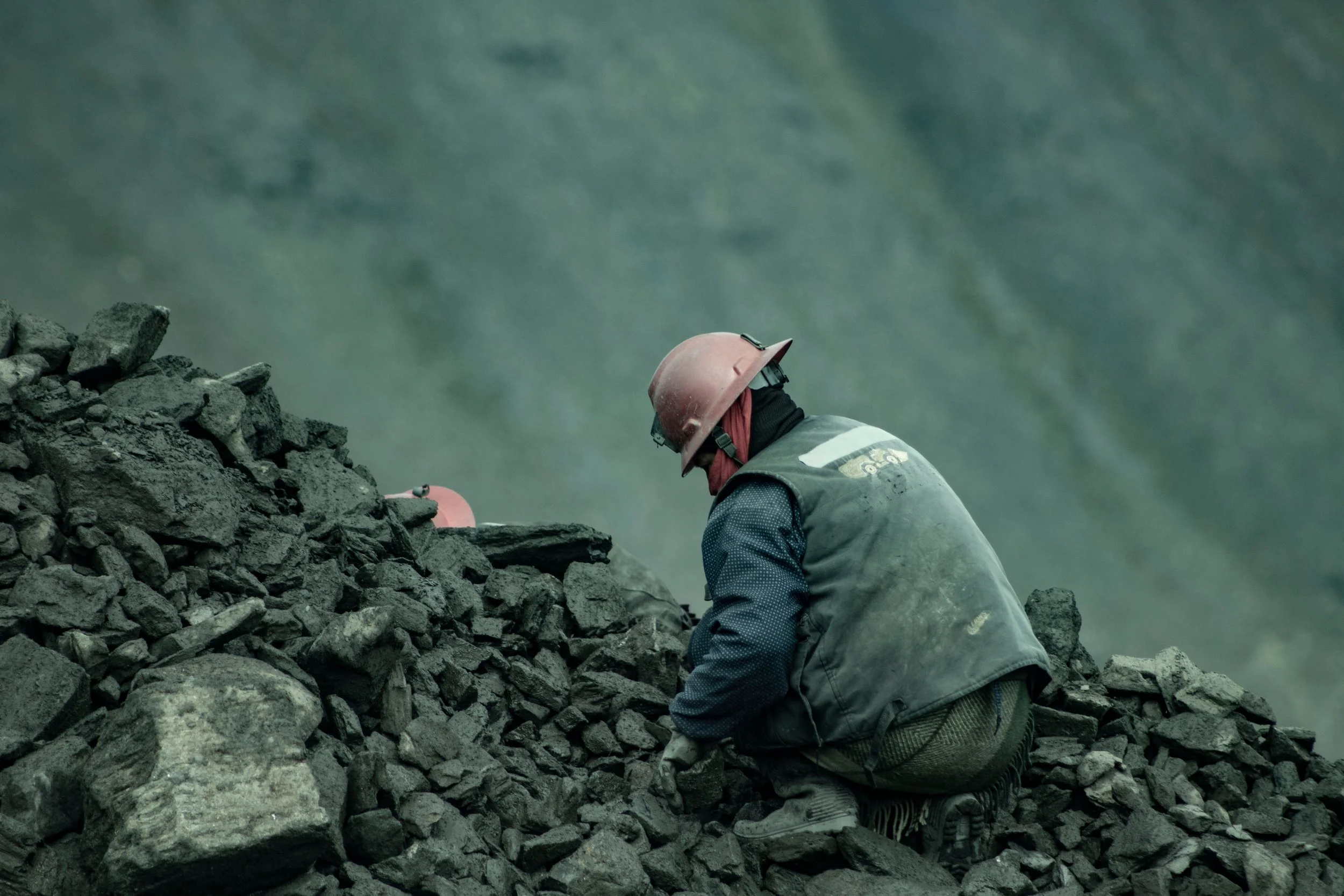
Miner working in a quarry in Puno, Peru. Neneqo Fotografo. Pexels.
The clean energy transition is often pictured as smooth and modern: electric cars, solar panels, wind turbines and batteries replacing a dirtier past. But before a battery reaches a driveway or a phone, it begins somewhere else, usually in a mine. The minerals that make clean technology possible, including cobalt, lithium, nickel, copper and graphite, are increasingly at the center of a harder question: can the world move away from fossil fuels without repeating the same extraction patterns that harmed vulnerable communities in the first place?
The demand is real. Electric vehicles require far more mineral inputs than conventional cars, and the International Energy Agency says the energy sector has driven most recent growth in demand for battery metals like lithium, nickel, cobalt and graphite. That does not mean the transition should stop. It means the supply chain needs to be treated as part of the climate story, not an invisible background detail.
The Democratic Republic of Congo shows why. The country supplies much of the world’s cobalt, a key mineral used in many rechargeable batteries. In Kolwezi and surrounding mining areas, Amnesty International and Congolese organization IBGDH documented forced evictions tied to industrial cobalt and copper mining. Their report described homes destroyed, communities displaced and people losing access to land and livelihoods as mines expanded.
Amnesty International Secretary-General Agnes Callamard warned that “Decarbonizing the global economy must not result in additional human rights violations.” That sentence captures the contradiction at the center of the clean energy race. An electric car may produce fewer emissions on the road, but its battery can still carry the weight of displacement, dangerous labor or polluted land if companies and governments do not enforce stronger protections.
Lithium raises another version of the same problem. In South America’s salt flats and Nevada’s high desert, Indigenous communities have warned that lithium extraction can threaten scarce water, fragile ecosystems and cultural survival. Amnesty International’s 2026 briefing on Nevada’s lithium boom argued that several projects were advancing without the free, prior and informed consent of affected Indigenous peoples. Human Rights Watch and the ACLU made a similar argument about the Thacker Pass project, saying the U.S. permitting process violated Indigenous people’s rights.
Graphite, another battery material, carries its own risks. A 2025 study summarized by the Business & Human Rights Resource Centre documented allegations of harm connected to graphite mining in Madagascar, including water pollution, deforestation, soil erosion, loss of agricultural and grazing land and damage to sacred or ancestral sites.
For consumers, this can feel distant. Most people buying an electric vehicle or supporting renewable energy are trying to reduce harm, not create it. But that is exactly why the supply chain matters. A just transition cannot be measured only by what comes out of a tailpipe. It also has to ask what happened at the mine, whose land was used, whose water was risked and whether communities had the power to say no.
The world needs clean energy. The question is whether it can be built cleanly all the way down.
GET INVOLVED:
Learn more about critical minerals and human rights through Amnesty International and Human Rights Watch. Track global mineral demand through the International Energy Agency. Support supply-chain accountability by following organizations such as Business & Human Rights Resource Centre and asking car, battery and electronics companies to publish clear information about their human rights due diligence for the minerals they use.

Carol Khorramchahi
Carol Khorramchahi is a student at Boston University, where she studies English and Psychology and minors in Journalism. She enjoys writing and reporting on stories that bring together culture, identity, and community, and has experience in both newsroom reporting and digital media. She is especially interested in thoughtful storytelling with a global lens.