
By Joseph Morales
Despite billions pledged internationally for Amazon preservation, Indigenous patrols defending rainforests receive only a small percentage of direct climate finance.
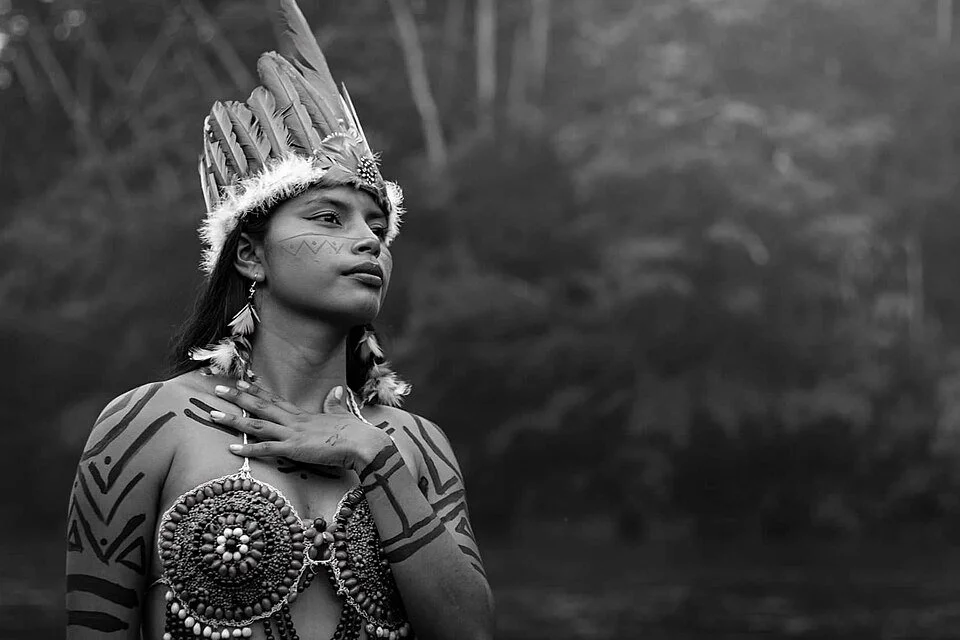
Kichwa Indigenous leader and Amazon defender Janet Salazar Grefa. Sergio Carranza Basantes. CC BY-SA 4.0.
Across the Amazon Basin, Indigenous communities stand as the primary line of defense against tropical deforestation and biodiversity loss.
Stretching over nine nations, these ancestral territories encompass some of the most intact forest cover on the planet. Studies consistently show that deforestation rates are significantly lower inside legally recognized Indigenous lands than in state-managed reserves.
As Fany Kuiru, General Coordinator with the Indigenous Organisations of the Amazon Basin, stated: "Indigenous territories are the best preserved in the Amazon because we make respectful use of our territory and natural resources." Yet, despite playing this vital role in global carbon regulation, the Indigenous patrols monitoring and defending these forests operate under severe financial constraints and growing security threats.
At international climate summits, world leaders and philanthropic institutions regularly pledge billions of dollars toward rainforest conservation and Indigenous land tenure. However, a major structural flaw persists in how these funds are distributed.
The vast majority of global climate finance passes through multi-layered international bureaucracies, national governments and large non-governmental organizations. By the time administrative fees and compliance hurdles are processed, only a fraction reaches local hands.
Reports from the Forest Tenure Funders Group reveal that in 2021 and 2022, less than 3% of its members’ pledged funding directly reached Indigenous and local community organizations on the ground. By 2025, that share stood at just 7.2%.
This financial disconnect creates a dangerous disparity on the front lines. Indigenous territorial guards, such as the Charip guards of the Wampis Nation in Peru and Yanomami community monitors in Brazil, risk their lives daily to track illegal gold mining, illicit logging and land-grabbing syndicates.
Galois Flores Pizango, Vice Pamuk, or Vice President, of the Autonomous Territorial Government of the Wampis Nation, highlighted the core objective of their territorial governance: "For us, the Wampis, autonomy means living in freedom and peace as we have inherited our territory. It means being free from pollution and deciding our own future, for ourselves, but also for all of humanity."
Armed with basic gear, handheld GPS units and community-operated drones, these volunteer guardians document environmental crimes where state law enforcement is absent. As Rainforest Foundation US documented in their work supporting local monitoring networks, equipping local patrols with direct resources drastically improves real-time detection of illegal deforestation while bolstering community safety.
Without steady financial support for legal defense, secure communication systems and emergency transport, community guards face escalating retaliation from organized criminal networks expanding into remote forest tracts.
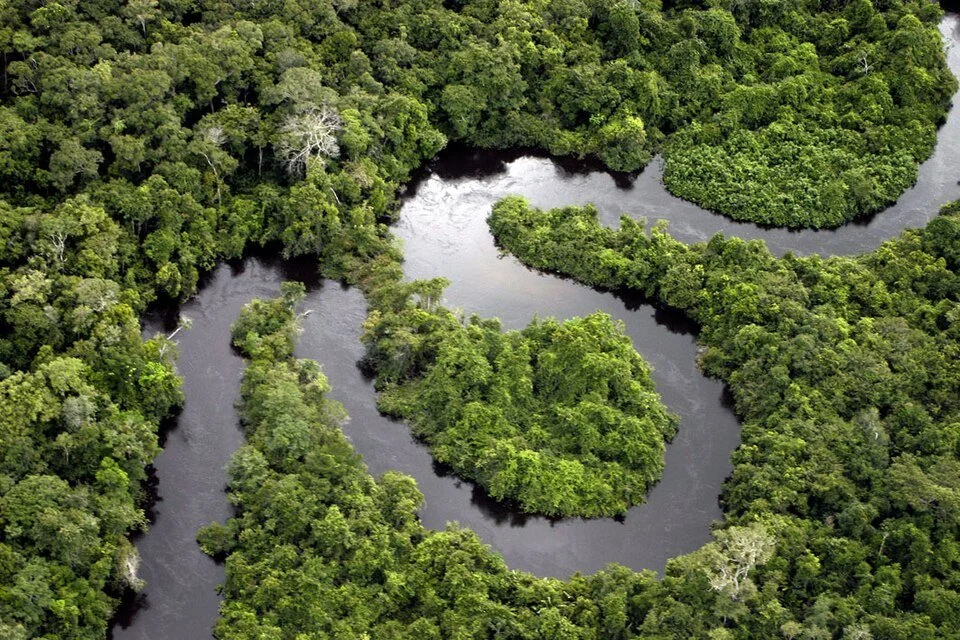
Aerial view of a river winding through the Amazon Rainforest. Jlwad. CC BY-SA 4.0.
To effectively protect the Amazon canopy, international funding systems must lower bureaucratic barriers and establish direct-grant mechanisms, such as the activist-led Amazon Defenders Fund, that disburse resources directly to tribal governance structures.
Protecting the world’s critical carbon sinks requires the recognition of Indigenous peoples not merely as beneficiaries of conservation aid, but as sovereign, fully funded partners in global climate stewardship.
GET INVOLVED:
Rainforest Foundation US: Partners directly with Indigenous communities in Central and South America to provide technology, legal support and direct funding for forest monitoring.
Global Witness: Documents human rights abuses, land-grabbing and the threats faced by environmental defenders worldwide.
COICA (Coordinating Body of Indigenous Organisations of the Amazon Basin): The umbrella organization representing Indigenous peoples and their regional organizations across the entire Amazon basin.
Autonomous Territorial Government of the Wampís Nation (GTANW): The official self-governing administrative body of the WampIs Nation in the Peruvian Amazon protecting their ancestral territory.
The Amazon Defenders Fund: A program of Amazon Watch that provides direct, rapid-response micro-grants to Indigenous leaders and community patrols across the Amazon Basin.
Joseph Morales
Joseph Morales is an enrolled member of the Tohono O’odham Nation and an English major at Arizona State University. Through his education he has built years of experience in digital media and tribal journalism, focusing on representation and community storytelling.