
By Jeremy Gordon
Plans to construct up to 18 new data centers in Batam, Indonesia, have sparked protests among local residents, who have seen their water supplies depleted for months.
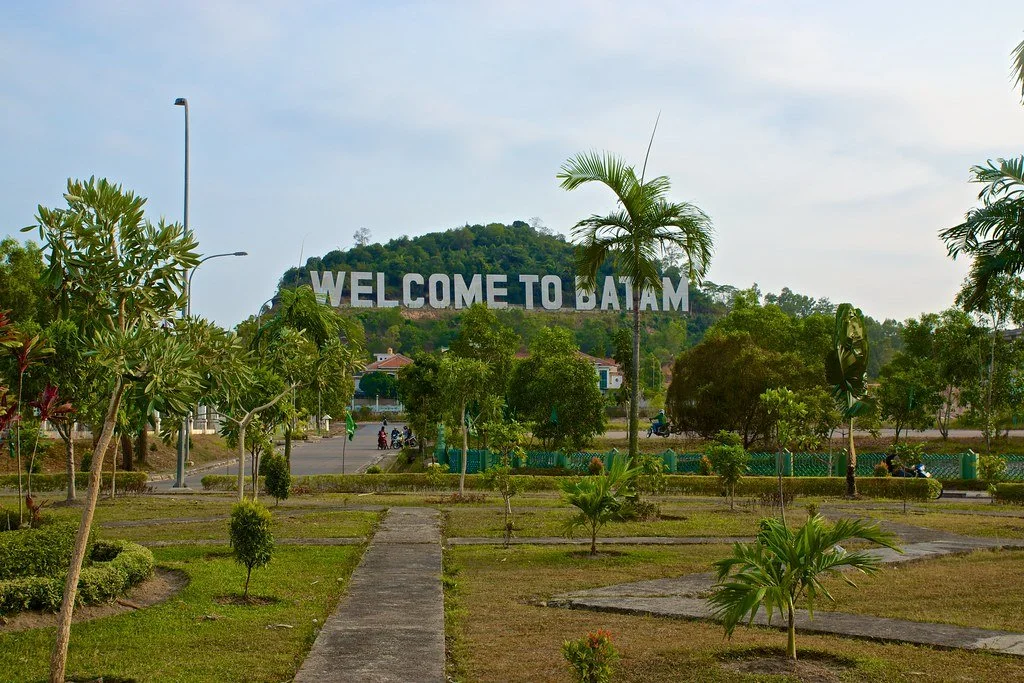
Kota Batam, Kepulauan Riau, Indonesia. Uwe Schwarzbach. Flickr. CC BY-NC-SA 2.0.
Data centers have seemingly cropped up everywhere in the last two years, becoming the focus of widespread public ire. These centers, which house servers, storage drives and networking equipment, have been blamed for their incessant noise pollution and industrial-grade ugliness, as well as rising utility costs and diminishing water quality and supply in surrounding areas. The issue was a focal point in the 2026 U.S. midterm season, resulting in dozens of new restrictions and moratoriums on projects across the country, but animosity toward them is worldwide. This includes Batam, Indonesia, where a plan to turn the island into a low-cost digital hub has sparked protests from locals.
Batam is part of Indonesia’s Riau Islands province. The island, which has a population of around 1.3 million, has faced water shortages over the last year, the result of a powerful El Nino, which caused a particularly severe dry season, along with longstanding water-infrastructure problems. The island lacks natural freshwater rivers and relies instead on six artificial reservoirs filled by rainwater.
Compounding the water issue is the fact that Batam’s authorities recently approved plans for up to 18 new data centers to be built on the island. The island is ideal for tech companies to build such centers due to its proximity to Singapore, its relatively low operating costs, and its access to a network of underwater cables. Two of these new data centers are already operational.
By 2032, 10 data centers operating at full capacity could require over 8 million gallons of water a day. That will suck up about 8% of the island’s total water supply. And according to residents, they have already started causing problems.
For the past three months, the water in Batam has run only at night, whereas it used to run 24 hours a day. Many home water meters now register no flow at all. Residents have had to rely on water from tanker trucks, which is often dirty and malodorous. Many residents cannot shower, cook their rice or wash their vegetables.
This has sparked a wave of protests, with citizens gathering outside the Nongsa Digital Park, where the new data centers are being built, to voice their dissent and demand action from the government. These protests have been somewhat successful, prompting the authorities to order data center developers to construct their own water infrastructure instead of relying on the island’s depleted resources.
Plans for desalination plants, which turn saltwater into potable water, are now underway. On Nov. 5, 2026, the city broke ground on the Sea Water Reverse Osmosis facility in Kabil Industrial Estate, which will cost $32.8 million to build and eventually produce around 184 gallons of drinkable water per second. But the project’s first phase is targeted for completion in November 2027, a full year away.
Meanwhile, Batam’s residents still face grave problems. They cannot rely on consistent clean water with which to bathe and cook and they continue to see these new data centers as the cause. Rage against data centers is not just limited to the United States and the West. It is a global phenomenon. And as is often the case in the developing world, citizens struggle to have a say in decisions made by large and wealthy entities.

Jeremy Gordon
Jeremy is a graduate student at Johns Hopkins University studying Creative Writing. He graduated from the University of Maryland with a bachelor's in Criminology and Criminal Justice and worked for four years as an Investigative Specialist with the Public Defender Service for DC.