
By Barrington Jayden Henry
The Romani People continue to face discrimination in the Czech Republic.
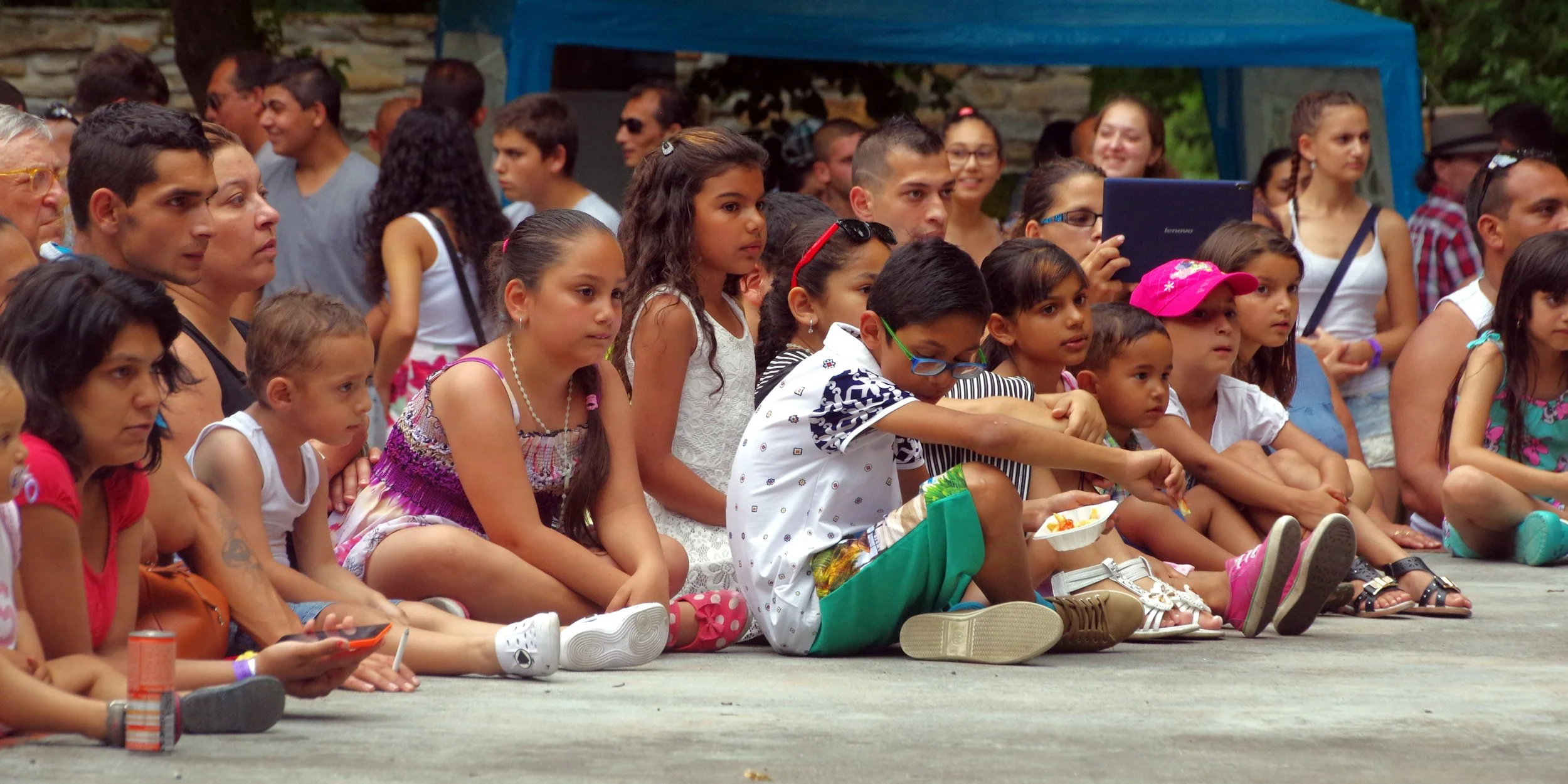
Children at a Roma Festival in the Czech Republic. Donald Judge. CC BY 2.0.
The Czech Republic is one of the most ethnically homogeneous nations in Europe. Once a relatively diverse part of the Holy Roman Empire, and later in Austria-Hungary, large and thriving populations of Germans, Jews and Hungarians were cast out through war and ethnic cleansing during the 20th century. Today, ethnic Czechs make up a large majority of the population, following the 1989 Velvet Revolution and the dissolution of communist Czechoslovakia. One of the country’s very few minority groups continues to face much discrimination in the public sphere: the Romani people.
The Romani people, commonly known by the derogatory term “Gypsy,” or as a group, the Roma, are a Eurasian ethnic group known for their historical nomadic lifestyle. While research has indicated that the Romani people have origins in the Indian subcontinent, they currently inhabit almost every European country. Throughout the past millennium, they have been subjected to enslavement and forced assimilation across Europe. During World War II, Nazi forces murdered as many as 500,000 Romani people in the Holocaust. Even today, with a population of approximately 12 million living in Europe, Romani people are commonly discriminated against and cast as outsiders in European societies.
Despite Romani people having lived in the Czech lands for centuries, they are frequently othered and discriminated against in almost every facet of society. This discrimination starts from a young age, as Romani children are systematically segregated from their non-Roma classmates and sent to ethnically concentrated schools. Despite Romani people rarely making up more than 10% of the residents in any given community in the Czech Republic, one can commonly see one school filled with almost entirely Romani children, and another with none. If they are not sent to segregated schools, Romani children are often placed in “special schools,” facilities or classes designed for children with intellectual or learning disabilities, regardless of whether they are actually afflicted with them. According to the Open Society Justice Initiative, Roma children are disproportionally represented in special education settings. In these learning environments, they are not being provided with the tools they need to succeed, nor the quality education that they deserve.
Romani people in the Czech Republic have faced discrimination and inequality in the public sphere for many decades. In addition to disparities in education, Roma in the Czech Republic are disproportionately poorer than other groups in the nation. They are also often victims of housing discrimination, including unfair evictions and exclusion from housing benefits. The state has failed to address these issues and ensure that they are adequately served, and the European Committee of Social Rights has reprimanded the Czech Republic for allowing discrimination that can “seriously infringe on their private and family lives, as well as on their right to health.” This is also reflected in the Czech Republic’s political discourse. After the 2025 parliamentary election, when political parties ANO 2011, Freedom and Direct Democracy and Motorists for Themselves formed a governing coalition, environment minister nominee Filip Turek came under fire for his unearthed racist posts on social media, one of which celebrated the firebombing of a Romani household.
There are some signs of improvement and investment in addressing discrimination in the Czech Republic. Two years ago, the previous government officially recognized “antigypsyism” as a type of racism, and the current government is moving toward investing more state resources into combating discrimination and shrinking socioeconomic disparities that plague the Romani people. Ultimately, true progress will happen when the attitudes of people, not only institutions, change for the better.
GET INVOLVED:
To learn more about the lives and challenges of Romani people in the Czech Republic and throughout Europe, visit the European Roma Rights Centre, which works to spotlight and combat anti-Roma hate.
To learn more about the effort to involve Romani people in political participation and draw policymakers’ attention to antigypsyism, visit the Roma Foundation for Europe, which works to empower and engage Romani people across the continent.

Barrington Jayden Henry
BARRINGTON JAYDEN HENRY is from the Atlanta area and is a senior at Vanderbilt University, studying political science and history. Jayden is also the host of the weekly radio program I Want to Tell You Something on WRVU Nashville. In his free time, he enjoys playing tennis, reading, and going to museums.