
By Azhar Kantayeva
The death of Saltanat Nukenova sparked nationwide attention and legal reform, but Kazakhstan is facing a crucial question: Do stronger laws translate into real protection for women?

A protester holds a sign calling for an end to violence against women. Fmtechgirl. CC BY-SA 4.0.
In 2023, the murder of 31-year-old Saltanat Nukenova became one of the most closely followed cases of domestic violence in Kazakhstan. Her husband, former economy minister Kuandyk Bishimbayev, was convicted of her murder and sentenced to 24 years in prison on May 13, 2024. His trial was broadcast online and followed by more than 3.5 million people each day, according to UN Women. It also attracted national and international attention, including from Russia and other Russian-speaking countries. Thousands of people later joined online activism and peaceful demonstrations calling for justice and stronger protection for women. For many people, Nukenova’s case became more than a criminal trial. It opened a difficult conversation about domestic violence, women’s safety and whether Kazakhstan’s laws were doing enough to protect survivors.
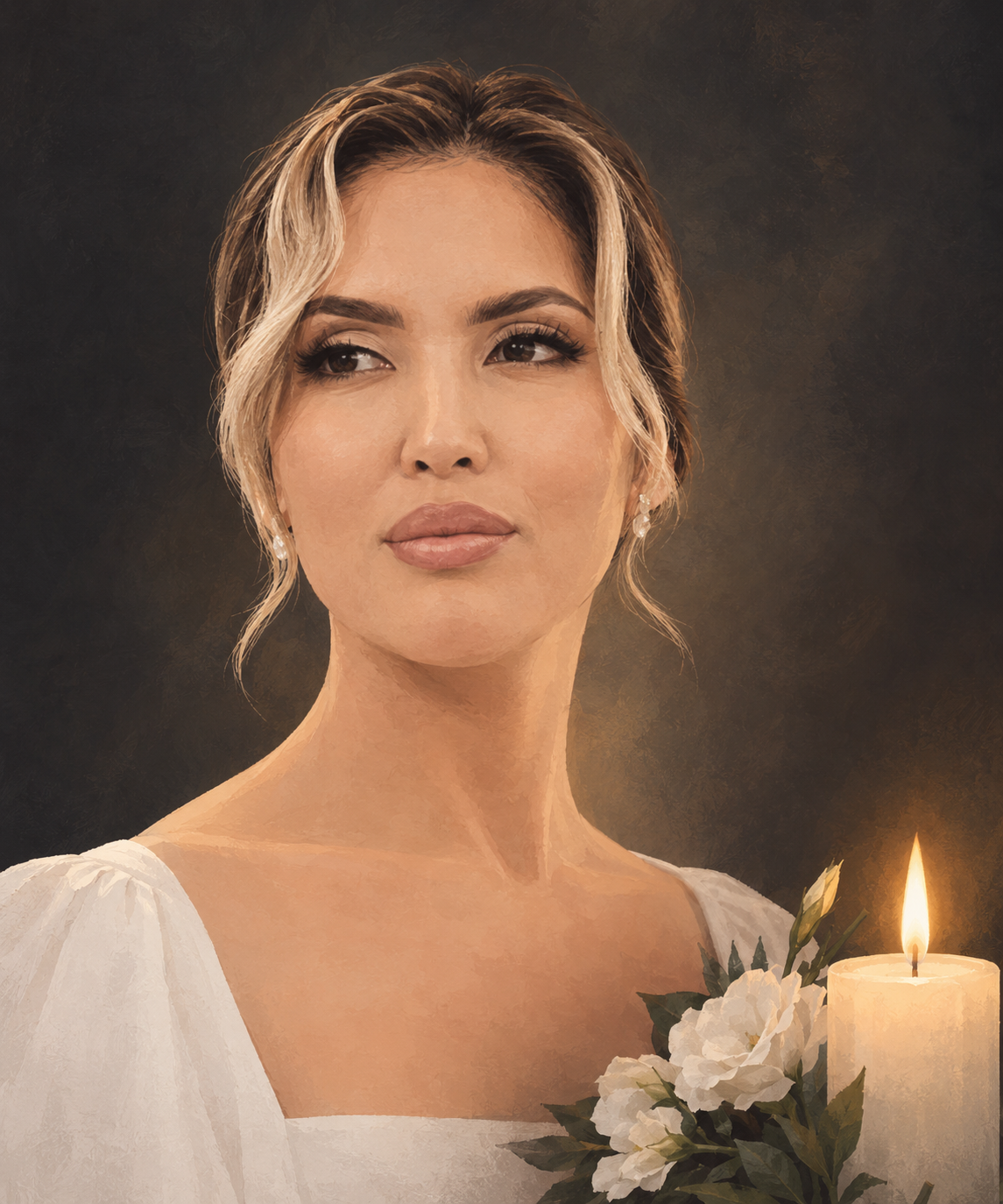
Editorial illustration of Saltanat Nukenova. Original artwork.
On April 15, 2024, President Kasym-Jomart Tokayev signed a new law aimed at strengthening the protection of women and children from violence. The reforms restored criminal penalties for battery and intentional infliction of light bodily harm, offenses that had been decriminalized in 2017. They also changed how domestic violence cases are handled by the police. Officers became responsible for collecting evidence and are now required to register and investigate reports of domestic violence even when there is no formal complaint from the survivor.
A woman experiencing domestic violence may fear retaliation, depend financially on her partner, worry about her children or face pressure from relatives. Social stigma can make reporting even more difficult. In an interview with UN Women, Nukenova’s brother, Aitbek Amangeldi, highlights the Kazakh concept of uyat, meaning “shame,” as one factor that can discourage women and girls from reporting violence. Fear, stigma and inadequate support systems can leave survivors feeling that speaking out may create more problems rather than solve them. The 2024 reforms attempted to reduce some of the burden placed on survivors by giving law enforcement greater responsibility for collecting evidence and investigating cases.

Illustration depicting domestic violence against women. UN Women. CC BY 3.0.
Changing the law is only one part of protecting survivors. A woman may also need somewhere safe to stay, psychological support, legal assistance and financial help. Kazakhstan’s government reports that crisis centers provide psychological, social and legal assistance to survivors. UN Women has documented the experiences of survivors and people supporting them in its article “Ending domestic violence in Kazakhstan: stories from survivors and allies”.
The story of Saltanat inspired her brother to create a volunteer network supporting survivors of domestic and gender-based violence. According to UN Women, the network has grown to more than 3,000 active volunteers and has worked on around 1,200 cases of domestic violence and femicide. These efforts show that the response to domestic violence is not limited to courts and police. Community support can also give survivors practical options when they decide to leave an abusive situation.
The scale of the problem remains significant. Kazakhstan’s Interior Ministry recorded 99,026 complaints related to family violence in 2023, while courts imposed administrative sanctions on 67,270 people. UN Women reports that 16.5% of women ages 18 to 75 in Kazakhstan have experienced physical or sexual violence in their life from an intimate partner. However, the organization notes that domestic violence is underreported, and official numbers may not show the full picture. This makes it difficult to measure whether women are actually safer. More reports could mean more violence, but they could also mean that more women feel able to seek help. Fewer reports do not necessarily mean that violence has decreased either.

Jas Otan activists help families in need. Yersain77. CC BY-SA 4.0.
Human Rights Watch welcomed the 2024 reforms but argues that the law remains incomplete. As of October 2026, domestic violence itself is not a standalone criminal offence. Instead, the law criminalizes specific acts such as battery and intentional infliction of light bodily harm. This distinction matters because domestic violence can involve psychological, sexual and other forms of abuse that may not leave visible physical injuries. Human Rights Watch has also raised concerns about implementation, monitoring and access to services, particularly in rural areas.
Kazakhstan has taken important steps since Saltanat Nukenova’s death. The law has changed, police responsibilities have increased and support services are available to survivors. But a law cannot protect a woman if she is too afraid to report violence, has nowhere safe to go or cannot trust that the system will respond when she asks for help.

Saltanat Tursynbekova speaks at a parliamentary meeting on domestic violence. Talgat Tanybayev, Press Service of the Majilis Of The Parliament Of The Republic Of Kazakhstan. CC BY 4.0.
Nukenova’s story became a catalyst for change, forcing a previously private issue into a national conversation. More than two years after the reforms, her case still raises the most important question: is changing the law enough to make women feel safe?
The answer will not be found only in legislation or statistics. It will be found in the experiences of women who seek help: whether they are heard, protected and given a real chance to rebuild their lives. Kazakhstan has changed the law. Now, the harder task is putting that protection into practice.

Azhar Kantayeva
Azhar is International Relations student at Dokuz Eylül University in Türkiye and an emerging writer with a passion for journalism, travel, culture, and global affairs. She has experience writing about international issues, destinations, and cultural perspectives. Alongside her studies and writing, she works as an English and Turkish teacher. Her work is driven by curiosity, cultural exchange, and a desire to connect people through stories.