
By Khanh Huyen Nguyen
These cafes reveal Hanoi’s history through the architecture and everyday life that continue to shape the city today.
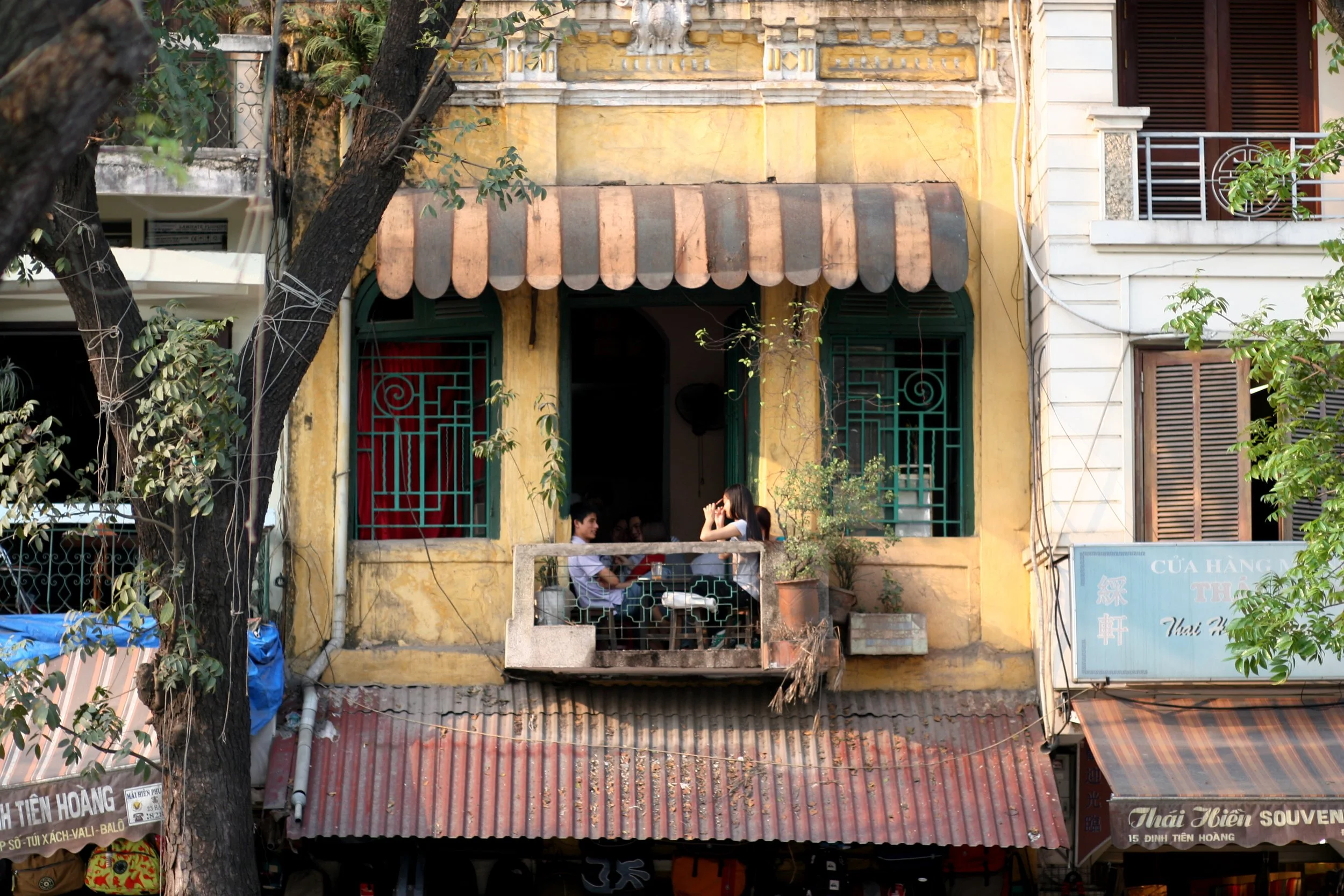
A cafe in a French colonial house in Hanoi. Nam-ho Park. CC BY 2.0.
Coffee culture is an integral part of Hanoi’s lifestyle. Beyond places to work, catch up with friends or relax with a cup of coffee, some cafes preserve traces of Hanoi’s past through their spaces and stories.
1. Loading T Cafe
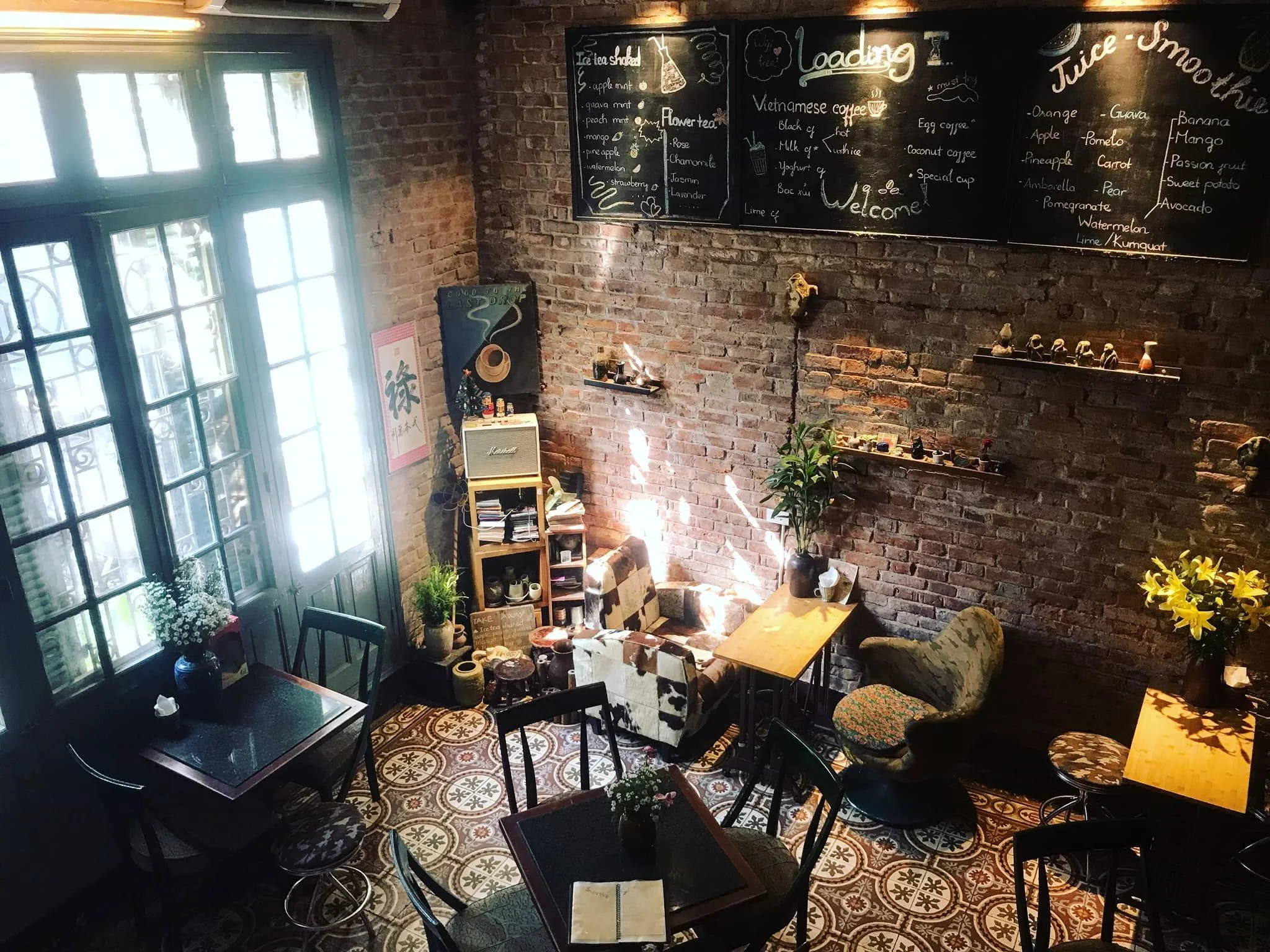
Loading T's cozy interior with red brick walls and vintage decor. Courtesy of Loading T Cafe.
Loading T Cafe occupies one of many old French colonial villas that continue to shape Hanoi’s Old Quarter. Built in 1932, the villa was the residence of a wealthy family. After the end of the First Indochina War in 1954, it was subdivided into smaller apartments to accommodate multiple families. Today, part of the building has been transformed into a cafe and craft shops, while some apartments remain home to residents.
Rather than renovating the whole space, the cafe’s owners have chosen to preserve details of Indochina-era architecture: the cream-yellow façade, olive-green wooden shutters and rounded balconies. High ceilings and large windows create the typical airy spaces of French colonial homes. Exposed red brick walls, vintage furniture and patterned floor tiles reveal the building’s past without turning it into a museum. The venue shows historic architecture adapted to Hanoi’s urban history while retaining the elegance that originally defined it.
2. Bancong Cafe
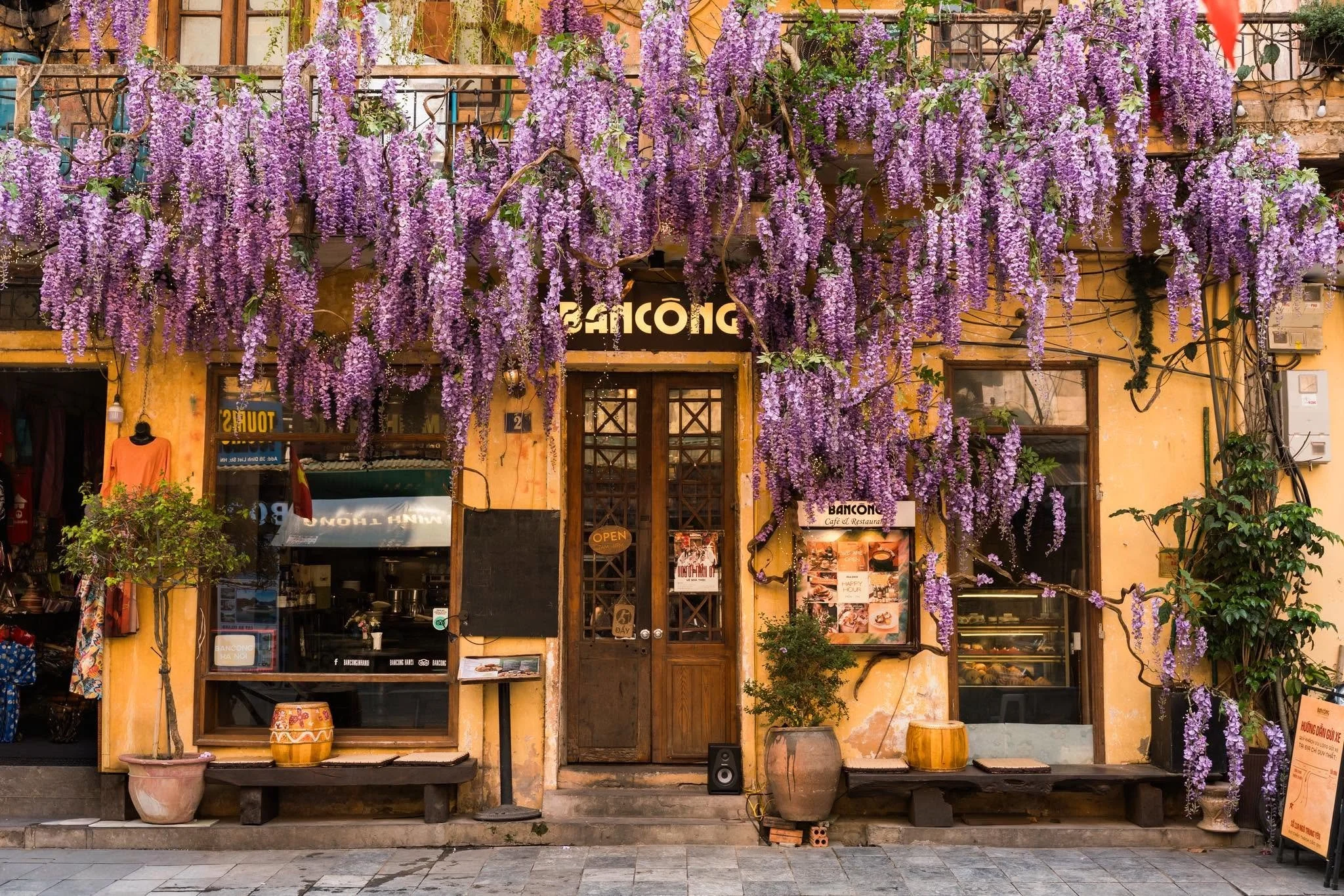
The distinctive yellow-wall facade of Bancong Cafe. Courtesy of Bancong Cafe.
Besides French colonial architecture, another architectural style found its way to Hanoi in the 1930s, Art Deco. Housed in one of the remaining Art Deco villas from this period, Bancong Cafe offers a chance to discover a lesser-known chapter of the city’s architectural history.
Although located on a bustling street, the villa was originally designed as a private residence rather than a commercial property. In 2019, a Hanoi architect purchased the building, carefully restored the villa and preserved its distinctive architectural features while adapting it for a new purpose. The cafe is named after its airy balconies, as the Vietnamese word “ban cong” means "balcony." Timeworn walls, vintage wooden tables and architectural details bring you back to Hanoi’s atmosphere during the 1930s, when French influences were woven into daily lives.
3. DOT Cafe

DOT’s balcony entrance features characteristic windows of old French villas. Courtesy of DOT Cafe.
Nestled on the second floor of a modest French villa on Tran Quoc Toan Street, DOT Cafe offers a more intimate perspective on Hanoi’s architectural heritage. Built in 1950, the villa has a smaller scale than the grand colonial residences that often capture visitors’ attention in the Old Quarter. But this feature makes the cafe more special.
Reaching DOT Cafe feels like discovering a local secret. There is no signboard outside, only an open doorway and a wooden staircase leading upstairs. Inside, much of the original character is still retained, including floral floor tiles, timber doors and large windows overlooking the tiled rooftops of the surrounding neighborhood. Most furniture and decorative pieces were collected from the owner’s home or gifted by his friends over the years. They create a warm, lived-in atmosphere as though you have been invited into someone’s living room, where the Hanoi’s stories continue to unfold.
4. Toka Coffee Stand
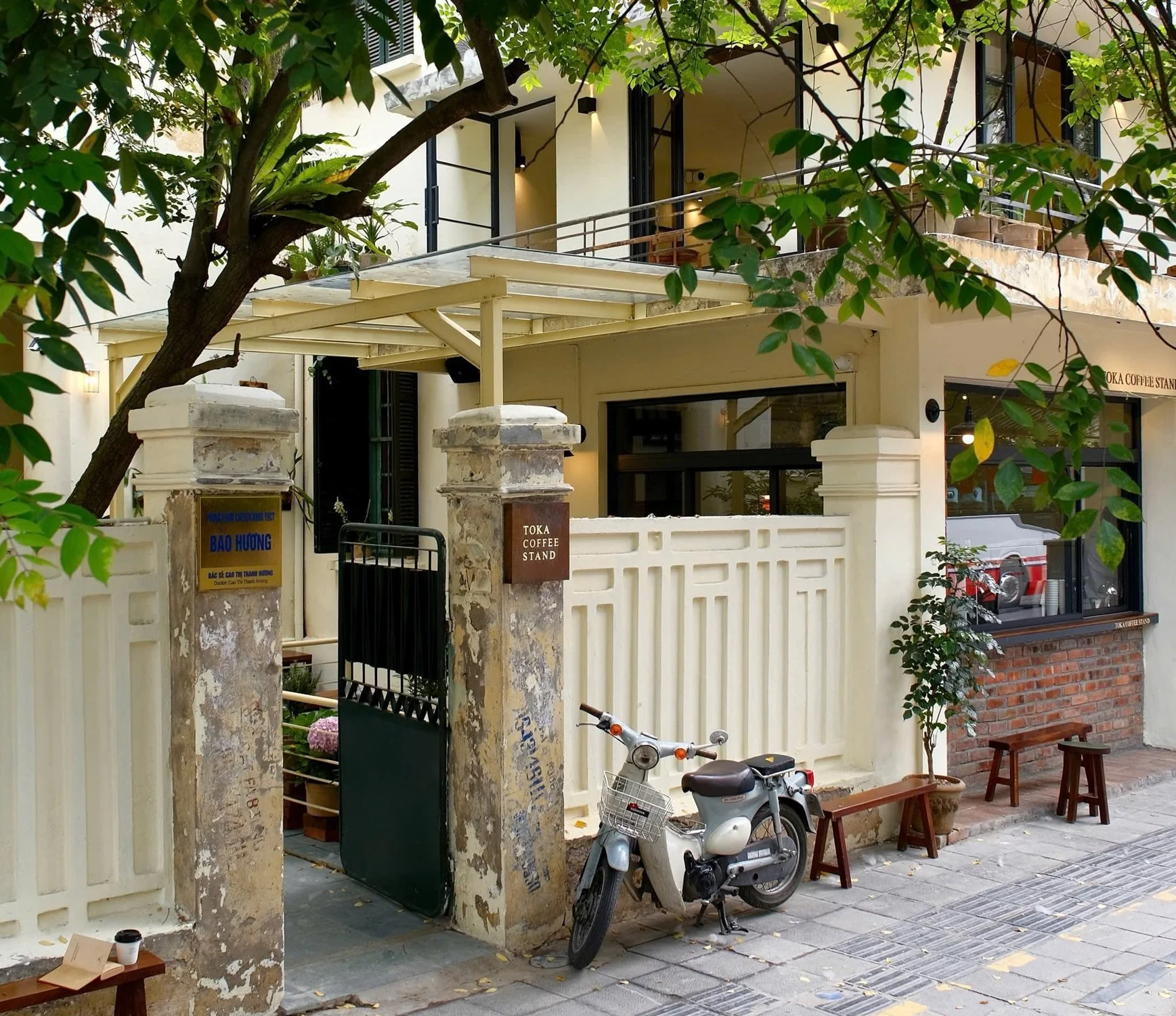
Toka’s exterior, with pale yellow walls and a green-painted iron gate. Courtesy of Toka Coffee Stand.
Unlike grand colonial villas whose architecture has remained largely recognizable through yellow walls, green shuttered windows and ornate details, Toka Coffee Stand offers a different interpretation of the city’s old houses. This cafe sits between the old and the new, where history blends with modern life into a place where people come to drink coffee, meet friends and spend their everyday moments.
Toka’s pale yellow walls and green-painted iron gate still carry the atmosphere of an older Hanoi home. In contrast, the modern coffee counter and a glass-covered outdoor area introduce a more contemporary rhythm. Inside, dark wooden furniture, patterned tiles, faded paint and vintage-style lighting create a sense of nostalgia. The sophisticated decor, despite its classic feel, doesn’t resemble a preserved relic at all, but rather a cozy homestay nestled in a peaceful residential area. A small courtyard with bamboo furniture and a traditional ceramic tea set adds another layer of Vietnamese daily life to the setting.
5. Cu Xa Cafe
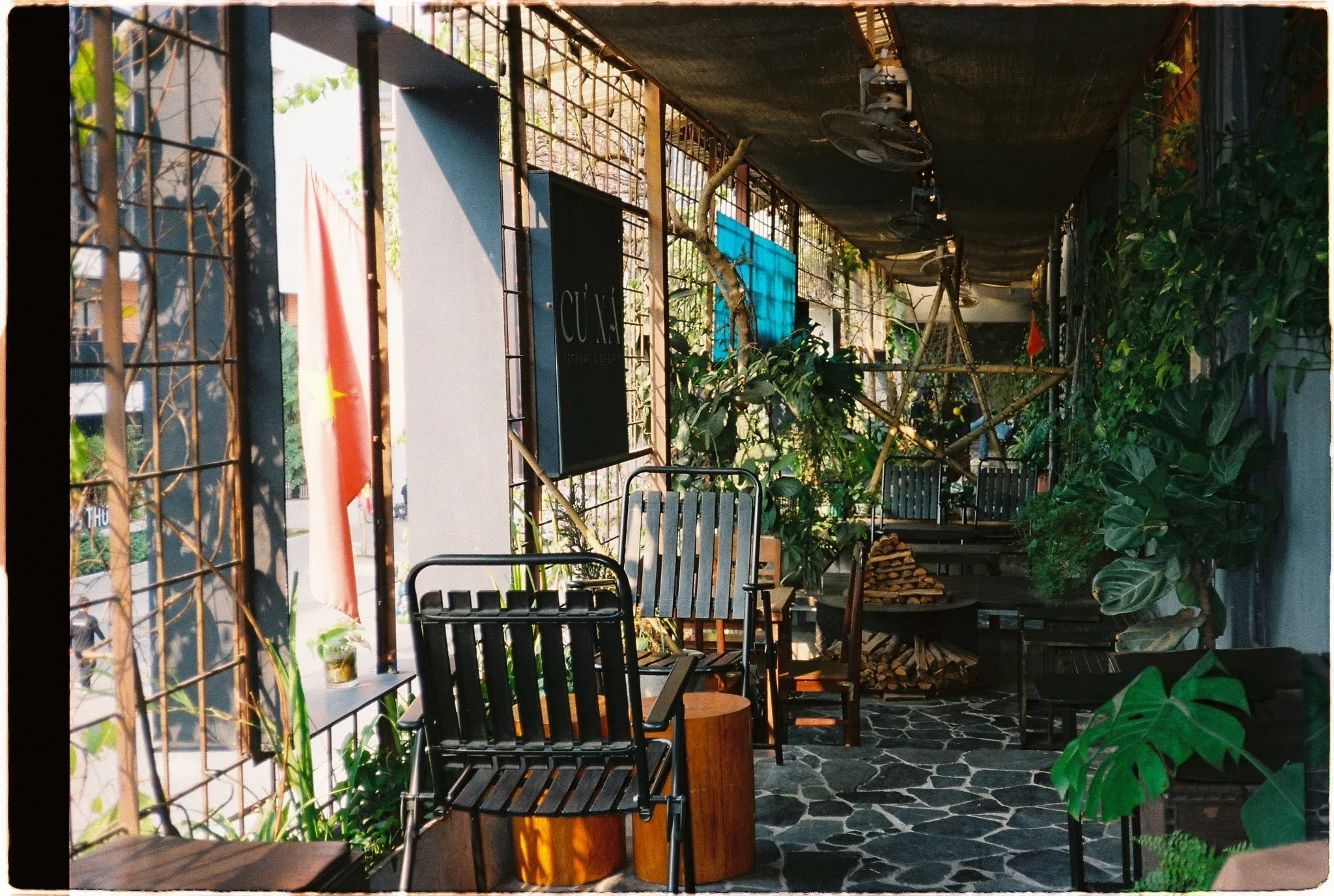
Sitting area in the Cu Xa's corridor. Courtesy of Cu Xa Cafe.
To understand Hanoi’s more recent history, you need to visit Cu Xa Cafe. It is located on the second floor of the Khuong Thuong collective housing complex, a residential block built in the 1970s for government employees and their families. During the subsidy period, these complexes shaped everyday urban life, with neighbors sharing courtyards, corridors and communal spaces. The cafe’s name is also an old Vietnamese term for these buildings.
Before reaching your table, you have to climb old concrete staircases and walk along residential corridors that are still used by residents today. These spaces remain part of the collective housing experience, where neighbors once shared common areas and built close-knit communities. Inside, Cu Xa preserves the spatial character of a Hanoi collective home, with separating walls and interior windows between rooms, reflecting how generations of residents lived in these compact apartments. The cafe also brings back childhood’s simple joys through its craft workshops and activities, such as drawing, coloring and playing games like horse race chess.
6. Nhan Coffee

The modern exterior of the Nhan Coffee today. Courtesy of Khanh Huyen Nguyen.
Established in 1946, Nhan Coffee is one of Hanoi’s oldest cafes. Each cup of coffee here is made with dedication: from selecting the coffee beans to roasting and grinding, the steps are mostly done manually to preserve the authentic flavor. Despite many branches across Hanoi and other provinces, the cafe on Hang Hanh Street is still the most famous one, often referred to as the birthplace of the brand.
The cafe’s history is intertwined with significant moments in Vietnam’s history, especially the liberation of Hanoi in 1954. The cafe was founded by three revolutionaries, The, Nhan and Thi, all of whom were members of the Hoang Dieu District’s guerrilla unit. During the First Indochina War, this cafe not only served coffee but also helped support revolutionary activities by raising funds and serving as a safe house to exchange revolutionary messages. The founders chose the name “Nhan” because it reflects kindness, virtue and humanity. Nowadays, Nhan Coffee is a reminder of Hanoi’s wartime past, connecting generations with the city’s history that lives outside museums and monuments.
7. Cafe Lam

Drinking coffee at Cafe Lam on a winter night. Rush Murad. CC BY-NC-SA 2.0.
For art lovers, the Vietnam Fine Arts Museum is an essential stop to discover the country’s most celebrated painters. Yet another remarkable collection is hidden inside an unassuming coffee shop: Cafe Lam. At the cafe, the paintings hanging on the walls preserve the stories of the artists who gathered here and the cafe’s unique role in Hanoi’s artistic life.
Established in 1952, the cafe was named after its founder, Mr. Nguyen Van Lam. Over 70 years, it has retained a simple charm with faded walls, green windows, dark-colored wooden tables and low plastic chairs. Since the opening day, the cafe has been a hot spot for locals and artists. Many famous Vietnamese painters like To Ngoc Van, Bui Xuan Phai, Nguyen Sang, Duong Bich Lien, as well as prominent writers such as Van Cao and To Hoai, spent their time here. Mr. Lam also supported struggling artists by giving them free coffee and breakfast. In return, they gifted him some artworks to express their gratitude, which became the foundation of the cafe’s art collection. Sitting at Cafe Lam, you can imagine yourself joining conversations among generations of artists, musicians and writers at that time.
Khanh Huyen Nguyen
Huyen Nguyen is a freelance travel writer based in Hanoi, Vietnam, specializing in travel, food, and lifestyle, with origins in the international hospitality industry. Her works have appeared in several online publications, including Lonely Planet, Azure Road, Sprudge, Dispatches Europe. With a passion for storytelling, she brings cultural insight and personal experience to every piece. In her free time, she enjoys traveling, reading, and taking photos. Find more about her works here.