
By Kaitlin Murray
Removed during centuries of colonization, these items sit at the center of some of the world’s fiercest repatriation battles.
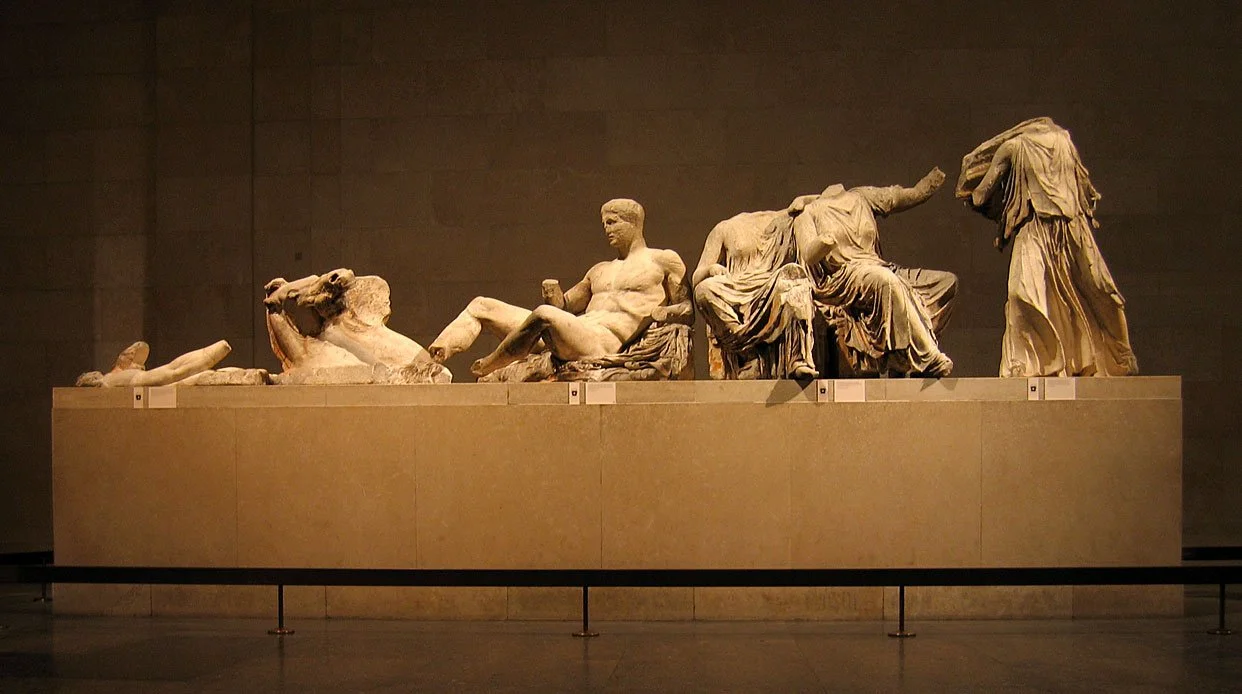
Statues from the east pediment of the Parthenon in the British Museum. Andrew Dunn. CC BY-SA 2.0.
In the Acropolis Museum in Athens, Greece, the Parthenon Gallery exhibit sits half-empty, haunted by spaces reserved for missing statues. Plaster casts line the gallery, mimicking the placement of the original marble reliefs now housed in the British Museum in London. This arrangement reflects the reality for so many around the globe: vacant modern galleries awaiting the return of long-lost cultural heritage kept thousands of miles away in the Global North.
Most artifacts at the center of restitution disputes left their countries of origin during European colonialism, when military conquests and unequal treaties moved cultural property and items of ancestral or religious value out of Africa, Latin America, Asia and the Pacific islands into European private collections and museums.
While this system of extraction built some of the world’s biggest art collections, including the Met, the Louvre and the Neues Museum, none are as symbolic and controversial as the British Museum. Originally founded in 1753 to house thousands of “natural and artificial rarities” collected by British scientist Sir Hans Sloane, it became a central repository for cultural artifacts taken during colonial expansion.
Today, the British Museum faces a growing wave of requests from the artifacts’ nations of origin, particularly when their provenance is undocumented or disputed. As former British colonies gained independence and later the 1970 UNESCO Convention established rules intended to prevent illicit transfer of cultural property, nations entered decades-long discussions over who owns historical items.
Under the British Museum Act of 1963, the museum was forbidden to return or dispose of items in its collections unless under very specific circumstances, such as duplicates or items unfit to be retained, a clause with many gray areas. The museum can provide artifacts on long-term loan, an alternative path for nations petitioning for restitution.
To date, many cases remain unresolved, caught in disputes over who owns heritage and whether items can be considered the national property of countries that didn’t exist when the items were seized.
Below are 5 artifacts or groups of objects at the heart of the standoffs between countries of origin and the British Museum today.
The Parthenon Marbles from Athens, Greece
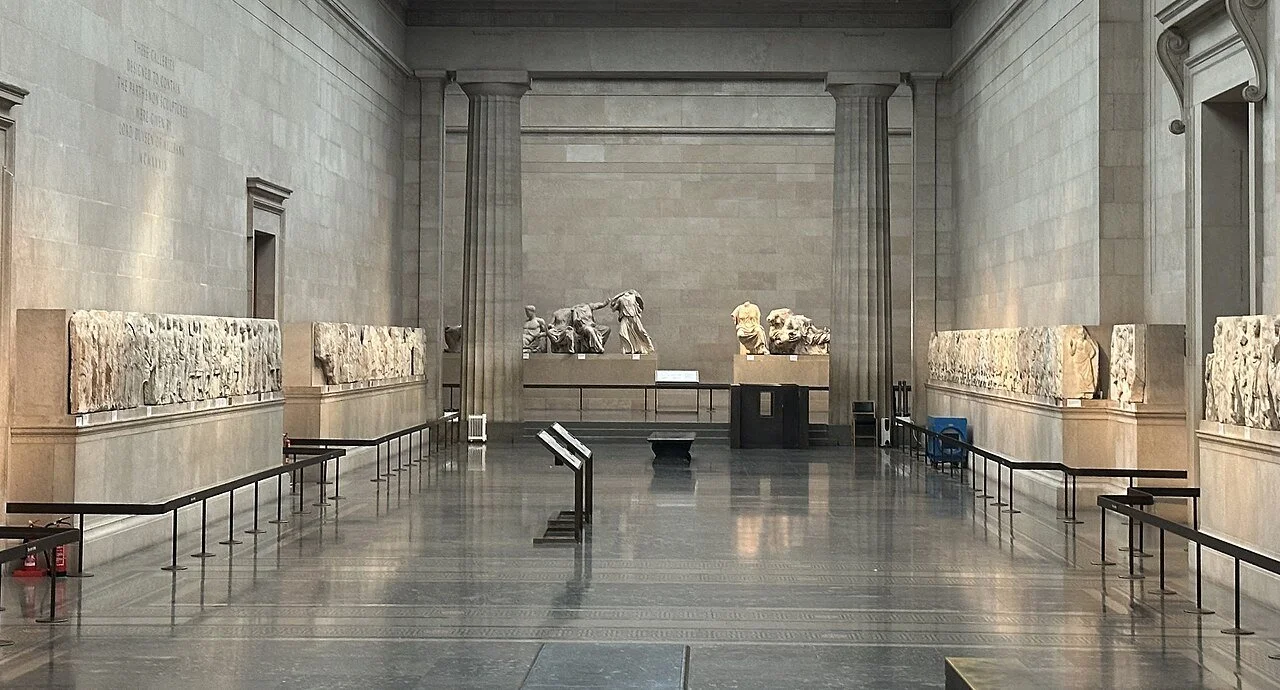
The Elgin Marbles in the British Museum in London. Jay.M. CC BY-SA 4.0.
The Parthenon Marbles, sculptures and friezes that once adorned Athens’ temple of Athena, are now split between the British Museum and the Acropolis Museum in Greece. British Lord Elgin removed about half of the surviving fifth-century B.C. marbles in the 19th century, when Athens was under Ottoman rule.
Today, debate continues over whether they should be returned to Greece. The Greek government argues that the marbles are part of the country’s cultural heritage and were removed under suspicious circumstances. The British Museum argues that more visitors come to the British Museum and maintains that they were acquired legally under Ottoman authorities. Even with attempts at cordial discussions between the two nations, no progress has been made.
The Koh-i-Noor Diamond from Central Asia
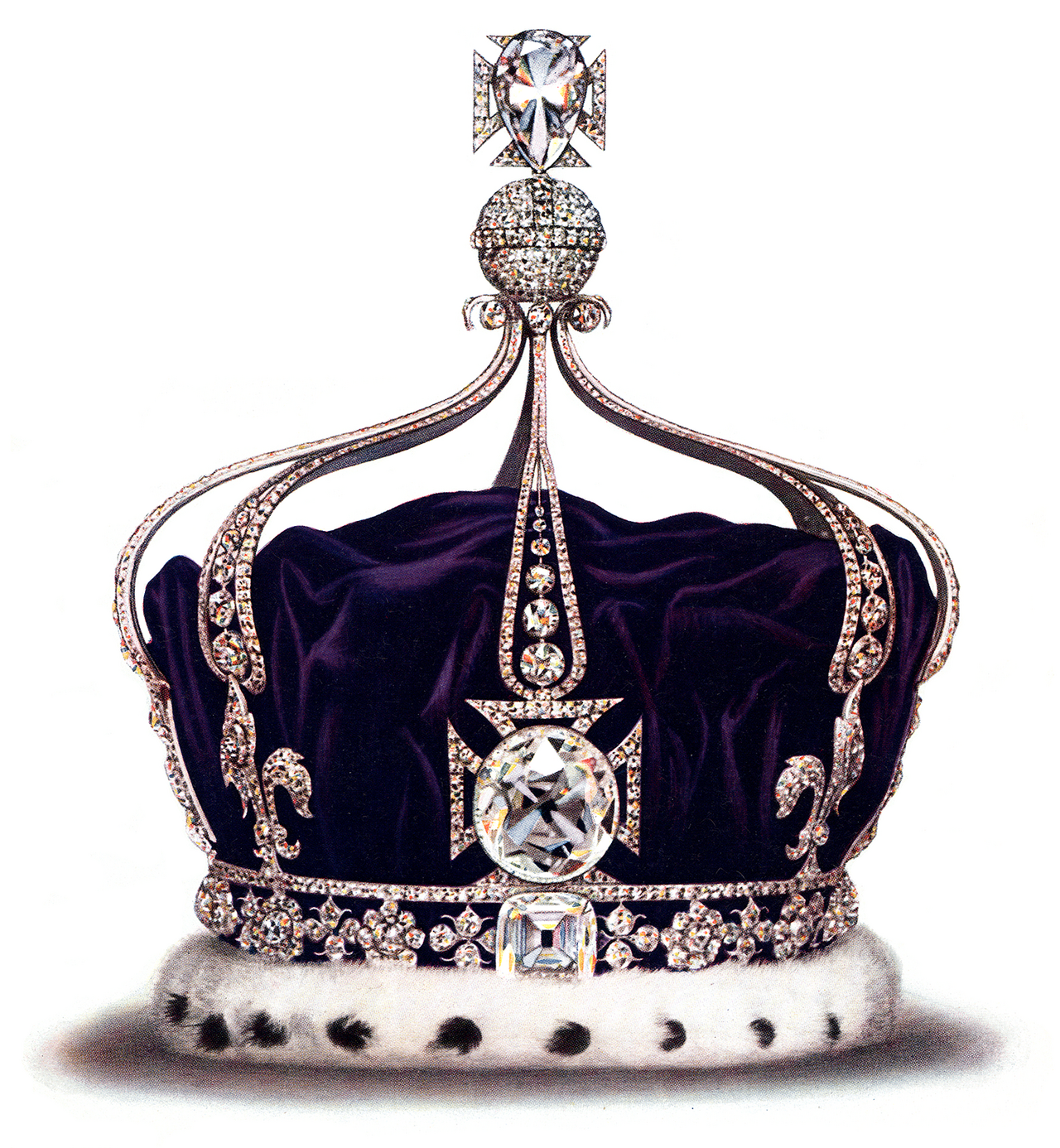
The Queen Mother’s crown with the Koh-i-Noor diamond. G. Younghusband & C. Davenport. Public Domain.
The Koh-i-Noor diamond is one of the most contested jewels in history, with India, Pakistan, Afghanistan and Iran all claiming it should be returned. It is one of the world's largest cut diamonds at 105 carats and is now housed in the Crown Jewels vault at the Tower of London. The diamond’s life has been shrouded in legend as it passed between empires across Central Asia for centuries. First mentioned in the historical record of the Mughal Emperor, the diamond passed through Persia, kingdoms in modern-day Afghanistan and the Sikh kingdom of Punjab. After Britain annexed Punjab in 1849, the diamond was surrendered to Queen Victoria and has been housed in Britain since, in the Queen Mother’s coronation crown.
With multiple nations claiming the diamond, disputes have arisen over where it should be returned. India claims the diamond was mined there and that, at the time, it was the only known place with diamond mines. Pakistan claims that Punjab was the last known home of the diamond before the British annexation. The British government argues that more people see the diamond in London than they ever would in Central Asia, and maintains it was legally transferred to Queen Victoria. As of now, they have no plans to return what they consider one of their most important crown jewels.
The Benin Bronzes from Nigeria
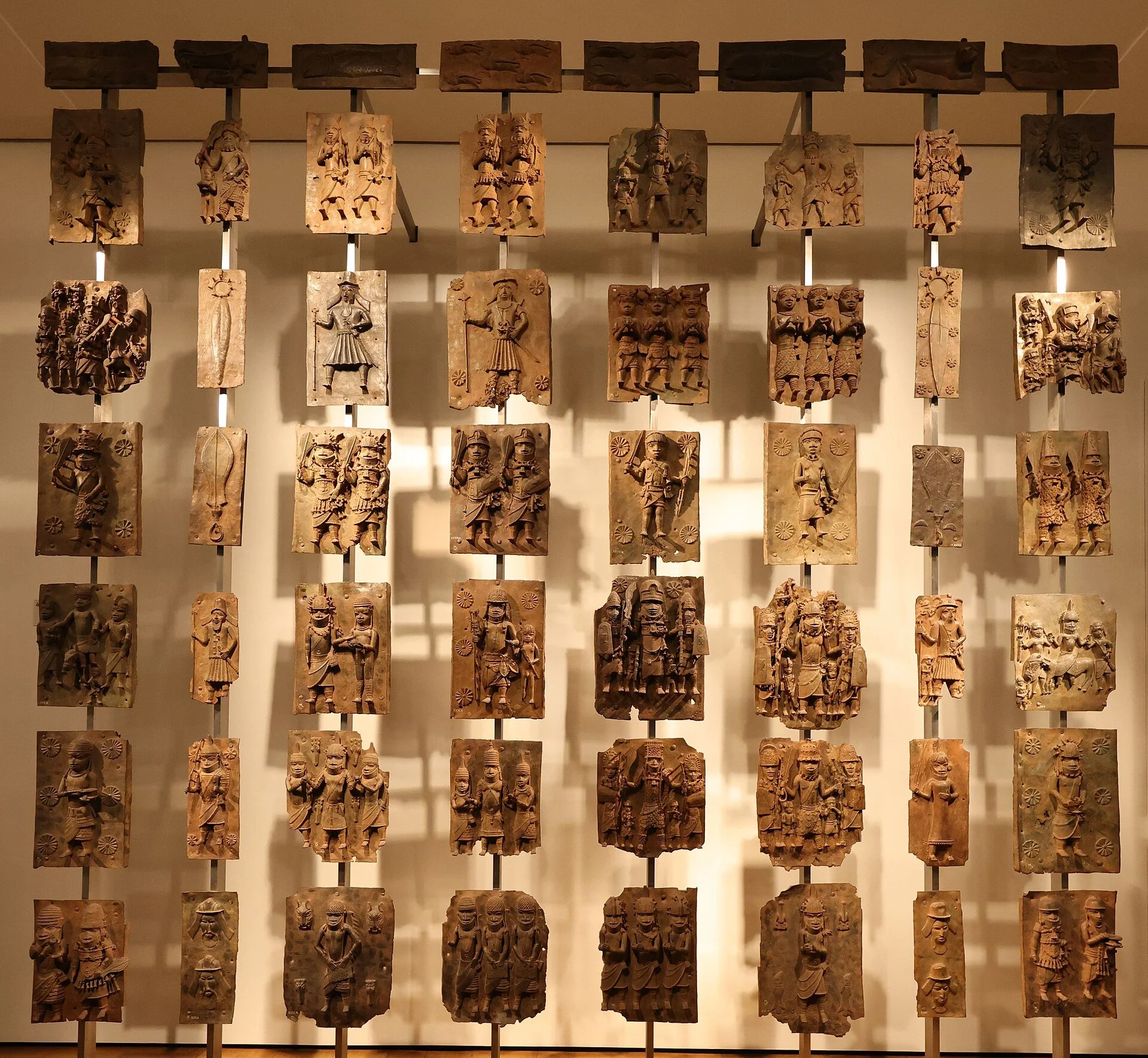
The Benin bronzes are displayed in the British Museum. Geni. CC BY-SA 4.0.
The Benin Bronzes, a collection of reliefs, sculptures, commemorative heads, royal regalia and ornaments mainly made of brass and bronze in the Benin Kingdom of West Africa, are primarily housed in the British Museum. Made in the 16th century, many of the pieces were commissioned by the oba, or king, for ancestral altars, with the most famous group being the brass plaques that decorated the halls of the Benin Royal Palace.
As European colonial expansion crept toward the kingdom, relations with the British soured, leading to the 1897 British occupation and looting of Benin City. The result of the looting, including 160 bronze heads that were “Benin’s equivalent of chronological records,” was hundreds of artifacts in Britain, France, Germany and the U.S., 900 of which are under the umbrella of the British Museum.
While many are loaned and on rotating display around the world, the Nigerian government officially requested their return in 2021. Even with efforts for collaborative academic studies, the British Museum cannot legally and does not intend to return the bronzes.
The Rosetta Stone from Egypt
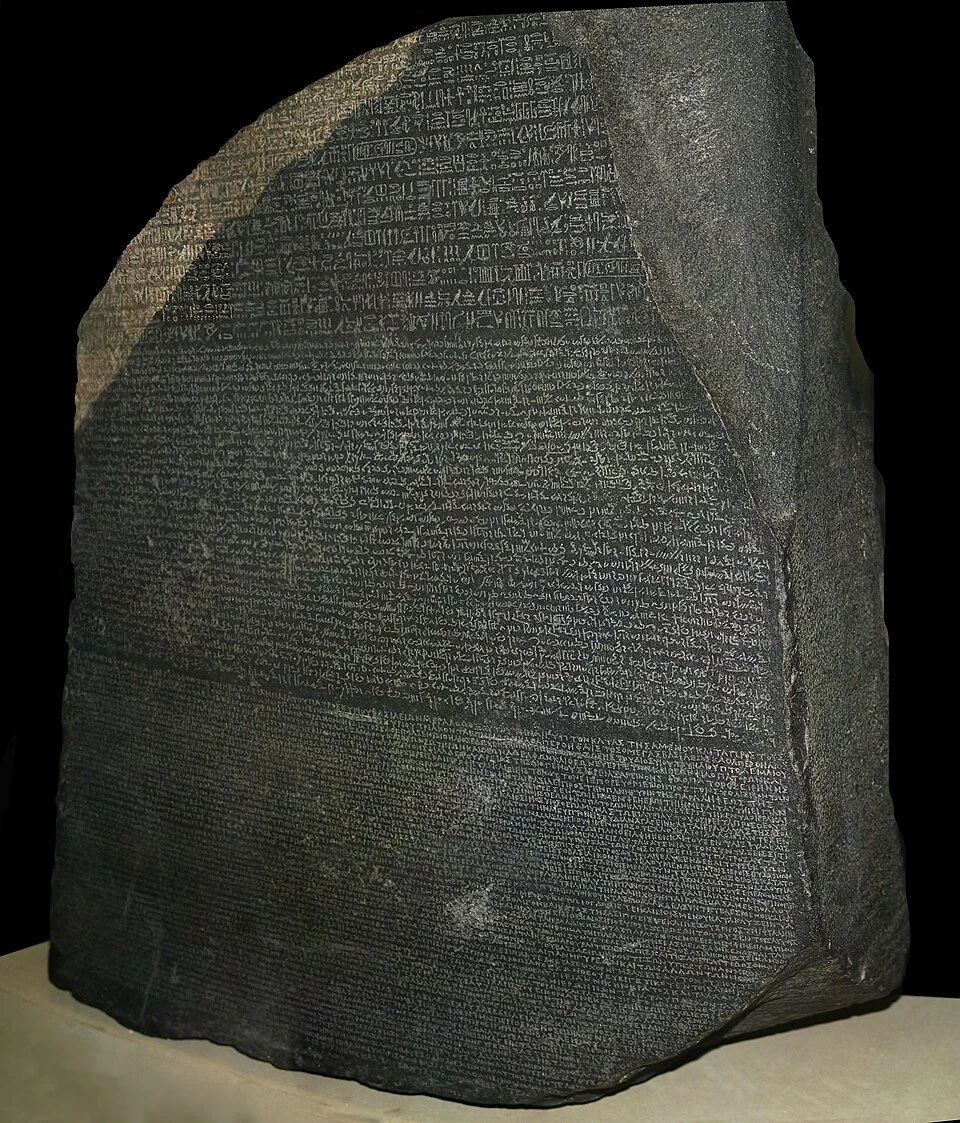
The Rosetta Stone, with the same text in hieroglyphic, Demotic and ancient Greek scripts. Hans Hillewaert. CC BY-SA 4.0.
The Rosetta Stone is one of the world's most famous artifacts, as shown by the crowds arriving in droves to get a sneak peek at the British Museum. The Egyptian Ministry of Antiquities has repeatedly requested the stone's return, and Zahi Hawass, a famed archaeologist and former Minister of Tourism and Antiquities, has called it “an icon of Egyptian identity” that belongs in Egypt.
The grey granodiorite slab is engraved with three scripts: hieroglyphic, Demotic and ancient Greek. Discovered in the town of Rashid in 1799, when the French and British were at war over control of Egypt, it was essential in cracking the ancient Egyptian hieroglyphs.
The Moai from Rapa Nui (Easter Island), Chile
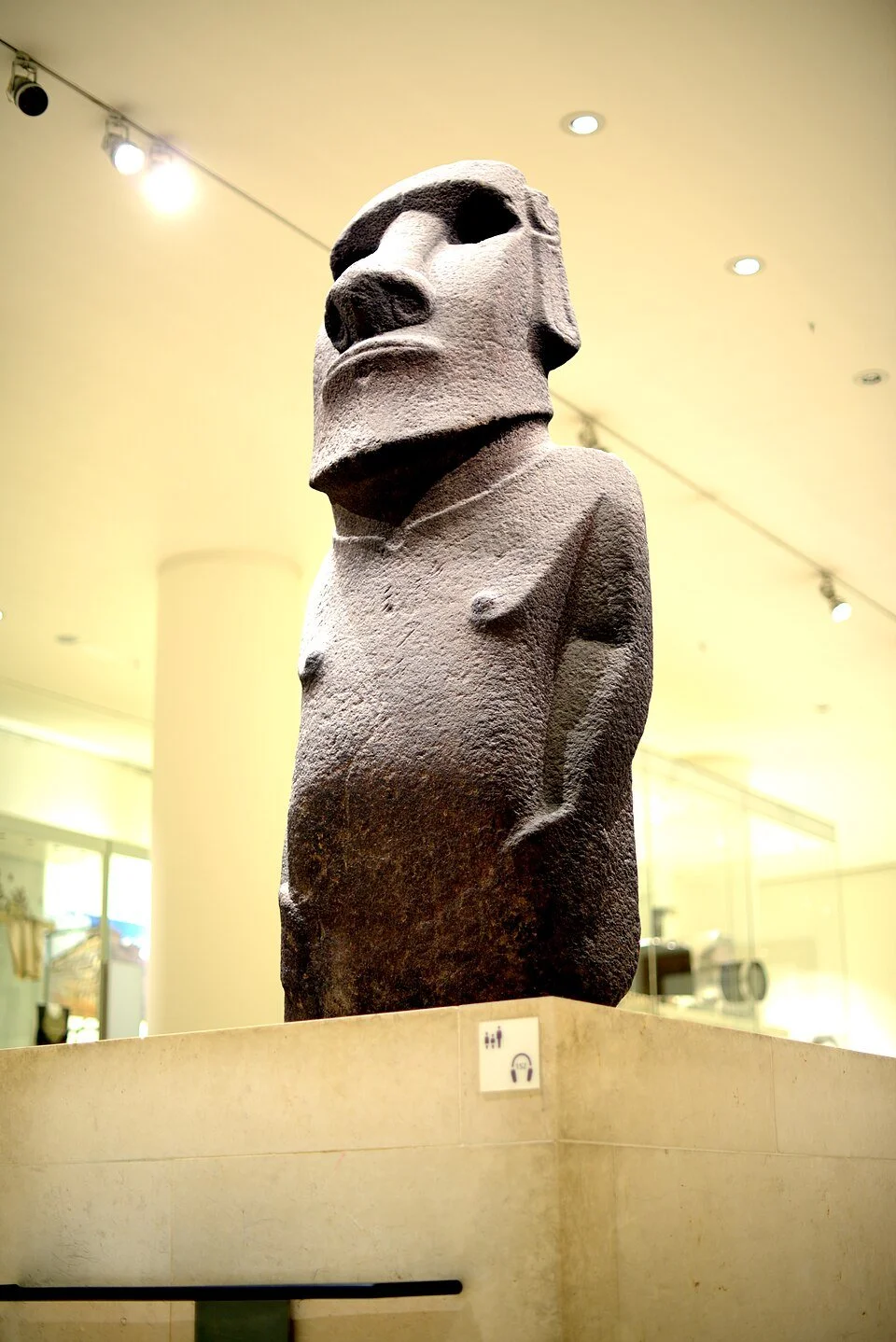
The moai Hoa Hakananai'a statue at the British Museum. James Miles. CC BY-SA 4.0.
Rapa Nui, a small island thousands of kilometers off the coast of Chile, is famed for its moai, large monolithic statues that have ancestral and spiritual meaning. Today, the British Museum houses two statues, Hoa Hakananai’a and Moai Hava, but the people of Rapa Nui are asking for them back. Carved between the 11th and 16th centuries, they are central to Rapa Nui’s cultural legacy.
Hoa Hakananai’a, nicknamed the “Stolen Friend” of the island, was “gifted” to Queen Victoria by a British naval crew in 1869; unlike many other statues, it is made from basalt lava rock and contains petroglyphs. Social media campaigns and official Rapa Nui delegations have been asking for their perspective to be heard on the matter. Anakena Manutomatoma, a representative of Rapa Nui's development commission, told the BBC, “We have mourned him for too long. It is time to stop crying and take action to bring him home."
There have been successful cases of artifact repatriation around the world. Since 1990, the Native American Graves Protection and Repatriation Act pushed U.S. museums to begin returning Native American human remains and objects. In 2025, the Vatican returned items to Indigenous communities in Canada, and the U.S. returned items to Iraq in 2021 after the looting of Baghdad in 2003. In Britain, 32 items from the Asante Kingdom were loaned to Ghana in 2024, and in 2015 the Gweagal Shield of Australia was temporarily loaned.
However, as more and more nations ask British institutions for their items back and discussions continue, they raise a question far bigger than any single object: Who has the right to own the world’s cultural heritage?
It’s a question with no easy answer, but for post-colonial nations, every item returned is a stride toward reclaiming their own history from the empires that once occupied them.

Kaitlin Murray
Kaitlin Siena Murray is a travel journalist and global storyteller documenting cultures, historical places, and the people and social impact movements helping the world. Raised worldschooling across more than 129 countries with degrees in anthropology and history, her writing is driven by a commitment to global citizenship, capturing the diversity and beauty of the world through the lens of culture, history, and social change.