
By Arianna Kaplan
Saba is one of the Caribbean’s smallest inhabited islands but has the most ambitious plan to achieve its sustainability goals, earning its deserved moniker as the “Unspoiled Queen.”

A panoramic view of Mount Scenery in Saba. Wei86 Travel. Pexels.
The Caribbean Islands are some of the most well-known vacation spots due to their pristine beaches, vibrant culture and crystalline waters. Often overlooked in favor of some of its better-known islands is the tiny island of Saba, which has deliberately avoided mass tourism to remain one of the premier destinations for sustainable tourism, living up to its moniker as the “Unspoiled Queen” thanks to its virtually untouched greenery and emphasis on environmentally friendly practices.
The “Unspoiled Queen” is 28 miles southwest of St. Maarten, the international hub of the Caribbean. Despite its proximity to commerce and tourism, the tiny, five-square-mile island refuses to budge on its sustainability goals. As climate change threatens environmentally sensitive destinations such as the Caribbean, the island continues to pioneer sustainability initiatives that allow visitors to take part in a location’s culture, history, activities and natural environment, while working to preserve its natural beauty for many years to come.
Saba is formed at the base of a dormant volcano and boasts a total of four villages. There are no permanent beaches and no place for cruise ships to dock. Reachable only by tiny “puddle jumper” plane or ferry, what the island lacks in size it makes up for in rich cultural history and ecotourism opportunities, such as near-endless diving and hiking through seven distinct climate zones. That, coupled with its red-tiled gingerbread houses, friendly community and pristine conditions, makes Saba a place you’ll want to put on the map. Designated as a “Hope Spot” by Mission Blue, a distinction granted to places critical to ocean health, Saba is an ecotourism haven that the sustainable traveler will not want to miss.
Saba stands out among its Caribbean counterparts because of its ambitious sustainability initiatives, notably its drive toward 100% renewable energy. The island operates on a solar grid during the daylight hours with battery storage at night, plus an ongoing wind energy project. The island is currently working towards becoming the first Caribbean island to achieve 100% renewable energy. It’s not just about slashing carbon emissions. Saba enforces a “carry in, carry out” policy for garbage and began implementing a ban on single-use plastics in 2021.
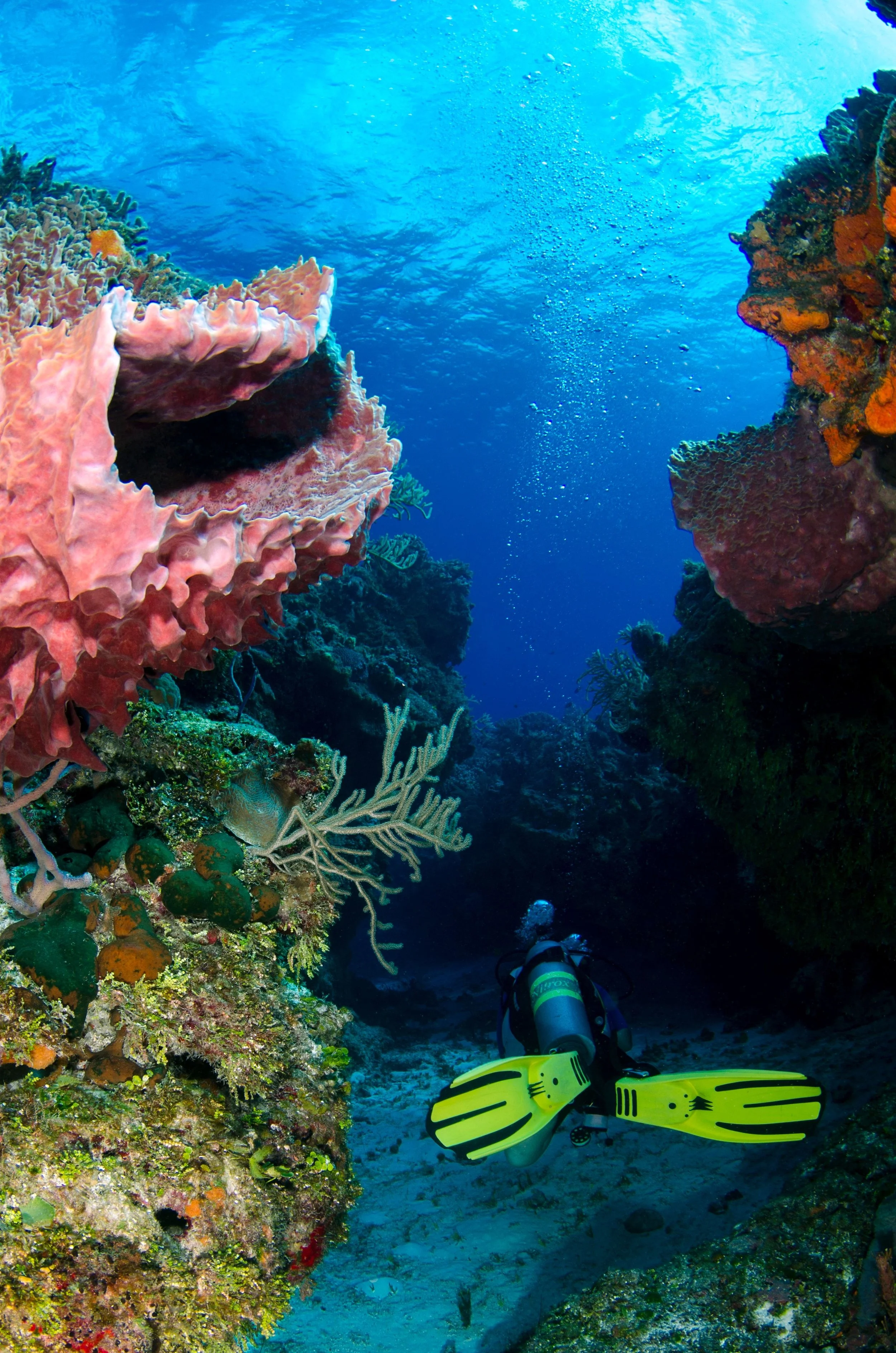
Diving in Saba. Leonardo Lamas. Pexels.
In the water, Saba is perhaps best known for its diving. Because of its rocky topography, Saba doesn't have any permanent beaches or cruise ship ports. However, during spring and late summer, a “disappearing beach” can be seen at Wells Bay; a tiny strip of beach which appears or washes away based on the tides and seasons. Additionally, Saba established the Saba Marine Park in 1987 to protect its beaches, reefs and ocean. As a result of the protected waters, Saba has maintained one of the Caribbean’s healthiest reef systems, although Saba’s corals remain vulnerable to many of the regional environmental pressures such as coral bleaching and degradation. Saba’s marine ecosystems remain healthy because of fishing restrictions in key zones, dive-site management and conservation initiatives. Tourism and conservation intersect in Saba’s waters, as local students, interns and visitors combine classroom learning with hands-on environmental practices.
For tourists, dive group sizes are limited and conservation practices are emphasized. Divers can contribute by taking photos of what they see underwater to document changes in reef recovery and coastal erosion. Additionally, past volcanic activity due to the movement of tectonic plates in the Caribbean has created interesting formations such as submerged lava flows and hot springs.
On land, one of the biggest appeals of visiting Saba is hiking, which also represents another successful effort of sustainability. With over 20 hikes to choose from, visitors get to tour Saba’s seven distinct vegetation and climate zones such as cloud forests, rainforests, grassy meadows and sheer bluffs. The trails are monitored by the Saba Conservation Foundation, which maintains the trails to prevent erosion and protect native vegetation. The Mount Scenery trail is one such example, where trail maintenance and sustainable trail practices meet stunning scenery on Saba’s tallest peak. Other notable trails include The Ladder, a historic route that connects Saba’s rocky coast to its mountainous interior. Hikers climb 800 steps carved into the rock face and get to witness views of the coastline and sea. Saba also has over 60 species of birds and several other endemic species, such as the Saban Anole and the Saban Black Iguana, that you may see along your hike.
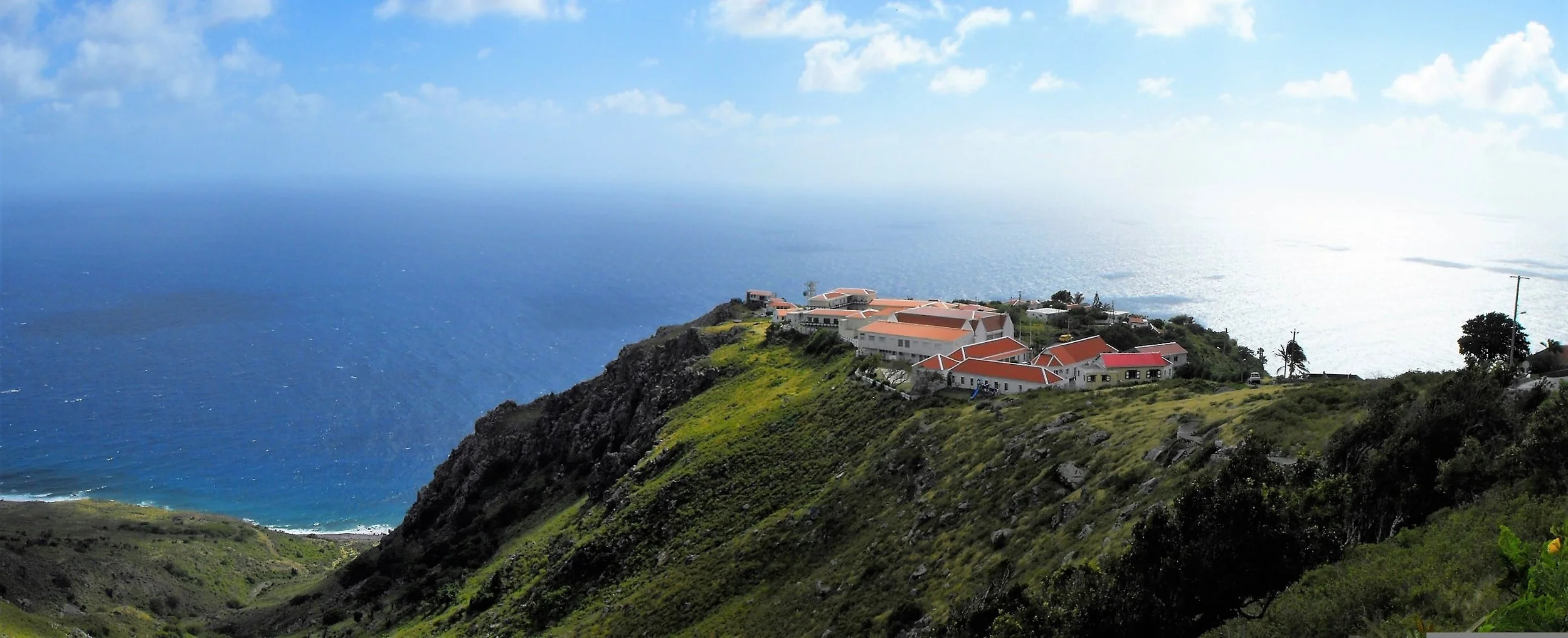
St. John’s, Saba. 4169213. Pixabay.
Saba has four villages and one main road, with a population of around 2,000. All of Saba’s villages are easily reachable via taxi or on foot and possess a quaint charm. The Bottom is Saba’s capital and largest village, and it’s the first stop from Fort Bay, where ferries dock. It is also the trailhead for most major trails on the island. Windwardside is the second-largest village, followed by St. John’s and Zion’s Hill, also referred to as “Hell’s Gate” because of a steep chasm between the village and the rest of the island. All the villages are characterized by red-roofed houses with bright colors and flourishing gardens.
In keeping with sustainable practices and the size of the island, car usage is limited, and the infrastructure consists of just one road. This street, known as The Road, takes the driver through varied ecological zones from dry scrubland to dense tropical vegetation, climbing to an elevation of over 1,800 feet with views of the mountain, cliffs, greenery and sea all in one.
Beyond sightseeing, Saba has a rich cultural history that visitors can participate in. Saba was originally inhabited by Arawak and Carib Indigenous peoples. English sailors landed on Saba in the 1600s, and Dutch colonists established a settlement around 1640. In 2010, the island became a special municipality of the Kingdom of the Netherlands, but before that, Saba was a melting pot for the English, Irish and Dutch, as well as people of African descent brought to the island as a result of slavery. During the 1800s, the majority of the male population went to sea as fishermen and seamen, leaving the island to be known as the “Island of Women.” These women became adept at a technique called Saban Lace, a beautiful handcrafted lacework that grew into one of the leading industries for Saba. The lace is still created and can be purchased around the island, and visitors can even take a lace class and participate in local history by visiting one of the island’s museums, such as the Saba Heritage Center to learn more about the preservation of Saba’s cultural heritage. Visitors can also participate in weekly youth activities, visit the Harry L. Johnson Museum in a 19th-century sea captain’s cottage in the historical district of Windwardside, as well as the Major Osmar Simmons Museum, which commemorates the life and artistic collections of the eponym.
Local artists and residents have also embraced the Saban environmental practices. Jewelry is crafted using natural materials and fibers, as Saba integrates sustainability with artistic expression. There are no large chains on the island, including large-chain hotels, and each establishment is locally run. To stay in Saba, visitors can stay at its newest lodging for around $300/night, the 30-room Scenery Hotel in the town of Windwardside at the foot of Mount Scenery, which opened in early 2026, or in any number of its other hotels and cottages. As per Saba’s emphasis on environmentally friendly practices, many of the hotels follow sustainability goals such as operating on solar energy during the day and reducing single-use plastics. As Saba’s water supply is dependent on rainfall, keep water use to a minimum.
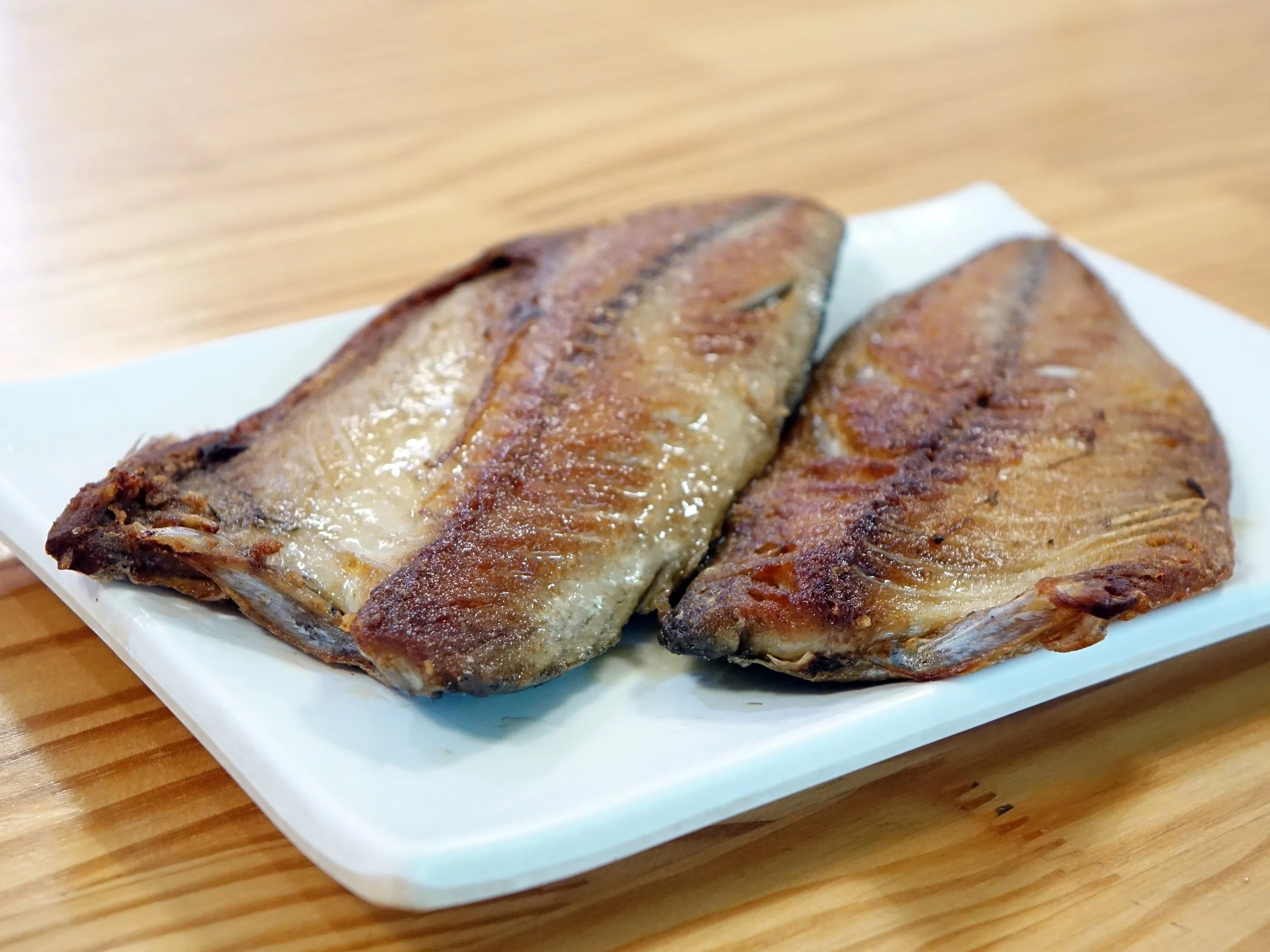
Grilled fish from a seafood restaurant in Saba. Cegoh. Pixabay.
TRAVELING THERE:
To get to Saba, scheduled and charter flights are available from St. Maarten during daylight hours and take about 12 minutes. Ferry ridesfrom St. Maarten or St. Eustatius operate daily and take about 90 minutes. Because of its rich seafaring history and location on the water, lobster is a Saban delicacy. Despite only having around fifteen combined restaurants, cafes and bars, the seafood is world-class.
Saba is perfect for a day trip as visitors island-hop in the Caribbean, and its sister islands of St. Maarten and St. Eustatius are other popular nearby destinations; from there, visitors can take trips to the larger destination spots of Anguilla or St. Barts.
The best time to visit the island is from November through April, when the rainy season has passed. November offers the Rum and Lobster Fest, which visitors are welcome to participate in. One note: Saba is in the hurricane belt, and September is perhaps not the best month to visit.
Saba is off the beaten path for popular destination spots in the Caribbean, but its charm lies in its resistance to mainstream tourism and its fight against the increasingly felt environmental pressures from climate change. By keeping conservation work at the forefront, it is a departure from the typical beach-resort image of the Caribbean. It is a breath of fresh air in a quiet, calm and safe island for the outdoorsy-minded. Safe travels!

Arianna Kaplan
Arianna is in her final year at Scripps College, part of the Claremont College consortium in the Los Angeles area. She writes in a variety of genres but most enjoys creative nonfiction and place-rooted narrative. Writing at Catalyst, along with The Student Life Newspaper offers a perfect outlet for her zest for life, and she's beyond excited to be here. In the future, she plans on pursuing a career in journalism.