
By Cove Johnson Rabidoux
As Myanmar’s military restricts access to sanitary pads, women face rising prices, health risks and increased stigma.
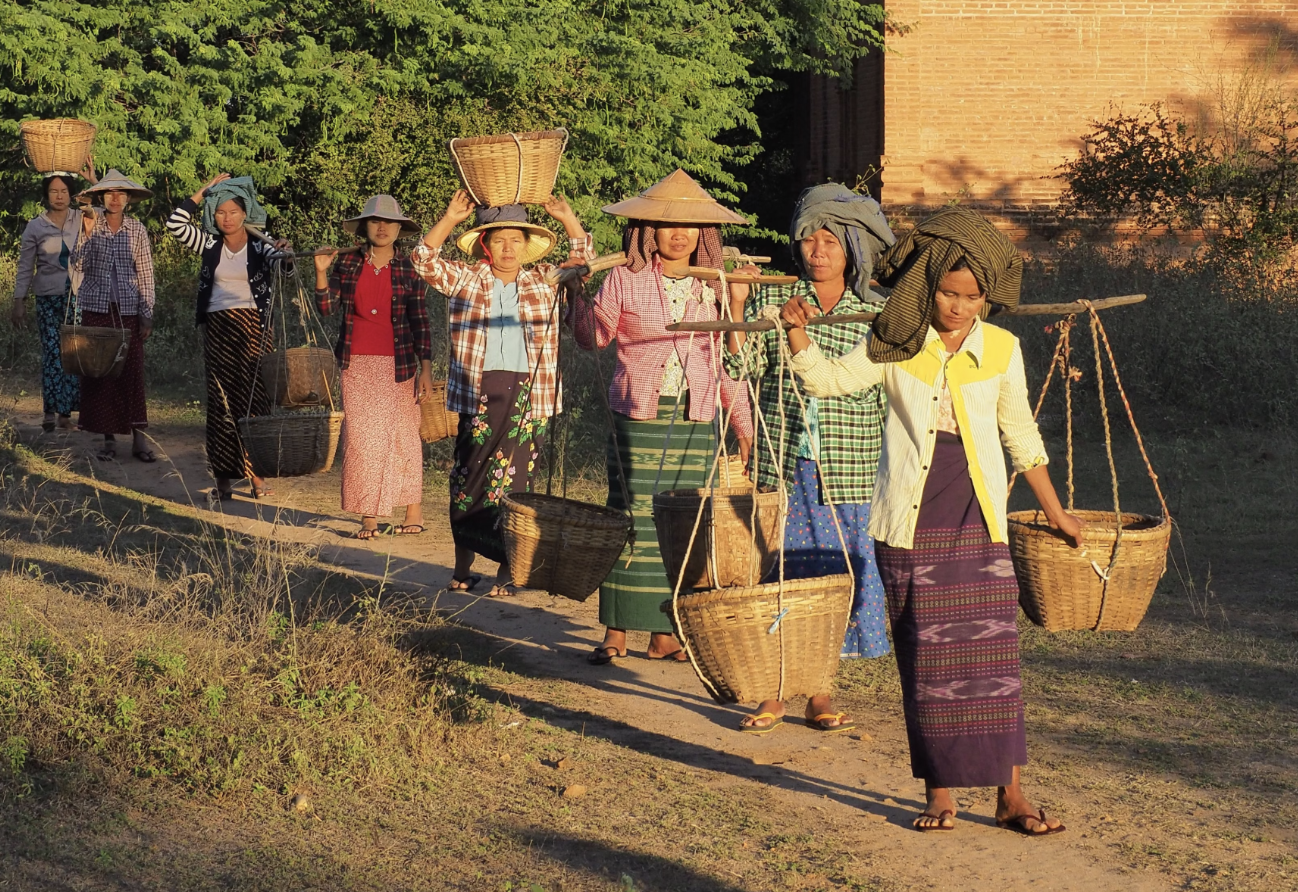
Women with baskets in Myanmar. Rockwell Branding Agency. Pexels.
A shortage of supplies often comes with war, but it’s rare for menstrual products to be affected as severely as they have been in Myanmar. After years of civil conflict, the country’s military regime has significantly restricted the distribution of menstrual pads. The regime claims that resistance fighters use these products to treat their wounds. However, medical experts have rejected this claim and instead warn that restricting menstrual products can be harmful to women’s health.
The blockade began in August 2025, after four years of ongoing conflict between the military junta and a coalition of anti-military forces. After the military junta seized power from Myanmar’s elected government, the coalition, primarily composed of pro-democracy civilians and ethnic armed organizations, rose to remove the junta from power. This clash triggered a civil war, ultimately resulting in over 100,000 deaths. While the conflict has entered a stalemate, the military continues to limit supplies entering opposition-held areas, including menstrual products.
Most women in conflict-affected areas can no longer find pads in town, leaving some to buy them from the black market. However, even then, these products are often priced extremely high. “A packet of pads costs almost as much as a day’s wages,” Daw Mya Hnin, a mother from Taung To village, told UNICEF.
As a result, many women are resorting to other materials in place of pads. Rags, newspapers and even leaves have all reportedly been used as alternatives to traditional menstrual products. This has significant health implications, as these materials simply aren’t as hygienic as pads and tampons. In fact, makeshift products can cause pain and irritation, as well as reproductive tract infections.
Daw Mya Hnin described the challenges of resorting to cloth rags: “They never dried properly, and I often suffered rashes. I knew it was unhealthy, but what else could I do?”
Health risks, such as rashes, are especially concerning as the country’s healthcare infrastructure has been devastated by war. Women who develop infections may therefore struggle to access the medical care they need.
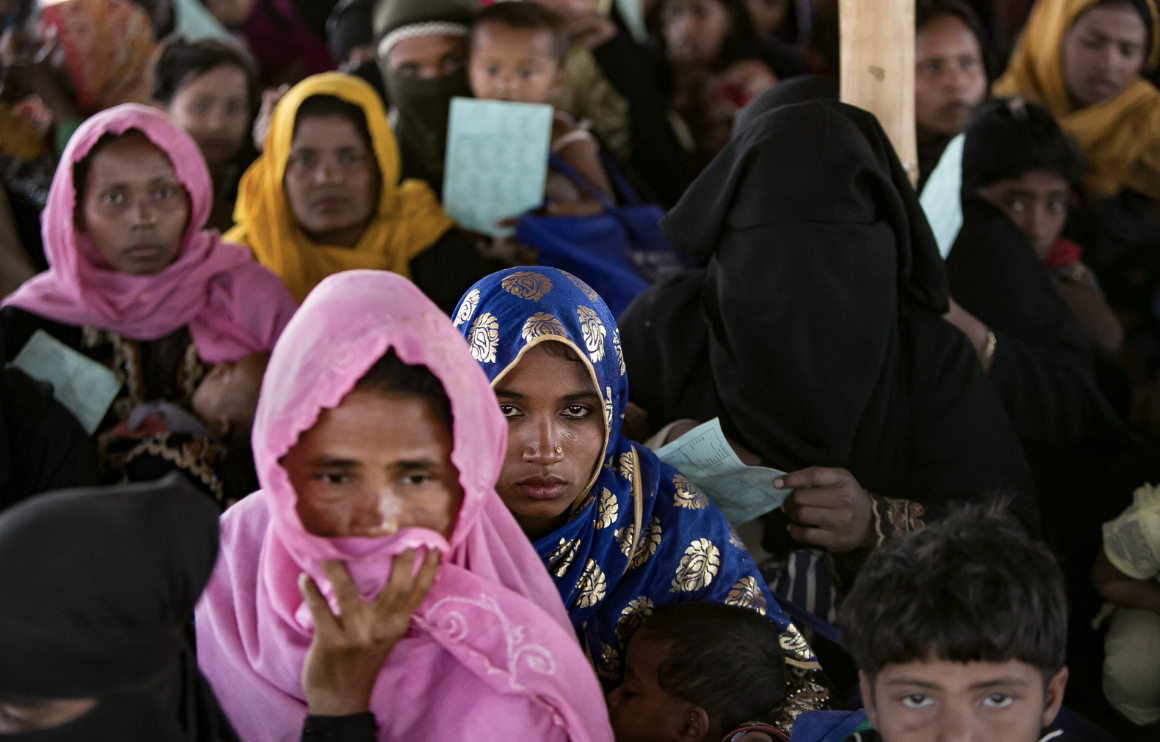
A group of refugee women in Myanmar. UN Women. CC BY-NC-ND 2.0.
However, banning menstrual products doesn’t just have health consequences, but social ones as well. Before the shortages, one 2022 study found 81.6% of girls in Myanmar were embarrassed about their first periods. These feelings can be exacerbated by the inability to access menstrual products, as women are more likely to show visible stains.
“I don’t feel confident to walk around or go near other people when I am menstruating,” a woman told Al Jazeera. “I feel insecure that people may notice an odour and I constantly ask other women to check my back for blood stains.” As a result, lots of women stay indoors and out of sight while menstruating.
Some activists believe this was actually the main objective of the military’s product ban, even calling it “gender-based violence.” By limiting women’s ability to manage their periods privately, the military is exploiting the stigma that already exists around menstruation. Therefore, the military’s policy can be seen as a way to exert control over women’s everyday lives. As they’re preoccupied with managing their periods, women are less able to participate in political activities.
One anonymous activist from Yangon said, “Targeting menstrual products might seem small compared to bombings and executions. But it is a serious threat to women survivors of war who need menstrual supplies to stay healthy.”
GET INVOLVED:
Partner with FIN Myanmar to support women’s menstrual health in Myanmar. Help the International Rescue Committee provide aid to those impacted by the conflict in Myanmar. For a complete account of the impacts of banning menstrual products in Myanmar, read The Sabai’s report.
Cove Johnson Rabidoux
Cove is an English student at the University of California, Los Angeles. Her writing can be found in the Daily Bruin, The Teen Magazine, Piece of Cake Magazine, and other publications. In her free time, she enjoys reading and traveling.