
Lucio Usobiaga, the co-founder of Yolcan—a nonprofit aimed at preserving the chinampas.
Read More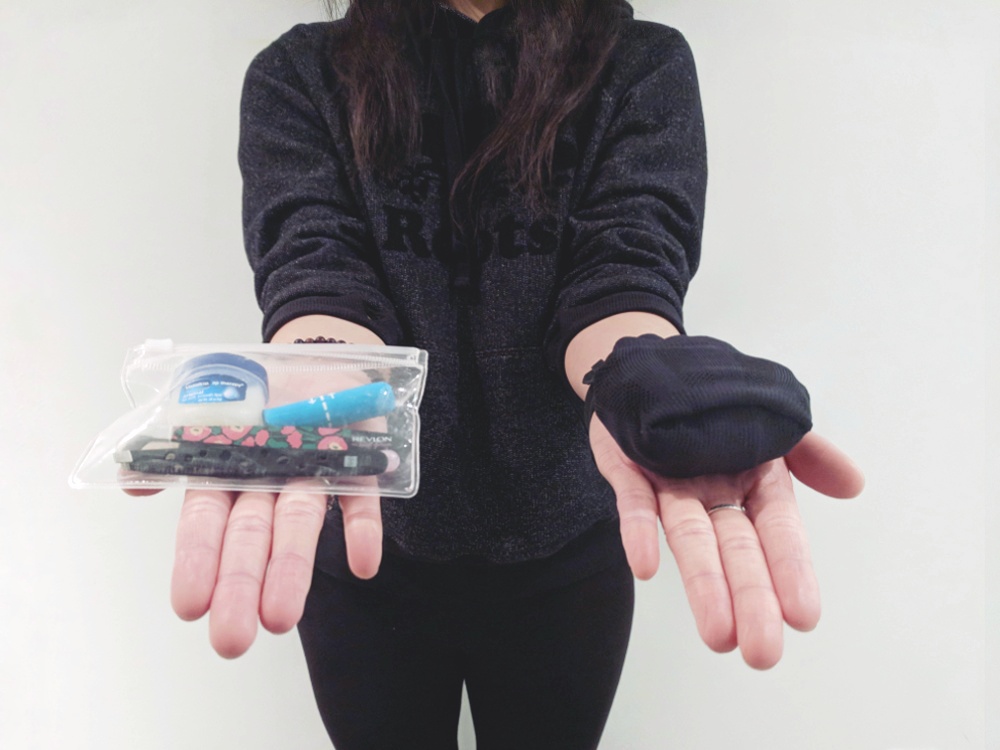
My First Zero-Bag Trip and Why It Was Important
I’m grateful to be fortunate in a few ways, but the one lucky bit currently on my mind is that I like to write. Generally, and especially when it comes to this blog, I try and write about things that seem important. I can certainly pound out mindless marketing drivel at ~90wpm as I did for a grueling six months in one particular job, but I never thought that was important (though I lied at the interview and said I did). In the years since calling that my profession I’ve learned some things. One of those things is not to lie at job interviews because even if you do get a job you don’t like, you will not be able to sustain it day-in and day-out. Another thing I’ve learned is that writing words that do not seem important is like eating at Taco Bell. It might seem like a good idea before you start, there’s no actual discernable benefit other than a temporary dopamine hit, and even as you’re doing it you find yourself wondering why.
I try and write blog posts that, at their most unsuccessful, will at least entertain. If they are a little more successful they might point you towards an object or idea that can be of use to you. My most successful posts will do both, and if I’m really on a roll, without any spelling mistakes. If I have an idea for some writing that will do none of those things, I don’t write it.
Sometime before the new year I had the opportunity to visit a beautiful landmark someplace close to my old hometown, the beautiful capital city of Toronto, ON. (There’s a joke in there for my Ottawa friends.) I went to Niagara Falls for a two-day, one-night trip. Being in a particularly minimalist mood as I decided what to pack up in my bag for the trip, I had a thought that sauntered into my mind, sat down, and refused to leave. It was: “All right Miss Fancy-Pants one-bagger, how about a real challenge? Don’t bring a bag.”
Since in my general experience the thoughts that refuse to leave are the ones that turn out to be important (even if at the time I don’t know why), I decided to listen to it. So aside from the items I take with me daily (wallet, phone, headphones, power bank), here’s what I brought for the two-day, one-night trip.
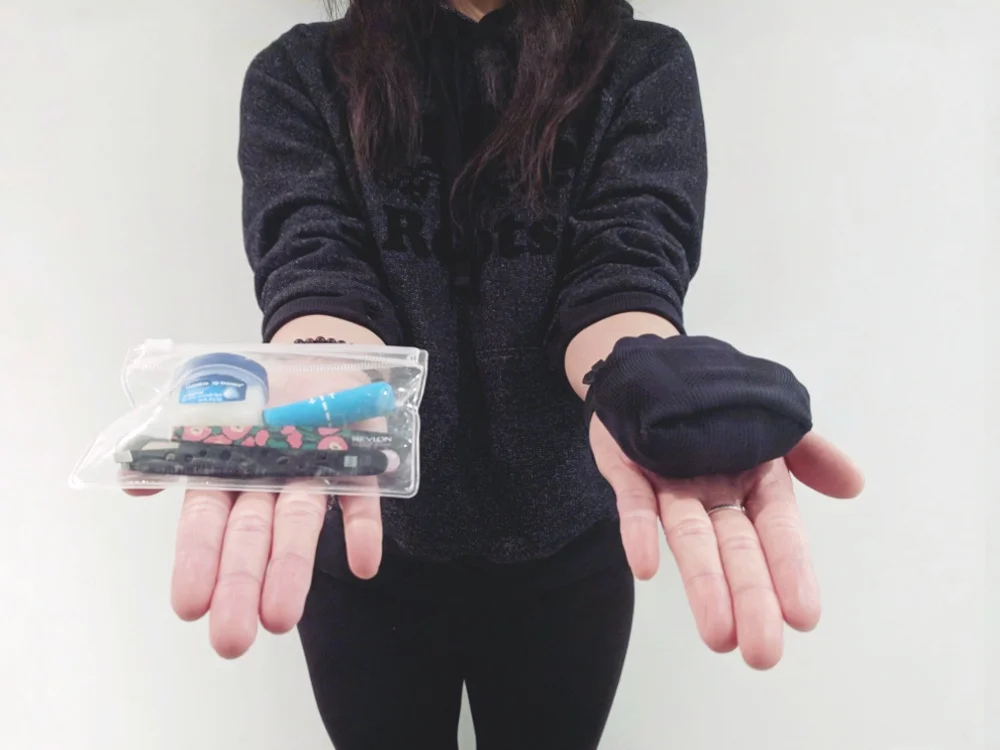
All I see when I look at this is how huge my fingers look.
I’m holding a little zip pouch with some lip balm, tweezers and cuticle trimmers (because all those things are annoying to not have on hand), and a just-in-case tampon. In my other hand is a pair of balled-up socks with some underwear tucked into the middle. These items went into the pockets of my Uniqlo down jacket, the jacket went onto me, and I went to Niagara Falls.
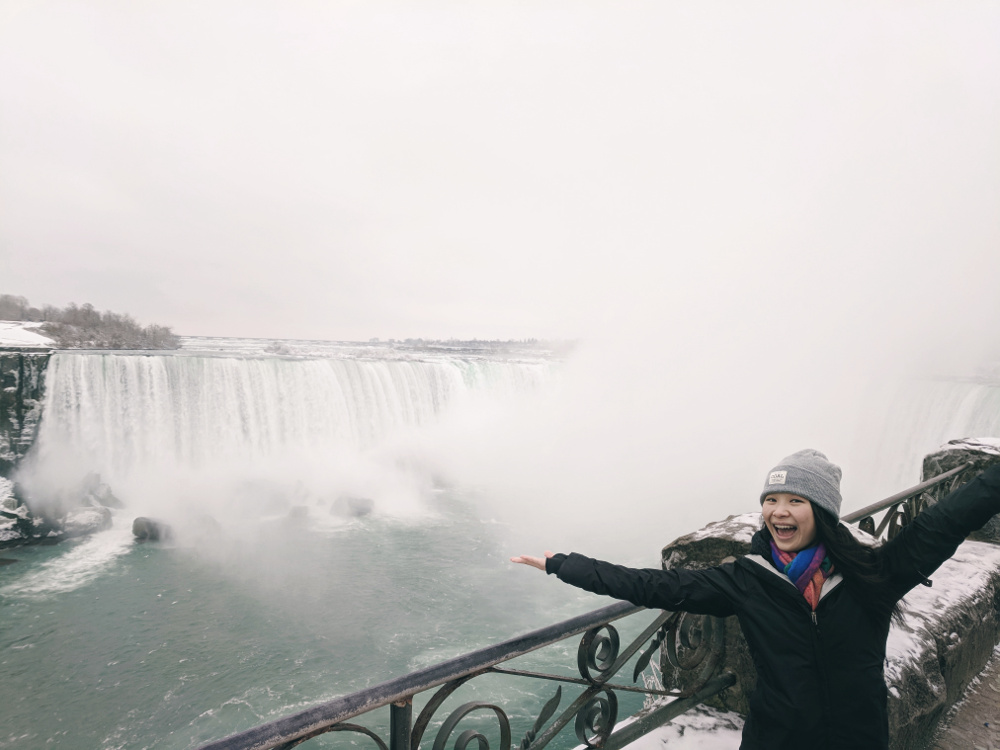
It was cold. I was unperturbed.
I know, you’re thinking, “But what about X?! How did you Y?! What did you do for Z?!” Well, I made some assumptions. The plan was to stay in a hotel. Since Niagara Falls is a city that inexplicably exists almost solely for tourists (and once long ago was a terribly bloody battlefield that soon after became a tourist attraction - but I digress) I figured the hotel room would be well appointed. I bet that there would be a toothbrush available, and soap to wash with, and probably skin lotion. The latter two of these assumptions resolved in my favor. There was mouthwash, at least.
I intended to wear most the same clothes on both days, aside from the change of socks and underwear, and this went fine. In fact, aside from the discovery that I never again want to go longer than twenty-four hours without brushing my teeth, I wasn’t really put out by not having more stuff with me. Actually, it was quite the opposite. Not having any bag at all made me feel quite like a kid at recess, freshly unshackled from the norm and wanting to run around just for the heck of it.
This was all some months ago and it’s taken me until now to write about it, mainly because I couldn’t decide why it was important. I figured it out earlier today during an altogether unrelated moment, listening to an audiobook at the gym. It was The View from the Cheap Seats by Neil Gaiman (my favourite author and a constant inspiration). If you happen to be at all interested in writing or observing life or breathing I highly recommend it. He speaks at one point about writing things to find out what it is he thinks of them. I had minimalism in the back of my mind and something fell into place. Like with the trip to Niagara Falls, and more importantly, in general, I experiment with doing without so I can discover what it is I really need - and to go a step further, to find out whether or not I have the fortitude and resourcefulness to do without anyway. It’s how I came to nomadism and traveling with one bag in the first place - by experimenting.
It’s all too easy to be on autopilot, doing things a certain way because that’s the way you’ve always done them. It’s a refreshing and informative experience to, just for the heck of it, try something that for you is completely unusual. It doesn’t matter if it’s about doing without, though it’s almost certainly guaranteed to make you feel uncomfortable, temporarily. It doesn’t have to stick, but it might. At the very least, you’ll learn something about yourself that you wouldn’t have found out otherwise. And that’s why it was important for me to take a short trip with nothing more than what fit in my pockets.
Next time, though, I’ll bring a toothbrush.
THIS ARTICLE WAS ORIGINALLY PUBLISHED ON HER ONE BAG.

VICKY LAI
Vicky is a software developer originally hailing from Toronto, ON Canada. She's been travelling the world while living out of one bag since 2016. She loves telling stories through writing and photography, and combines these passions at heronebag.com.

Lessons from My Time in Standing Rock
The chaos of that day was vivid. In the morning, I remember strolling around Oceti Sakowin, the main camp of Standing Rock, and asked if anyone had been arrested at the new frontline camp. My friends had camped there the night before in an effort to help protect the space from the police, whom many rumored were prepared with riot gear and paddy wagons.
The newly established camp had been set up to block the next part of the construction for the Dakota Access Pipeline and the people residing there were building the infrastructure to survive the incoming winter months. By the evening, elders were shouting over the microphones at Oceti Sakowin, “We need you on the frontlines! The police have arrived!”
Vans and trucks speed out of the main entrance of the camp, all packed with people in masks and scarves. Highway 1806 was lined with cars, cameras, and people. Grey smoke billowed in the distance as a car burned. The chaos could be felt. I rushed into the frontline camp and began helping wherever I could. A indigenous woman and I carried things out of her tent as police closed in with their batons. Dark tanks stood in the distance and snipers on hilltop.
The more that I saw, the more that my heart began to race. Bulldozers began to plow through sacred burial grounds before my very eyes. Men were dragged out of teepees in their underwear. People pulled their bruised and bleeding friends array from the barrage of tear gas and rubber bullets. I grabbed my own friend as we slipped through the crowd after police shot at a horse.
With distance from my month spent in Standing Rock, I still find myself waking up in the middle of the night and thinking of the thousands of people that devoted so much time and pain to establish one of the most powerful modern cases of resistance against corporate greed. I think of the main fire at Oceti Sakowin, where people would gather every night with soup or cornbread or rice cooked by volunteers in the kitchen. I think of the children running around during recess and of the sun setting in the background as I walked back to my tent. I think of the moments experienced there, devoured by terror at the hands of the state.
Standing Rock, like many things in life, was a lesson in pain and endurance. It was also a lesson in how to love and demand a new world in one scarred by violence. There were many times that I wished to turn away and turn away from the horror, but as an activist, writer, and lover of freedom, I could not. As a black person in America, I have faced my own ordeals because this country has refused to wash away the oppression of present social institutions.The indigenous tribes that gathered deserved more and still do after centuries of surviving colonialism.
But the question still remains - what do we do next to help the environment? The answer arrives when we build spaces, like Standing Rock, that aim to show another way, a better way to relate to each other and treat the Earth. The answer arrives when we begin to understand that all of our lives are on the line if we do not act now. The answer arrives when we choose to not turn away.
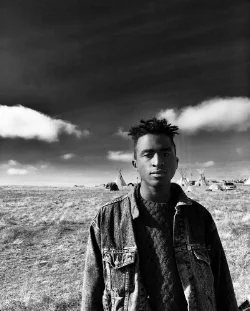
RYANT TAYLOR
Ryant Taylor is a writer and activist from Cleveland, Ohio. He has participated in protests in France, Ferguson, and Standing Rock. He is the creator of Decolonize The Mind, a travel blog, and is currently freelance writing in the Philippines.
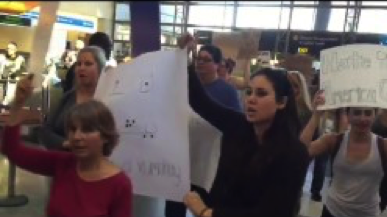
Protestors against travel ban.
Protesting the Travel Ban at LAX: Attorney Julia Trankiem Shares Her Volunteer Experience
On January 29, 2017, in response to Executive Order 13769—nicknamed the “travel ban”— which suspended refugee arrivals and banned entry into the U.S. for 7 predominantly Muslim countries, and likely spurred by the previous day’s demonstrations at JFK airport, hundreds of protesters descended on LAX condemning the Order.
That Sunday morning, chants like, “No Hate, No Fear. Immigrants Are Welcome Here,” rang out throughout the airport. There was marching, there were signs, there was singing, there were cries. Religious adherents, military veterans, descendants of immigrants, translators, lawyers, and politicians were present, demonstrating and lending support and services.
One of the attorneys lending her services was Julia Trankiem. The daughter of Vietnamese immigrants, and an alumna of University of Michigan Law School, Julia practices litigation and employment law in Los Angeles. Friday evening, word of the travel ban reached her. Saturday, she spent time learning more about the ban and reaching out to her contact at the American Civil Liberties Union (ACLU). By Sunday morning, she was driving towards LAX while listening to the news in tears. “I felt compelled,” she said, “I didn’t have a choice to just sit back.”
She headed to the short term parking lot, where she boarded a bus filled with protestors. After she arrived at the outside terminals, Trankiem saw a sign that read, “Hi, I’m an attorney.” The man behind the sign directed her towards The Coffee Bean & Tea Leaf inside. Once she made it, she found too many attorneys and not enough work. Undeterred, she eventually made her way to the baggage claim area, where she was able to begin volunteering.
Trankiem spent much of her day as an intake coordinator. Since there were no direct flights from the banned countries, she looked up flights to guess where else travelers might be flying in from—layover cities like London, Dubai, and Frankfurt. Afterwards, she helped send other attorneys to the corresponding terminal to meet with travelers to see if they or their family members or loved ones were subject to the Executive Order.
Detention times varied for flagged travellers, but some were detained longer than 6 hours, Julia says. There were rumors of immigration officials asking people to sign over their visas and conflicting stories of provisions, like food and water, having to be requested for detainees. There was confusion, and chaos, and disorganization, Julia says. There were also counter protesters with a different message. Julia heard accounts from attorneys that some people were told to, “Go back to where you came from.” The Los Angeles Times reported that there were about a dozen protesters in support of the travel ban.
The overwhelming majority of protesters at LAX, however, were against the ban, and in support of immigrants and refugees. Julia describes a sea of demonstrators on the parking bridge, in the lot, and in baggage claim-- some of whom applauded when international travellers de-planed and picked up their luggage. Many also held signs with compassionate messages like, “Welcome To This Country.” She says there was a “vibrant energy” that was “unifying” on that Sunday at LAX. She and others shared the “common goal of trying to make a difference and stand up for America’s core values.” Julia shares that she was thanked for her efforts, but left feeling thankful she was able to be of some assistance. She says that America blessed her family by allowing them into the U.S. after they fled the Vietnam War, and her volunteering was a small way to help repay the debt she feels she owes America.
Between January 27, 2017and January 31, 2017, an estimated 60,000 visas were revoked. By January 31st, nearly 50 lawsuits had been filed contesting the constitutionality of Executive Order 13769. On February 3, 2017, just 5 days after the LAX protest, a temporary restraining order (State of Washington v. Trump) was placed on the Executive Order. That restraining order was challenged and later upheld by United States Court of Appeals for the Ninth Circuit on February 9, 2017. The litigation is ongoing.
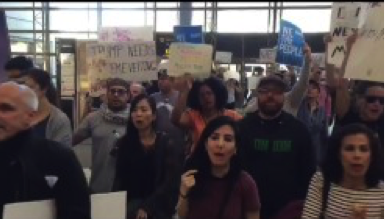

ALEXANDREA THORNTON
Alexandrea Thornton is a journalist and producer living in NY. A graduate of UC Berkeley and Columbia University, she splits her time between California and New York. She's an avid reader and is penning her first non-fiction book.
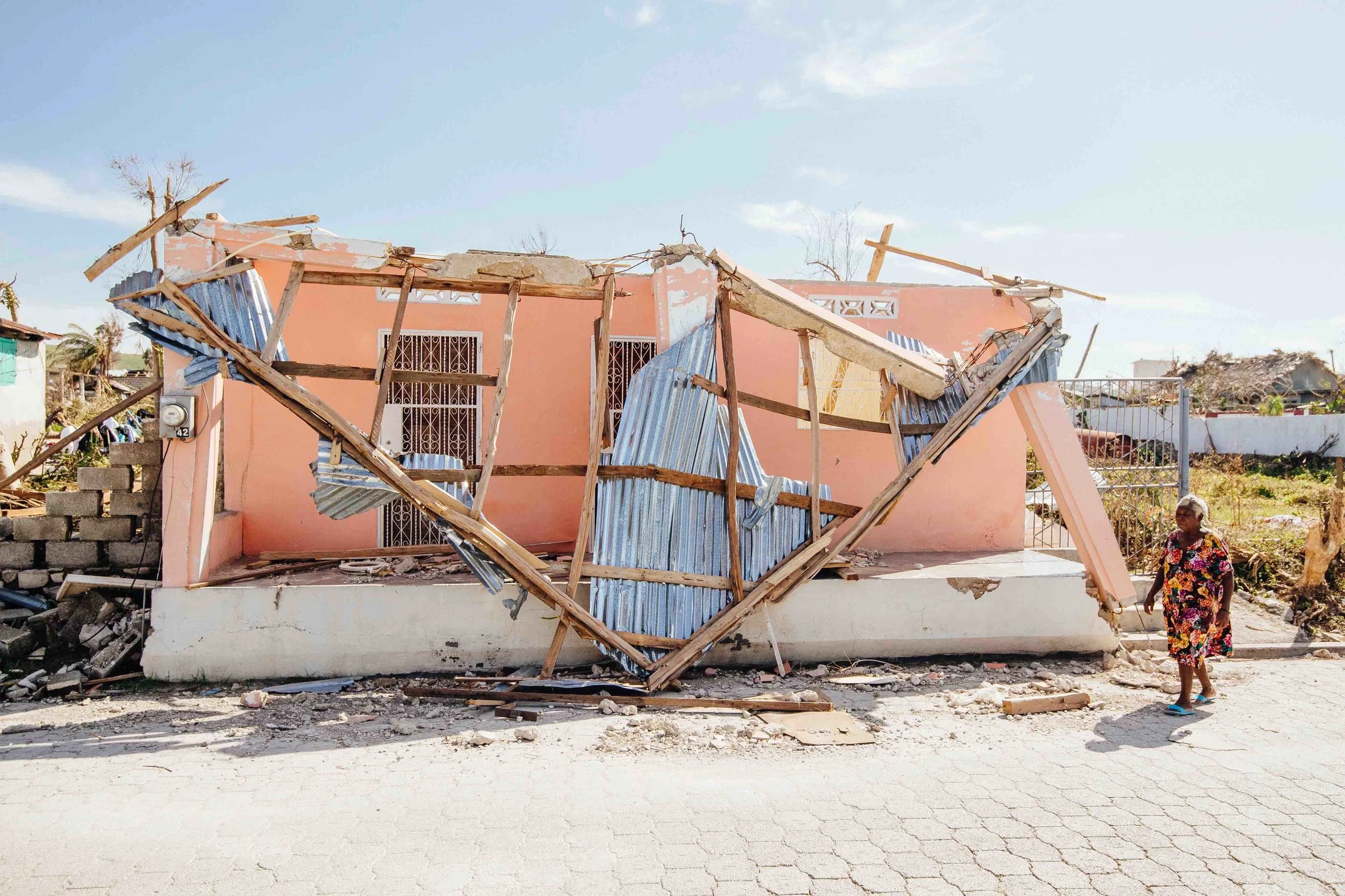
Photo credit: Waves for Water
Update from Waves for Water's Efforts Post-Hurricane Matthew in Haiti
Jon Rose, founder of the non-profit Waves for Water, sent CATALYST an update on recovery efforts in the wake of Hurricane Matthew.
It’s been just about two weeks since Hurricane Matthew made landfall on the South Western tip of Haiti. Two long, hard weeks for millions of people affected by this catastrophic event. In retrospect, I went into this one a little cocky, I think, mostly because I feel so comfortable in Haiti. It felt like no matter how bad it was going to be, it was happening in a place that feels like a second home. I thought the relief plan/action would also be easier because we have such a solid, extensive local network and team there. And I thought my own psychological capacity would be more balanced on this one because I had gone through it before, in the same country. I assumed a bunch of things…
Well, the universe sure has a way of humbling us. In other words, I was mistaken on just about everything.
By day two on the ground, our W4W country director, Fritz Pierre Louis, and I, sat shaking our heads in disbelief. We basically had to throw everything that we thought we knew or expected out the window – to start fresh, as if this was an entirely new country. It is a different beast entirely than the 2010 earthquake that leveled Port-au-Prince.
Why? Many reasons, but I’ll list a few:
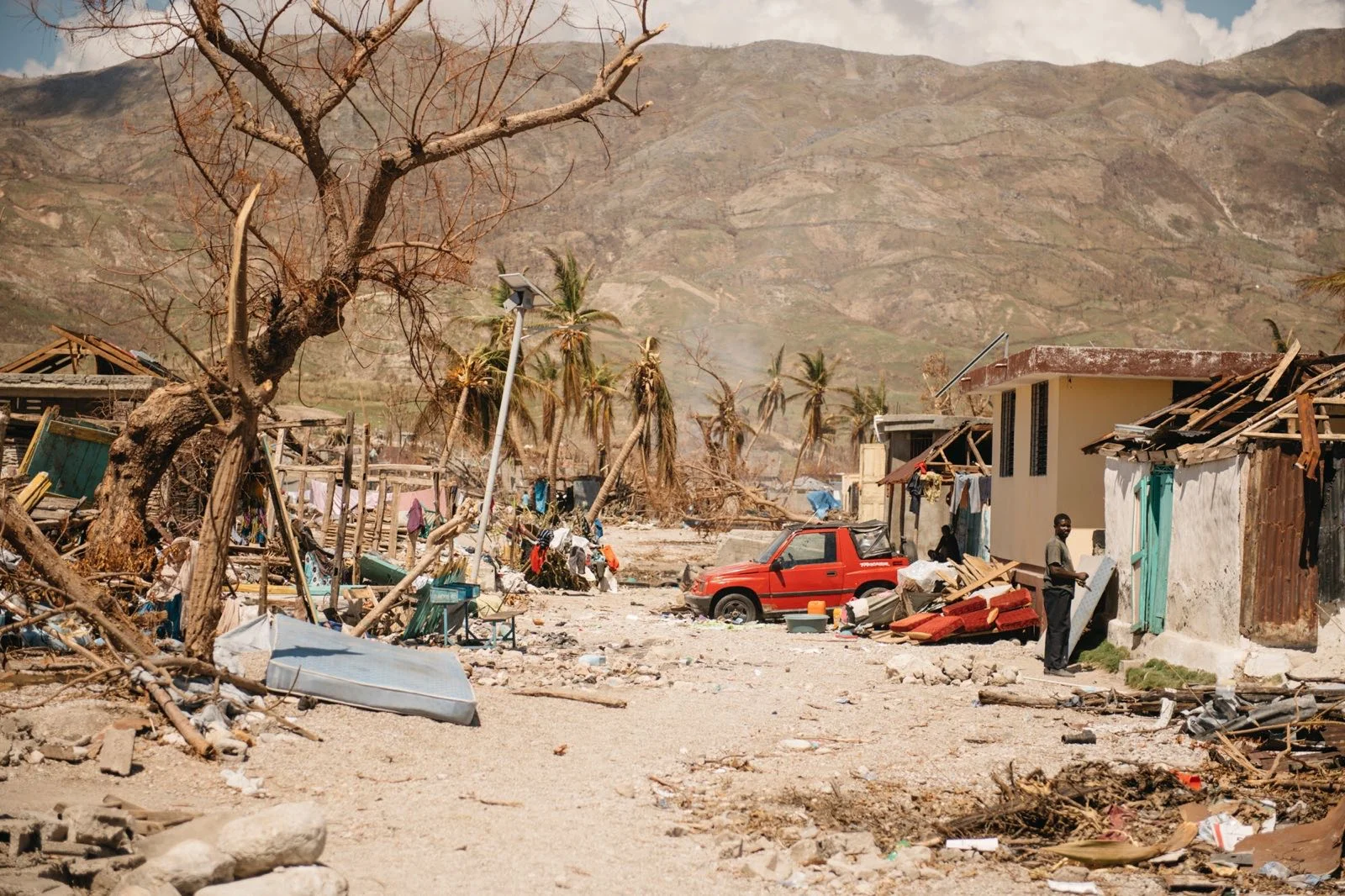
Photo credit: Waves for W
1. Scope of Destruction -
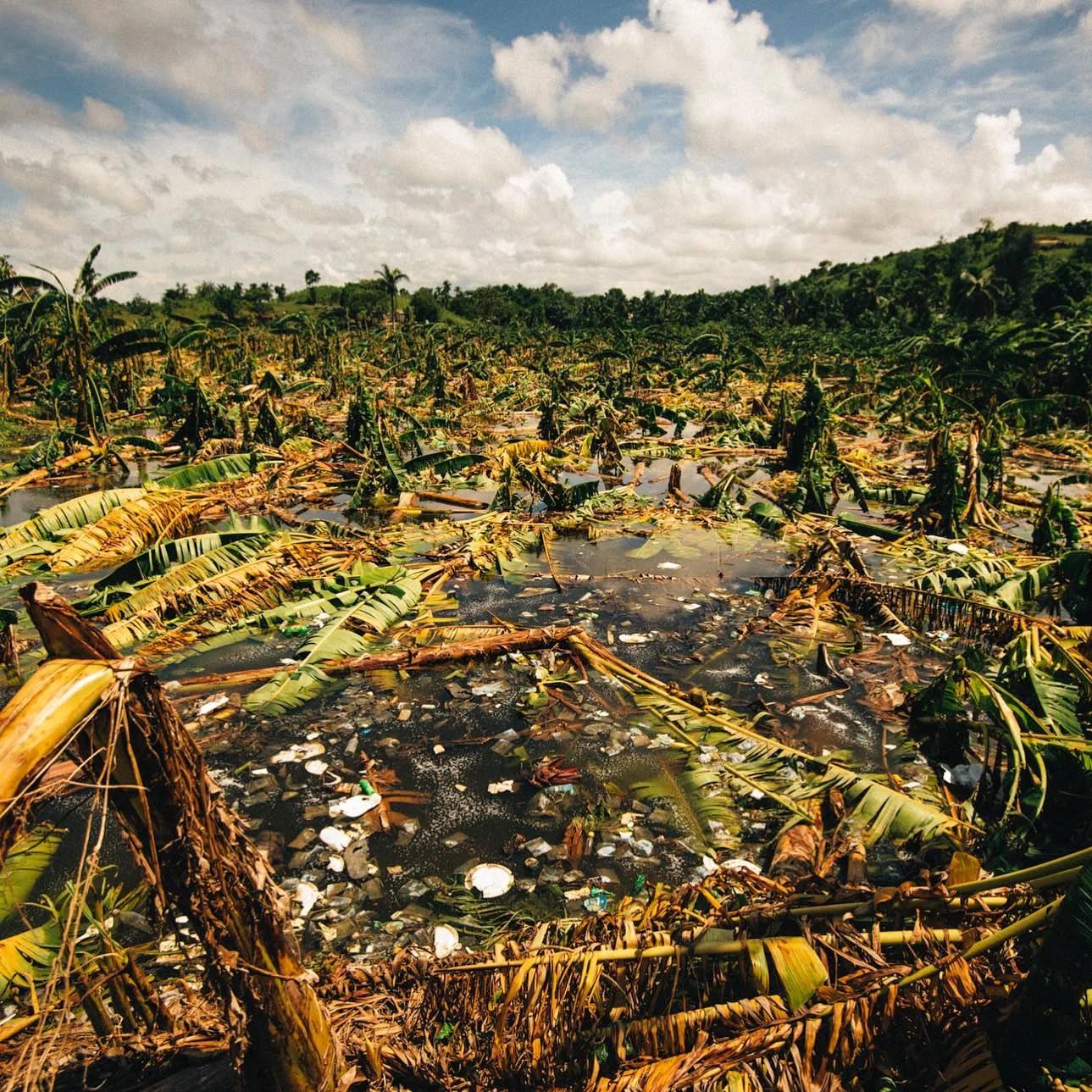
Earthquakes have an epicenter – a narrower, more pinpointed area of impact. With hurricanes of this size the swath of destruction can cover hundreds of miles in all directions, leaving town after town after town leveled. The mountain villages see tornado-force winds (140 mph) with flash flooding that turns each valley into a violent river, destroying anything in its path. The coastal towns get the worst of it with those same tornado-force winds mixed with a 15-20 ft+ storm surge (aka tsunami). Basically a storm like Hurricane Matthew is like if a tsunami and a tornado got in a fight. The sheer scale of devastation, the widespread scope, has left many very experienced relief agencies (including us) with the very hard decision of where to start first.
2. Remote Area -
The majority of the Southwestern tip of Haiti is quite rural. Which means that most of the towns that got hit hardest are small and hard to get to on a normal day – windy coastal roads or mountainous dirt roads the only way in or out. This was before the storm. Now, most of those roads have been compromised, leaving relief capabilities at a bare minimum. For many of these places, supplies can really only be dropped by sea or air, which both tend to have limited payload capacity. This limits not only the speed with which supplies can come in, but the quantity. And with the massive amount of need, quantity is everything at the moment. Normally, relief initiatives will set up a solid distribution outpost in or around all the ground zero areas and then create a regular flow of supplies to feed those outposts (almost always by convoys of large trucks). This just isn’t possible for many of these places, and it won’t be for some time – bridges and roads are washed out, making them only passable via 4x4 vehicles that can traverse the riverbeds.
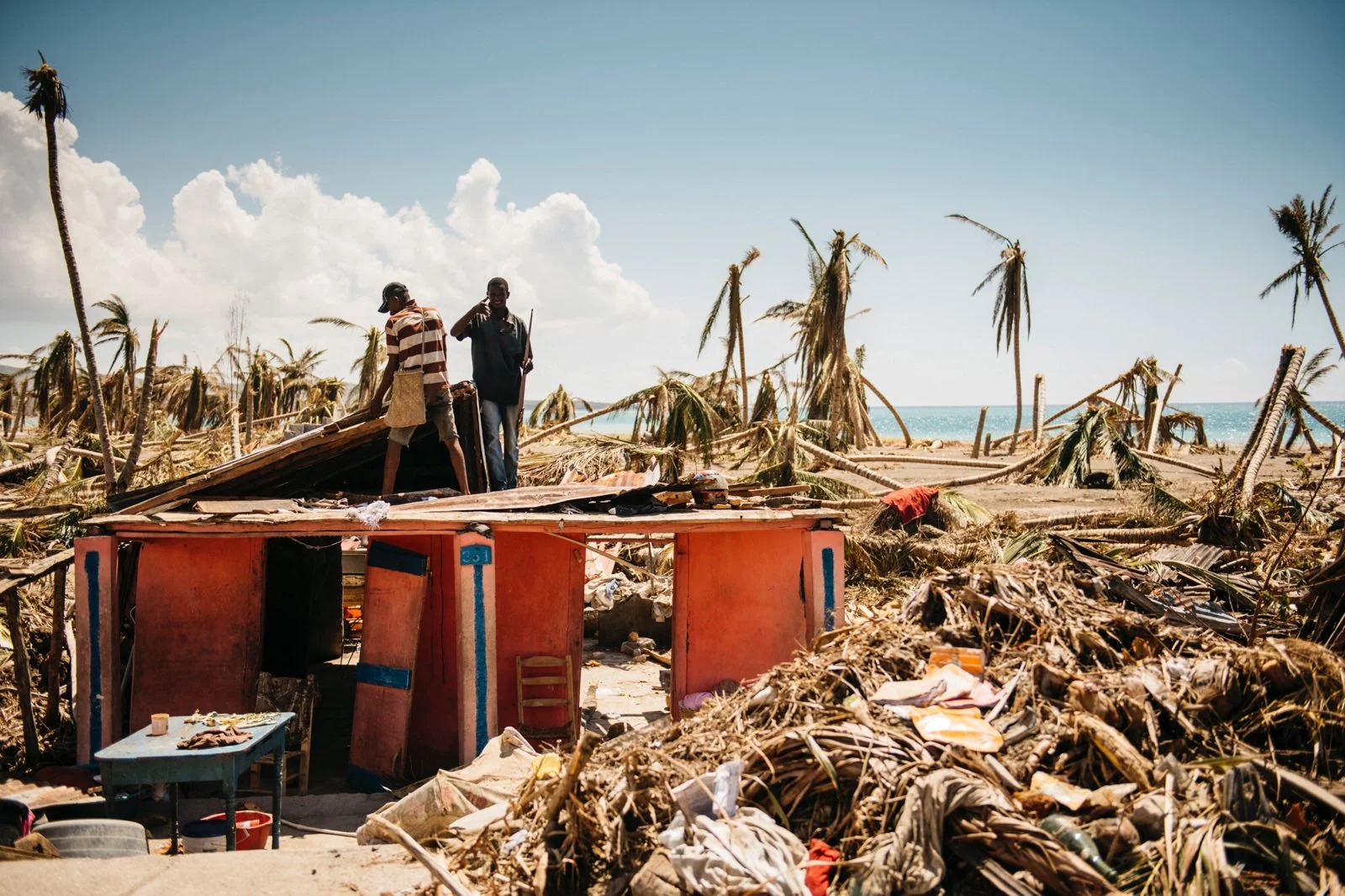
3. Base of Operations -
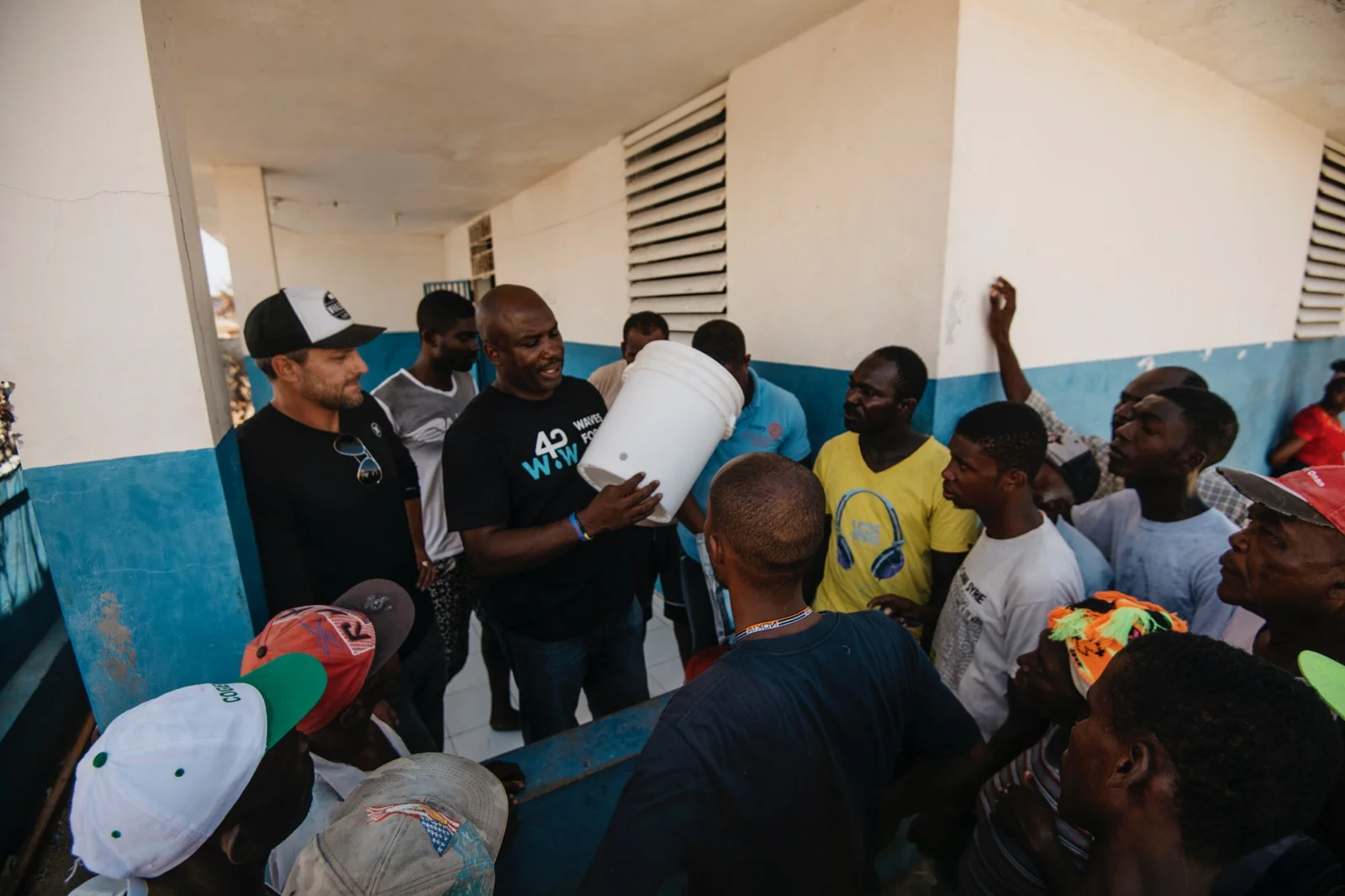
In any good, large-scale/long-term disaster relief initiative, a solid BOO (base of operations) is imperative. This is the place from which teams can do all their planning/staging. It is basically home, office, and everything in between for the duration of the initiative. It needs to be close to ground zero, but with enough breathing room to create a habitable environment. It can often be a scenario as simple/rugged as a camp with tents, or commandeering an old building, or in the best case there are hotels or private rentals available. But in all these cases, we find a way to ensure the teams are safe and have what they need to do their job – power, cell and internet service, food, water, etc. In this case, the only real option was in the city of Les Cayes, which got hit really damn hard itself. But there is an airstrip, it has some hotels still operating on generators, cell service is in and out, and there is water and food accessible. The problem is some of the hardest hit areas are 4-5 hrs drive on 4x4 roads, so the amount one team can do per day, staging from so far away, is incredibly limiting. Until some of the major infrastructural issues in that part of the country are restored (roads, power, etc), which will be months, it’s nearly impossible for relief teams to set up proper long-term operations in those hardest hit areas. The only exceptions are small, targeted teams that can travel lightly in 4x4’s because they don’t have bulky supplies, such as ours (we can carry 200 water filtration systems and 100 solar powered LED lanterns, in two 4x4 vehicles), or medical triage teams. We have seen some of the medical teams already posted up throughout the region, in whatever buildings are still standing. But those aren’t long term operations, as medical is mostly needed in this initial stage.
These are all things I’ve encountered (individually) before, over the many disasters we've worked. But it’s the combination of them all at once that is making this thing such a beast. The only other one I’ve seen with a magnitude like this was Typhoon Haiyan in the Philippines, which is still known as the largest storm ever recorded. If Haiyan is the largest, then Matthew was its equally evil twin brother, whose only difference is being a few seconds younger.
So, what does all this mean for W4W? After two weeks of traversing the whole Southwest, we now have a very accurate assessment of the hardest hit zones and a good plan to serve them. I shall note, unlike the majority of our other disaster relief initiatives, this one will include a few new categories of relief beyond our normal focus of access to clean water.
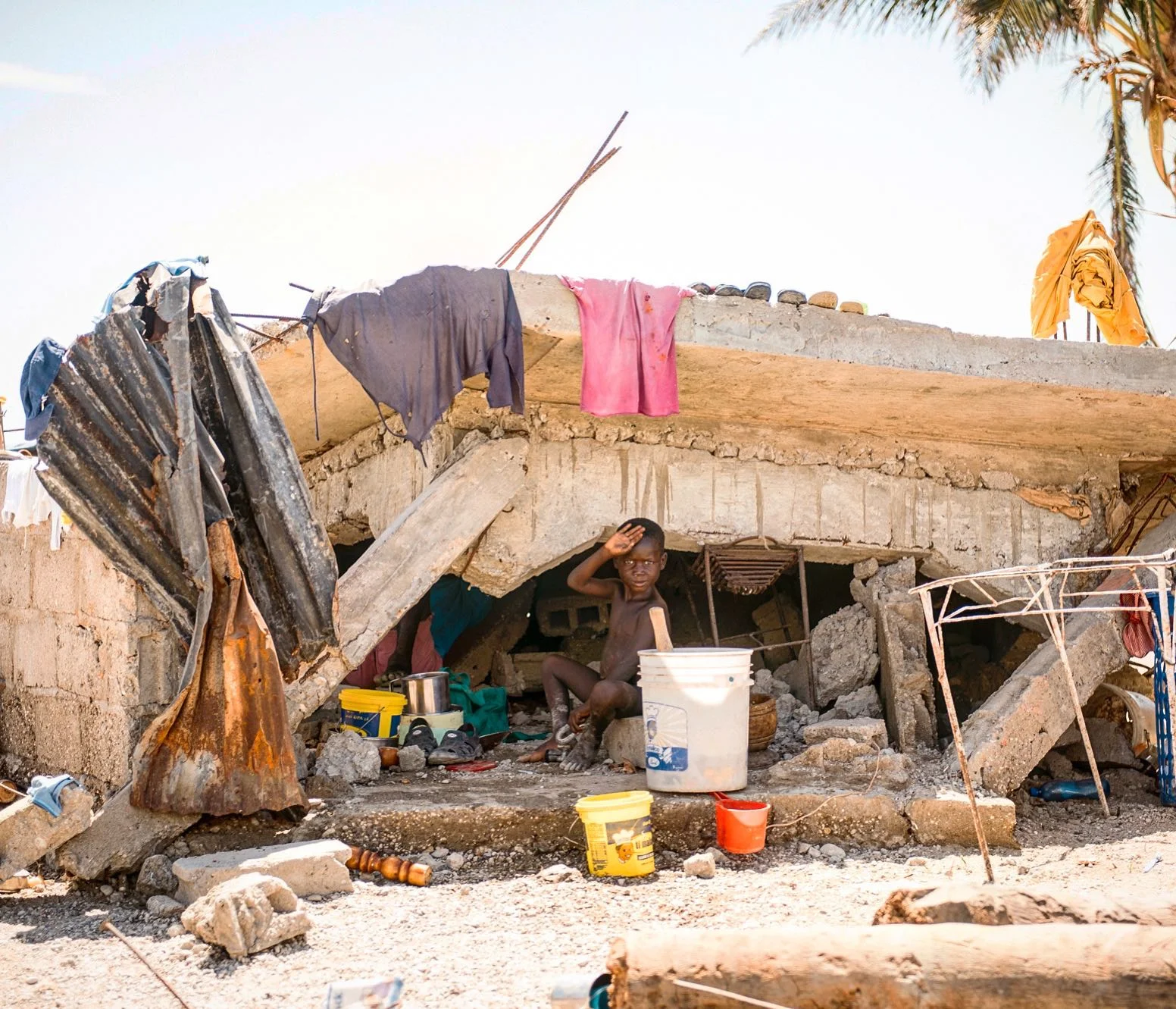
Despite all challenges, W4W has hit the ground running with an action plan that focuses on access to the following essentials:
1. Water -
Access to clean water will still be our main focus, with a targeted implementation strategy aimed almost entirely on cholera hotspots. There have been over 20 new (Matthew related) cases of cholera that have popped up and these numbers are expected to rise dramatically in the coming weeks. Clean water is kryptonite for waterborne diseases such as cholera, so the more we target the areas where it is starting to spread, the better chance we have of curbing the amount of cases popping up, and prevent new ones. We did a very similar program in 2011, when the first outbreak happened in the Artibonite department of Haiti. In partnership with UN’s CVR division, we implemented 4,000 water filtration kits, with a full WASH (water, sanitation, hygiene) education protocol/training, directly in two of the epicenters of the outbreak (Mirebalais and Saint Marc). Shortly thereafter, reported cases leveled out. The implementation strategy for our program this time will be very similar – we’ve identified five areas where confirmed cases have popped-up, or ones we feel are most susceptible to developing them. We will focus the majority of our water filter supply on these areas. We realize that so many places need access to clean water (even before the storm), but since we have limited resources and can’t help everyone, we feel that the best way for us to make the biggest impact is to target our efforts, by tackling the cholera issue head on.
2. Light -
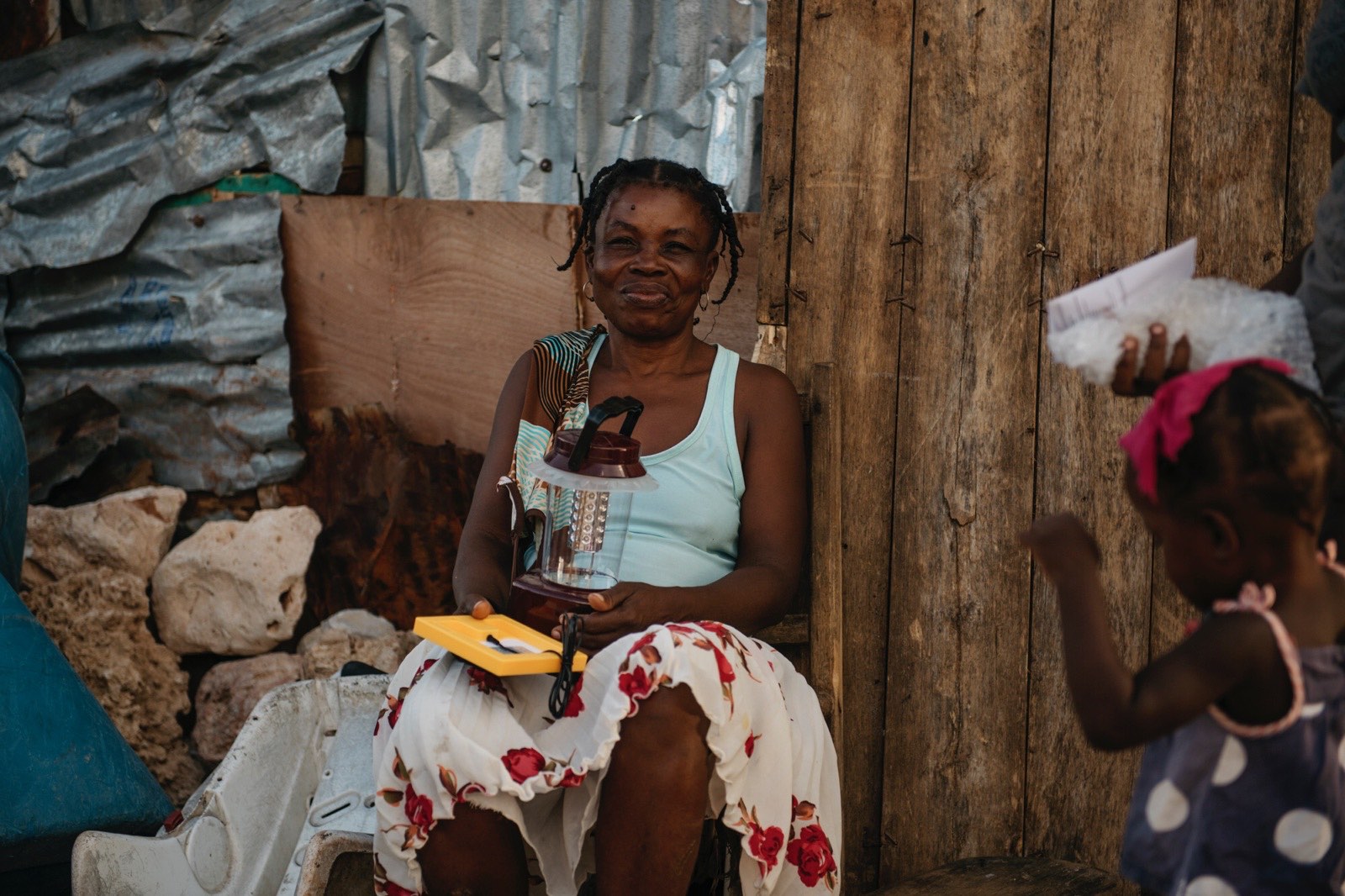
One of the main things that we feel is being overlooked is lighting. The power is out in all of these areas and will be for months. This means that once the sun goes down it is pitch black. There are obvious reasons why this is a challenge, but one of the major issues is safety. Light = community, people gather around any light source when it’s dark. To put it bluntly, a good light source dramatically cuts down the scenario of young women being alone/vulnerable in whatever dark shelter they’re staying. Right now, some families are burning small fires, inside or near their makeshift shelters. Which brings up other safety concerns in terms of breathing in smoke in a confined space, not to mention the incredible discomfort from the added heat alone. It’s already extremely hot, even at night. All of these points, we’ve witnessed personally, and has now brought this topic to the forefront for us. We feel that it is imperative to add this facet to our Matthew Relief Initiative. The lights we are implementing are solar powered LED lanterns that also have a USB port to charge a cellphone, as well as a built in radio (one of the primary ways that rural communities get their news/information). As a last little added bonus, we’ve sourced the lights in-country – so by adding them into our program, we are also contributing to the local economy.
3. Cash for Work -
We are establishing small scale CFW (cash-for-work) programs, focused primarily on rubble/debris removal from, starting with roads and community centers. These types of programs are widely used in development and disaster initiatives around the world. In a disaster situation, it’s a good way to help spark the local economy and fill some of the gaps left from the vacuum that follows a catastrophe such as this. The bottom line – everything has been stripped from these folks (including their jobs) and they need money, so rather than just give straight hand-outs, it's best to employ them, as there is so much to be done and they want/need the work. It's an honest job for services rendered, just like many of them had before. Local residents are already rallying and working for free to help their communities as best they can, but that doesn't put food on the table at the end of the day. The whole thing is overwhelming for them, so something like this helps to restore at least a little normalcy.
Given the conclusions I’ve come to from the last two weeks on the ground and our vast experience in this field, I feel like we are well equipped to not only handle this, but to create a large-scale, long lasting, impact.
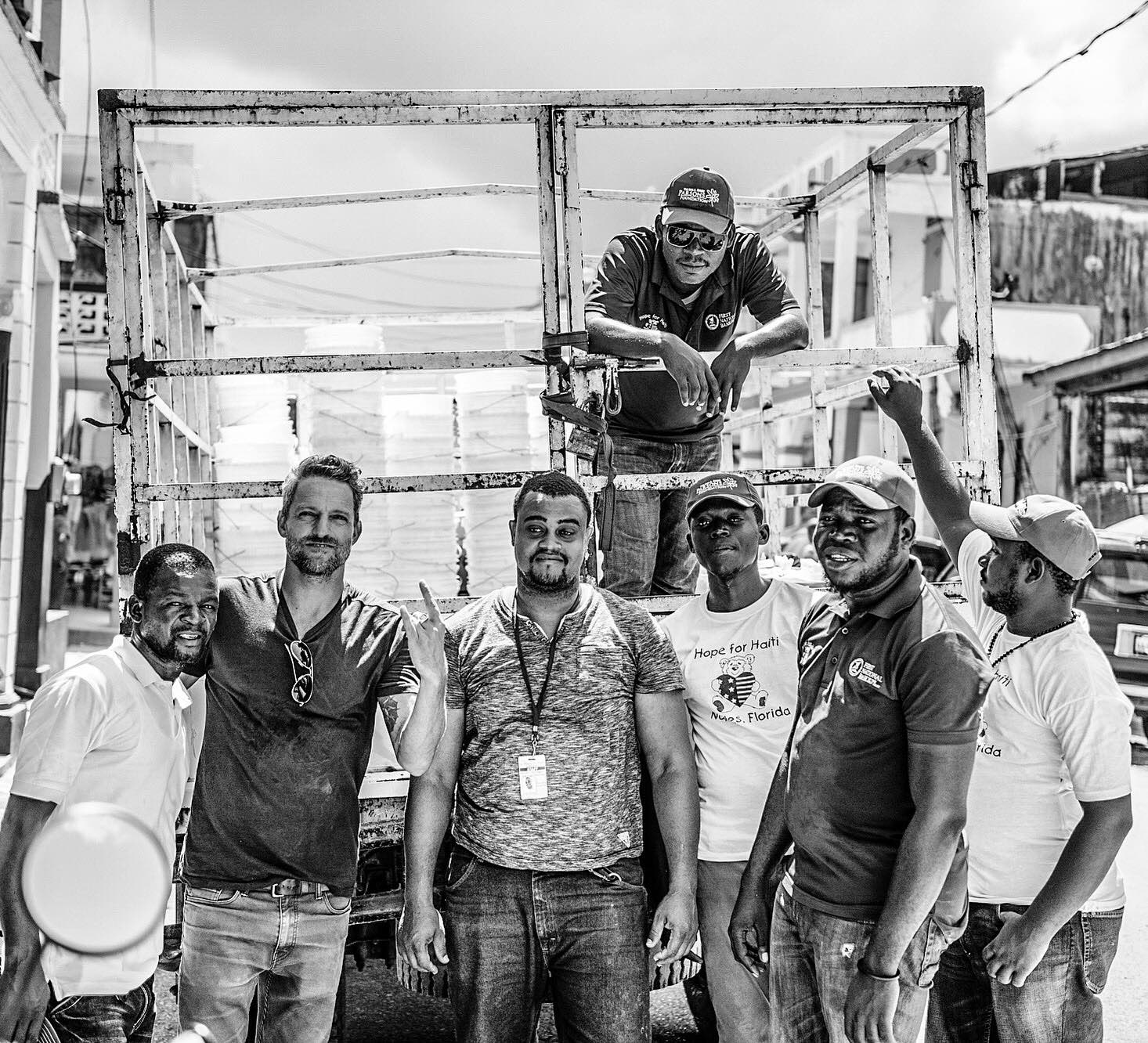
I will also note that even though these first two weeks were primarily focused around assessing the situation on the ground, we also started implementing of all three facets of the program. At this point, we've already distributed 500 water filtration systems and 300 solar lanterns in eight communities — Port Salut, Chardonnieres, Port-a-Piment, Coteaux, Les Cayes, Aquin, Jeremie, and Leogane. We've done this through some of our existing local networks and in collaboration with NGO partners such as (Les Cayes based) Hope for Haiti and local Rotary Club chapters. Lastly, in terms of our CFW (cash-for-work) initiative, we kicked things off with the clearing of rubble/debris on the main road in Chardonnieres.
As our programs gain more traction in the coming weeks/months, more updates from us will follow. Thanks to all of you who have supported and believed in this initiative so far… this stuff simply doesn’t happen without you.
Look out for updates from W4W on their website: www.wavesforwater.org
Jon Rose
Jon Rose is the founder and CEO of Waves for Water, a non-profit organization that helps bring clean water to areas that lack consistent access to it. W4W does this through its Clean Water Courier program, which is based on a Do-It-Yourself humanitarian model.
In Search of Beauty in Antarctica
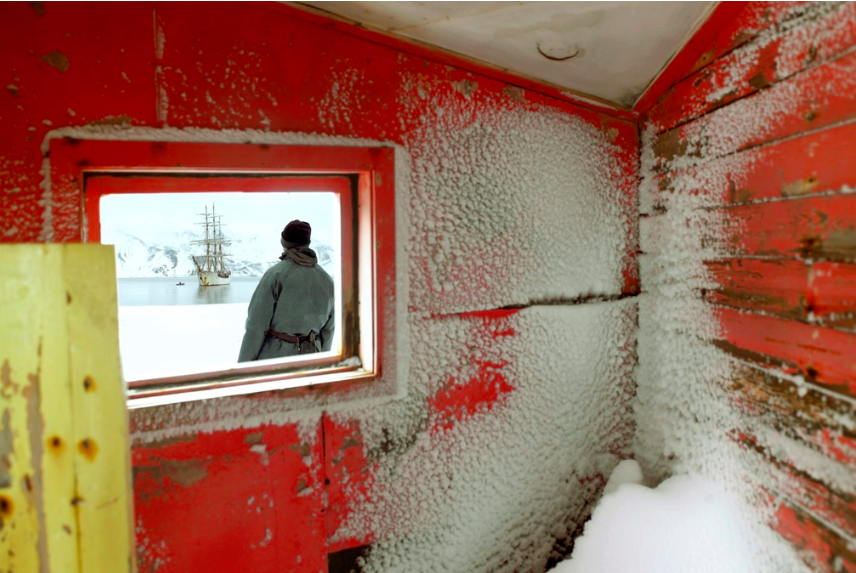
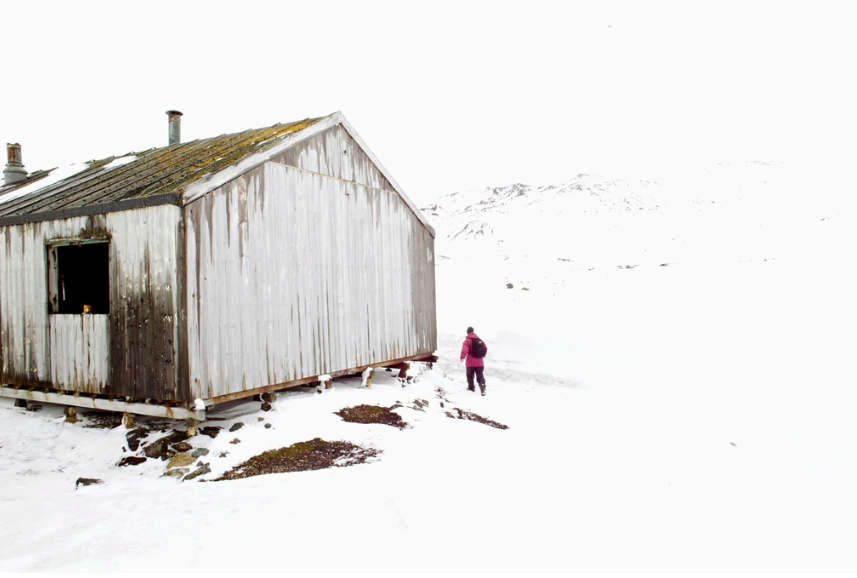
Traveling on a sailing ship built in 1911, the same era the last great expeditions braved the unknown and departed for the infinite and barren landscapes of the white continent, René Koster leaves on his own voyage in search of beauty, the beauty of emptiness and cold.
Thoughts of frozen ships trapped in ice-covered seas cross my mind.
Embarking on a voyage to the South Pole, I travel in a sailing ship built in 1911, the same era the last great expeditions departed for the unknown continent. I recall images of the photographers who joined these expeditions to report of the unexplored. Fascinated by their stories I head for the same circumstances as those of the early twentieth century.
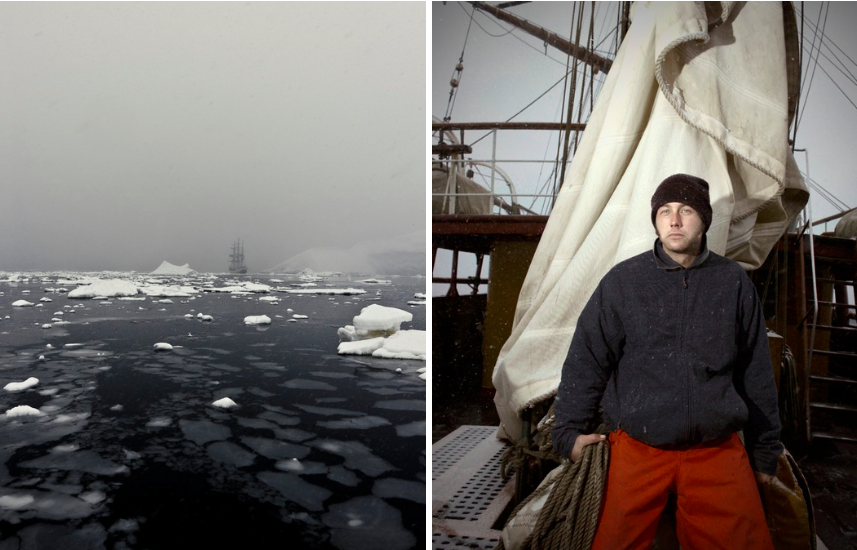
I am on a journey of longing, to a time that once was. A heroic saga, filled with hardship and adventure, in an infinite, barren land.
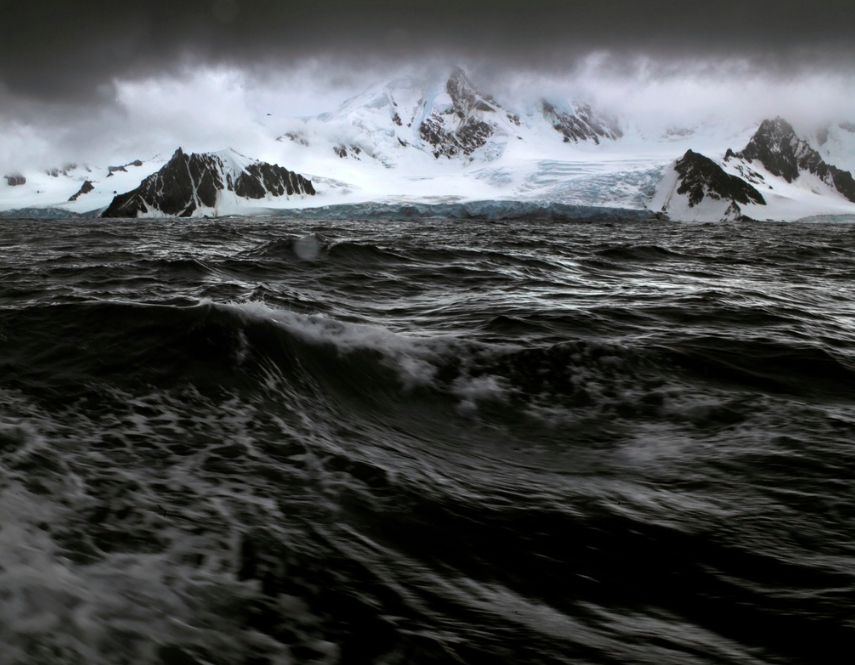
This series of photographs, taken with modern equipment, references the past. Personally, I feel no need for the photographs to look as if they have been created with techniques of the early 1900s. This is why I have deliberately chosen to work in color; allowing the greyscale of the landscape to emphasize the blue captured in ice. In my search for the right images, I have tried to avoid as many elements of the present time as possible; things that would remind me of everyday life.
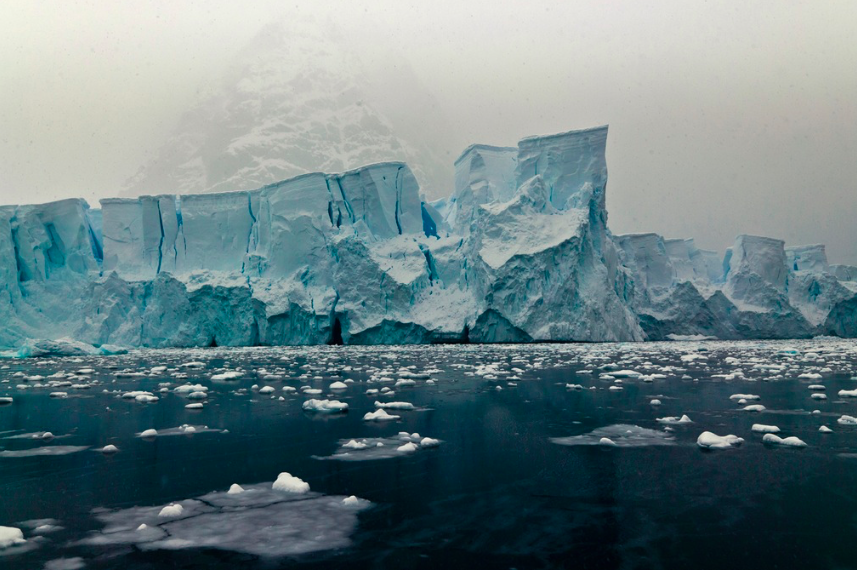
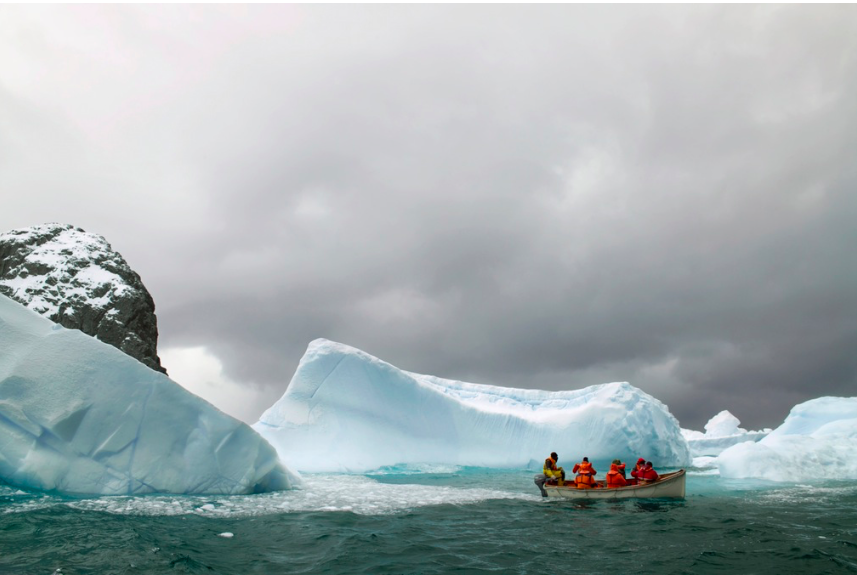
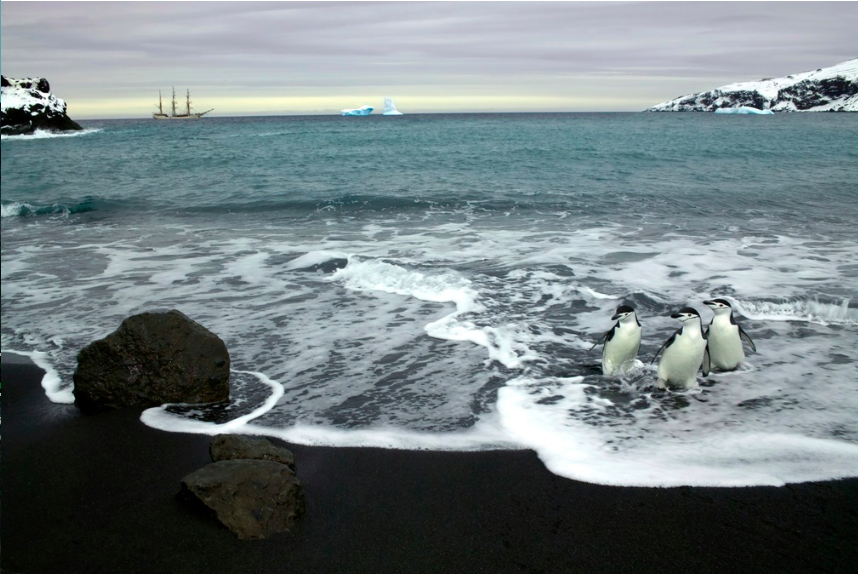
The calm misty weather gives me a sense of desolation and makes the whole world feel smaller.
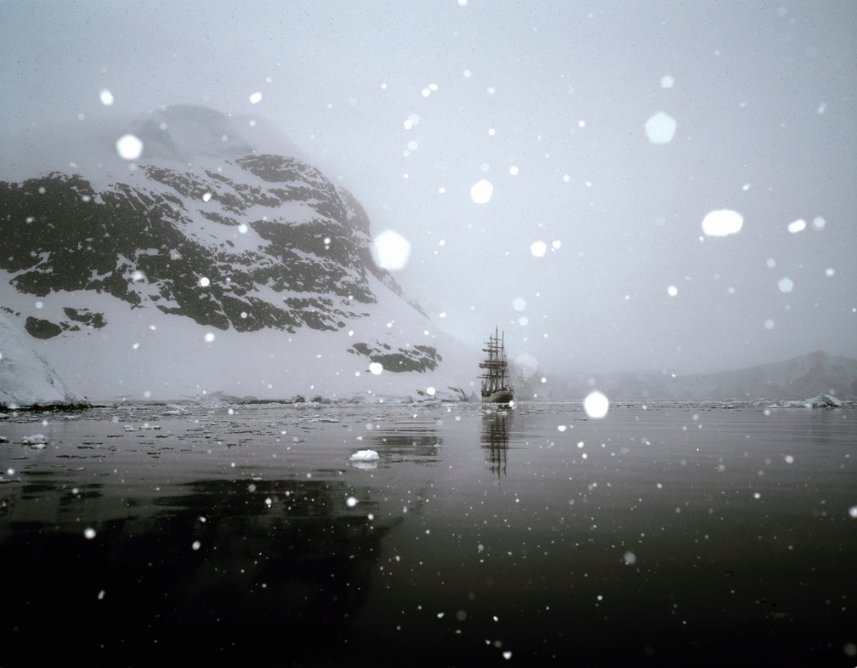
The slow rate of traveling by sailing ship influences my way of taking photographs; I seek stillness, harmony and tragedy in these otherworldly landscapes. In search of beauty, the beauty of emptiness and cold.

RENE KOSTER
René Koster's work concentrates mostly on travel photography and portraits for magazines around the globe. Work from his Antarctica project was awarded The Travel Photographer of the Year. Check out his website here.
American Thoughts On Foreign Aid: A Documentary By ONE
ONE explores what American perceptions of US Foreign Aid are... and then shines some light on the reality.
Join ONE by taking action to support the world's most vulnerable here
NICARAGUA: Surfing for Change Travel Guide
The mission of Surfing for Change is to spread awareness that tourism, and surf travel, can bring dollars and along with it a lot of destruction to surf destinations in the developing world. Their vision is that there is a better way. Here, watch Nicaragua's Wave of Optimism (WOO) implementing a new model for surf tourism, and Courney Hull, social entrepreneur, building the world's first plastic-free hotel.
CONNECT WITH SURFING FOR CHANGE
MILLENNIAL TRAINS PROJECT: The Uncharted Territories
This past summer, The Millennial Trains Project (MTP) embarked on its inaugural cross-country journey - visiting six cities in ten days; traveling by train the entire way. With a mission to awaken the entrepreneurial amongst a group of 25 crowdfunded Millennials, the trip exposed them to the uncharted territories of America; showing the promise, and room for growth the country has. This video - narrated by Keith Bellows, Editor-in-Chief of National Geograhpic Traveler and MTP on-train mentor shares his insights on the Millennial Generation, travel, and the need for all of us to fight complacency in order to break the status-quo.
CONNECT WITH THE MILLENNIAL TRAINS PROJECT
VIDEO: Exploring America's Newest Frontiers with the Millennial Trains Project
All aboard the Millennial Train! This 10-day 7-city train journey is set to embark on its second voyage, from Portland to New York City. As an annual journey, the Millennial Train Project hosts a group of bright young minds who have crowd-funded their way onto the train as they aim to tackle America's newest frontiers and challenges. It's an ever-moving incubator, riding full speed ahead toward a brighter tomorrow.
CONNECT WITH MILLENNIAL TRAINS PROJECT
VIDEO: Explore the Scenic US on a Road Trip
A vivid exploration of American culture, this video shows different parts of the country from the perspective of a road trip. While it starts in New York City, it is hardly limited to urban environments and looks at many different parts of the country.