
The Korea-based POSCO Corporation is pursuing a project in Odisha, India, that is resulting in the violation of human rights. If the project proceeds as planned, some 22,000 people risk being forcibly evicted from their lands and dispossessed from their means of livelihood. POSCO's investors have responsibilities to ensure that the company respects human rights, and to ensure that abuses to not take place in their name.
Unravel: A documentary about the Kutch District of India
Clothing from Westerners who throw away their clothing often winds up in India. This video documentary visits the Kutch District in India, which is a major destination of used clothing. The clothing there is torn apart and turned into thread to create new garments. The community in the Kutch District is fascinated by their ideas about the Westerners who they imagine only wear their clothes a few times before throwing them away.
BANGLADESH: From No-Man's Land to the Unknown
For decades, more than 50,000 people have been stranded, without access to basic rights, on tiny islands of no-man's land locked within India and Bangladesh. Last year finally saw an end to these enclaves, or 'chitmahals,' bringing hope and change to communities living on the world's most complex border.
The party lasted long into the night across remote patches of northern Bangladesh. As the clock struck midnight people played music, danced and sang using candles for light, and for the first time in their villages they raised a national flag. Similar events were also taking place on the other side of the border in India just a stone’s throw away.
For 68 years, ever since the formation of East Pakistan in 1947 (which later became known as Bangladesh), the residents of one of the world’s greatest geographical border oddities have been waiting for this moment; for their chance to finally become part of the country that has surrounded yet eluded them for so many years.
At 12.01am on July 31st, 2015, India and Bangladesh finally exchanged 162 tracts of land — 111 inside Bangladesh and 51 inside India.
Known in geographical terms as enclaves, or locally as chitmahals, these areas can most easily be described as sovereign pieces of land completely surrounded by another, entirely different, sovereign nation.
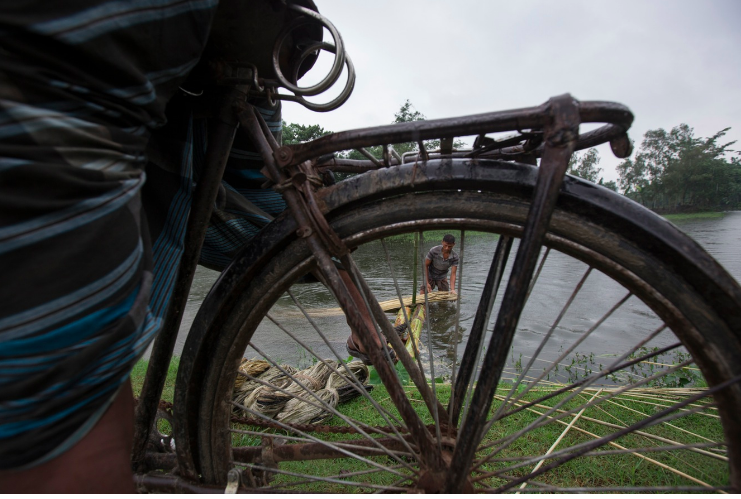
ABOVE: Inside an enclave, a man prepares jute by removing the long, soft vegetable fibres that can be spun into coarse, strong threads, and keeping the sticks. For many enclave dwellers, jute is where most of their income comes from and also what they use to build their houses.
Enclaves aren’t as rare as you may think, and until now this part of South Asia has contained the vast majority. Existing around the world, mostly in Europe and the former Soviet Union, they were once much more prevalent — until modern day cartography and accurately defined borders eliminated many. Some still remain, such as the Belgium town of Baarle-Hertog, which is full of Dutch territory. The locals have turned the unusual border into a tourist attraction. However, for this region of southern Asia, where political and religious tensions run high, the existence of enclaves is not so jovial. Life for those who are from these areas is far harder than in neighboring villages, only minutes away.
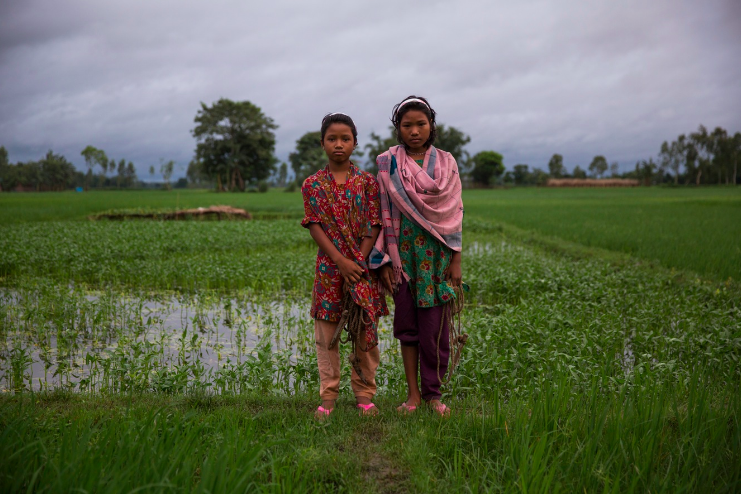
ABOVE: Sisters Lobar Rani Bormoni, 11, and Shapla Rani Bormoni, 12, stand in a paddy field in the enclave in Bangladesh where they born.
“These enclaves are officially recognised by each state, but remain un-administered because of their discontinuous geography. Enclave residents are often described as “stateless” in that they live in zones outside of official administration — since officials of one country cannot cross a sovereign frontier into administered territory,” explains Jason Cons, a Research Assistant Professor at the LBJ School of Public Affairs at the University of Texas, Austin and author of the forthcoming book, ‘Sensitive Space: Fragmented Territory at the India-Bangladesh Border.’
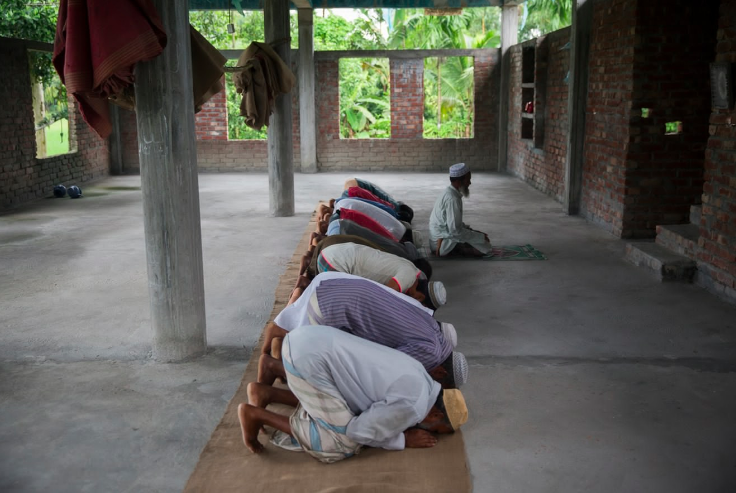
ABOVE: Muslim men from Dhoholakhagrabari enclave pray in their mosque. Mosques are usually the only solid structures that exist inside the enclaves.
Several folktales tell of the origin of these enclaves being the stakes in a game of chess between two feuding maharajas in the 18th century, or even the result of a drunken British officer who spilt spots of ink on the map he drew during partition in 1947. Captivating as these stories are, the most likely explanation dates back to 1711 when a peace treaty was signed between the feuding Maharajah of Coch Behar and the Mughal Emperor in Delhi. After the treaty their respective armies retained and controlled areas of land, where the local people had to pay tax to the respective ruler, thus creating pockets of land controlled by different people.
Prior to 1947, when this region was entirely Indian territory, living in these locally-controlled enclaves made little difference. However, during the drawing of the boundary between India and Bangladesh, the Maharajah of Coch Behar asked to join India — on the condition that he retain all his land, including that inside the newly formed East Pakistan, which his ancestors had rightly won control of over 200 years ago.
So, through no fault of their own, the lives of 50,000 people turned upside down — for decades they have been stranded on islands of no-man’s land.
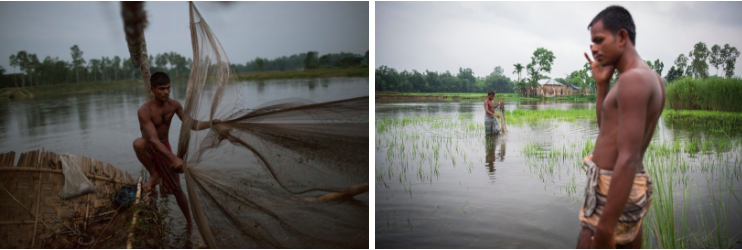
ABOVE: (Left) A man fishes at dusk using his large bamboo fish trap. This river exists just outside the enclave but as it’s in Bangladesh territory, enclave dwellers are forbidden to fish here otherwise angering the local fishermen. (Right) Enclave dwellers fish in a flooded paddy.
During the early 1970s a framework to find a solution to this problem was put in place — called the 1974 Land Boundary Agreement. For forty years, as governments came and went, neither the Indian nor the Bangladeshi politicians were able to agree with their counterparts at the time. And whilst the politicians squabbled, the residents suffered.
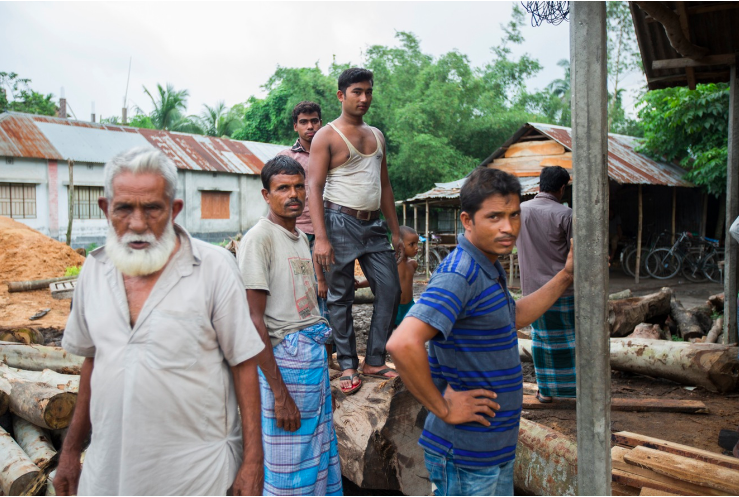
ABOVE: Only informal work, like at this sawmill, is available for enclave dwellers in Bangladesh.
On the ground there are no border fences or security checkpoints, and without realising it, you can walk in and out of India countless times, crossing an international boundary completely obliviously. However, there is a serious lack of infrastructure and this has been one of the most serious problems facing the residents. Paved roads quite literally stop at the boundaries to the chitmahals, as do electricity poles. The enclave inhabitants in Debiganj District of Bangladesh, as non-Bangladeshi citizens, were even barred from sending their children to school, also receiving no state assistance or even the most basic of hospital treatment.
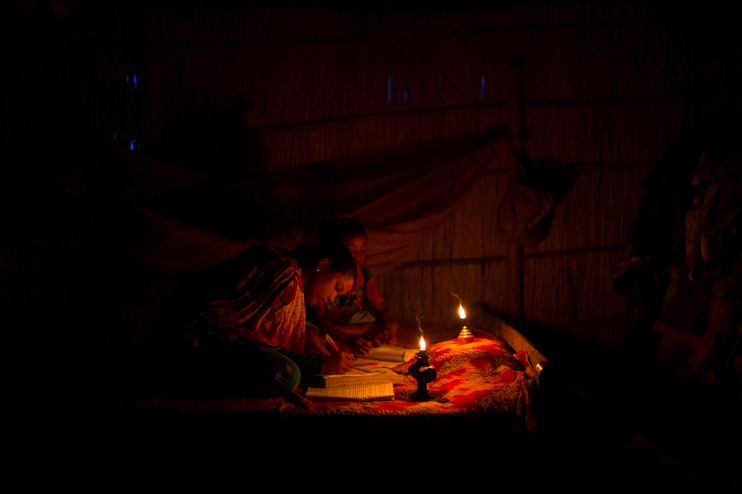
ABOVE: Sheltered within their small bamboo house, located inside the enclave of Dhoholakhagrabari, Eity Rani, 14, and Shobo Rai, 8, carefully do their homework by the light of an oil lamp. Life is much harder for children who are born in enclaves.
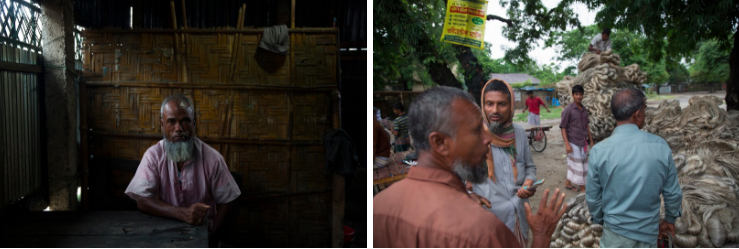
ABOVE: (Right) A Bangladeshi man sits in a shop in the market of a small town that sits between enclaves. (Left) Every Saturday a jute market is held in Debiganj. For the many inhabitants of the enclaves that surround the town, jute is where most of their income comes from.
Wearing just a lungi — a traditional sarong worn around the waist — Sri Ajit Memo is sitting in the middle of a small muddy courtyard, surrounded by houses made of bamboo and jute sticks. At 55 years old, his family have lived in a Dhoholakhagrabari chitmahal for generations. Chewing on the twig of a certain tree that locals here use as an alternative to toothpaste, he explains, “All kinds of problems exist here. The government doesn’t care about us, or our children, and so it’s very difficult for them to even go to school. Honestly, we are Indian, but how can we feel this way when we get no help from them?”
For enclave dwellers on both sides of the Indian-Bangladeshi border, the entitlement to receive even the most basic of rights has eluded them.
Reece Jones, an Associate Professor in Political Geography at the University of Hawai’i Manoa, who has visited many chitmahals on both sides of the border, explains further, “After decades in this situation many people have found ways around it through bribes to officials or through friends who helped them to obtain the documents they needed, such as school enrolment forms for their children. However, the situation was not stable or secure. They were extremely vulnerable to theft and violence because the police had no jurisdiction in the enclaves.”
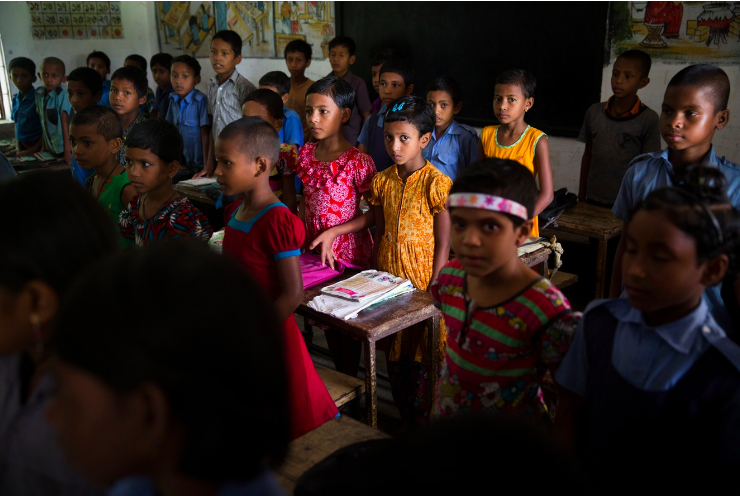
ABOVE: Rupsana Begum, 7, (pink dress) and Monalisa Akter, 7, (orange dress) are from an enclave but were able to come and study at Sher-e-Bangla Government School because their parents managed to acquire fake documents and were able to pay the school.
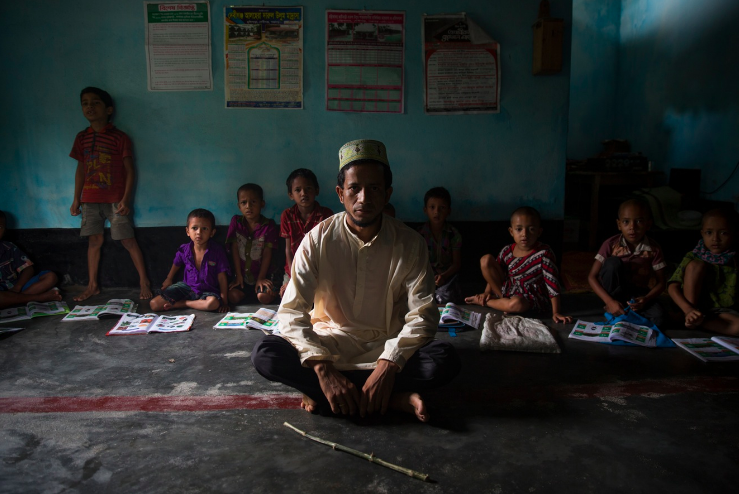
ABOVE: In Dhoholakhagrabari enclave students and their teacher sit in a madrassa class. Because enclave children have a difficult time accessing the education system in Bangladesh the locals of this enclave formed an Islamic Foundation funded on donations.
Today, after decades left living in limbo in these randomly placed no-man’s lands, around 47,000 people on the Bangladeshi side and some 14,000 on the Indian side have finally been given the right make a choice: stay where they have lived for generations with official citizenship of the country that will absorb them, or return to their country of origin.
None of the residents living in Bangladeshi enclaves within India asked to return to Bangladesh and as a result they will now all become Indian citizens. However, on the other side of the border in Bangladesh, whilst the vast majority of the Indian enclave dwellers decided to stay and become Bangladeshi citizens, 979 people requested to return to India. For these families, the enclave saga has yet to end.
Of those 979 individuals, a total of 406 come from Debiganj district. In 2011, a team of Indian officials visited every home in every enclave in Bangladesh and produced the first ever detailed census of all those living within the Indian enclaves. This report formed the basis of all subsequent decisions on the status of each person living in the enclaves.

ABOVE: (Left) An old lady inside her home, which has no running water or electricity, in Dayuti enclave. (Right) Dhonobala Rani, 70, gets emotional knowing that she has to leave her son (in the blue shirt) behind in Bangladesh, as she takes Indian citizenship.
Several months after my visit to document the enclaves during the final days of their existence, those who had chosen to leave for India finally crossed the border, leaving their homes in Bangladesh forever. In India they were given land and began the process of integrating into Indian society. Those who chose to stay behind in Bangladesh also started to receive such basic rights as eligibility to vote and access to health care.
Let us hope that after decades of struggle on these isolated political islands, the lives of these ex-enclaves dwellers can begin to reach some level of normalcy. In the end, after so many years of uncertainty, the world’s strangest border region has now become a thing of the past.
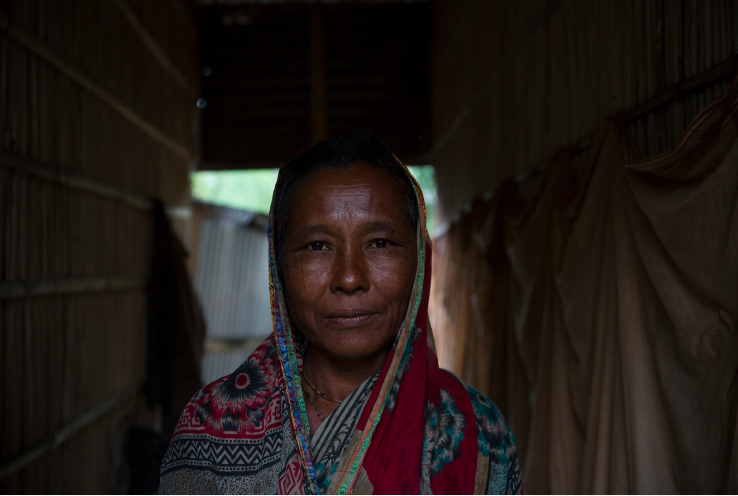
ABOVE: A lady from Ponchoki Bhajini village, in the enclave of Dhoholakhagrabari. She has chosen to leave for India, to start a new life as an Indian citizen.

LUKE DUGGLEBY
Luke Duggleby is a British freelance documentarian and travel photographer. He currently lives in Bangkok and is represented by Redux Pictures.
VIDEO: E-Waste Tsunami in Delhi
E-WASTE TSUNAMI
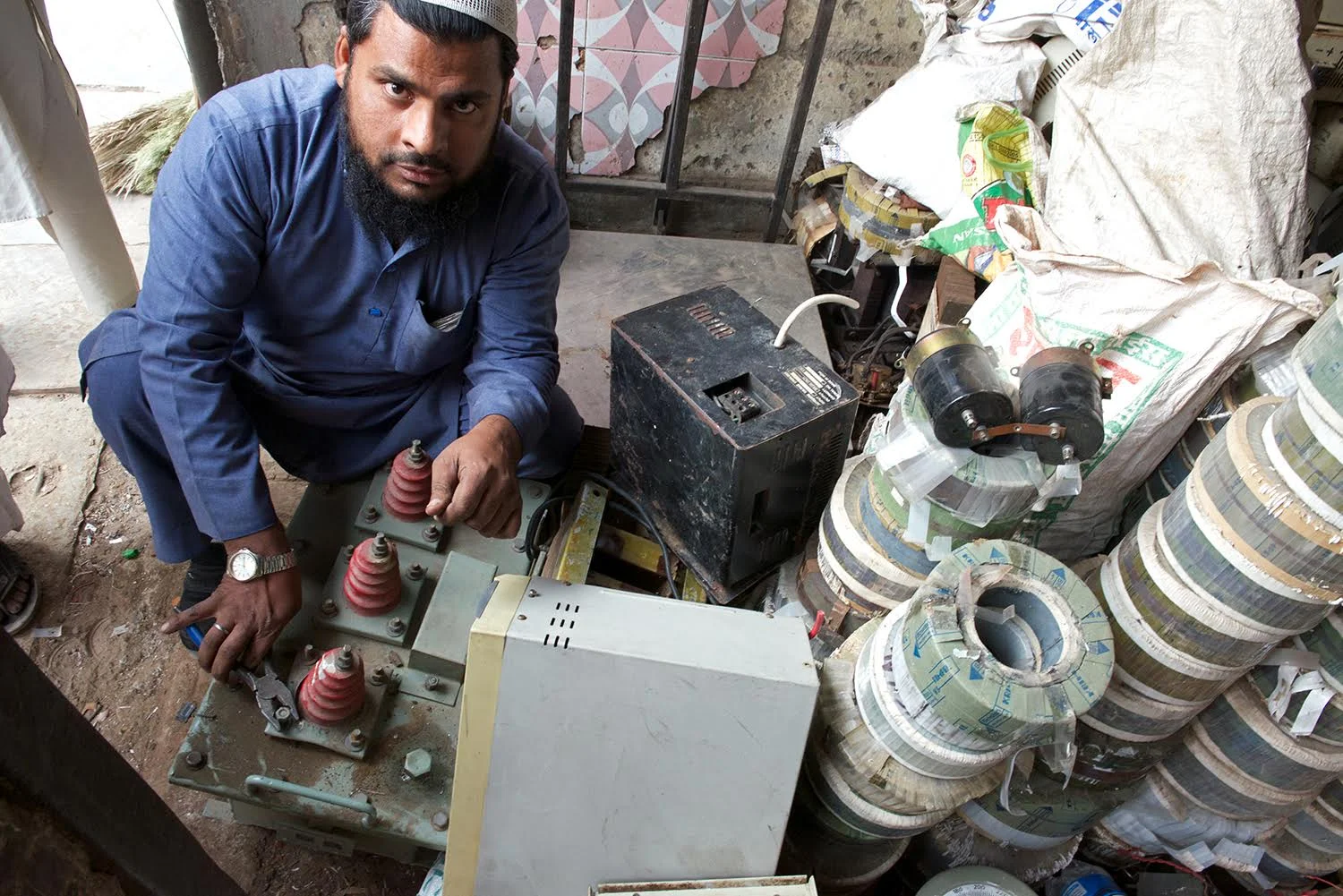
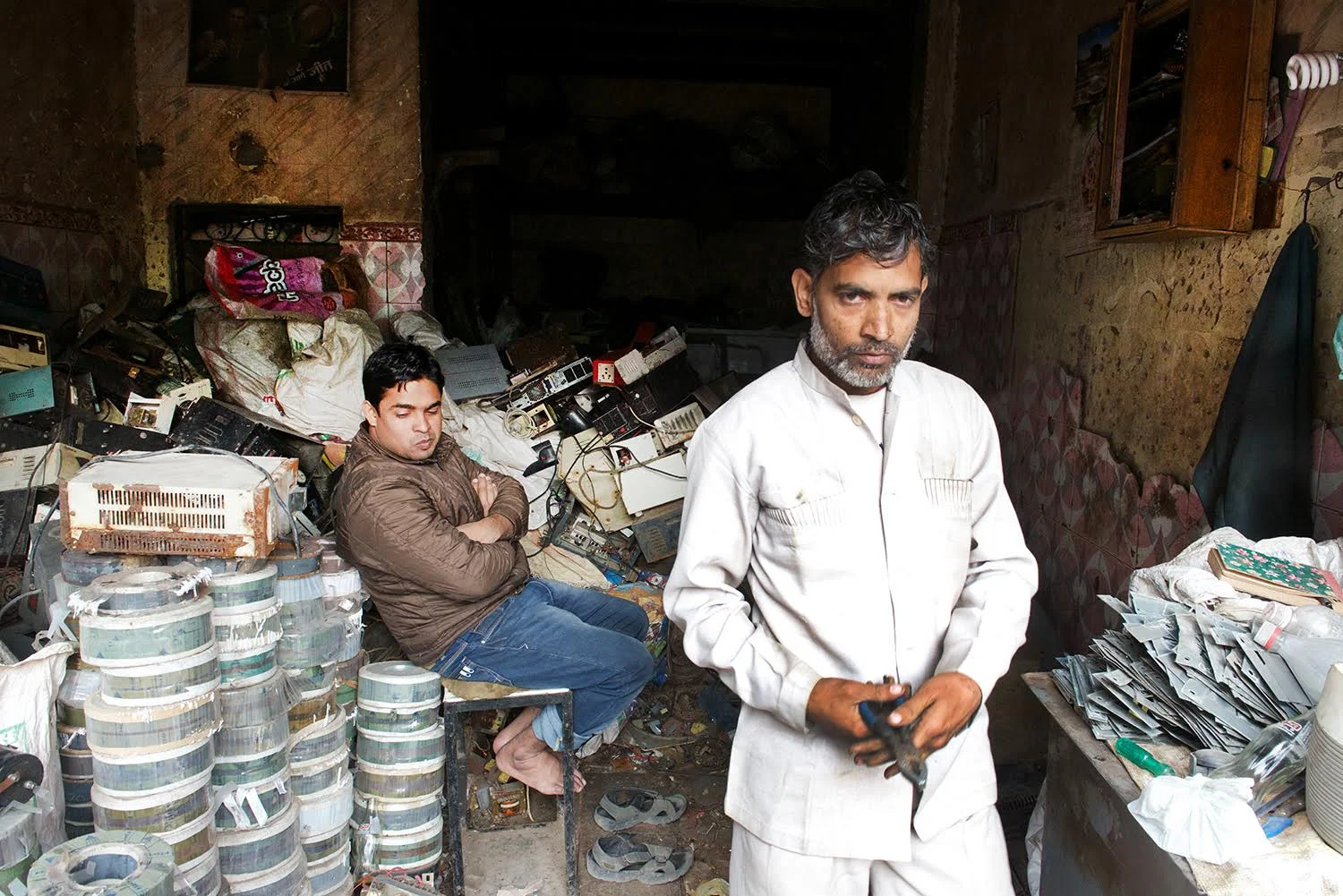
E-WASTE TSUNAMI peers behind the virtual world conjured by our computers and mobile phones to the very real world of electronic trash.
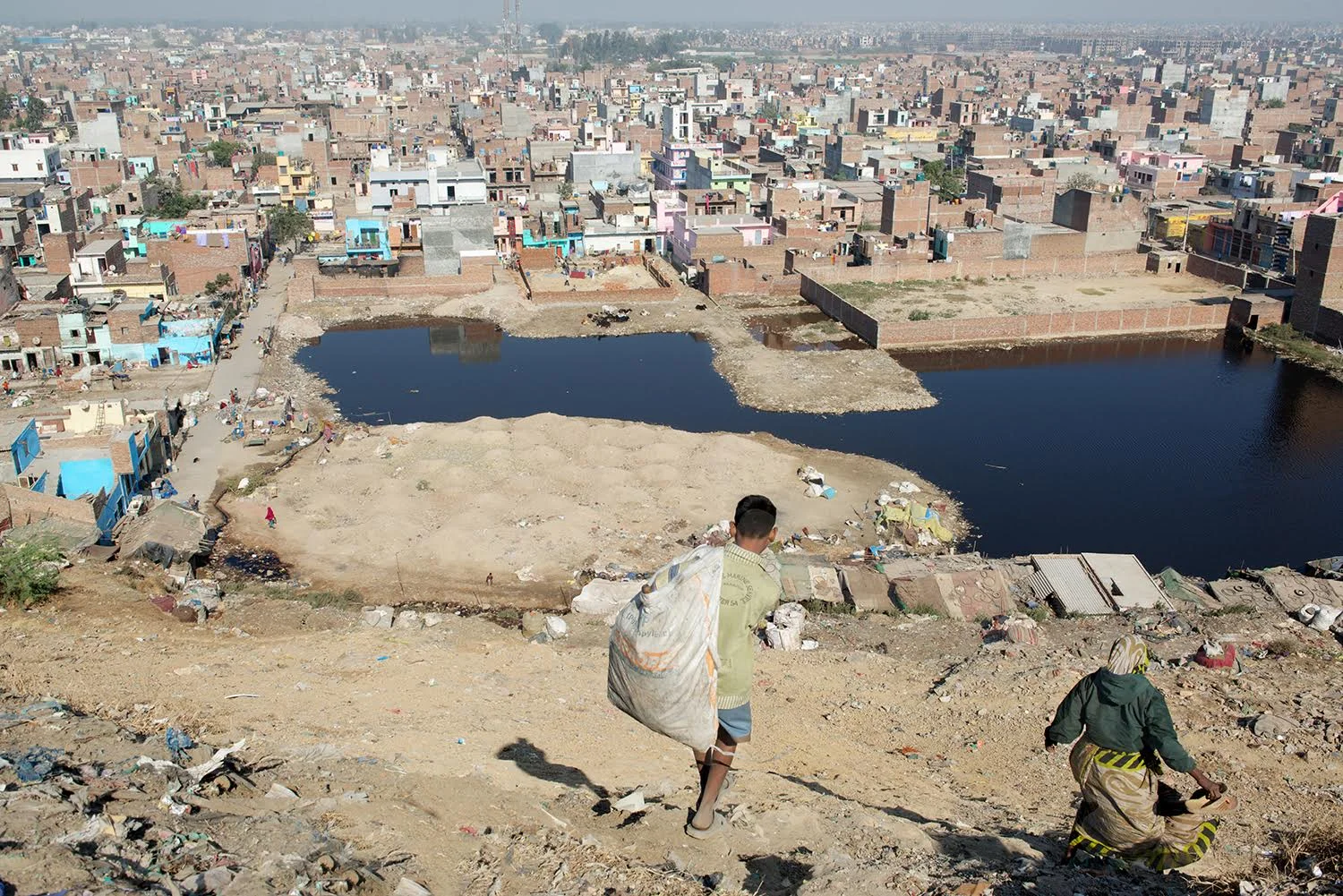
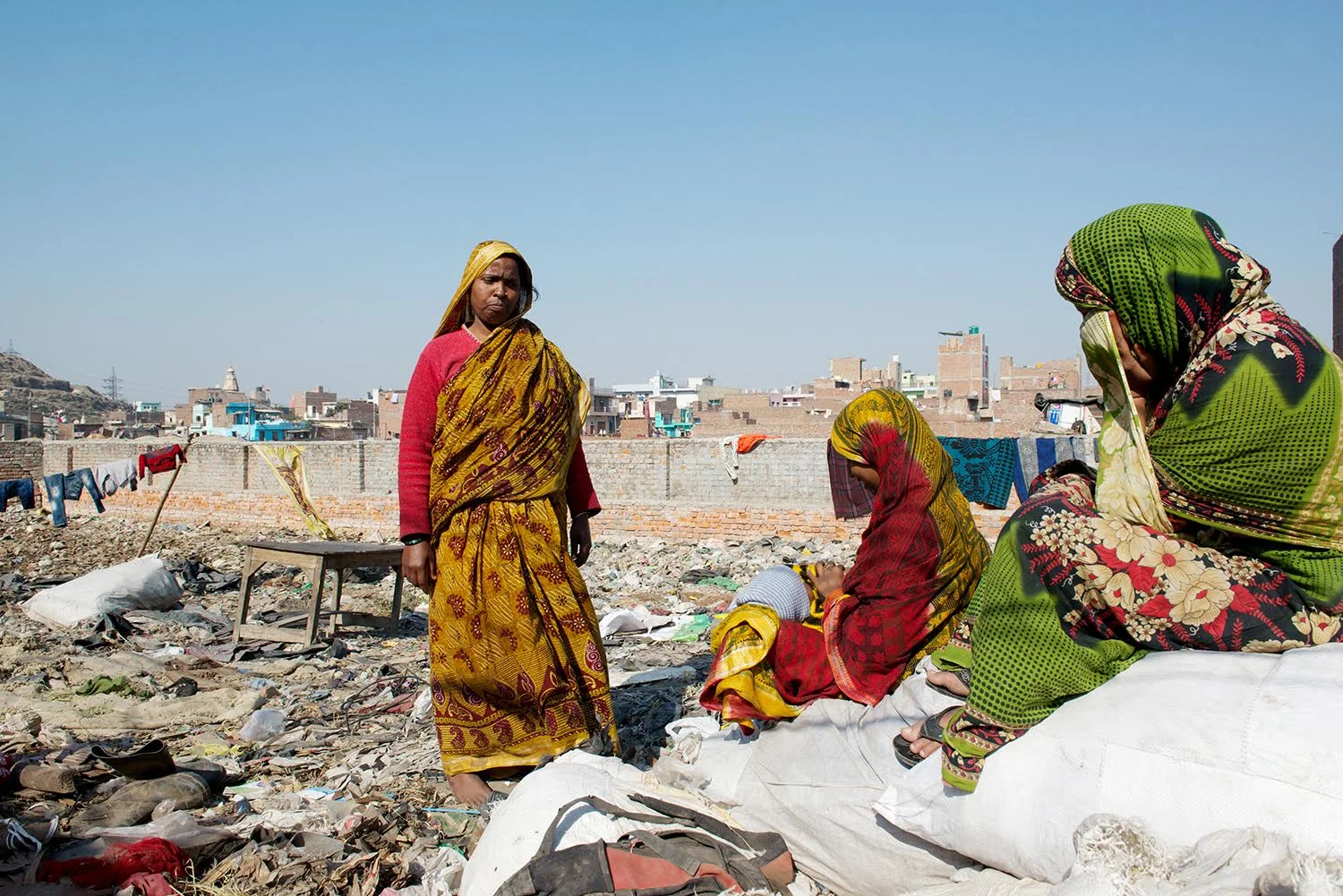
The ecosystems of production and consumption create the ecosystem of the receiver. In the receiver ecosystem are the environment into which products and materials are disposed, and the urban poor who work in the informal labor sector, generally in unregulated conditions
and facilities. Increasing consumer affluence, population growth, and decreasing product prices exponentially accelerate the e-waste problem. This project documents what’s happening at the frontline in the world of the receiver in a developing economy.
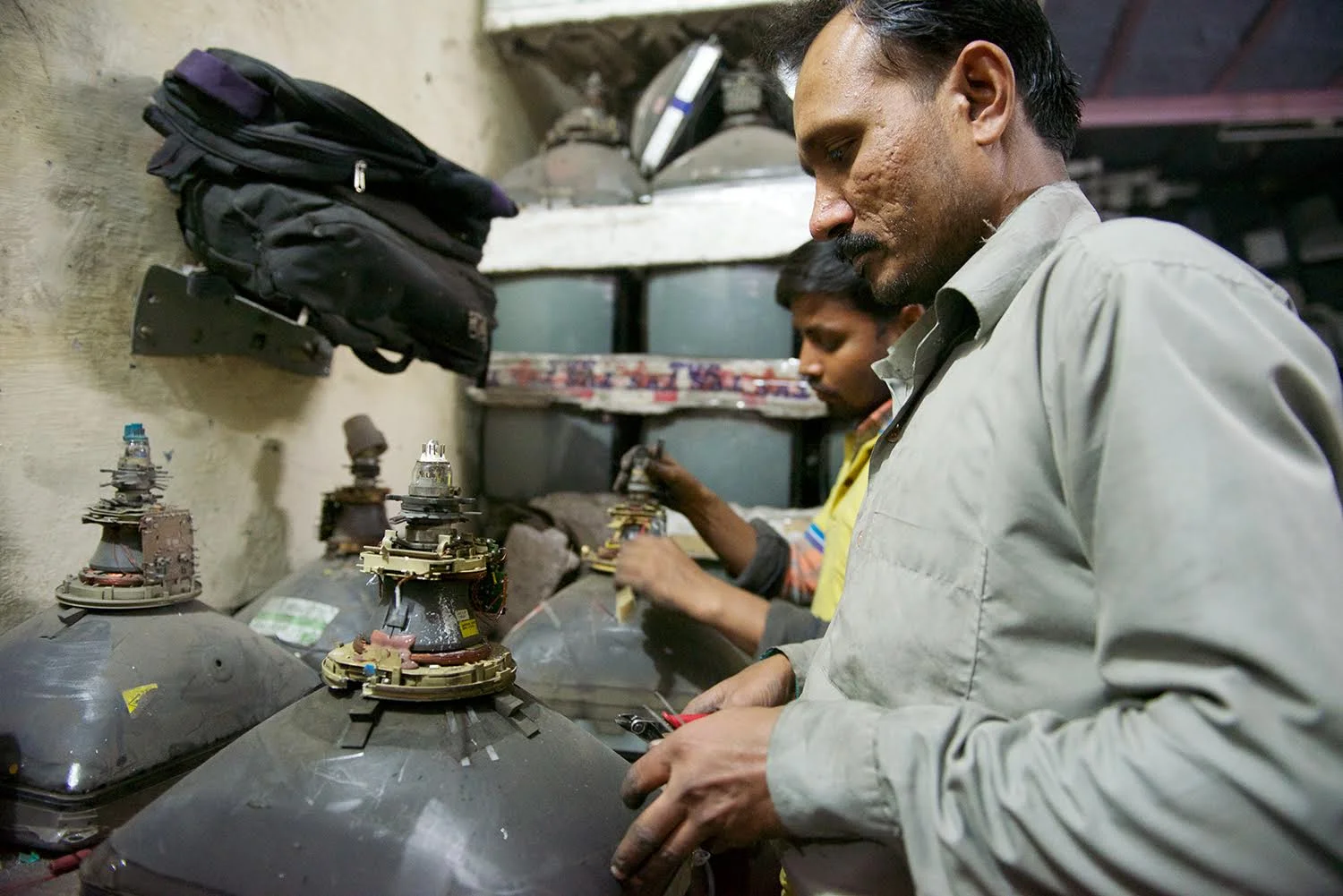
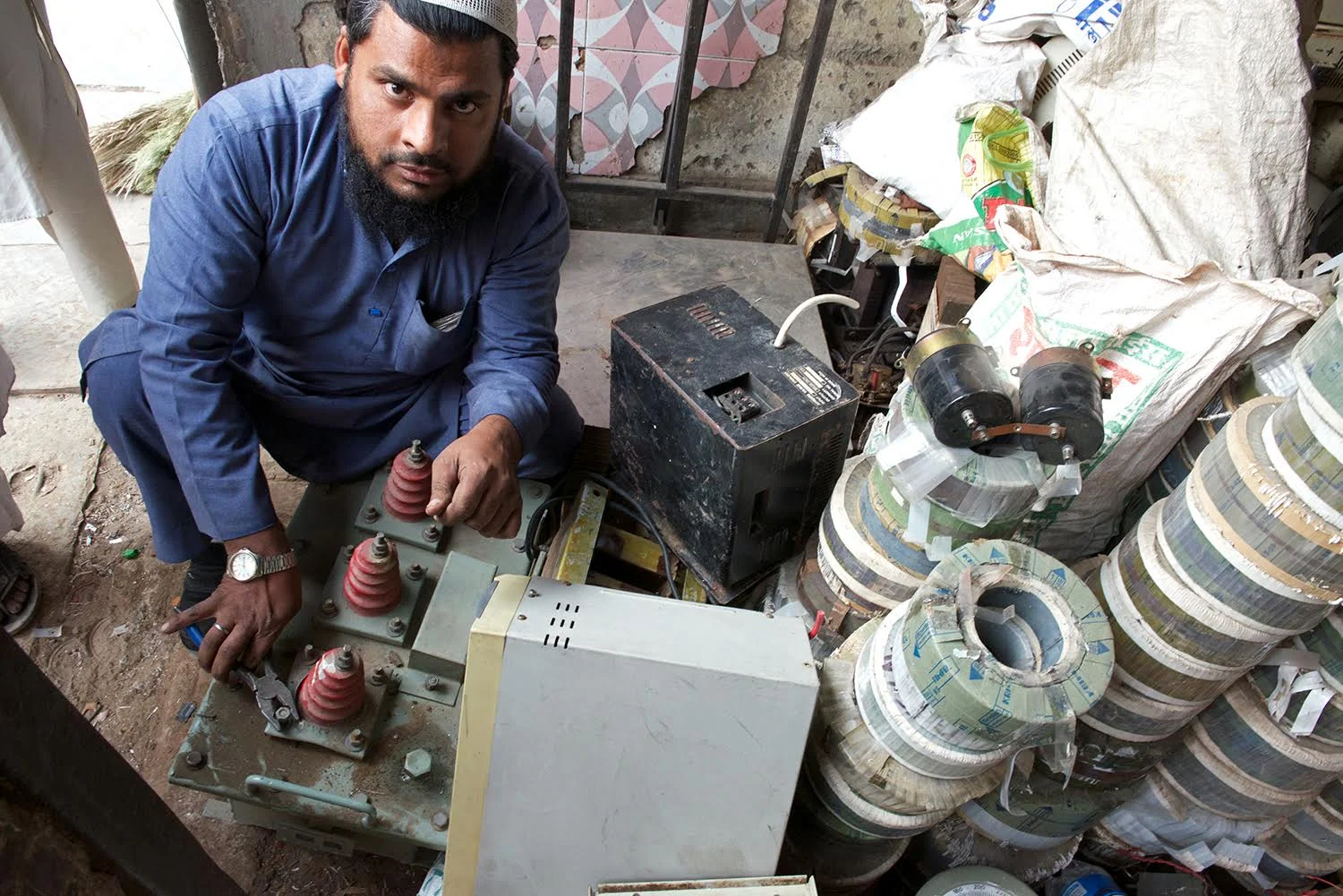
The photographic documentary, and film, produced by StudioFYNN, provide a glimpse into the lives of those who work with e-waste on a daily basis in Bhalswa and Mustafabad, Delhi, India. While alternatives to toxic labor practices exist, only a handful of socially conscious and technologically equipped facilities are committed tobest practices with e-waste end-of-lifecycle. Given this highly complex problem, in what generative ways can diverse fields (such as industrialdesign, psychology, or urban policy) begin to model a more sustainable future?
PHOTOGRAPHS BY SHAUN FYNN
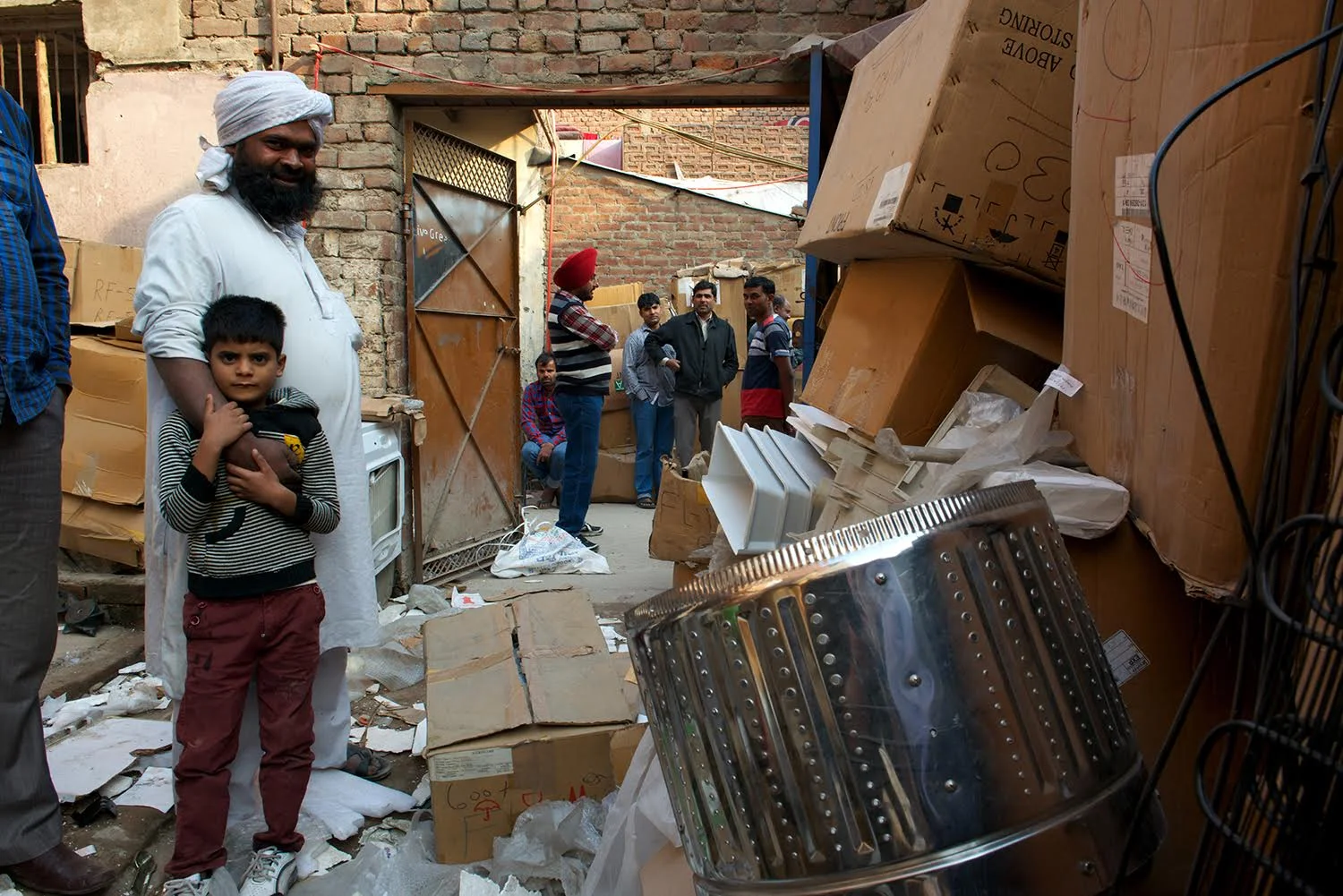
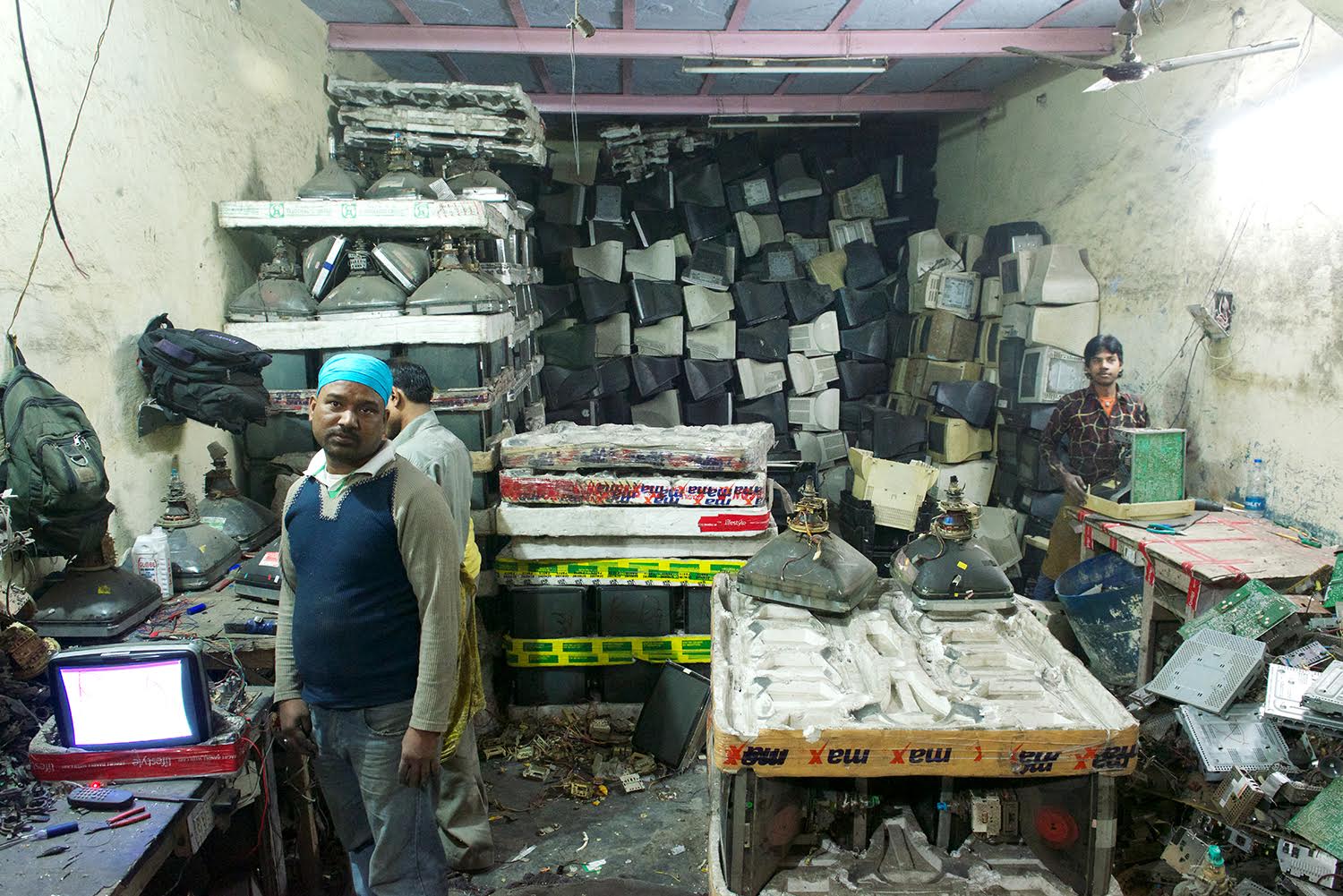
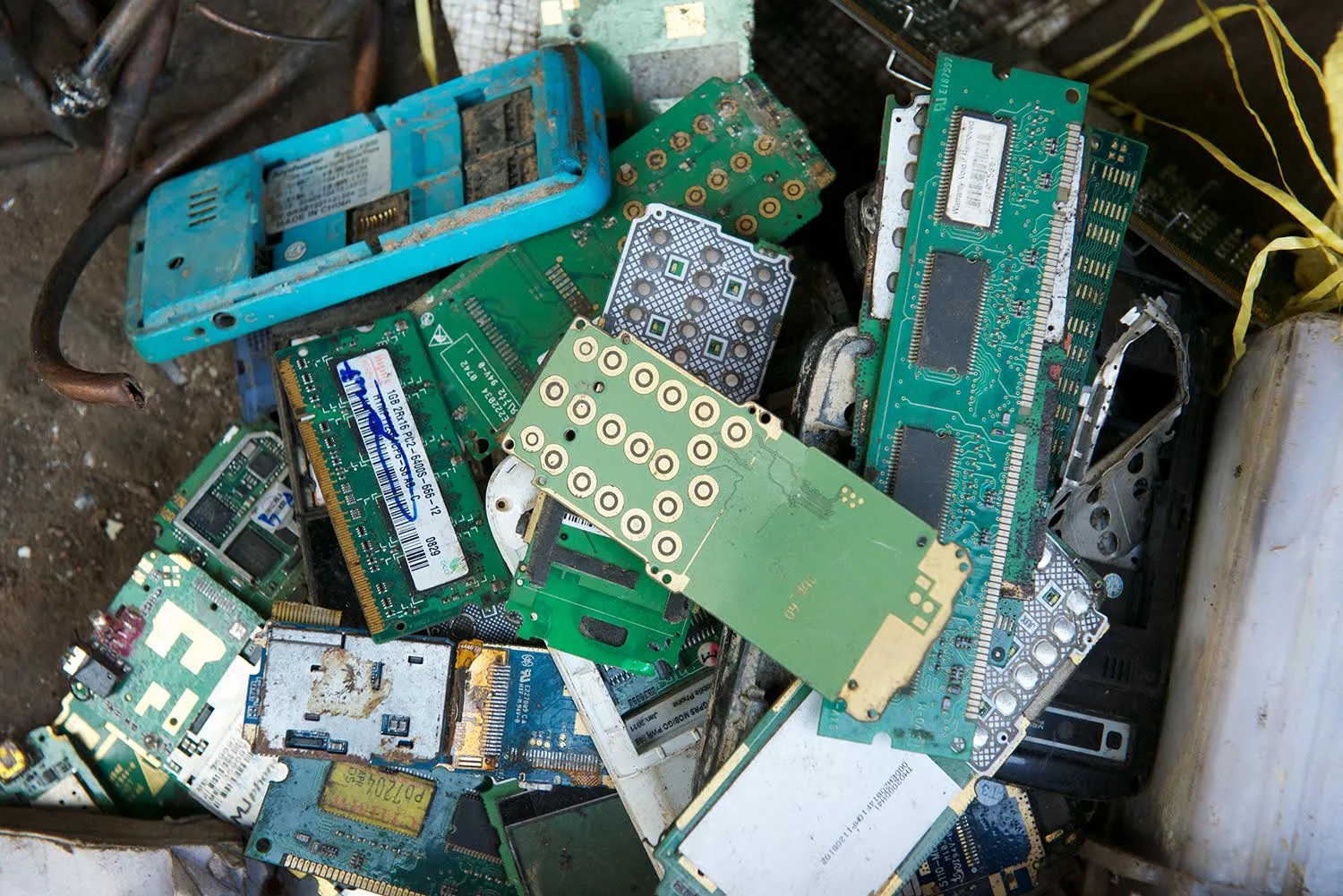


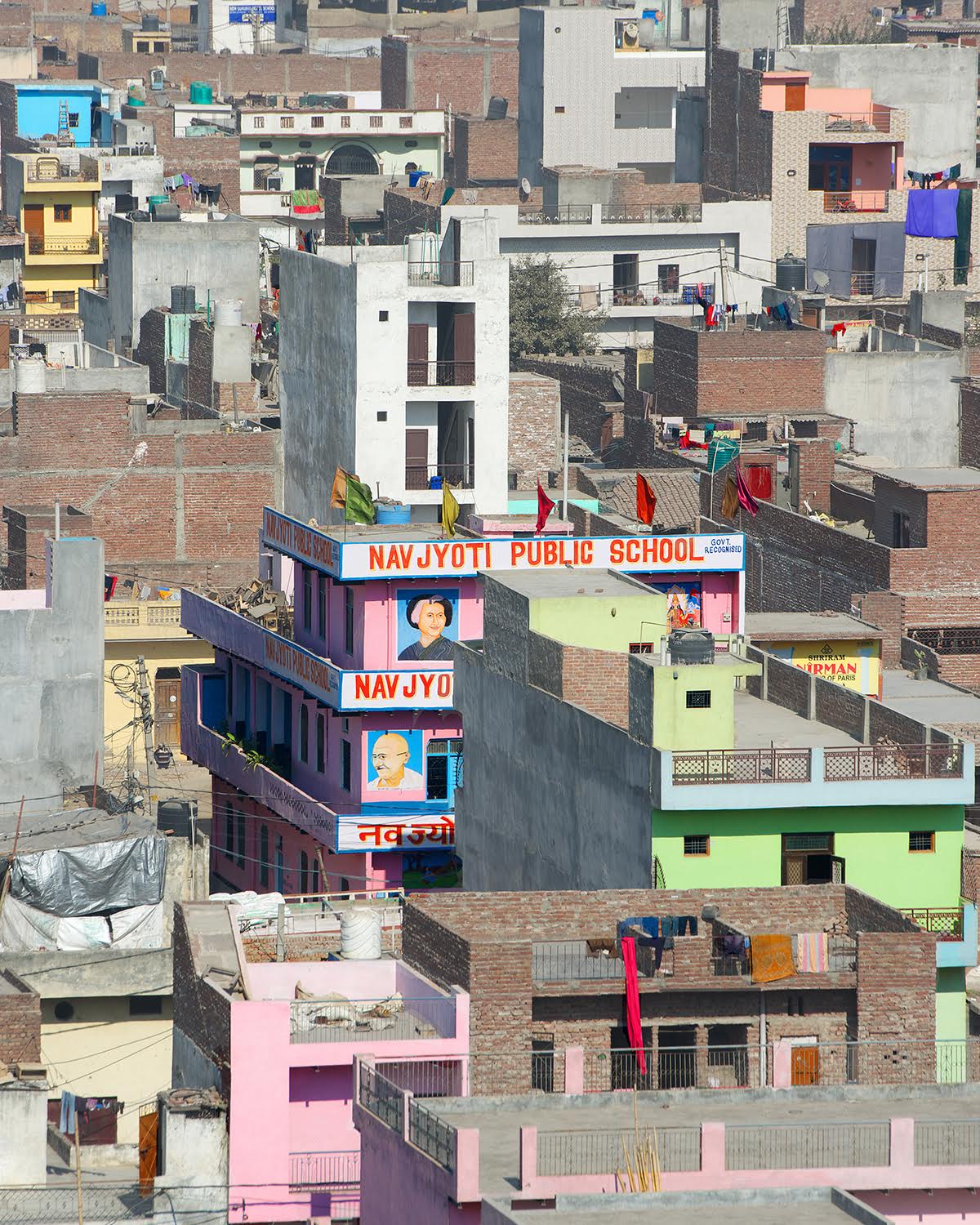


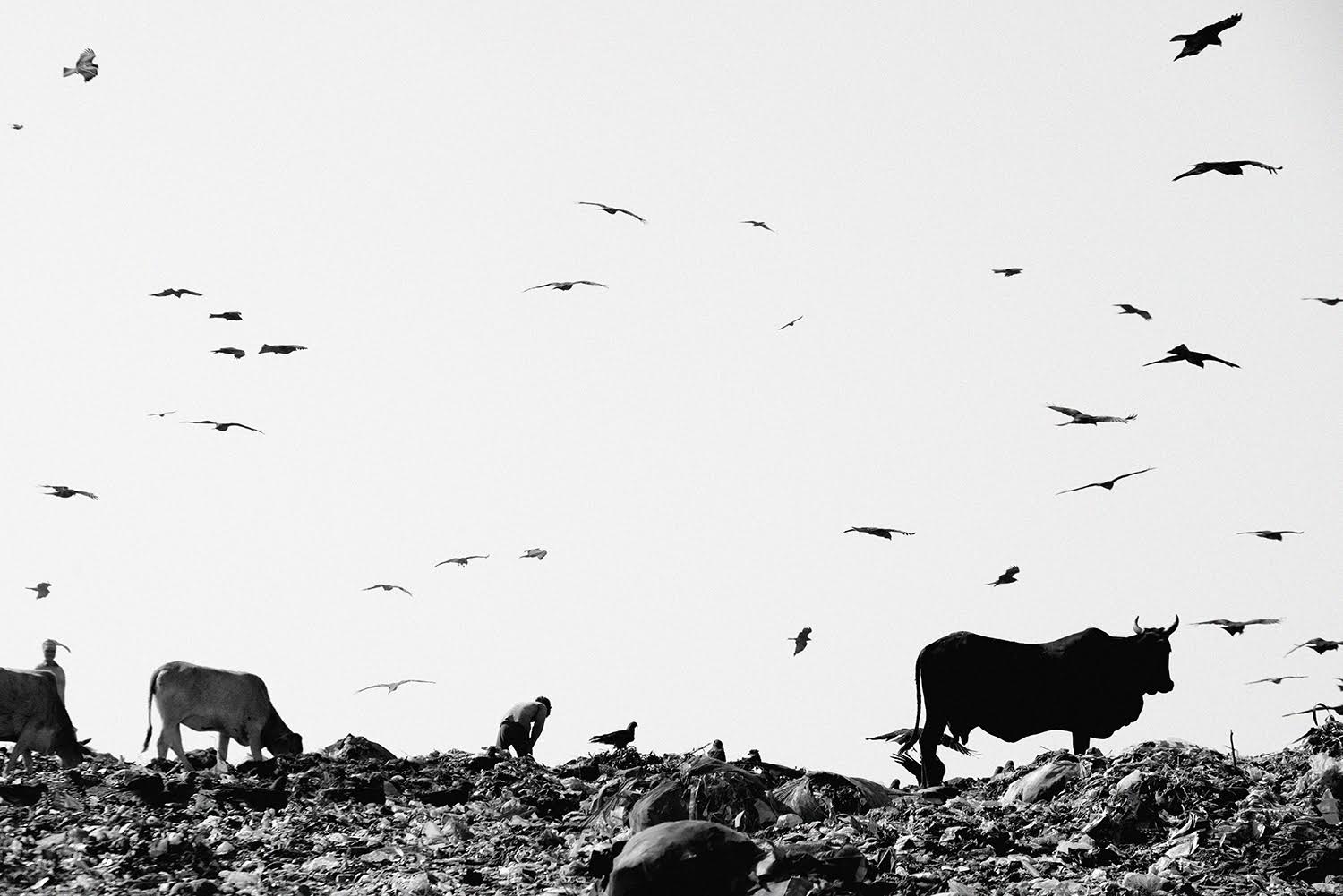
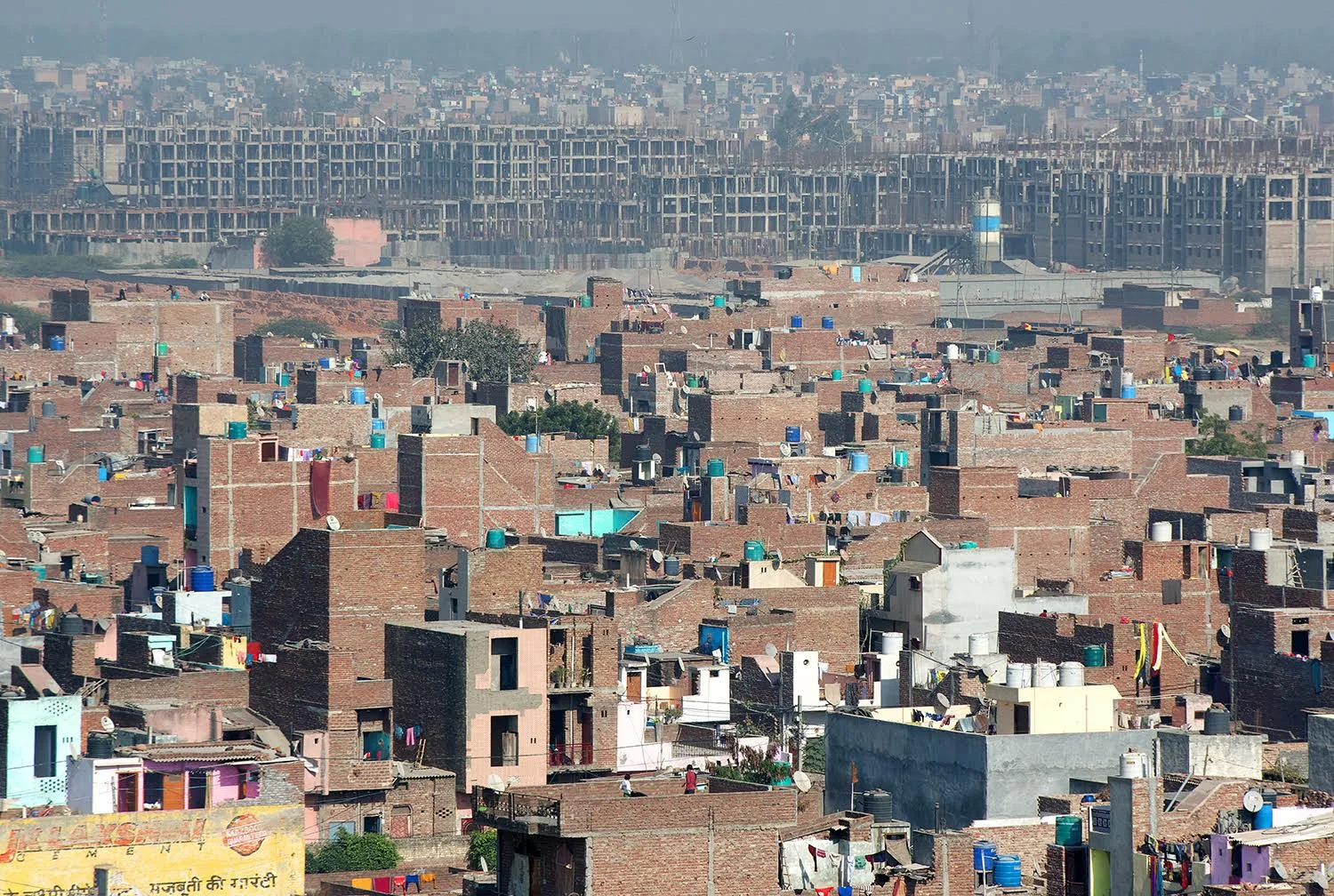
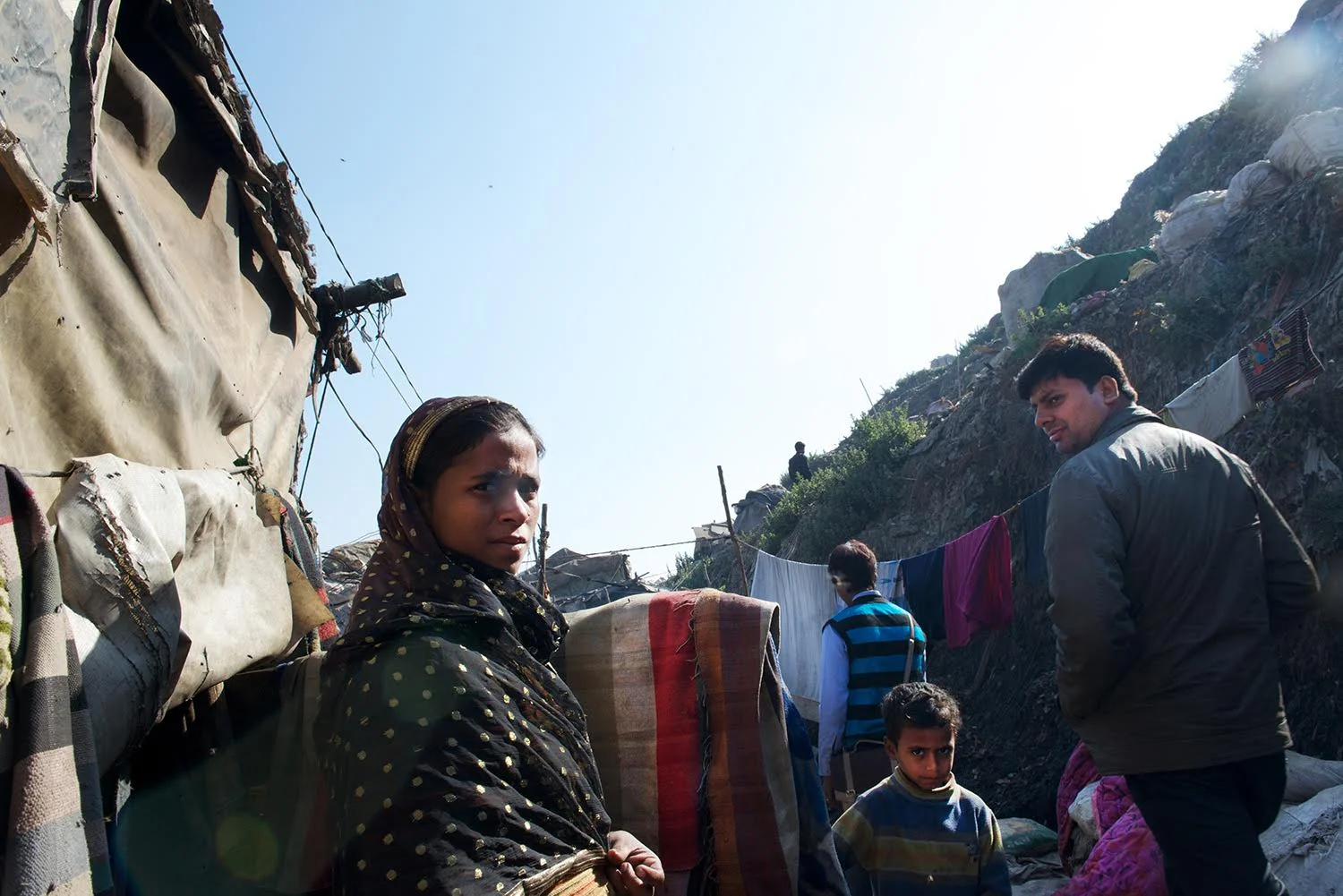
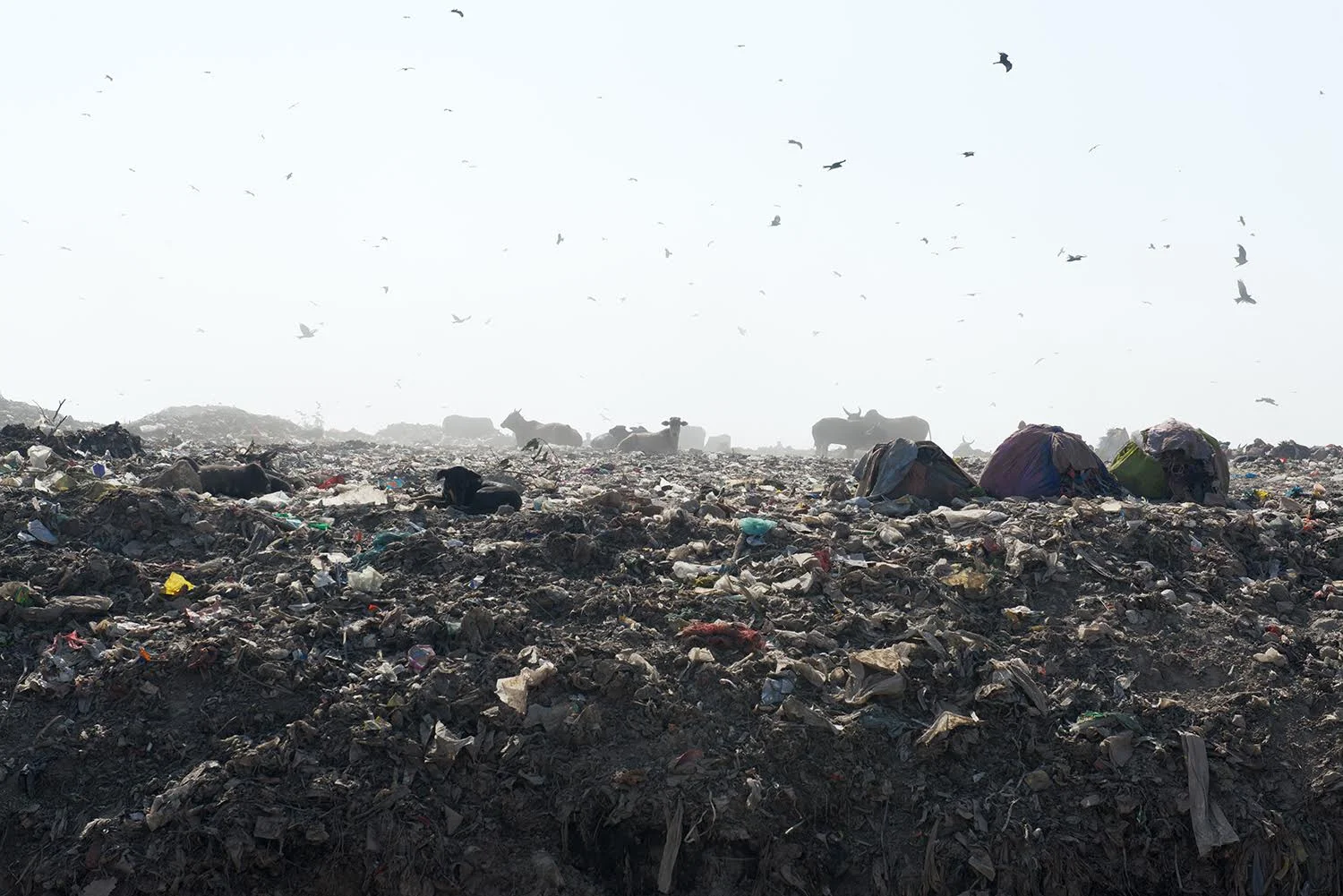
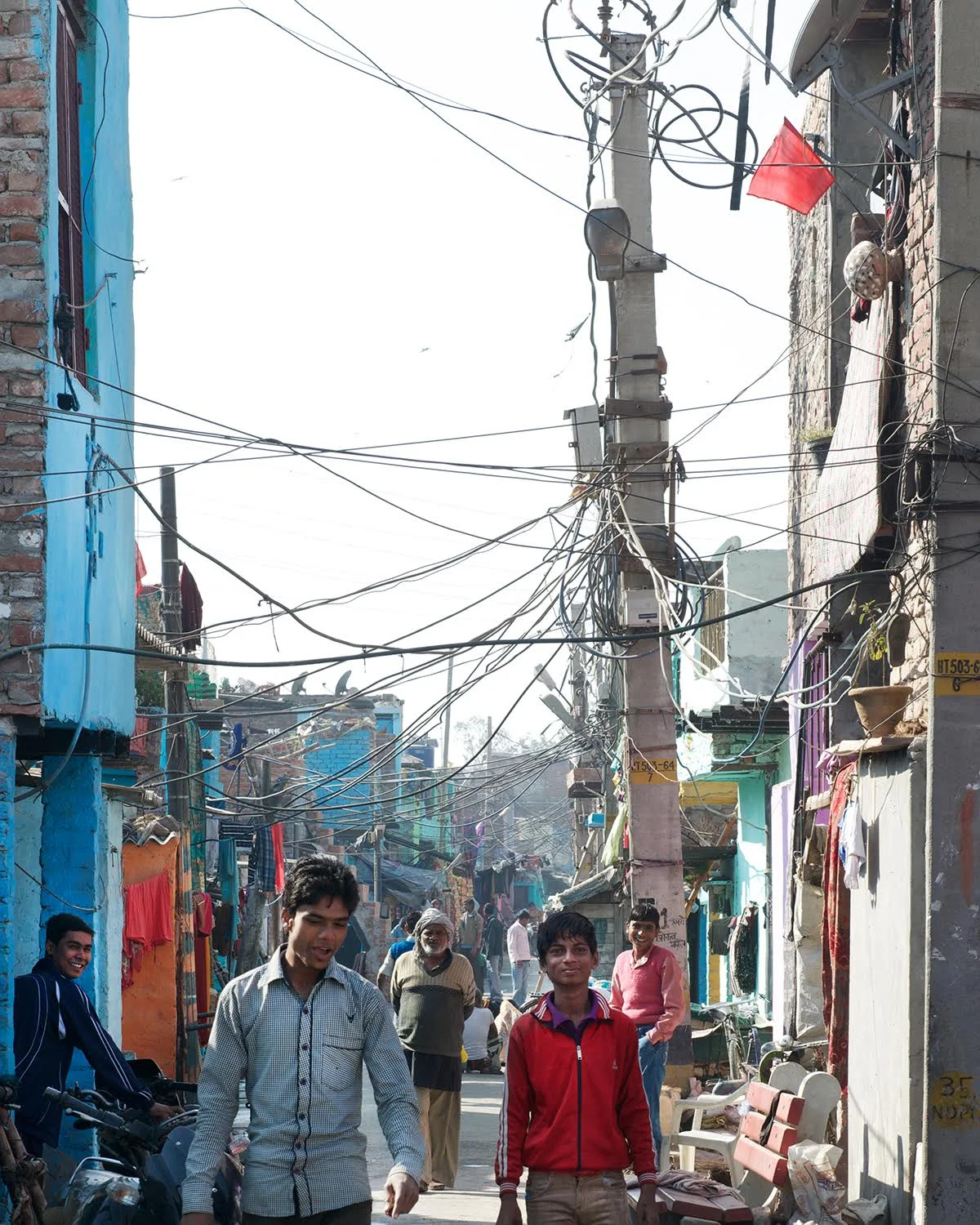
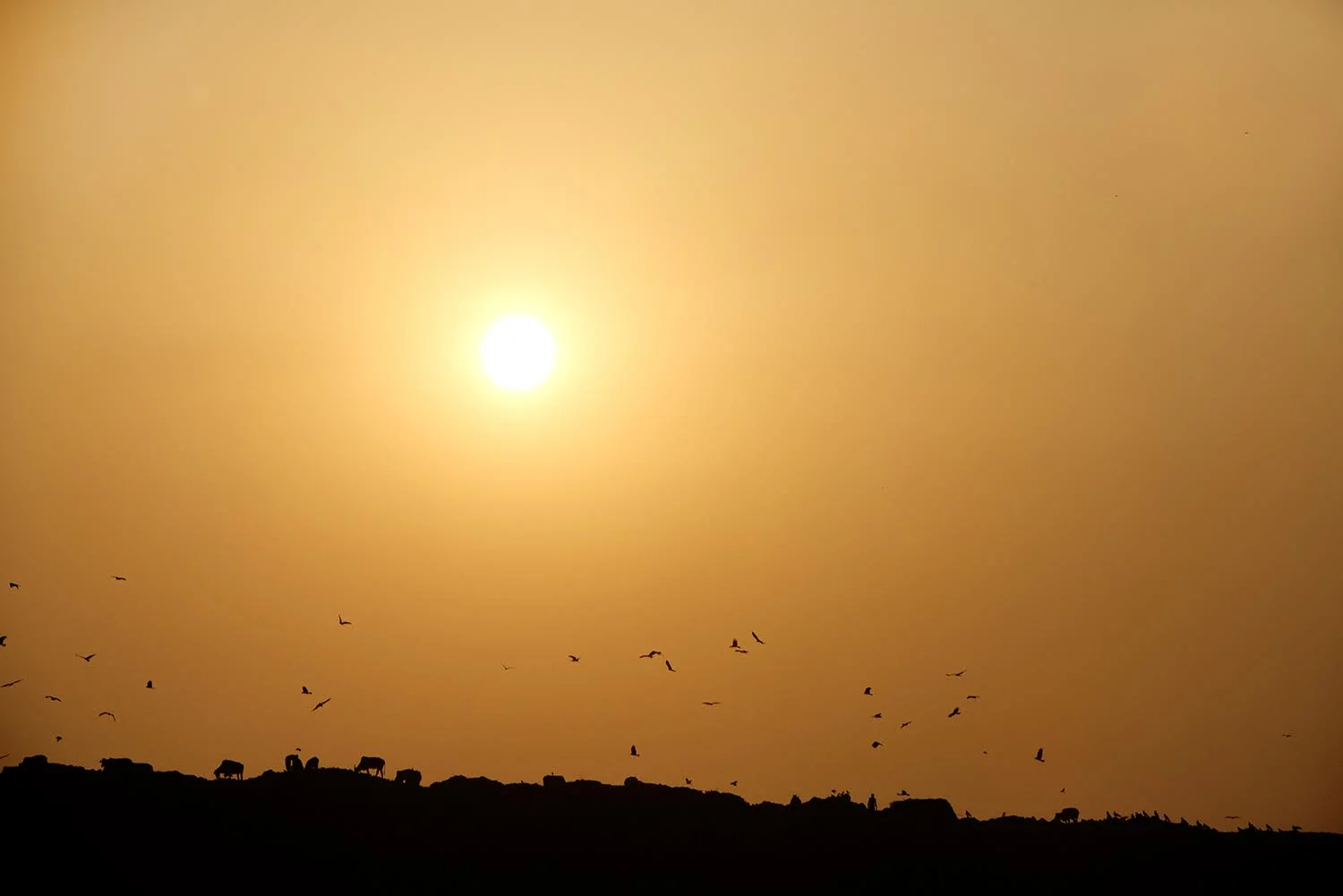
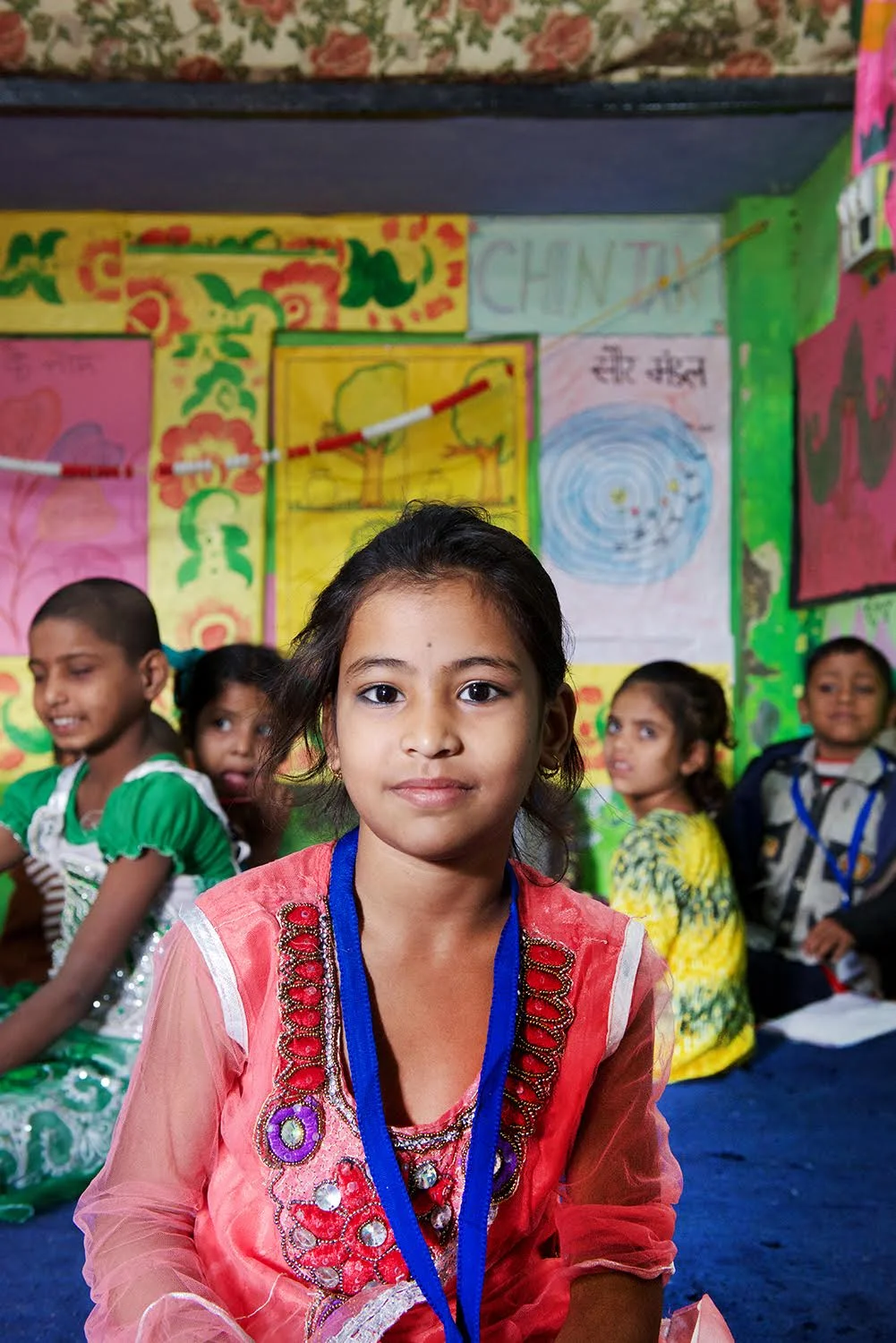
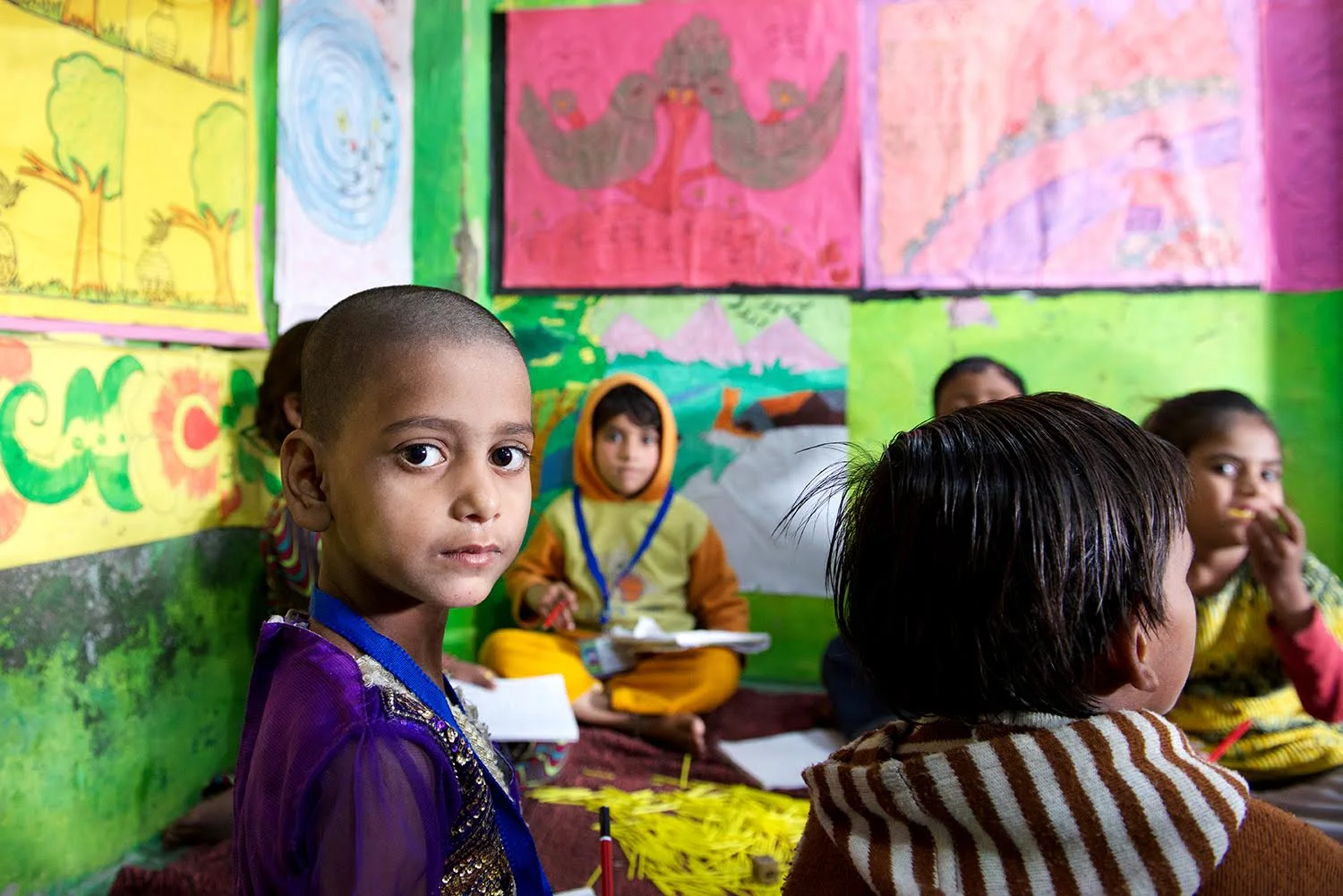
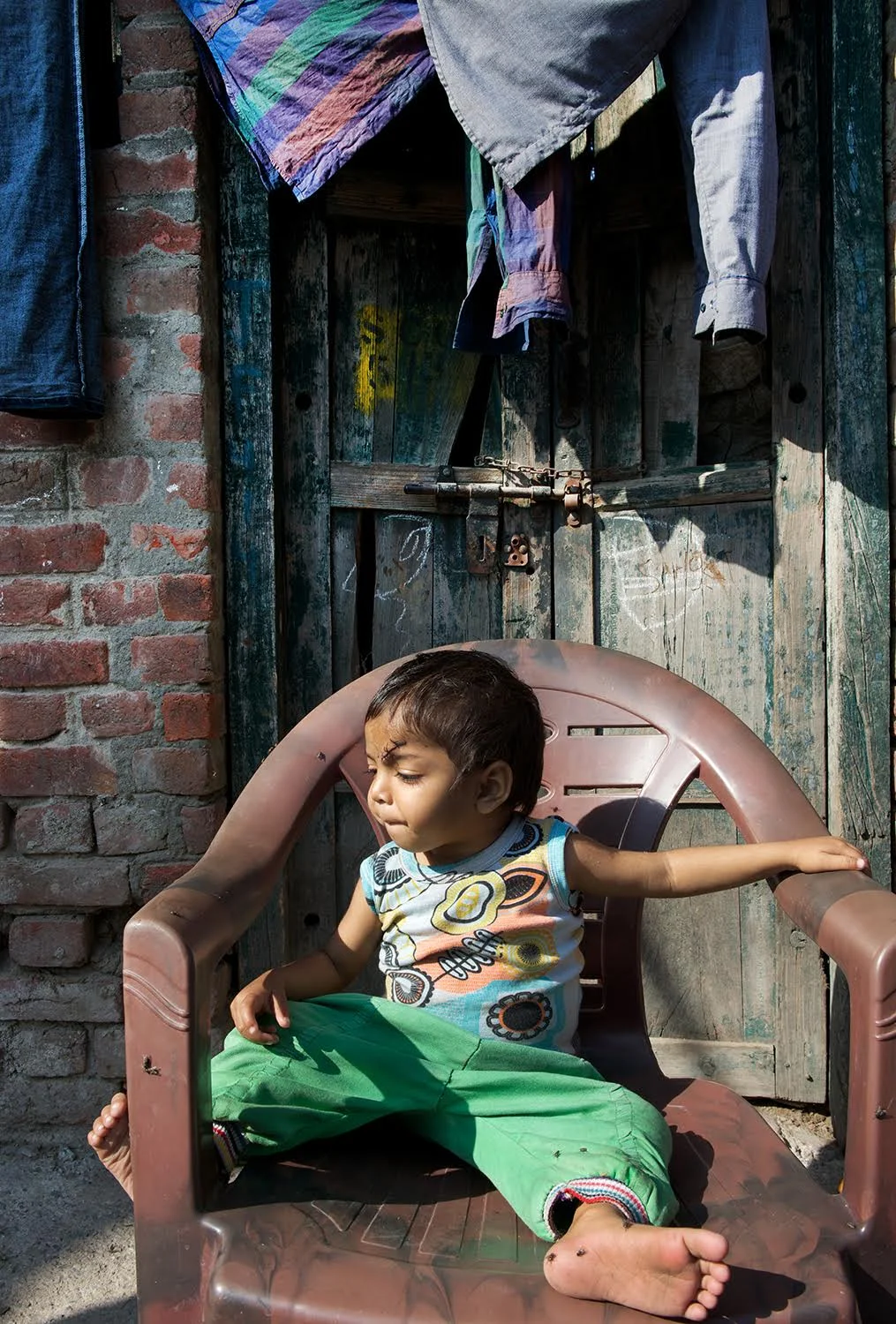
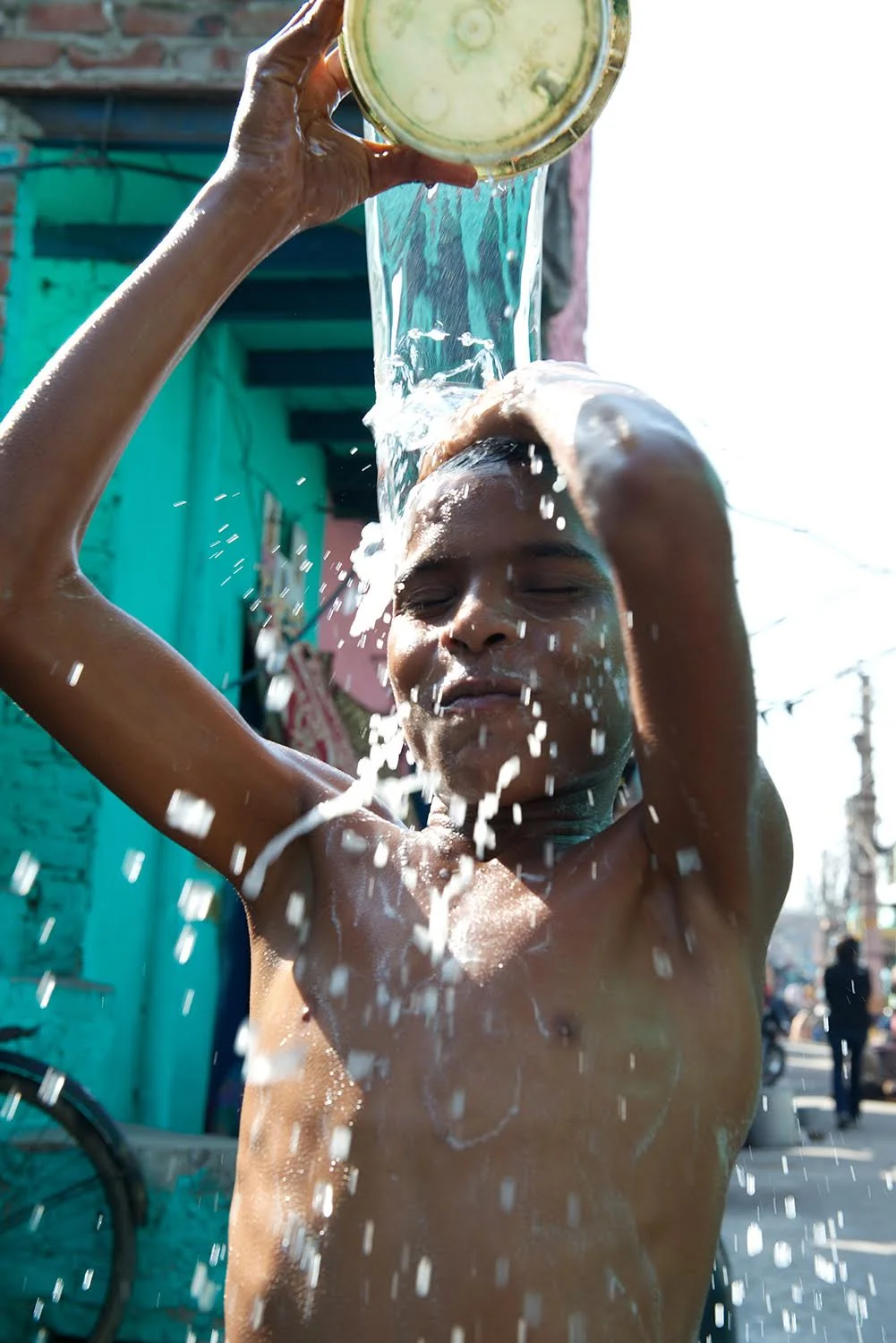
Want to see more? Check out STUDIOFYNN's Delhi Journey, an accompanying film for the E-Waste Tsunami project.

SHAUN FYNN
Shaun Fynn is an acclaimed designer with over 20 years experience in advising and creating for Fortune 500 companies. Since founding STUDIOFYNN in 1997, he has developed the practice globally, working in areas of design research, photo documentary and design education. E-Waste Tsunami — a project that peers behind our virtual worlds to capture the real world of electronic trash — was on exhibition in The Sheila C. Johnson Design Center's Arnold and Sheila Aronson Galleries in New York City at the beginning of 2016.
INDIA: Mumbai Will Soon Get Pink Autos For Women And By Women
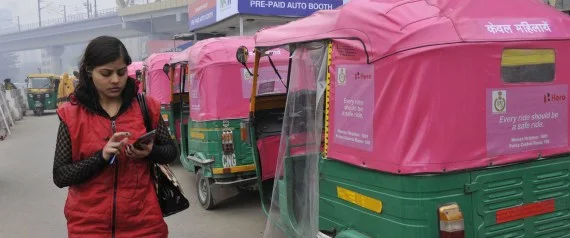
For all the women traveling alone in Mumbai, there's some great news. In a first in the city, 548 women from across Maharashtra were granted autorickshaw permits through a lottery process organized at the Andheri RTO on Tuesday. These autorickshaws will be driven by women and will mostly cater to women commuters.
This comes after the government introduced a five percent reservation system for women autorickshaw drivers.
So, how are you going to identify these autos? It will be coloured either pink or light orange, reports Times Of India.
The city already has an exclusive women-only taxi service driven by women drivers. However, because their number is limited and most of them operate near airports and luxury hotels, it's not an easy option for most women commuters. The auto services will be more affordable and be available almost everywhere.
Meanwhile, the government is welcoming more applications from women as there are still 1,316 permits that remain to be allotted.
While certain rules have been relaxed for the female applicants, most of them are the same for drivers of both genders: they have to show that they have lived in Maharashtra for at least 15 years and they have to be fluent in speaking Marathi. It is not necessary for them to have any educational qualifications.
Among all the rules, speaking Marathi seems to be the most important one. Transport minister Diwakar Raote also stressed the importance of the rule, adding that it was non-negotiable.
"I am glad that online applications were also in Marathi. If any driver who gets a permit is found not to know the local language, we will take disciplinary action against the officials who cleared his files," he said.
Mumbai is not the first city to start the pink auto initiative. In 2012, Ranchi had started it following the Delhi gangrape. In Odisha, Bhubaneshwar and Cuttack also launched the 'pink auto' service last year after several complaints of harassment from women commuters.
In Gurgaon too, the pink auto service was launched in January 2013 following the Delhi gangrape. However, the operation was shut down due to lack of safety features. It was re-launched in 2015 with panic button and light and sound button installed in it.
ORIGINALLY PUBLISHED ON HUFFINGTONPOST.IN

ADRIJA BOSE
Adrija Bose is the Social Media Editor at HuffPost India. A resident of New Dehli, Adrija has an affinity for economics, viral videos, tea, rain and the outdoors.
INDIA: A Café Run by Acid Attack Survivors Attracts Visitors from around the World
The women of Sheroes' Hangout serve coffee and share their personal stories.
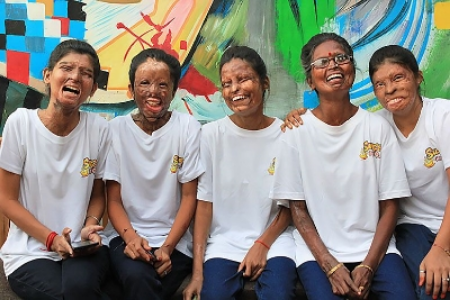
Ritu Saini, Chanchal Kumari, Neetu Mahor, Gita Mahor, and Rupa at the café. (Photo: Courtesy Sheroes’ Hangout)
The Taj Mahal may be one of the world’s top architectural wonders, but just a half mile away, a new destination is gaining attention: Sheroes’ Hangout.
“I was exhilarated the first time a group of Indian tourists who visited the café told me how much they appreciate my courage,” says Rupa (who goes by one name), a 22-year-old survivor of acid violence who, along with four other women, runs the café Sheroes’ Hangout. “Since then, we have had regular customers who come here not only to enjoy a cup of joe but also to talk to us.”
Visitors to Sheroes’ Hangout always leave with a sense of fulfillment. It’s not only because of the cutting-edge coffee and delicious snacks the café serves.
Opened in December 2014 in Agra, a city in the north Indian state of Uttar Pradesh, Sheroes’ Hangout started as a crowdfunding project by Stop Acid Attacks, a group committed to ending acts of violence against women. Its “pay as you wish” contributions go toward the rehabilitation of survivors of acid violence in India.
“Our visitors are mostly people from around the world who hear about us in the news,” says 20-year-old Chanchal Kumari, another survivor who helps operate the café. A man whose marriage proposal she refused attacked Kumari in 2012. “They come here to see how acid attack survivors like us are coping with our lives.”
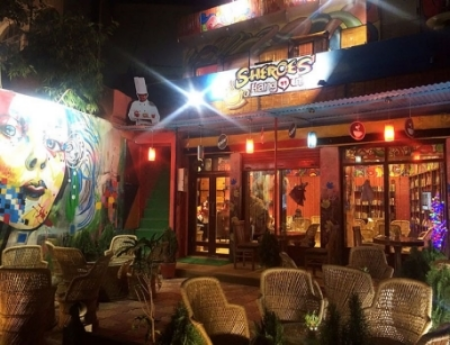
(Photo: Courtesy Sheroes' Hangout)
Kumari, who is recovering from her fifth reconstructive surgery, works alongside Rupa, Ritu Saini, Gita Mahor, and Neetu Mahor, all of whom lived a secluded life in their homes for several years, dealing with the pain of a charred face and a scarred soul. Then they discovered "Stop Acid Attacks," a Facebook campaign that was started on International Women’s Day in 2013. Based in New Delhi, SAA works with acid attack survivors in India, assisting them with legal and medical issues and helping them deal with the trauma of the attack. Sheroes’ Hangout is one of its several initiatives.
Acid attacks are a gruesome reality in India. The National Crime Records Bureau, a government organization that recently began recording acid violence, estimates that more than 1,000 such crimes are committed around the country every year, though the majority of attacks go unreported because of the shame the girl and her family feel and the fear of being attacked again.
SAA has been collecting data through its volunteers across the country and has information on 430 survivors, 350 of whom were attacked in the last two years. It is in touch with, and has assisted, more than 70 of them. According to the data collected, about 70 percent of victims are women, more than 50 percent of whom are attacked by spurned lovers. One of the biggest reasons behind the high rate of acid attacks is the lack of laws against the free sale of acid in India—a liter can be purchased for just 50 cents.
SAA wanted to do something for Gita Mahor, 42, and her daughter Neetu, 26, who were attacked with acid 23 years ago by Mahor’s husband, Neetu’s father. Both were left with mutilated faces and limited vision. Neetu’s one-year-old sister was sleeping next to her during the attack and succumbed to the injuries the acid caused to her. With no one else to support them, mother and daughter were forced to continue living with their assailant. To relieve them from their everyday distress and further domestic violence, SAA found it important to provide them an avenue of earning a livelihood so they could gradually move away from their home and lead a happier life.
“Acid attack survivors’ lives become even more traumatic when they start facing rejection from society due to their disfigured faces. They need someone to hold their hand and restore their self-confidence,” says SAA founder Alok Dixit.
Today, Mahor and Neetu dress up every morning and go to the café to serve coffee and treats—and share their stories with customers.
One of the objectives of SAA at Sheroes’ Hangout was to provide skills training in the subject that each survivor was interested in learning. With SAA’s help, Mahor took a baking course at a hotel in Agra and will soon be serving cookies and cupcakes to customers. Neetu, who is almost blind, is taking singing lessons from an SAA volunteer. “I love to welcome the guests at the café cheerfully, so that they know we are coping well,” she says.
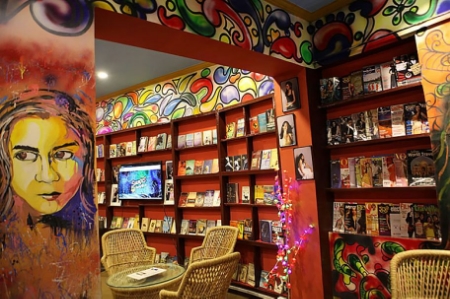
Saini, 19, played volleyball for India before suffering an acid attack by a male cousin in 2012 over a family property dispute, resulting in the loss of her left eye. She is unable to compete in the sport anymore, and she now handles accounts at the café. “My life changed ever since I joined SAA,” she says. “With the emotional support I received, I regained the confidence to go out with my face uncovered. Now I don’t care what people think of my disfigured face.”
Rupa—whose stepmother attacked her with acid when she was just 12—is a skilled tailor and an amateur apparel designer. The outfits she designs are exhibited and sold at the café. “Sheroes’ Hangout is not only giving us a chance to move our lives forward; it is also getting our stories out,” she says.
“True that,” says customer Shikha Singh, 20, a student of fashion design who finds herself in the café at least once a week. “I would never have known about the reality behind acid attack survivors had I not met these women. It is amazing the way they are working to fulfill their dreams despite the hurdles. I now prefer to spend on Sheroes’ Hangout rather than a McDonald’s or KFC. At least I’m sure the money will be used for a good cause.”
ORIGINALLY PUBLISHED ON TAKEPART
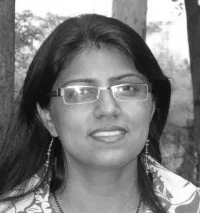
PRITI SALIAN
Priti is a Bangalore-based journalist whose work has appeared in The Christian Science Monitor, The Women's International Perspective, The National, Femina.in, Prevention, Discover India, and many other publications.
A Criminal State of Affairs

THERE ARE ENOUGH LAWS TO TACKLE IT.
THEN WHY IS UNTOUCHABILITY STILL PERPETUATED?
Ten Years ago, I started on a journey to document practices of untouchability across several states and religions of India. 25,000 kilometres, 9,000 minutes of footage and four years later, I put together a documentary called India Untouched. The main reason for making this film was to challenge the belief of most Indians that untouchability is a thing of the past.
In the years since the making of that film, little has changed. We still receive reports of barber shops refusing to shave Dalits. Homeowners unwilling to rent their houses to Dalits. Children segregated and discriminated in schools, women not allowed to draw water from wells, families pushed out of temples. Segregated mosques, churches, even crematoriums. Pervasive violence aimed at those who challenge caste discrimination. Social and economic boycotts for those who dare to transgress caste boundaries. Newly-weds chased and killed because they chose to marry outside their own caste. Rapes. Acid attacks. The list goes on shamelessly.
What is more shameful is that these practices are manifestations of a belief that views certain castes as nothing but an impure sect, which should remain servile and accepting of its lesser status. Our failure is to see this belief as endorsing of and perpetuating criminal behaviour.
Article 17 of the Indian Constitution states that “Untouchability is abolished and its practice in any form is forbidden. The enforcement of any disability arising out of untouchability shall be an offence punishable in accordance with law.” However, society continues to look at untouchability as a social given, grounded in ‘tradition’. Instead, we should see such practices for what they are: criminal acts. If your house were burgled, you would expect the case to be treated as a criminal act/offence. Such a luxury is not afforded, however, to Dalits facing discrimination and persecution. The laws in place to address the scourge of caste-based discrimination may be progressive, but the mechanisms that exist to enforce legislation are regressive.
A large part of the problem is that law enforcement agencies operate in a reactive rather than a proactive manner. Despite the prevalence of caste-based behaviour leading to untouchability (criminal offences) these agencies wait for an aggrieved party to file a complaint — and report violation of Article 17 — rather than do their job in enforcing the law. How else does one explain the fact that police stations and courts have not taken any suo moto cognizance of these everyday events? How else can we understand that there are no public or government campaigns to remind citizens that untouchability has been abolished, and that those practicing it will be treated as criminals? In order to fall in line with the shifted morality and ethics of our time, we need a strong and proactive law enforcement mechanism. We do not have this in India.
On 14 April 2012, we launched a campaign at Video Volunteers (a media and human rights organisation) to draw attention to the issue of untouchability. To date, we have collated 30 videos that document breaches of Article 17. Together with the videos, we collected 2,800 signatures that were sent to the National Commission for Scheduled Castes (NCSC) with an appeal that the videos be taken as evidences of offences, and that those involved be prosecuted. Despite submitting the petition and video evidence twice over, we have not received any sort of acknowledgement — let alone action — from the NCSC. We have now sought answers with an application under the RTI Act. It’s a sign of the times when one needs to file an RTI with the institution responsible for protecting the rights of Scheduled Castes, just to find out what is going on.
As a society, when we hear about untouchability practices, we should feel outraged, as we would with other criminal acts like murder and rape. It’s time we accepted that the practice of untouchability is not the vestigial remains of some backward, social phenomenon or tradition: it’s a criminal offence. Let’s start calling it what it is.
ORIGINALLY PUBLISHED IN TEHELKA.COM
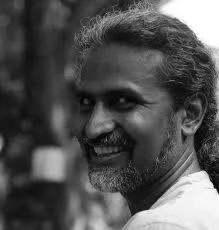
Stalin K.
@stalink
Stalin is the Managing Trustee of Video Volunteers India. He is a leading voice in the community media movement in India (including as co-drafter of the government’s recent community radio policy), a human rights activist focused on issues of caste and communal violence, an award-winning filmmaker (screened at Hamptons and winner of the Mumbai International Film Festival and Indo-american Arts Council Film Fest in NY, Earth VIsion Film Festival, Tokyo), and a sought after trainer and guest lecturer in media and human rights at universities around the world. He has produced 25 films on development issues, set up two community radio stations, designed a dozen rights-based campaigns, and conducted over 300 training workshops. Stalin has worked with more than 100 NGOs and regularly distributes his films to over 1000 groups, placing him at the heart of India’s NGO networks.
INDIA: 20 Tips on Ashram Life from a NYC Perspective
Traveling to India? AWESOME.
India is a beautiful country deeply rooted in tradition and culture. Most of my friends travel to India for a spiritual experience… and well, that’s because most of my friends are yogis. Go figure.
Most yogis who travel to India stay at ashrams, which are spiritual monasteries (and really, really, really cheap places to sleep). When I traveled Southern India (Kerala) this past March, I stayed at an Ayurvedic Ashram known worldwide as Amma’s Ashram.
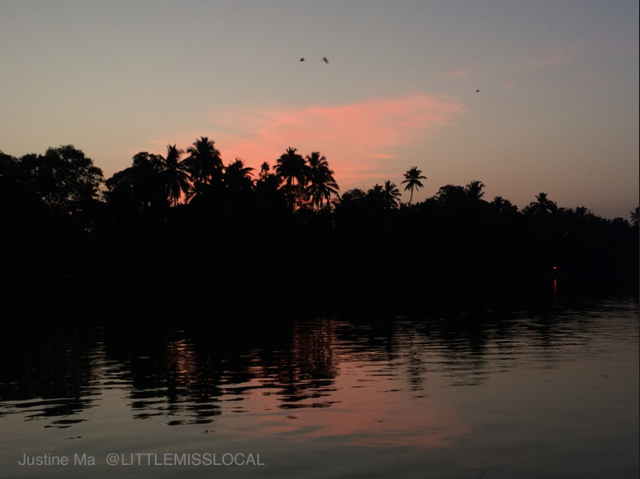
Amma (meaning Mother) is a living saint (yes, a real person) who has the stamina to bless and hug people for 16hrs straight sans lunch or dinner. It’s kind of her thing and she’s been doing it for decades. Her ashram is open to everyone: locals, backpackers, yogis, devotees, travelers, etc. So for my first trip to India, I was looking forward to receiving one massive hug, yoga at sunrise, and one dosa a day. However, my time at Amma’s proved to be more challenging than initially expected.
Sidenote: Dosas are thin crepes that are made of fermented beans, stuffed with spicy potatoes, cooked in ghee, and topped with coconut chutney.
It is imperative that you are aware of this street food item because dosas will lead you to happiness. Or at least it does for me.
If you’re planning to stay at Amma’s Ashram (amma.org) in Kerala, I’ve compiled a list of “need to know info” that you will not find on the main website. These tips will mentally prepare you for your upcoming journey and (hopefully) allow you to embrace life at Amma’s. Please keep in mind that the ashram lifestyle isn’t for everyone but it is an experience that I highly recommend experiencing.
HOW A NEW YORKER PREPARES FOR AMMAS:
1. Bring toilet paper, buy toilet paper. Carry a fanny pack stocked with toilet paper, tissues, and hand sanitizer. Throw a few bottles of water in there too. Just do it.
2. What to wear? Most people wear loose white clothing as a statement of simplicity. I wore a typical NY outfit — black on black on black—Amma still embraced me.
3. Avoid a potential argument. Every roommate should have their own key to access their room — pick up extras at the International Center.
4. FACT: Half a year's rent in NYC (or less) will last you a lifetime at Amma's.
5. In the word's of Amma, "some people who come to the ashram are crazy," so just acknowledge that for a sec.
6. You'll find that most people at the ashram are living in savasana and will walk straight into you sans apology. Don't get all NY on them, just smile and move on.
7. Public Service Announcement: The ashram uses communal spoons, plates and cups. After you use your utensils, you are responsible for washing these items in cold water and cheap, watered down soap. Consider buying your own spoon (15 rupees), a food container (180 rupees) and cup (20 rupees) from the shop located inside the ashram. Basically, keep yo' germs to yo'self!
8. On a similar note, avoid contact with ALL left hands at ALL times in India (even expats)... if you don't know what I am talking about, google it.
9. FACT: The ashram provides one sheet, one pillow and one pillow cover for your cot. The room is the same size as a NYC studio apartment.
10. FACT: When you take a shower, hot water is not available. And you’ll need to bring your own towel. If this is a potential problem for you, bring dry shampoo and deodorant.
11. FACT: The shower is positioned directly above the western toilet… so forget the towel, just double up on the dry shampoo and deodorant.
12. Sign up for seva (service) at the office. If you don’t feel like waiting at the seva office, there are plenty of opportunities to volunteer throughout the ashram. No one will refuse your help. They’re uncomfortably kind and welcoming.
13. Seva is optional. You are not obligated to clean toilets. I chopped vegetables and enjoyed it.
14. Dosas are available on-site at the Indian canteen.
15. In case you’re not interested in the complimentary Indian food, there’s a western café where you can purchase grilled cheese, handmade pizza, egg sandwiches, toast, spirulina bars, etc. However, I was told they’ve run out of tator tots until October.
16. NY’ers walk a lot so if you find yourself strolling outside of the ashram walls, you can easily find Amrita University just over the bridge. Keep in mind, this state-of-the-art building does not have western toilets, soap or toilet paper. Hence, fanny pack.
17. Head straight to the beach, just don’t go in for a swim. Their rules, not mine.
18. Take probiotics daily. I recommend hitting up your local JUICE PRESS at least one month before you arrive in India.
19. The ashram is awesome; participate as much as possible.
20. Two full days and one night will give you the opportunity to experience everything… or you can stay for 18 years, your choice.

JUSTINE MA
Justine is a NYC food & lifestyle blogger who has eaten her way around the world to understand the connection between local culture and cuisine. Follow Justine at LittleMissLocal.com as she explores local food, travel, health and wellness.
Solar Mamas — Why Poverty?
Are women better at getting out of poverty than men? The Barefoot College in India is a six-month program that brings together uneducated middle-aged women from poor communities all over the world, and trains them to become solar engineers. In this documentary from WHY POVERTY? meet Rafea, the second wife of a Bedouin husband from Jordan and watch her learn about electrical components and soldering without being able to read, write or understand English. Full documentary airs this Sunday 9 pm GMT in UK on BBC.
LEARN MORE AT WHY POVERTY
A Video Volunteers Film: The Fight for Justice Against Acid Attacks in India
In this Video Volunteers film, the IndiaUnheard correspondent, Varsha Jawalgekar, exposes the acid attack on Chanchal Paswan, 19, and her sister, 15, while they were asleep on their terrace. The attack was a result of their opposition to previous sexual harassment by the men. In the West, horrific attacks as such would be covered by major news media. However, in India, Video Volunteers is doing immensely important work getting information about this out and accessible.
CONNECT WITH VIDEO VOLUNTEERS
INDIA: End Untouchability
Untouchability in India (prejudice against what are considered the lowest caste, the Dailts), though technically illegal since 1950, still affects 167 million people, or 16% of the population. Members of the lowest rank of Indian society face discrimination at every level, access to education and medical facilities, restrictions on where they can live and what jobs they can have. This trailer for Article 17, the campaign launched by Video Volunteers in 2012, to empower the Dalits to tell their own stories through video, to achieve the goal, in the words of Stalin K, Managing Trustee of Video Volunteers, "the end of the 2000-year-old atrocity of untouchability in all its forms."
LEARN MORE ABOUT VIDEO VOLUNTEERS
The Poverty Song
Wilbur is a musician, creator of a new genre called Indo-World Fusion. He is a tireless ambassador for cultural intelligence and has a passion for humanitarian and social justice issues. He loves to make the common extraordinary. Here... the Poverty Song, and his message... "stop the shopping spree, end poverty."
CONNECT WITH WILBUR
GIRL RISING
GIRL RISING—the innovative feature film about the power of education to change a girl —and the world. The film spotlights unforgettable girls like Sokha, an orphan who rises from the dumps of Cambodia to become a star student and an accomplished dancer; Suma, who composes music to help her endure forced servitude in Nepal and today crusades to free others; and Ruksana, an Indian "pavement-dweller" whose father sacrifices his own basic needs for his daughter's dreams. Each girl is paired with a renowned writer from her native country. Edwidge Danticat, Sooni Taraporevala Aminatta Forna and others tell the girls' stories, each in it's style, and all with profound resonance. These girls are each unique, but the obstacles they faced are ubiquitous. Like the 66 million girls around the world who dream of going to school, what Sokha, Suma, Ruksana and the rest want most is to be students: to learn. And now, And now, by sharing their personal journeys, they have become teachers. Watch Girl Rising, and you will see: One girl with courage is a revolution.
LEARN MORE AT GIRL RISING
IT'S A GIRL
In India, China and many other parts of the world today, girls are killed, aborted and abandoned simply because they are girls. The United Nations estimates as many as 200 million girls are missing in the world today because of this so-called gendercide" Add your voice to raise awareness of this and bring It's A Girl film to an area near you.
LEARN MORE AT IT'S A GIRL
VIDEO: The Issue of Forced Sex Work in India
Everyday in India, almost forty girls under the age of fifteen, are forced into sexual labor. This film, presented by the Bachpan Bachao Andolan (BBA) - an organization with the goal of creating a world without child exploitation - suggests a simple way by which we can help stop this inhuman practice; by taking action against it.
CONNECT WITH BACHPAN BACHAO ANDOLAN
INDIA: Journey Across a Nation
When Mike Matas decided to drive a rickshaw across India he knew he'd be in for an adventure. But the real adventure began when his rickshaw broke down at the beginning of the trip and he had to find his way across the country via public transportation. Watch his beautiful journey unfold over 2,000 miles, 30 days, and 3000 photos. All in 3 minutes.
Sixpenny Globe - Around the World on the Cheap
After obtaining a college education and trudging through a year of minimum-wage jobs and unpaid internships, Kelsey Ogden and Kristen Refermat agreed that some extra spice was needed in their lives. For many, the remedy for such a dilemma might be a simple tropical holiday - complete with frozen margaritas and white sanded beaches. This however was not the case for these two. Instead, Kristen and Kelsey quit their jobs and bought two round-the-world tickets; on credit. Through their travels Sixpenny Globe was born - a new web series documenting their budget-traveling, hitchhiking, couchsurfing escapades around the world and back.