
By Mia Gooch
Beyond its charming streets and Victorian architecture, Bridge of Allan preserves a legacy of musical beginnings and literary inspiration.
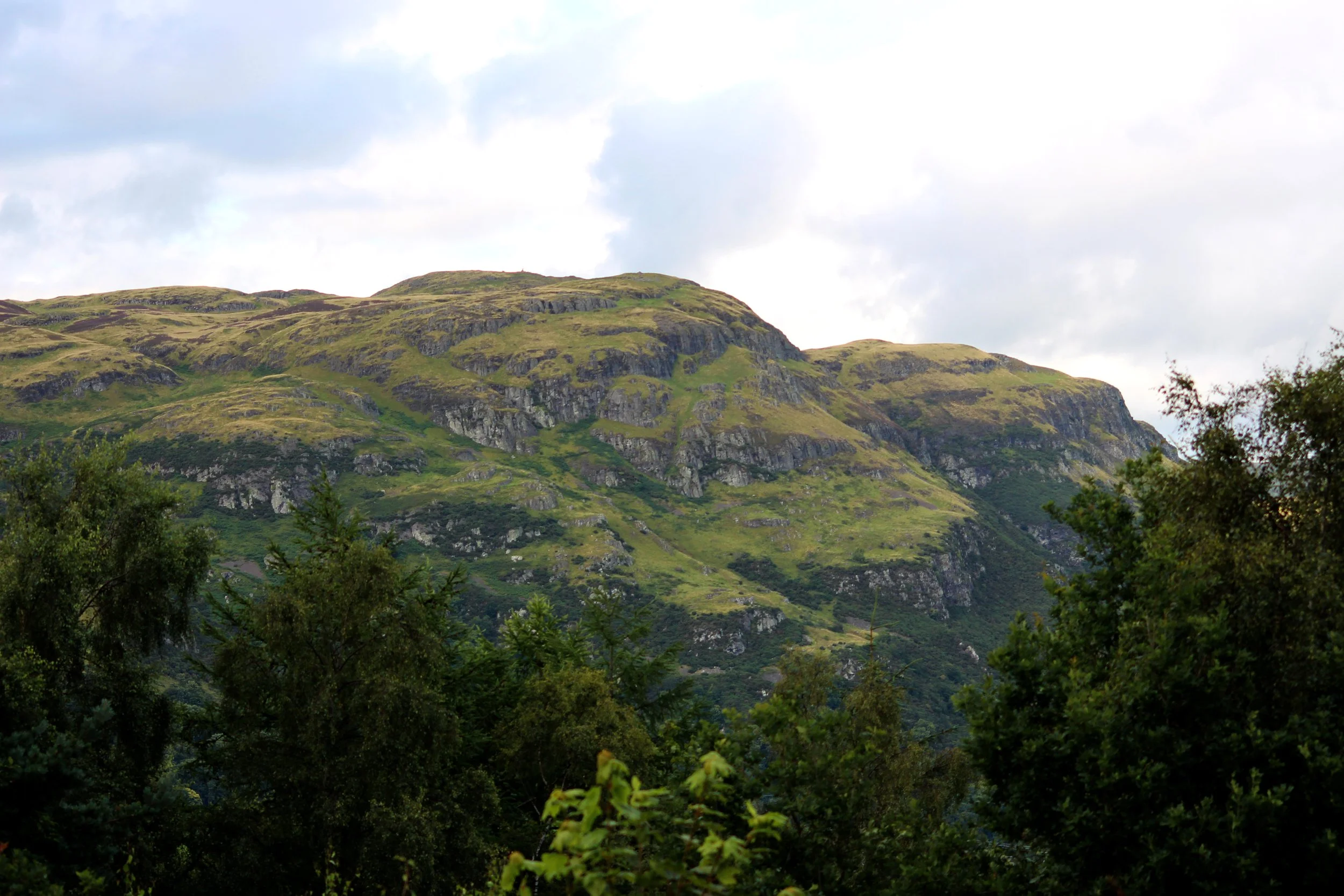
A photograph of the Dumyat slopes, under which the small town of Bridge of Allan, Scotland, is nestled. Alana L. Bowman. CC BY-NC-ND 2.0.
During my three months studying abroad in the Scottish city of Stirling, I often took the 30-minute walk from my university housing to the neighboring town of Bridge of Allan. Nestled beneath the slopes of Dumyat, the town became one of my favorite places to spend a quiet afternoon, whether I was tucked at a window table with friends at the Wee Timorous Beastie Cafe during morning study sessions or sitting along the Allan Water to gather my thoughts after long exam days.
Bridge of Allan is a bustling small town with undeniable architectural charisma. But while its quaint streets are constantly full of local chatter, its history is often overlooked by visitors. Many will find that they recognize the sounds and stories connected to Bridge of Allan before they know the town’s name, as its influence stretches into both musical history and literature. It was not until a walking tour with my English class that I discovered Bridge of Allan’s cultural legacies.
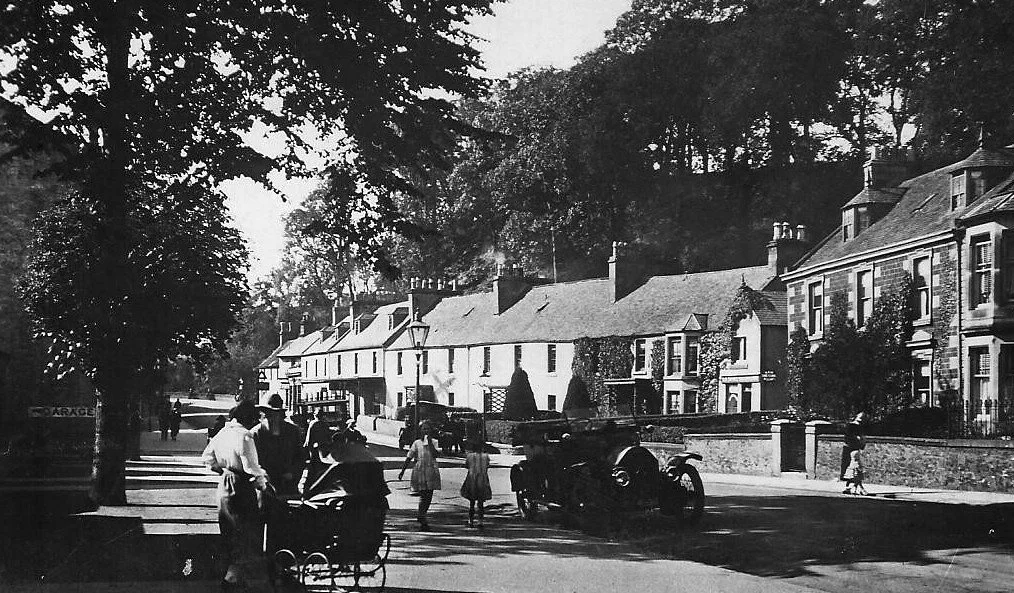
An old photograph of Bridge of Allan, Scotland. Tour Scotland Photographs. CC BY-NC-ND 2.0.
When walking from the University of Stirling down Airthrey Lane, visitors can continue past Coneyhill Road and bear left onto Henderson Street. At this intersection, they can spot an older building with cream-colored stone trimming known as Museum Hall. While originally constructed to showcase wealthy art and textile collections, Museum Hall also became a concert venue for one singular night. On Jan. 5, 1963, a young quartet played one of their early concerts for a crowd of about 100 people. This band, known as the Beatles, would soon enthrall music listeners and get booked on radio shows, but this soon-to-be frenzy was absent during the group’s early performances. To attend the Bridge of Allan show, audience members paid about five shillings for admission, unaware that they were witnessing a band that would soon become a global phenomenon.
The performance remains the only concert ever held at Museum Hall, which was later redeveloped into apartments after the art gallery closed. Even so, Museum Hall and Bridge of Allan remain a part of music history.
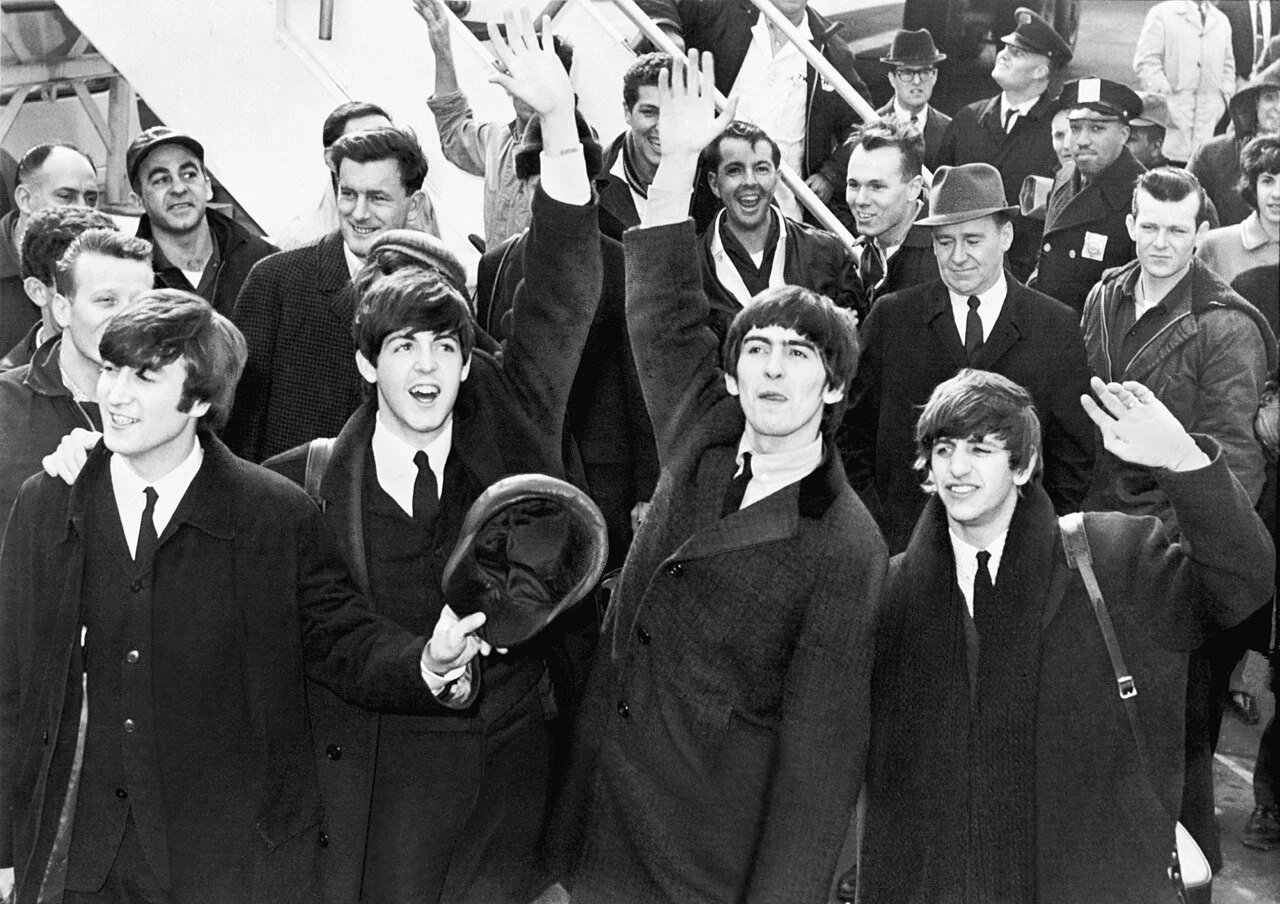
A photograph of The Beatles arriving at JFK airport. United Press International. CC0.
In its early years, Bridge of Allan developed as a Victorian spa town. Its mineral springs beneath Dumyat and the Ochil Hills offered visitors a chance to drink and bathe in the waters, believed to have healing properties. When continuing down Henderson Street to the grassy riverbank along the Allan Water, visitors will find the scenes of a river that grounded and inspired the celebrated author and poet Robert Louis Stevenson.
As a child, Stevenson often visited the streaming waters and spacious streets of Bridge of Allan. He seemed to find solace in the quiet nature of this former spa town during frequent sickly spells. Throughout his career, he returned to memories of Bridge of Allan in his writings. The Allan Water was a notable muse throughout his creative endeavors. In “Memoirs of an Islet,” Stevenson recalled, “I shall once more lie in bed, and see the little sandy isle in Allan Water, as it is in nature, and the child (that once was me) wading there in butterburs; and wonder at the instancy and virgin freshness of that memory; and be pricked again, in season and out of season, by the desire to weave it into art.”
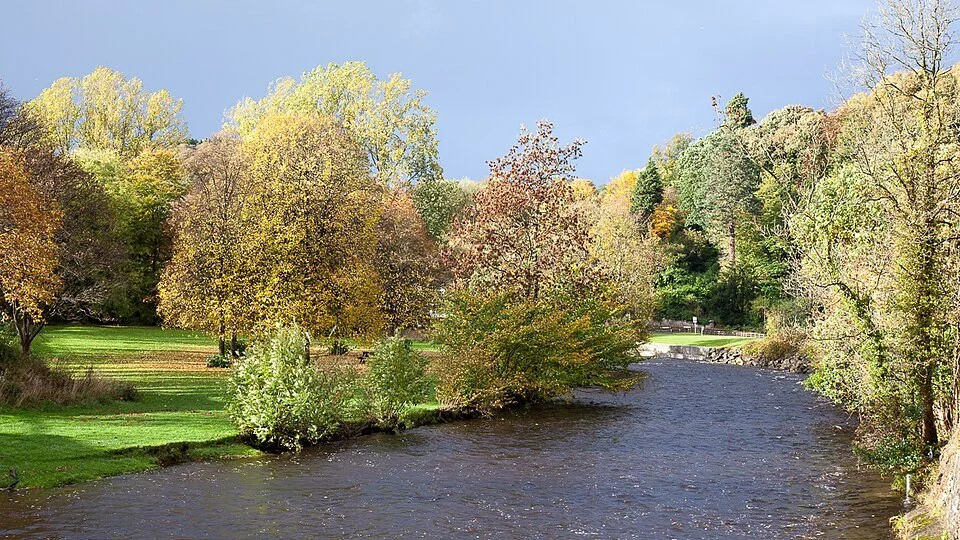
A partial view of the Allan Waters during early autumn. Doug Lee. CC BY-SA 2.0.
Today, travelers can walk alongside the Allan Water, with the slopes of Dumyat rising above, and follow in the footsteps of the author whose childhood memories of the Allan Water endured throughout his life. Exploring the town on foot allows visitors to see the landscape as the writer saw it: humble and rejuvenating, full of chances for one’s childlike imagination to wander.
Revisiting these sites after learning their history made me appreciate Bridge of Allan’s small-town feel even more. Looking back, it is understandable how this small town’s history is easy to overlook. Tucked beneath Dumyat, it doesn't announce its influence to the world, but it can be a place of great inspiration. The river where I’d sit to relax is the same river that a celebrated author found inspiration in when penning down his literary works. Songs that the world would eventually adore were happily performed in Bridge of Allan’s humble halls before the crowds knew every lyric.
TRAVELING THERE:
BeLocal helps travelers discover Bridge of Allan beyond its well-known landmarks by showcasing the town’s local businesses, cultural history and surrounding nature. It encourages visitors to engage with the places and people that make Bridge of Allan unique, no matter the length of their stay!

Mia Gooch
Mia a student at the University of North Carolina at Chapel Hill, majoring in Media & Journalism with a double minor in Education and Social & Economic Justice. She’s passionate about informal education and creating fun experiences where people of all ages can explore new perspectives and develop new skills. When she’s not in the classroom, she loves contemporary dance classes, spending time with friends and family, baking, and being outdoors!