
By Barrington Jayden Henry
This mining town’s rustic charm belies its dark past.
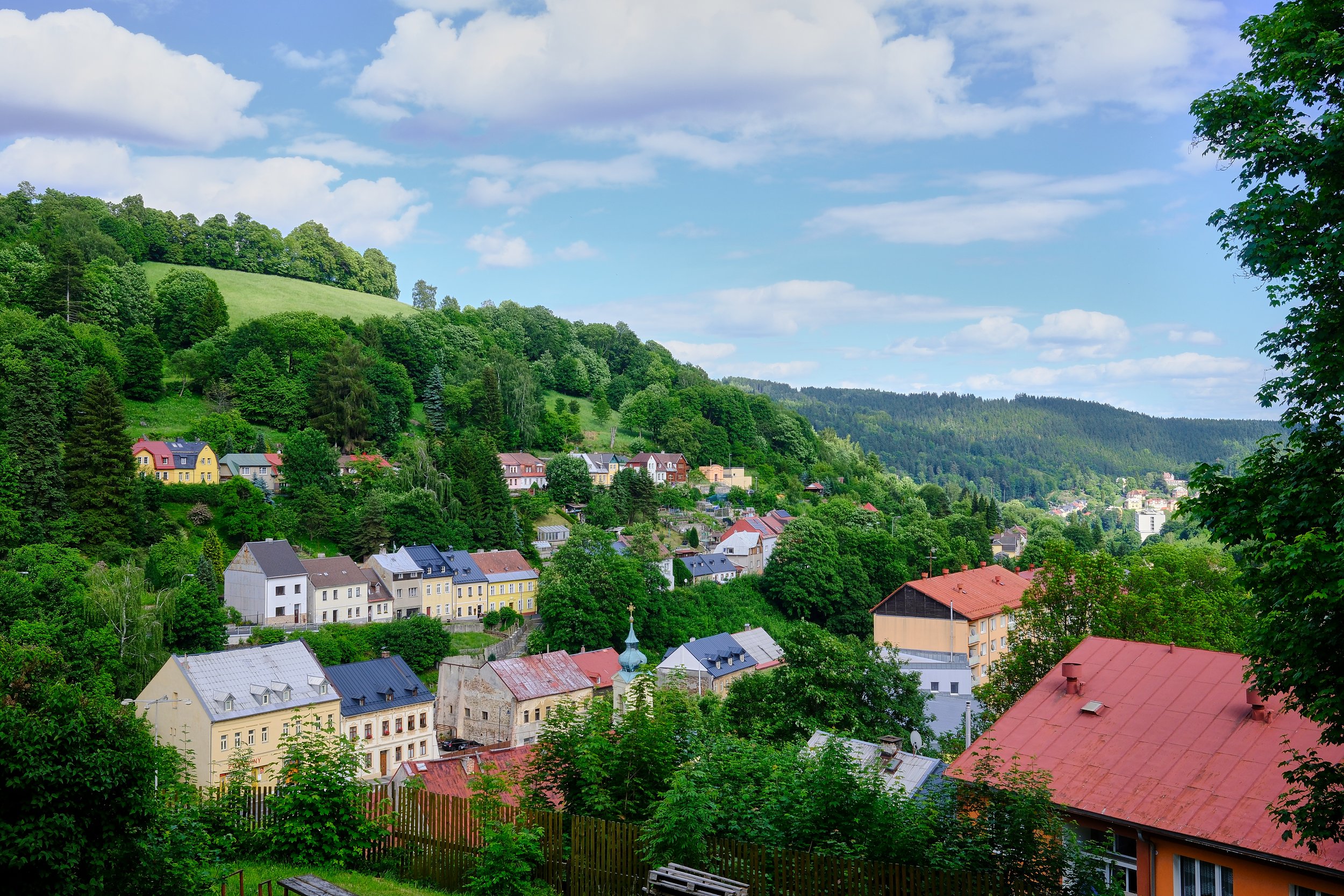
Jachymov, Czech Republic. Lubor Ferenc. CC BY 4.0.
In the first days of spring in the Czech Republic, I went with a group of friends on a short countryside retreat in the Ore Mountains. After about three months of traveling to the bustling cities of Europe, I was glad to set aside a weekend to slow down and relax in the picturesque mining town of Jachymov. Although Jachymov has less of the urban appeal of Prague or the medieval whimsy of Cesky Krumlov, its history has much to offer to travelers who are discerning enough to visit.
Jachymov lies near the Czech Republic’s northwestern border with Germany, and before the end of World War II was a majority-German town, then known as Joachimstal. Five centuries ago, it became a major site of trade and commerce in the Kingdom of Bohemia when silver deposits were found deep in the earth. Here, the Kingdom of Bohemia mined silver to mint the “Joachimstaler,” which was quickly circulated and emulated throughout the region. The Joachimstaler, shortened to the thaler, is the origin of the English word “dollar.” Although much of Jachymov’s silver production dwindled by the mid-17th century, miners also came across a strange black ore that they called “pechblende.” The German word “Pech” means bad luck, and was apt for the ore because Jachymov’s miners were commonly afflicted with severe lung diseases and cancers. Those miners were not unlucky, but were likely suffering from radiation poisoning, as pechblende would be studied and recognized centuries later by Marie Curie and her husband as uraninite, a uranium-rich ore.
After World War II, the expulsion of the German population and the takeover of communist Czechoslovakia transformed the town. The Communist regime forced its prisoners to mine uranium ore in Jachymov’s old mines until the mid-1960s. One of these, the Svornost Mine, is the oldest operating mine in Europe, and we were lucky enough to take a tour of the mineshaft and then go on a guided trek in Jachymov’s Ore Mountains, where forced labor camps stood for over a decade. The misery of the backbreaking labor of endlessly mining a substance that is killing you from the inside is hard to imagine. Today, Jachymov attracts mostly Czechs who come to ski in the winter or hike during spring and summer. As our guide explained to us, civil society organizations that seek to commemorate and recognize the town’s history of oppression often face opposition from seasonal residents and visitors, who would prefer to enjoy the comforts of their mountain cottages without being reminded of the pain that thousands experienced in the past.
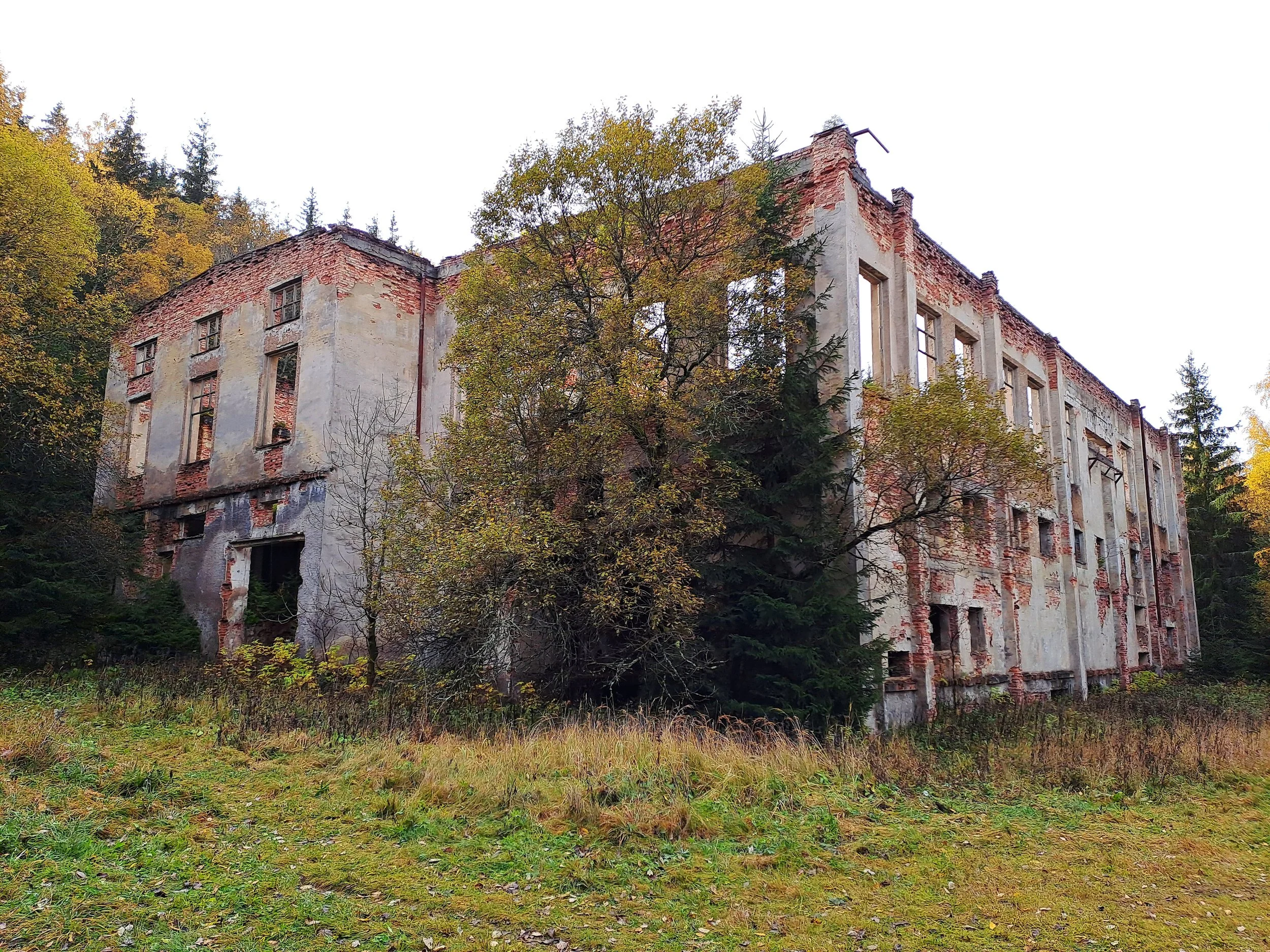
The remains of a compressor plant for one of Jachymov’s forced-labor camps. Hubert Kororo. CC BY-SA 4.0.
The beautiful sights of the Ore Mountains and the leisure with which we saw them are difficult to reconcile with the immense suffering doled out by a totalitarian regime just a few generations ago. It felt strange to sip on a cold drink in our mountain resort hotel, not far from a place where many people were effectively enslaved by the state. Jachymov, in this way, has a somber duality to it, and a visitor would be well served by learning about the darker side of the town, if only to better appreciate its current beauty.

Barrington Jayden Henry
BARRINGTON JAYDEN HENRY is from the Atlanta area and is a senior at Vanderbilt University, studying political science and history. Jayden is also the host of the weekly radio program I Want to Tell You Something on WRVU Nashville. In his free time, he enjoys playing tennis, reading, and going to museums.