
By Jeremy Gordon
Climate science suggests the flooding was affected by rising temperatures in the Himalayas, a trend that could lead to similar disasters across mountain ranges worldwide.
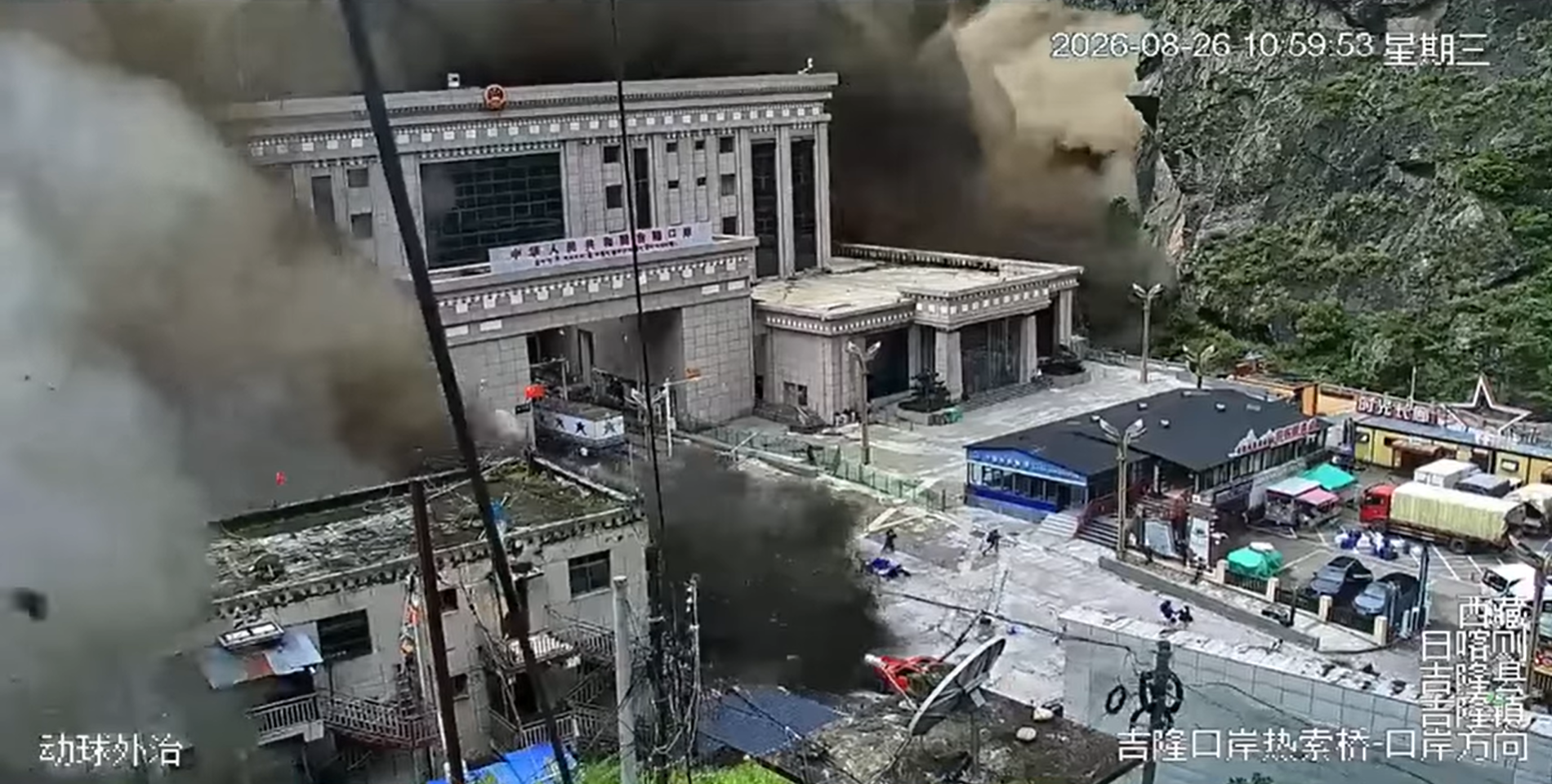
Flash flood hitting Gyirong Port. Unknown Author. CC0.
On Wednesday, Aug. 26, a catastrophic flood tore through over 40 miles of land in the Himalayas, on the border between Nepal and China. As of this writing, over 1,000 people are dead and over 4,400 are still missing, according to Nepal’s rescue services. Images and videos have poured across the internet showing the enormous wall of water, mud, rocks and ice as it obliterates buildings, snaps bridges and sweeps away fleeing victims.
Scientists have identified an ice-rock avalanche triggered by the collapse of part of a high-altitude glacier near Mount Langtang Lirung as the cause of the disaster. The flood wave descended at an average speed of 120 miles per hour, traveling nearly 14 miles in just under 7 minutes. With incredible force, the cascade wiped out entire towns and destroyed lives and infrastructure.
Nepal, a deeply impoverished country, is now left to sift through the destruction and pick up the pieces. Initially, the government under Prime Minister Balendra Shah was reluctant to seek foreign aid from its neighbors, as a result of geopolitical tensions. Shah came to power earlier in 2026, after a wave of student-led protests ousted the country’s previous leadership, which was seen as too closely aligned with various foreign powers, including India, China and the West. The government feared a repeat of the 2015 earthquake reconstruction, which saw foreign powers rushing in to project their geopolitical power on Kathmandu. Backlash to this latest decision caused the Shah government to reverse course and allow foreign aid, though many fear this delay cost more lives.
Though scientists are characteristically cautious about drawing direct conclusions, the impact of climate change on this disaster is apparent. Human-caused warming has caused the Himalayan mountains to warm significantly faster than many other parts of the globe. These mountains contain the largest volume of snow and ice outside the polar regions, with more than 63,000 glaciers feeding into at least 10 major river systems that support billions of people. Due to its elevation, 78% of this glacier area is highly exposed to warming. Ice loss rates across the region have doubled since 2000. If that trajectory continues, we will see glacial melt leading to more ice chunks breaking off and more catastrophic flooding.
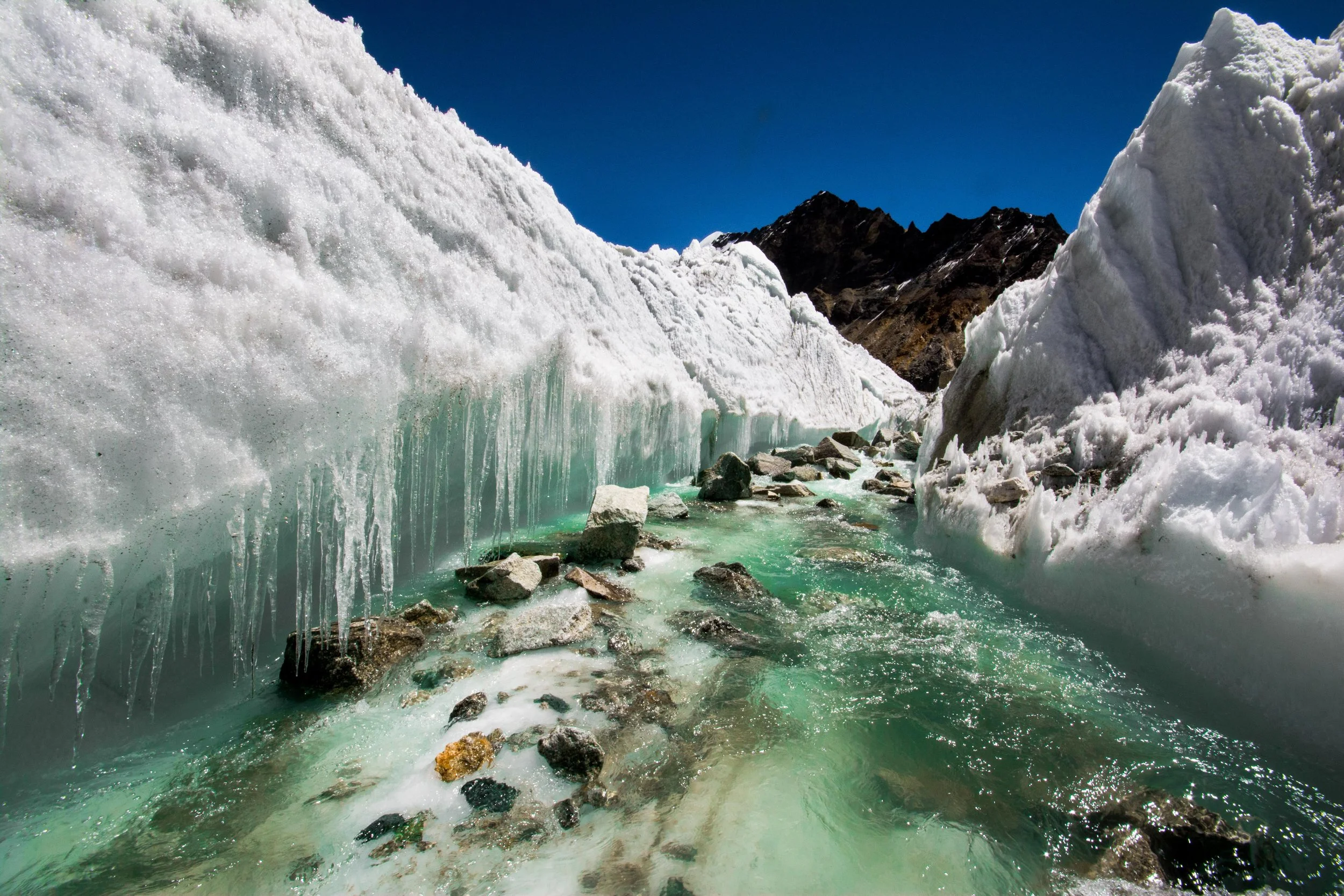
Glacial melt in the Indian Himalayas. Sharada Prasad. CC BY 2.0.
These disasters will not be confined to the Himalayas. The Andes in South America have also struggled with glacial retreat resulting from climate change. Peru has lost around 56% of its tropical glaciers over the last 60 years, threatening water supplies. The European Alps are heating up at roughly twice the global average and are projected to lose between 34% and 65% of their ice by 2050. The Rocky Mountains in North America have seen shorter, milder winters and longer, hotter summers, resulting in less water available for plants, animals, cities and farms.
Climate change in the world’s mountainous regions is occurring faster than in their surrounding lowlands. This poses a serious risk for the people, animals and plants that live in and rely on these regions for survival. Not only will there be sudden disasters that wipe out thousands of lives in a matter of minutes, but also be slow, agonizing death that results from depleted water sources and crop failure. There will also be global conflict that results from people fleeing disaster zones into more stable regions. As the Intergovernmental Panel on Climate Change observed in its 2023 Sixth Assessment Report, the risks and damages projected from climate change “escalate with every increment of global warming.” The report warns that “Cryosphere-related changes in floods, landslides, and water availability have the potential to lead to severe consequences for people, infrastructure and the economy in most mountain regions.”
The disastrous flash flooding in Nepal is not an isolated incident. It will happen again. And it will happen all across the globe.

Jeremy Gordon
Jeremy is a graduate student at Johns Hopkins University studying Creative Writing. He graduated from the University of Maryland with a bachelor's in Criminology and Criminal Justice and worked for four years as an Investigative Specialist with the Public Defender Service for DC.