
By Kaitlin Murray
Overtourism, altitude and community conflicts: unpacking the debate over visiting Vinicunca.
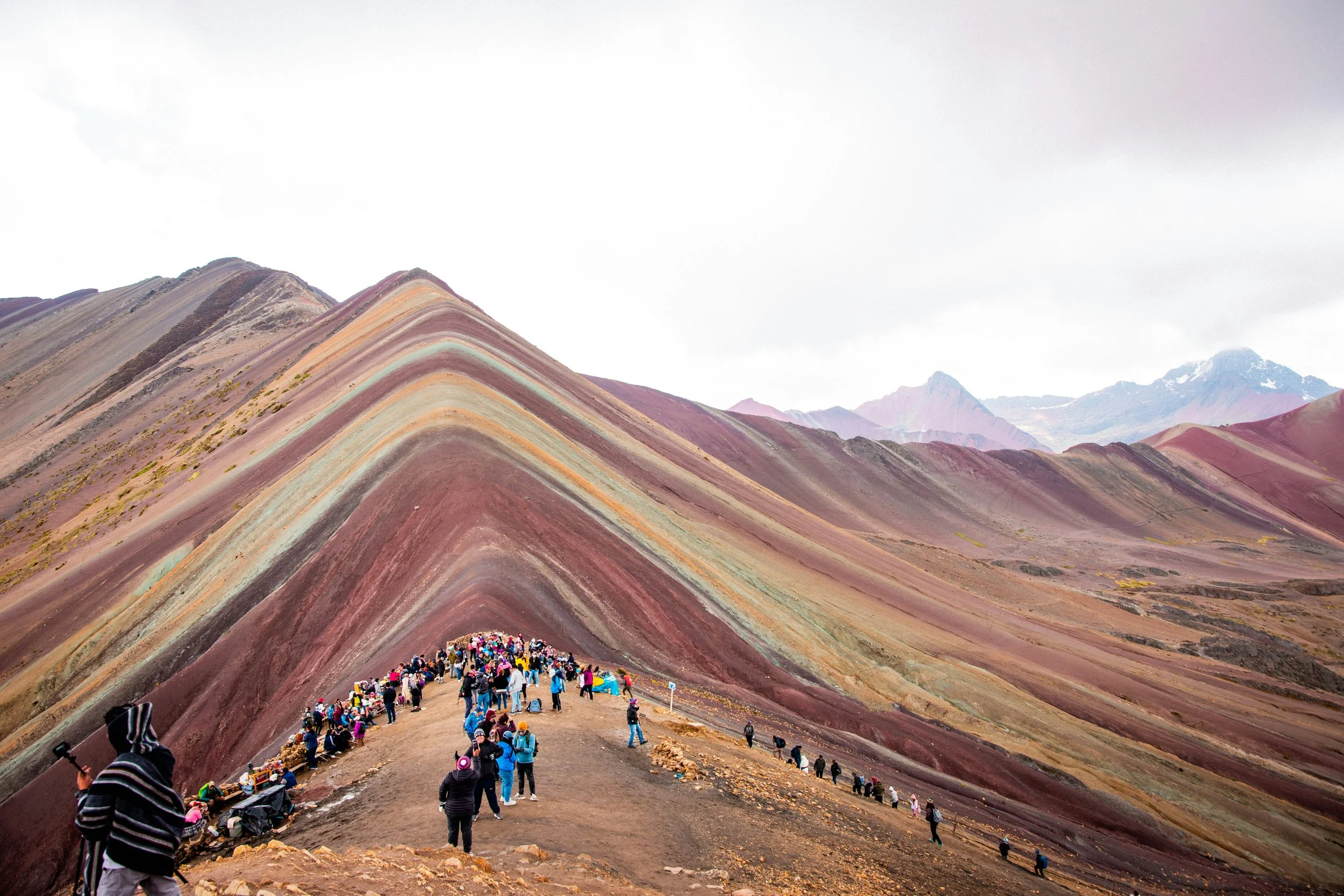
Vinicunca Mountain viewpoint. Alvaro Palacios. Unsplash.
At an elevation of 17,000 feet above sea level, not far behind the altitude of Everest Base Camp, the Vinicunca Rainbow Mountain quickly became one of Peru’s most popular tourist destinations.
As recently as 2015, it received less than 40 visitors a month, but the rise of Instagram aesthetic photo-ops and a Lonely Planet feature catapulted it into the spotlight, bringing in over 1,000 to 2,000 people a day and millions of dollars to communities once isolated from mass tourism. The bold colors became widely visible in 2015 after climate change had been melting the ice and snow covering the mountain.
With its unique stripes of red, green, purple and orange sediment and notoriously difficult climb to the top, this destination is at the center of a debate on overtourism and whether or not it is even worth a trip at all Three tourists have died here from altitude sickness, and many more from lightning, the Indigenous communities are grappling with violence over money disputes that have left one person killed and scientists worry about erosion due to the high amount of foot traffic.
While thousands of tourists come to take aesthetic pictures and marvel at the alien-like landscapes of this unique destination, Indigenous communities who have lived in the Andes for centuries consider this mountain and surrounding landscape sacred. It is the setting for various festivals and rituals that thank Pachamama for blessings.
This discussion isn’t limited to scientists or tourism professionals, as many visitors and travel bloggers have shared their opinions. Many have advocated against visiting the mountain, claiming altitude sickness can be life-threatening and accusing tour companies of misleading travelers by over-enhancing photos to make the mountain appear more vibrant than it does in person.
Others have advocated for it, saying altitude acclimatization and awareness that photos can be edited are each individual’s responsibility. With stunning landscapes and the chance to hike in the Peruvian Andes, tourism companies and previous visitors claim the experience is still worthwhile.
Here's a breakdown of each perspective on why visitors should or shouldn't continue to go to Vinicunca.
Why You Shouldn’t Visit Rainbow Mountain
Altitude Sickness
Vinicunca's elevation can put visitors at real risk of acute mountain sickness, especially since many international travelers land in Cusco and head straight out to the mountain without time to acclimatize. The hike to the viewpoint can take from 90 minutes to two hours each way, and while horses are available for hire, visitors often complain that the struggle to walk the trail overshadows the experience.
Tourism and Indigenous Community Violence
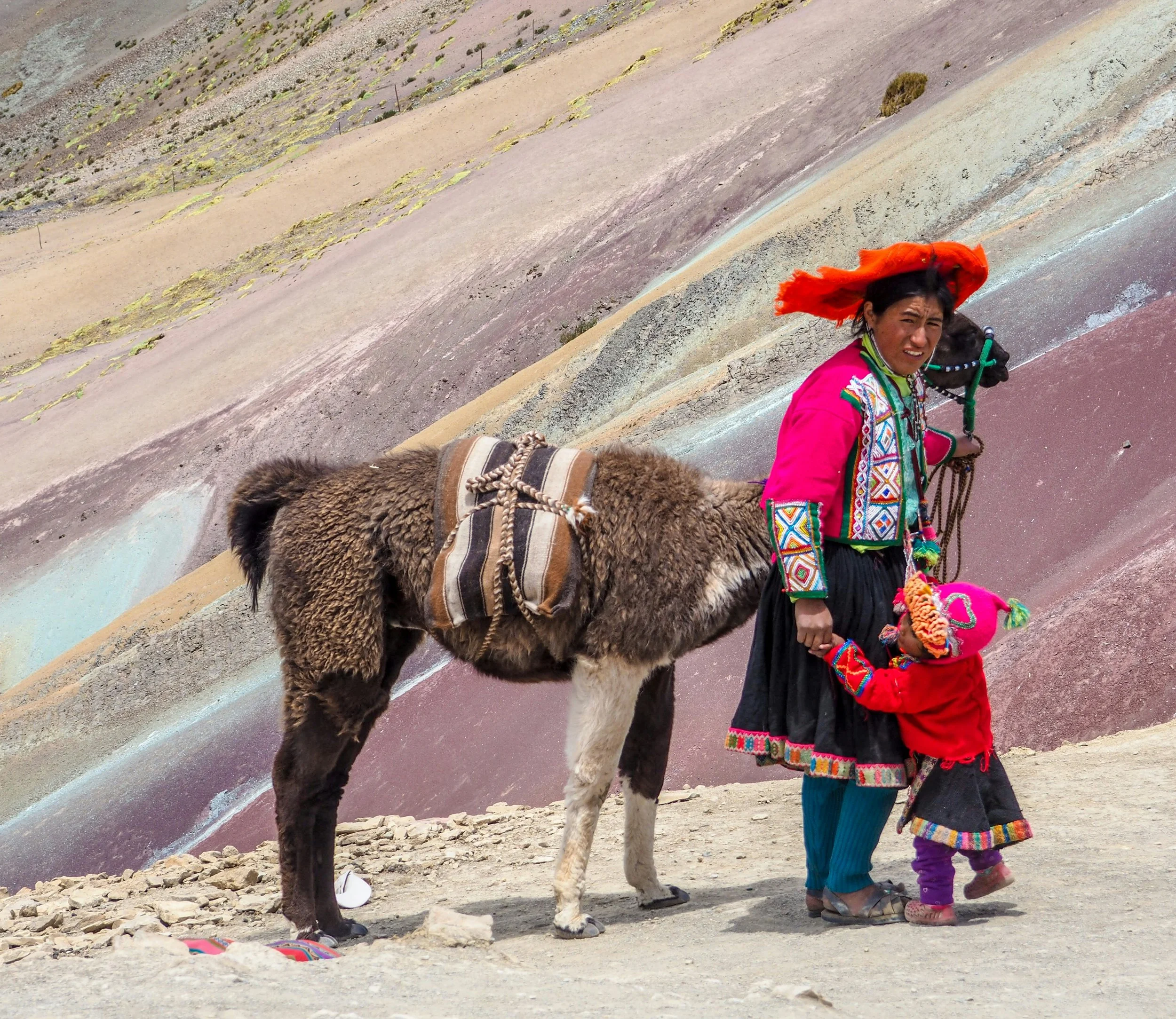
Many Indigenous people make money at Rainbow Mountain by letting tourists pose with their llamas for a photo. Ioana Mohanu. Unsplash.
The sudden influx of tourism at Vinicunca brought large quantities of money that the Indigenous communities of the area had not seen before. In an interview conducted by Bloomberg in the community of Chillihuani, they said they began bringing in roughly 9 million soles a year ($2.5 million). Although there was no government oversight in the area before, the increase in revenue in small villages that had previously been poor attracted the government, which intensified disputes over ticket-sale revenue as each side fought for control of the profits.
Flavio Illatinco was one of the biggest advocates for the tourist site and became caught up in disputes with other community leaders and government representatives over corruption, control and power over tourism income. In 2024, with disputes at an all-time high, Flavio was murdered by a mob of his neighbors, mostly men who worked at Rainbow Mountain. So far, 29 community members are under criminal investigation, many claiming they were never involved.
This incident showed that while increased tourism can benefit communities living in cycles of poverty, it can also harm them if not organized correctly.
The negative impact of overtourism on Indigenous communities is not a new topic in Peru. In 2025, tourism companies in Machu Picchu clashed, generating blockades and leaving travelers stranded in the remote town of Aguas Calientes. The Inca Trail has set limits on how many visitors can hike per day, after years of overcrowding and mistreatment of porters.
Misleading Tour Companies and Edited Photos
Many visitors have complained that tour companies edit promotional images to make the colors more vibrant. With the rise of social media, many arrive with expectations that don't match reality. Rather than the oversaturated colors they see online, they end up disappointed by the real muted tones, a letdown compounded by the exhausting hike.
Erosion
As thousands of people and horses walk up and down the trail each day, scientists have raised concerns about long-term erosion impacts. Using satellite images, scientists have studied how visitor volume is straining the terrain and accelerating landscape degradation.
Why You Should Visit
The mountain and its surrounding area offer some of the world’s most dramatic and unique landscapes. Many visitors come to see, with their own eyes, the unique layers of sediment created by years of weather, erosion and the formation of the Andes over millions of years. For those fascinated by the natural world, many argue this is a must-see destination.
As one of the highest places accessible by car, it offers a unique experience for travelers who want to see the Andes and its many natural colors without hiking long distances. Even with the strenuous hike to the famous viewpoint, many travelers see it as an easier alternative to longer trails in the Peruvian Andes.
The biggest pull, however, is the bucket-list element, with so many travel magazines and social media videos listing it as a must-see. While this may carry a negative connotation due to overtourism, it has inspired many to push themselves to reach the viewpoint with a sense of accomplishment and adventure. For many, the hike to the mountain and time in nature are worth the acclimatization and tiredness.
Alternative Options
If visitors want alternative options for incredible mountains, Palccoyo and Pallay Punchu are two good choices.
Palccoyo is another mountainous area with fewer people, with a strong greenish hint across the landscape. The hike takes only around two hours, but it's still quite difficult at that altitude.
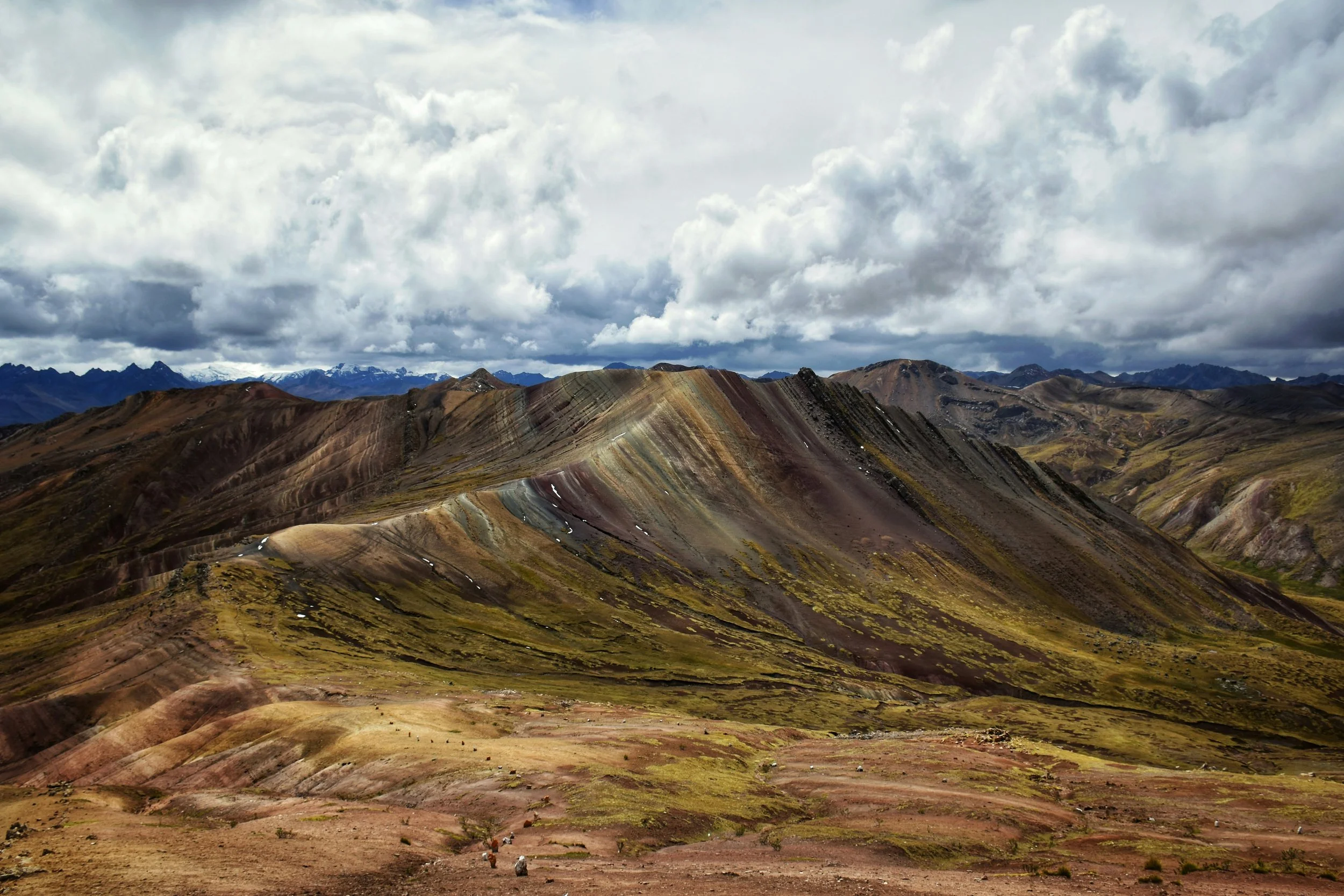
Palccoyo mountain in Peru. Jean Vella. Unsplash.
Pallay Punchu is considered the most dramatic landscape of the three, with a sharp mountain ridge of reds and deep greenish-blues. It looks like another planet, and no tourist groups organize tours here, so visitors need to arrange private transport. This destination is much more remote and off the beaten path.
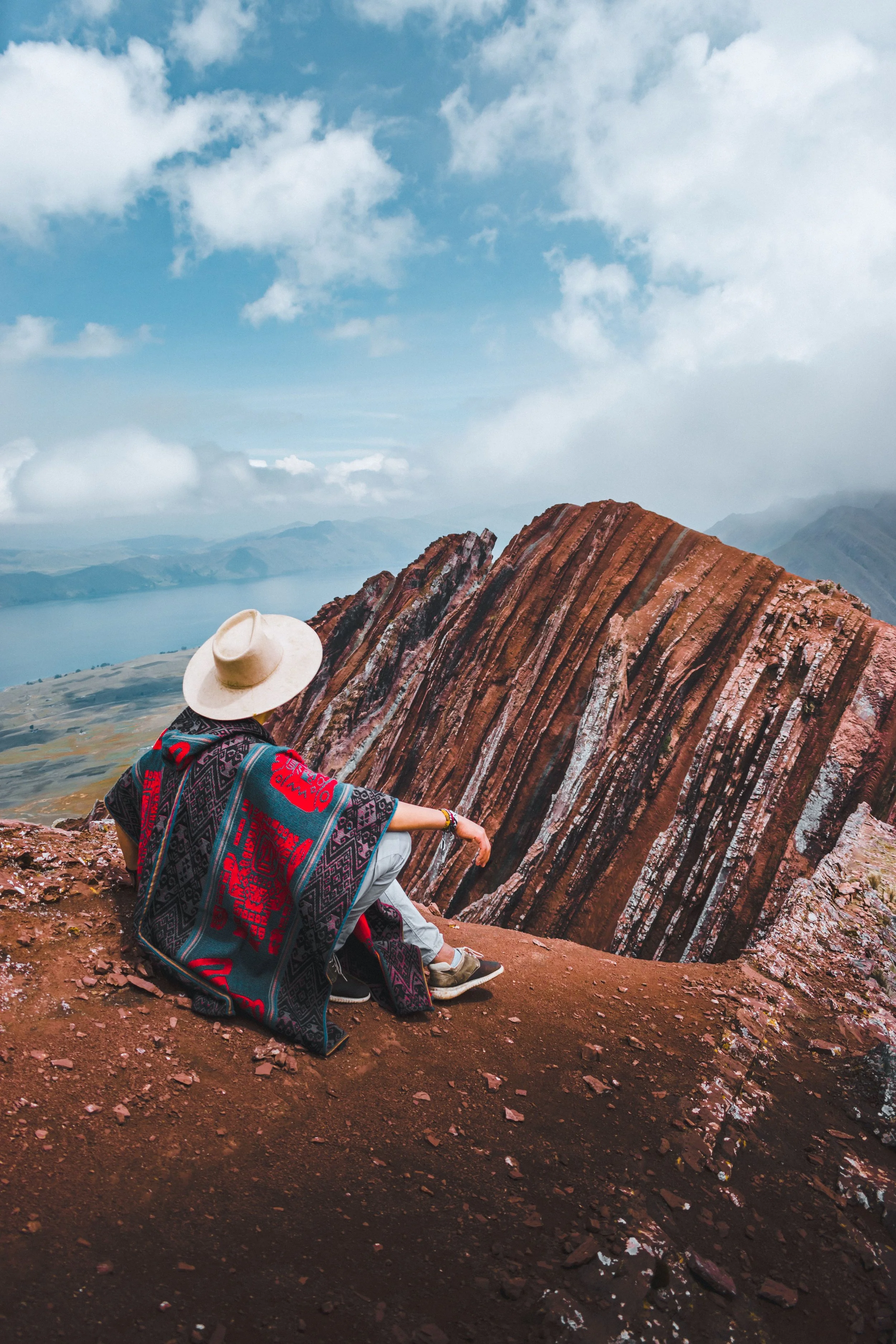
Tourist looking out over Pallay Punchu, famed for its sharp ridges. Jean Pixels. Pexels.
Vinicunca's transformation from a little-known route to one of Peru’s most-photographed landscapes has happened in about a decade, a shift so fast that the site has struggled to keep pace with the number of people arriving.
Whether it’s worth the trip ultimately comes down to the individual traveler based on their fitness level, ability to acclimatize and willingness to take on the demanding hike. No matter how popular a destination gets, the answer to this debate comes down to each traveler's preferences and how they choose to spend their time and money.
Kaitlin Murray
Kaitlin Siena Murray is a travel journalist and global storyteller documenting cultures, historical places, and the people and social impact movements helping the world. Raised worldschooling across more than 129 countries with degrees in anthropology and history, her writing is driven by a commitment to global citizenship, capturing the diversity and beauty of the world through the lens of culture, history, and social change.