
By Caleb A Yamamura
Millions of decades-old explosives create thousands of tragedies and what can be done about them
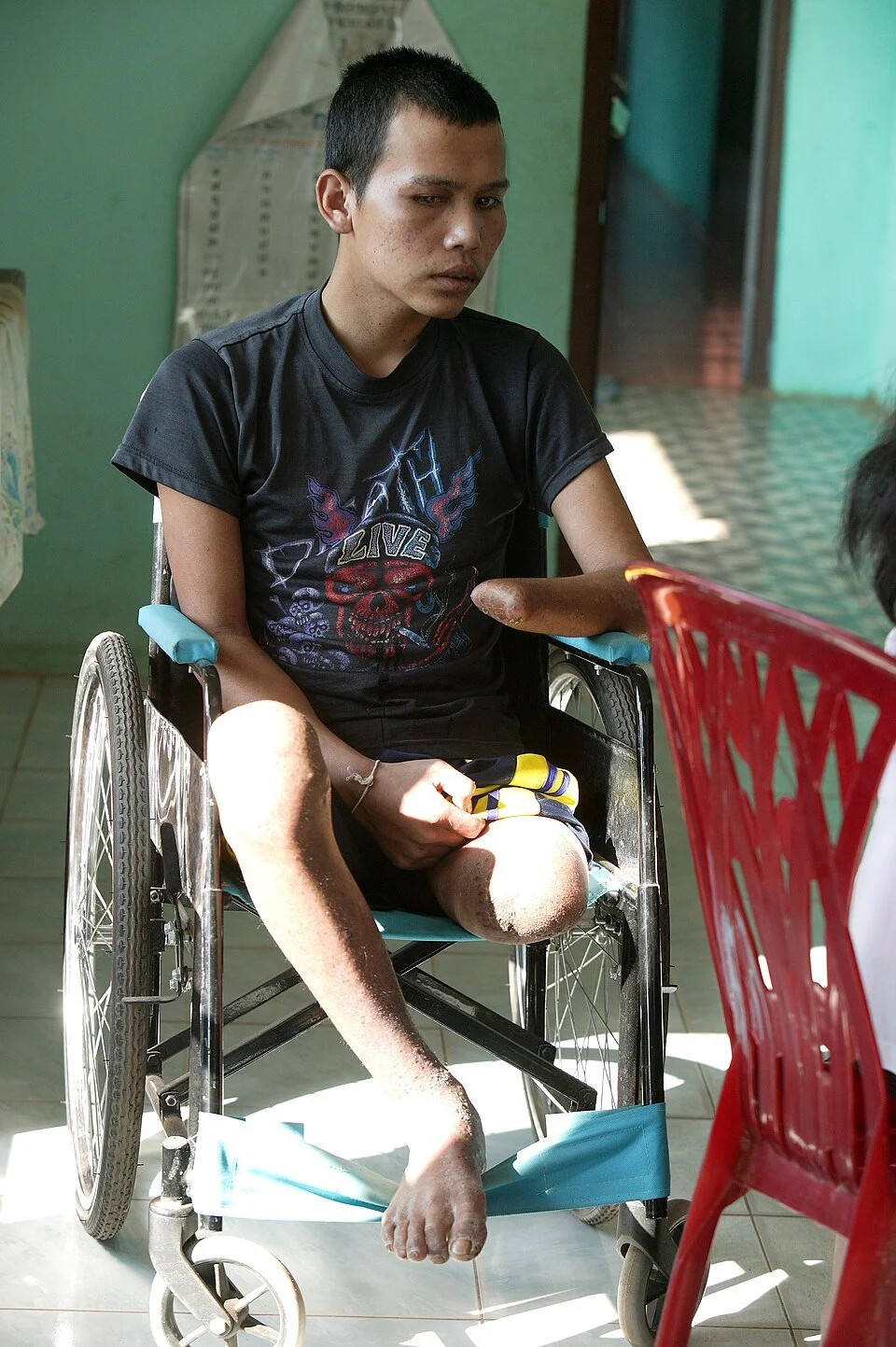
Laomn, an 18-year-old Laotian landmine victim. Jim Holmes. CC BY 4.0.
There is a sentiment that war does not end when the fighting is over, an idea true in both mental scars and lingering physical threats. In 2024, 6,279 people were injured or killed across over 52 countries contaminated by landmines and unexploded ordnance (UXO). Annually, around 90% of those affected are civilians; roughly half of civilian casualties are children. In 2024, roughly 33% of the total civilian casualties were killed, with the rest left with life-altering injuries.
There are broadly 2 types of landmines: antipersonnel (AP) and anti-tank (AT). Both threaten civilian populations, but AP mines do so on a far greater scale. Where AT mines usually need hundreds of pounds to detonate, AP mines need far less to detonate, and they are designed to maim or kill people, be they soldiers or civilians.
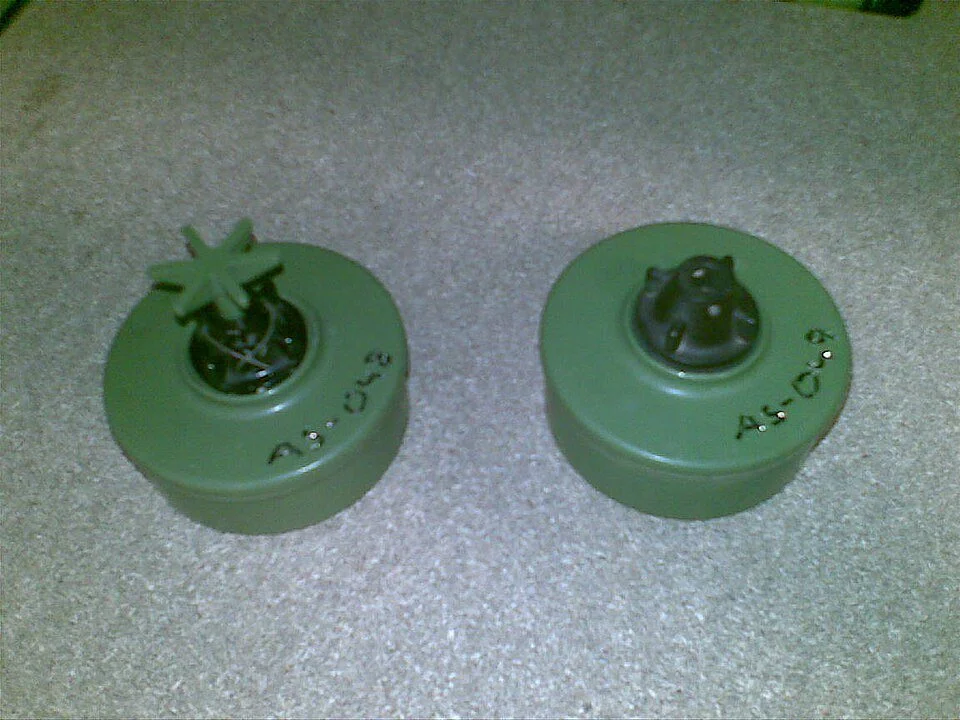
Yugoslavian PMA-2 antipersonnel mine. MoserB. CC0.
Tragically, landmines aren't used by militaries with the sole intent to harm enemy combatants. Most minefields actually do minimal damage to military forces, as most militaries are adept at locating and marking off enemy minefields. Instead, minefields are placed to deny the enemy a safe route of advance, allowing a military to have better control.
In the chaos of war, these fields will change hands many times, and as the war ends, they may be forgotten, perhaps intentionally. In turn, the people most likely to fall victim are civilians, long after combat ends.
UXO are munitions or military explosives that failed to function or detonate when intended. For example, an artillery shell that did not explode and then became buried in the ground. Such objects become extremely dangerous as they may detonate if disturbed.
UXO can be considered even worse than mines, as at the very least, most militaries consider it good practice to keep track of where they laid mines. If not for future cleanup, then to at least prevent their own forces from being hurt by their own mines. Additionally, some modern mines are “smart mines” which detonate by themselves after a given period of time to prevent such risks to civilian populations. By contrast, UXO is entirely unpredictable and is difficult to find because its position is often undocumented, but trained demining teams can detect and safely dispose of it.
A nation and its army can and should be held responsible for failing to properly clean up the landmines they laid. But no one can easily be held accountable for UXO.
UXO comes in many shapes and sizes, but is usually metal objects with oval, teardrop or cone shapes.
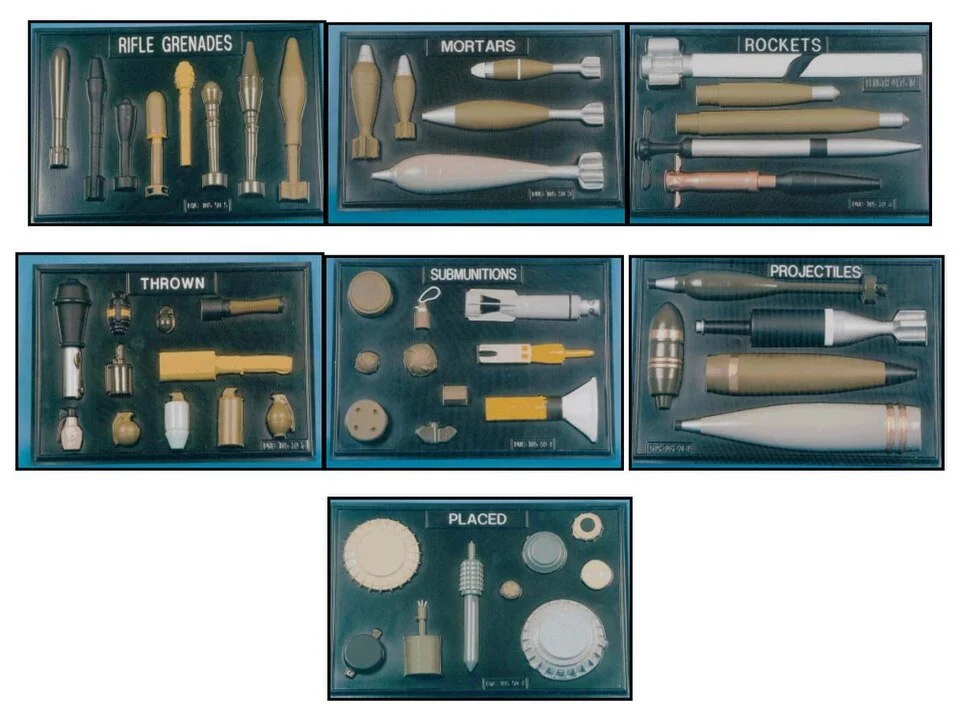
U.S. Army-made UXO recognition board set. UXO is usually found in various stages of degradation, rusty or broken into parts, all of which can still pose a threat. U.S. Army Alaska (USARAK), Fort Richardson. CC0.
If you recognize anything that could potentially be a military device, do not touch it, attempt to manipulate it or its surroundings in any way; retreat and report the appropriate authorities immediately. That is the 3R rule when dealing with potentially hazardous items: recognize, retreat and report.
Many adults are reasonably capable of recognizing when something resembles a weapon or military device. Children cannot. This is why children make up about 45% of all those injured by mines and UXO, as they are more likely to play with such objects and set them off.
Additionally, due to their smaller stature, they are more likely to receive fatal injuries. Studies find that children receive torso and head wounds at a far higher rate than adults, who are more likely to receive leg wounds alone.
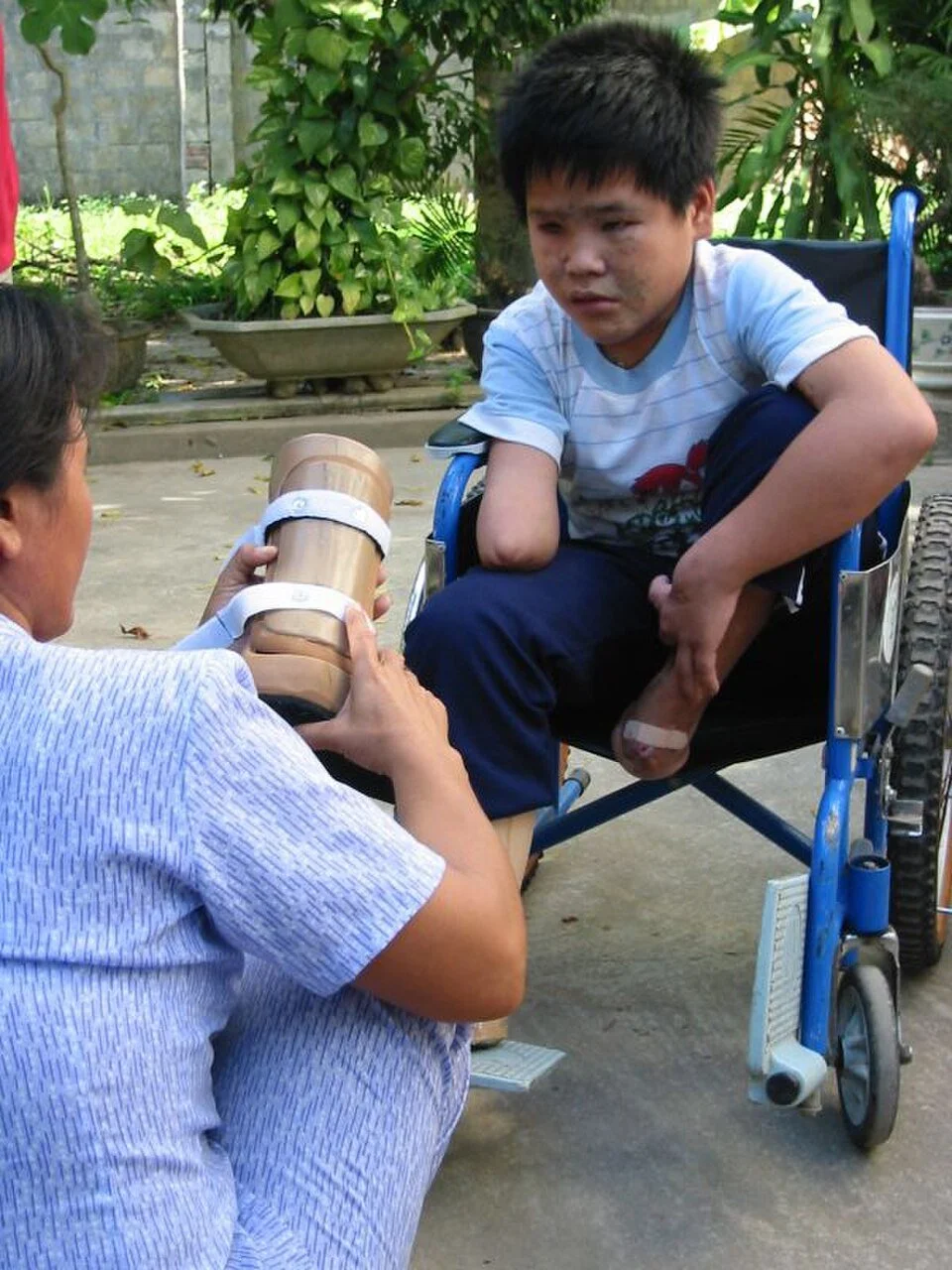
A Vietnamese child, recovering from landmine/UXO injuries. James Hathaway. CC by 2.0.
For adults, the group at most risk is farmers, who work on potentially contaminated fields and thus are most likely to encounter landmines. Additionally, heavy farm equipment can set off AT mines, which, being larger explosives, can often have more catastrophic results. This is also why there are more encounters with landmines in largely agrarian countries.
If you are traveling to a mine-contaminated area, take proper precautions, don’t stray off designated paths and listen to your tour guides. Try to ensure your children do not grab unfamiliar objects or play with random items.
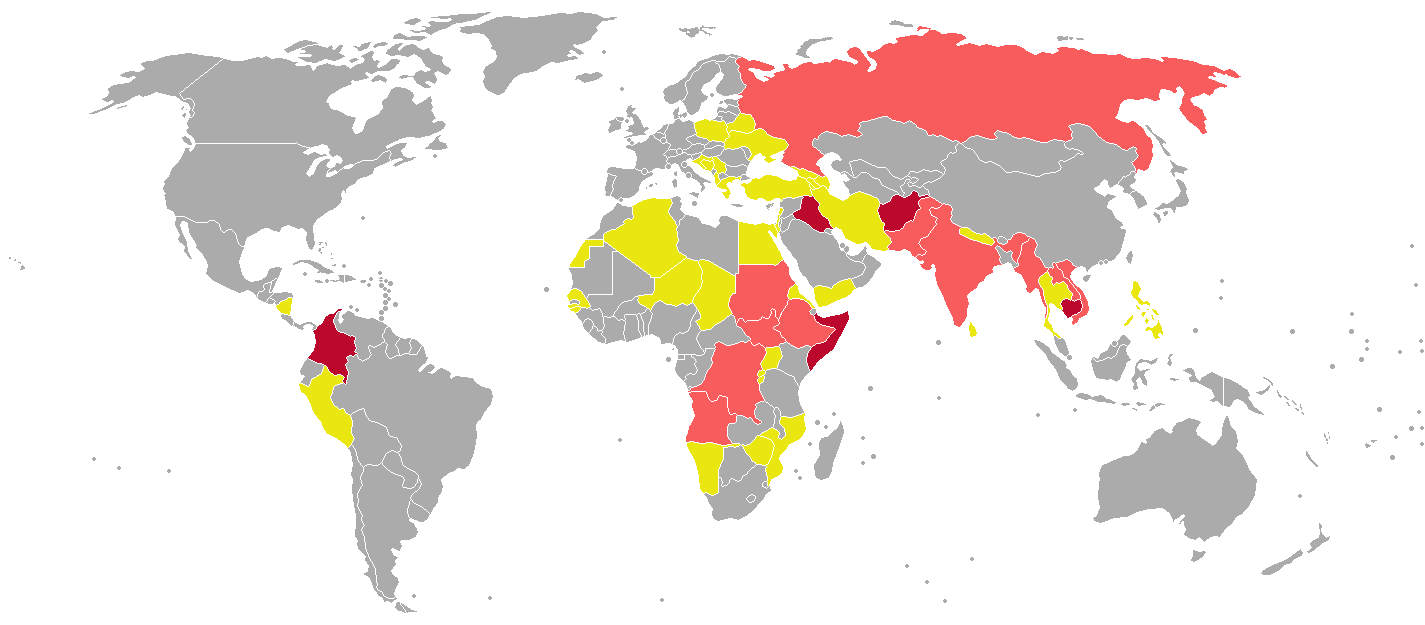
Map of all major mine-contaminated nations as of 2012; please refer to more up-to-date maps. KVDP. CC BY-SA 3.0.
Some of the most contaminated nations in the world are mined due to recent or ongoing conflicts, such as Myanmar, Ukraine, Syria, Afghanistan and others. Of note are Myanmar and Ukraine, the latter of which is now the most heavily mine-contaminated country in the world due to the Russian invasion in 2022.
Myanmar has consistently had the highest number of casualties caused by landmines and UXO for at least 2 years in a row, with a recorded high of 2,029 casualties in 2024. By comparison, in the same year, Syria recorded 1,015, Afghanistan reported 624 and Ukraine 293 people injured or killed by landmines or UXO.

16-year-old Ukrainian victim of a landmine in Kharkiv Oblast, 2024. State Emergency Service of Ukraine. CC BY 4.0.
Myanmar’s casualty figures are due to the ongoing and incredibly complex civil war in the country, and the junta government’s insistence on using mines against anti-junta forces. The junta seized power in a 2021 coup. Tom Andrews and Heba Hegrass, two U.N. special rapporteurs, explain that “The junta is doubling the impact of its extensive use of landmines to crush nationwide resistance.” These mines have largely affected civilians.
Other nations’ mine contamination is from decades-past conflicts, such as Bosnia and Herzegovina, which deals with mines and UXO from the Yugoslavian civil wars between 1991 and 2001.
Cambodia, along with Laos and Vietnam, still deals with mines and UXO left by conflicts spanning the 50s and 70s. Of those three, Cambodia is by far the most contaminated with landmines. The contamination in Cambodia is not just from U.S. military involvement, but also from civil conflicts centered around the brutal Khmer Rouge regime, which held power between 1975 and 1979, before being ousted by Vietnamese forces.
Explosives half a century old and older can still harm people. They can, will and have created tragedies for generations on.
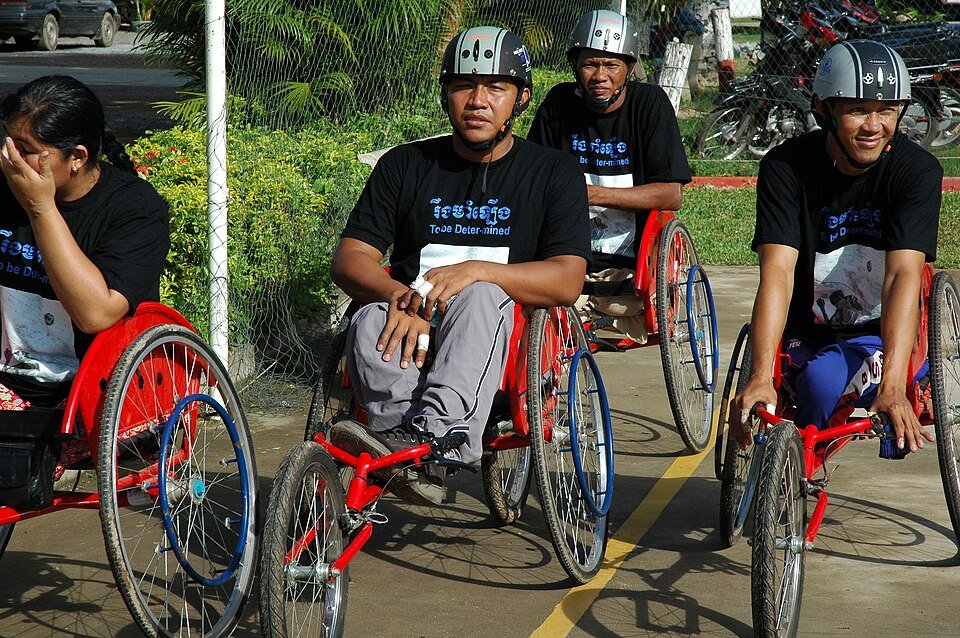
AusAID 2005, a Cambodian volleyball team, who all suffered landmine injuries. Lorrie Graham. CC BY 2.0.
There is an international treaty that prohibits at least the use of antipersonnel mines by its States Parties. The Anti-Personnel Mine Ban Convention (APMBC), otherwise known as the Ottawa Treaty, was signed in 1997 and entered into force in 1999. Not only does it prohibit the use of such weaponry, but it also requires that signatories destroy all existing stockpiles and engage in extensive demining actions.
The treaty has been very successful, as estimates prior to the 1997 convention reported that 15,000 to 20,000 people a year were injured or killed by landmines or UXO. Though thousands are still affected, thousands have been protected by its measures.
By 2024, over 50 million landmines in stockpiles have been destroyed under the Ottawa Treaty by over 161 signatories. Furthermore, both government and private groups have succeeded in clearing swathes of land of mines and UXO globally. Notable in that regard is the United Nations Mine Action Service (UNMAS), which provides both educational and on-the-ground demining services around the world.
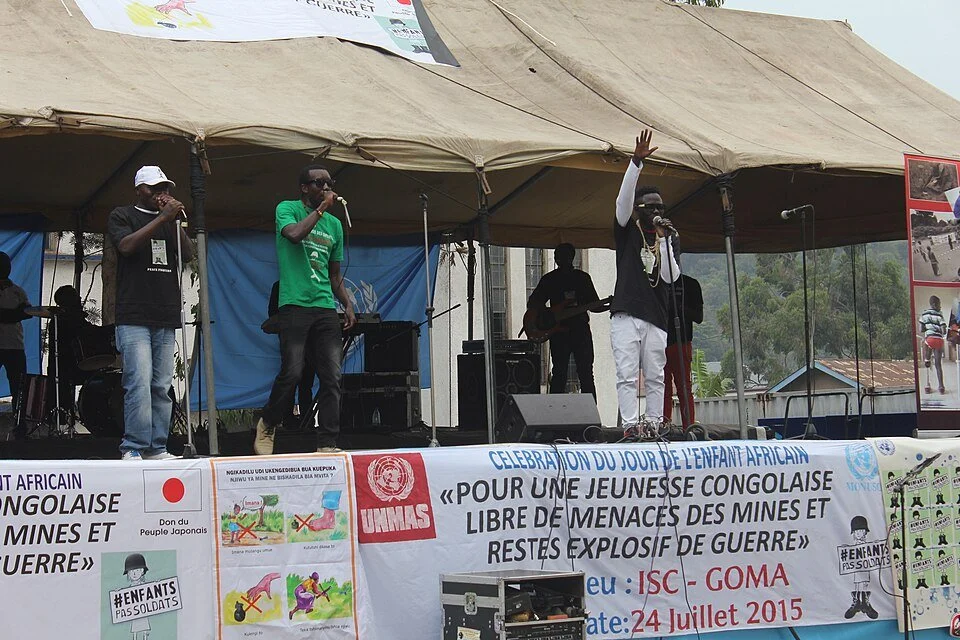
UNMAS work in the Democratic Republic of the Congo. MONUSCO Photos. CC BY-SA 2.0.
The international acceptance of the treaty has helped stigmatize the use of antipersonnel mines and has discouraged AP mine use among both non-signatory states and even non-governmental armed groups.
Some extremist groups still use such weaponry extensively, especially in the form of improvised explosive devices (IEDs), which can be classified as AP mines by the treaty. IEDs are usually buried along roadsides and can be triggered by pressure, tripwire or remotely detonated, which minimizes civilian casualties. IEDs are a major facet of the landmine crisis in Afghanistan, Syria, Palestine and many other areas.
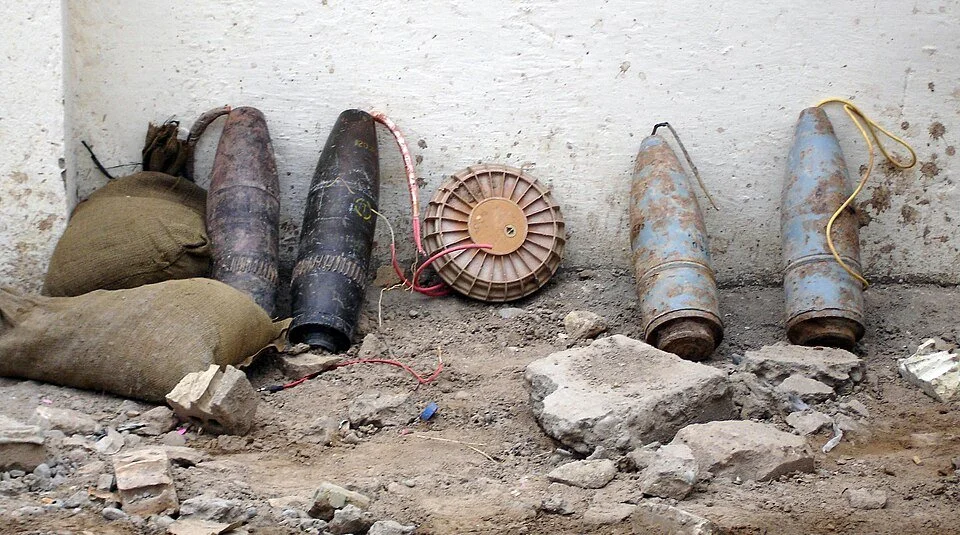
Examples of IEDs recovered from Baghdad. Anonymous. CC0.
Importantly, a number of major countries have not signed, including the U.S., Russia, China, India, Pakistan and around 30 more. These represent some of the most powerful militaries in the world, or at least the militaries that are likely to engage in large-scale warfare, in some cases with each other.
Additionally, 5 countries have recently withdrawn from the treaty, those being Estonia, Finland, Latvia, Lithuania and Poland. All cite the Russian invasion of Ukraine, and the threat of Russia, which is not a party to the treaty, as the reason why.
Finally, international funding for state-run demining efforts may be under threat. Funding cuts from both private and governmental donors do not bode well for the effort. Ruth Bottomley, a leading landmine researcher, warns “it's likely that all states could see a decline in funding.”
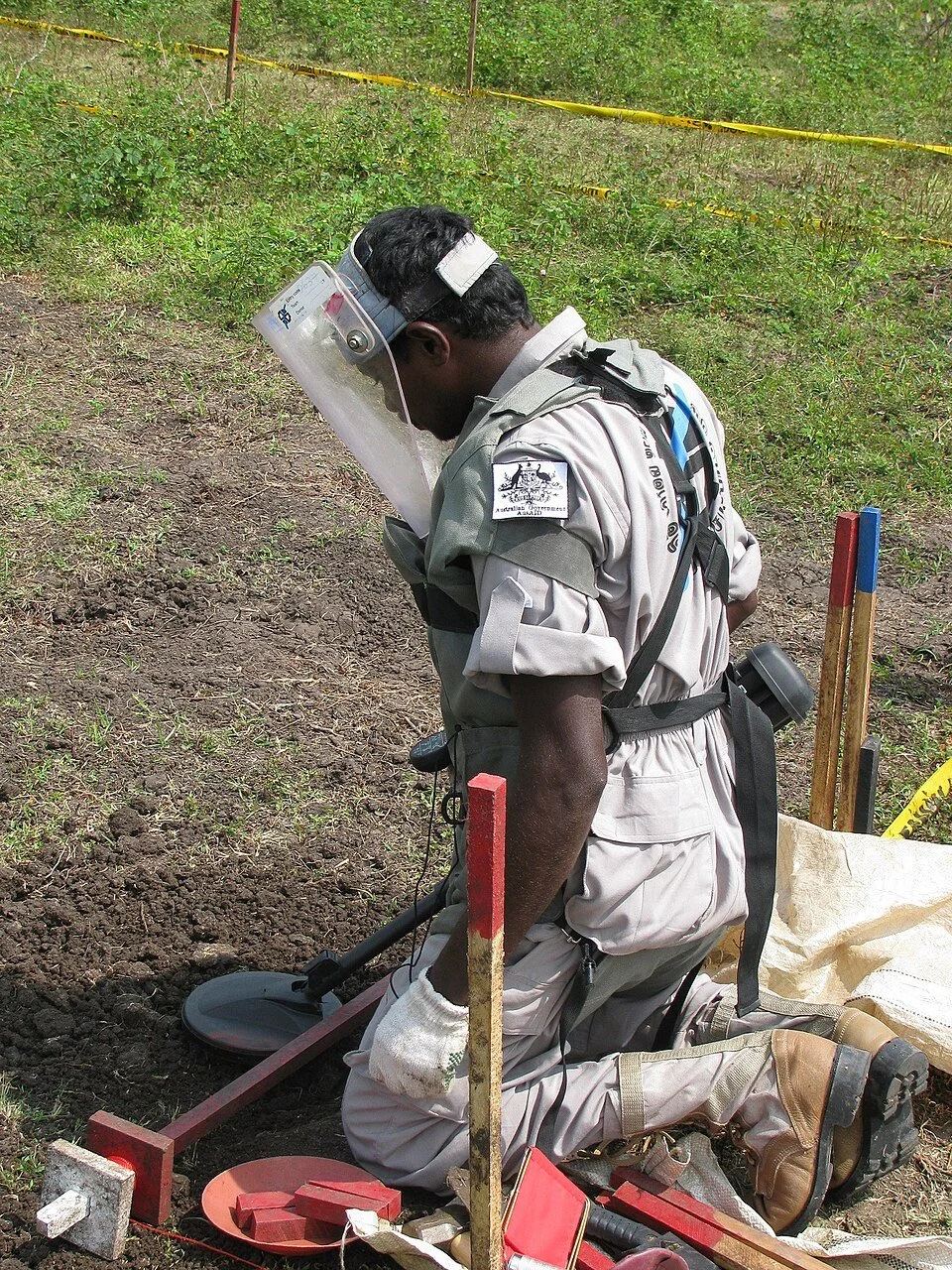
Demining operation in Sri Lanka, 2010. AusAID. CC BY 2.0.
GET INVOLVED:
As state funding becomes tenuous and uncertain, there are a number of nongovernmental organizations that still conduct demining activities. They fall under the broader mine-action sector. There are many mine-action groups whose work over the years has likely saved thousands of lives.
The previously mentioned United Nations Mine Action Service (UNMAS) is a U.N. mine-action body. The Mines Advisory Group (MAG) is a charity which engages in demining, risk education and victim support.
The Norwegian People's Aid Mine Action and Disarmament program is another notable example, which, aside from direct demining activities, advocates for international weapons treaties protesting the continued use of AP mines.
The HALO Trust is a humanitarian landmine-clearance organization that also engages in demining activities. Many other similar disaster or support charities also engage in demining activities.

Caleb A Yamamura
Caleb is from New York City, and is currently an undergrad at Vassar College, majoring in History and Psychology. He is also an avid traveler, having visited countries on each continent with his family (save for Antarctica… of course). He has a profound love for learning about the world, its cultures and people, and is happy to have the opportunity to share what he has learned about.