
By Claire Garvin
DNA-Based Reunification in El Salvador, Argentina, and Beyond
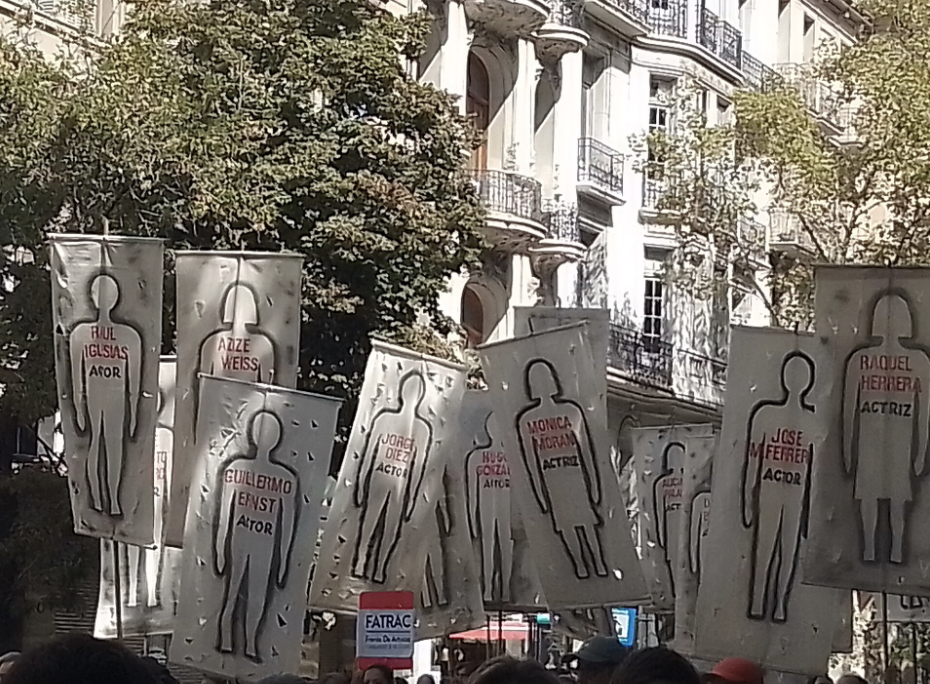
March for disappeared family members in Argentina. Lmalena. CC BY-SA 4.0.
In 1977, facing brutal state-inflicted violence from Argentina’s “Dirty War,” a group of grandmothers quietly formed what would become a revolutionary organization: the Abuelas de Plaza de Mayo. Throughout the Dirty War, an estimated 30,000 individuals were disappeared, many of whom were pregnant women whose children were then adopted into military families. Shaped by the nation’s pain, a new term embedded itself into the national vocabulary: “los desaparecidos,” or the disappeared.
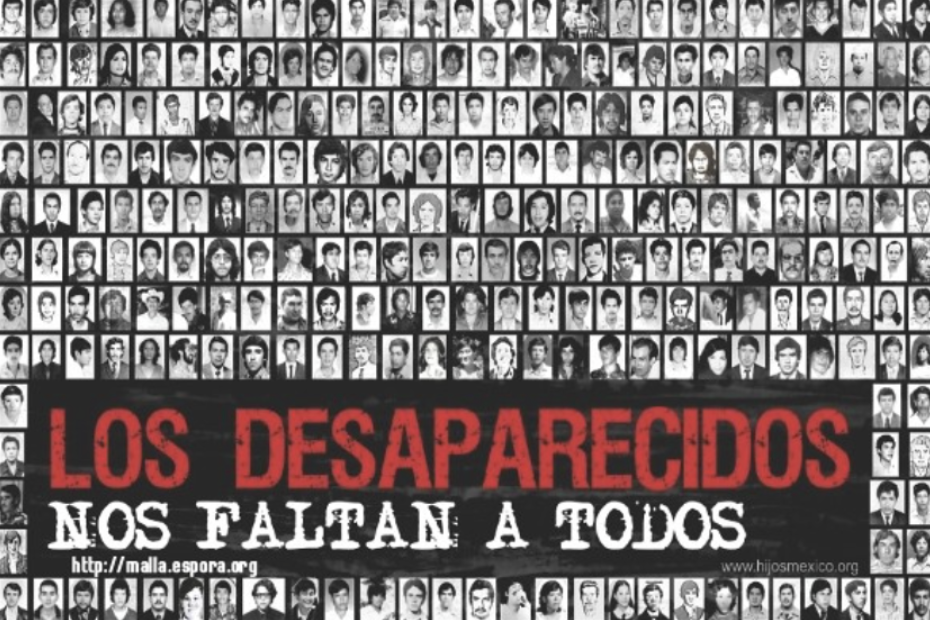
Collage of missing individuals, titled “The Disappeared: We Miss All of You.” Centro de Medios Libres. CC BY-NC 2.0.
After the war ended in 1983, the Abuelas de Plaza de Mayo started an ambitious initiative to reunite all of Argentina’s missing children with their families. Using the novel “Grandparentage Index,” which enabled genetic identification even without a parent’s DNA, the group created the National Bank of Genetic Data in 1987, a major advancement for the reunification of families around the world.
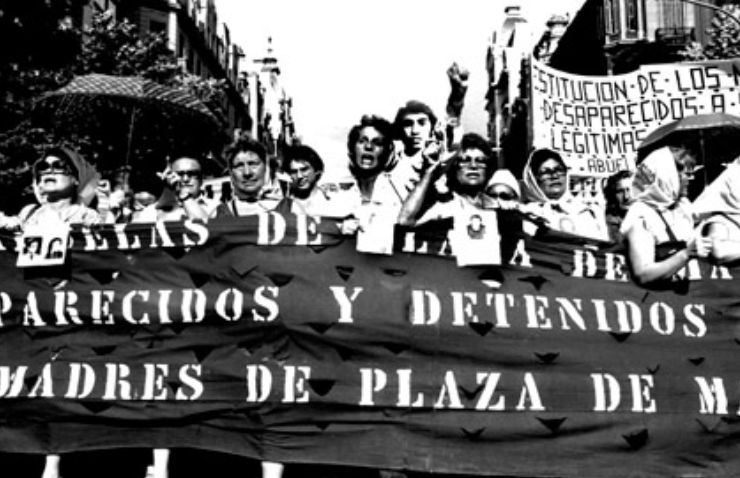
1984 march by the Abuelas y Madres de Plaza de Mayo. Archivo Hasenberg-Quaretti. CC BY-SA 3.0.
Today, the Abuelas de Plaza de Mayo have not only identified and reunified 140 missing children with their families, but also sparked an international initiative. Building upon the work of the Abuelas de Plaza de Mayo, the Asociacion Pro-Busqueda de Ninas y Ninos Desaparecidos was formed in 1994 as a response to the atrocities of the Salvadoran Civil War, in which more than 700 children disappeared. Today, after solving over 469 cases, Pro-Busqueda remains determined to “search until every disappeared child separated from their family during the war is found.”
Elizabeth Barnert, M.D., M.P.H., a pediatrician at UCLA Health, began working with Pro-Busqueda as a medical student at UCSF. In her novel, “Reunion: Finding the Disappeared Children of El Salvador,” she remarks that before traveling to El Salvador, she believed that nearly all of the missing children had been taken by the military during the war, yet the reality was often more complex. Frequently, mothers were tricked or lured by lawyers, who ultimately sold their children abroad, often in Italy and the United States. Dr. Barnert notes, “adoptive families in the United States and Europe saw themselves as rescuing orphans from war and poverty, unaware that many biological families … had been deceived or even robbed of their children.”
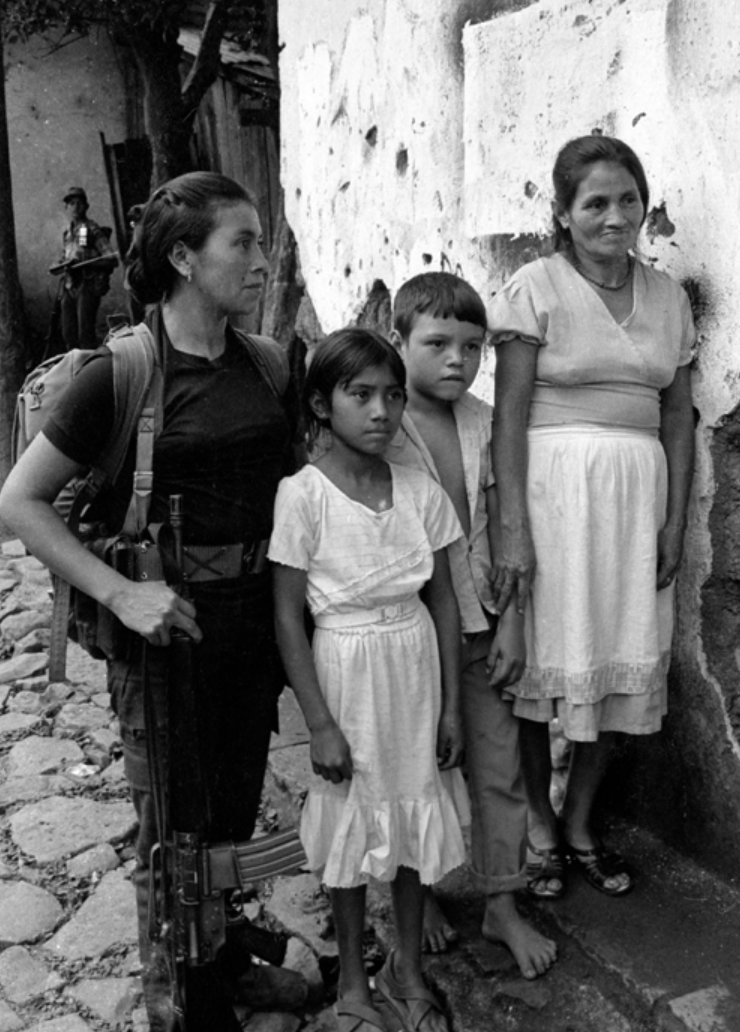
Young children fighting during the Salvadoran Civil War. Linda Hess Miller. CC BY 3.0.
Challenges to DNA-Based Reunification
The emotional complexity of reunification can stir painful emotions for children of reunified families. Following the Salvadoran Civil War, many of the reunifications occurred throughout adolescence, a critical time for identity formation. Adolescents firm in their transnational identity faced what Dr. Barnert described as “a reconfiguration of identity shaped by loss, time, and conflicting social realities.” Today, this emotional fragility echoes in reunifications of separated migrant families in the U.S., as well as families in Syria, Serbia and Ukraine.
Additionally, despite the pain of ambiguous loss, the psychological term for grief without closure, often experienced when a loved one is disappeared or kidnapped, distrust surrounding genetic testing lingers in many communities searching for disappeared family members. For instance, the priest of 80-year-old Consuelo proclaimed that it was a sin to donate DNA, while a lack of information surrounding how the sample would be collected and analyzed fueled distrust among many community members.
Despite these concerns, Dr. Barnert notes a general increase in awareness and trust in DNA-based reunification. Those involved in the process reflect on the immense healing of reunification, particularly when addressing the pain of ambiguous loss. Community plays a crucial role in the work of Pro-Busqueda in El Salvador and other DNA-based reunification NGOs, offering support-based groups with both reunified families and those still seeking missing children, as well as ample psychosocial support.
Beyond the fraught emotional tensions, logistical hurdles also remain. Cost, transportation and limited awareness strain the efforts, despite the relative simplicity of the testing itself. After swabbing one’s cheek, the sample is then de-identified and held in the genetic database. Researchers then analyze about 20 to 25 genetic markers. The odds of finding a match are “on the order of around one in a trillion unless two people are closely biologically related,” according to Dr. Huston, the leader of the Genetics and Justice Laboratory at Northwestern University.
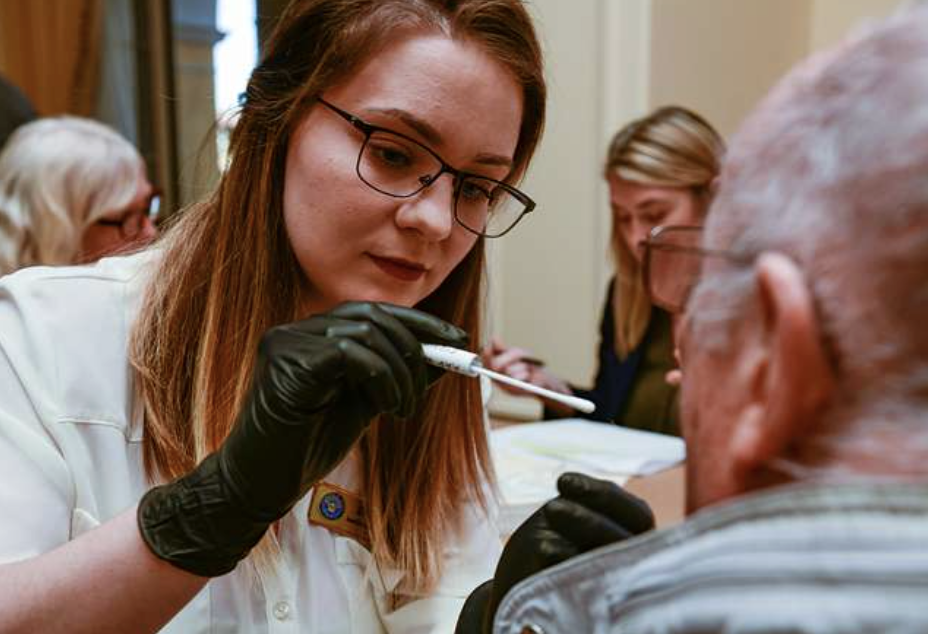
DNA collection using a cheek swab. Sgt. Michael O’Neal. CC0.
DNA-Based Reunification Around the World Today
Over 20 years have passed since Dr. Barnert initially set foot in El Salvador as a young medical student. Yet, she remarks that even today, “the human reaction to DNA transcends context,” a sentiment she finds repeated when speaking with those involved in DNA reunification around the world.
Today, the Netherlands has committed over $2 million for DNA testing in Ukraine, which will be used to create a genetic database capable of reuniting missing children quickly. Current estimates suggest that over 19,000 Ukrainian children have been taken throughout the war, many of whom have entered Russian education camps intent on erasing the childrens’ Ukrainian heritage and identity. In addition to providing firm evidence of missing children’s national heritage, the scientific immutability of DNA will be useful in the prosecution of war crimes.
As Dr. Barnert notes, “DNA unwinds uncertainty. The finality of genetic testing can force a government’s apology and can heal wounds, accelerating grieving or mending trust among reunited kin.”
GET INVOLVED:
Learn more about DNABridge, an NGO dedicated to creating an ethical international genetic database in order to reunite families.
Claire Garvin
Claire is a fourth-year student at Barnard College, Columbia University studying Neuroscience. She is interested in writing as a means of understanding the world, and she hopes to ignite meaningful change through her journalism. Outside of class, she enjoys baking, painting, and reading.