
By Mia Gooch
Whether through royal tradition or everyday coexistence, the presence of swans shapes daily routines across Europe.

A father and son at a lake in Austria, observing two large swans. Ahmet Yukset. Pexels.
A dream of romantic city life often draws people to Europe, as they presume that cafe terraces and shopping quarters are the most suitable way to experience local culture. Yet one of the continent’s most beloved attractions can be found gliding through rivers and waterways instead. The mute swan, or Cygnus olor, is an elegant white bird that has become inseparable from palace moats and lakes, protected and celebrated in many European cultures for centuries.
The sight of these swans captures the essence of medieval royalty, with writers having authored poems and myths about the majesty of these animals for hundreds of years. Long associated with royal protection, mute swans symbolize transformation and royal prestige in folklore. Fortunately for the travelers who take time to notice the overlooked, swans are everywhere in modern Europe. Travelers looking to experience a quieter side of Europe can find it in places where swans remain part of everyday life.
Wells, England: A City Shaped by Living Tradition
Despite being the smallest city in all of England, Wells is recognized for its natural springs and the moated Bishop’s Palace. Its most beloved residents are the mute bell-ringing swans, which have occupied the palace’s moat for generations. These swans are famous for ringing a bell when they want food, a tradition said to have been taught by the bishop’s daughter in the 19th century. Visitors can tour the palace to watch the swans ring for their meals and explore the gardens and grounds, wandering through the surrounding medieval streets. Though modest in size, its traditions with swans are long-standing.
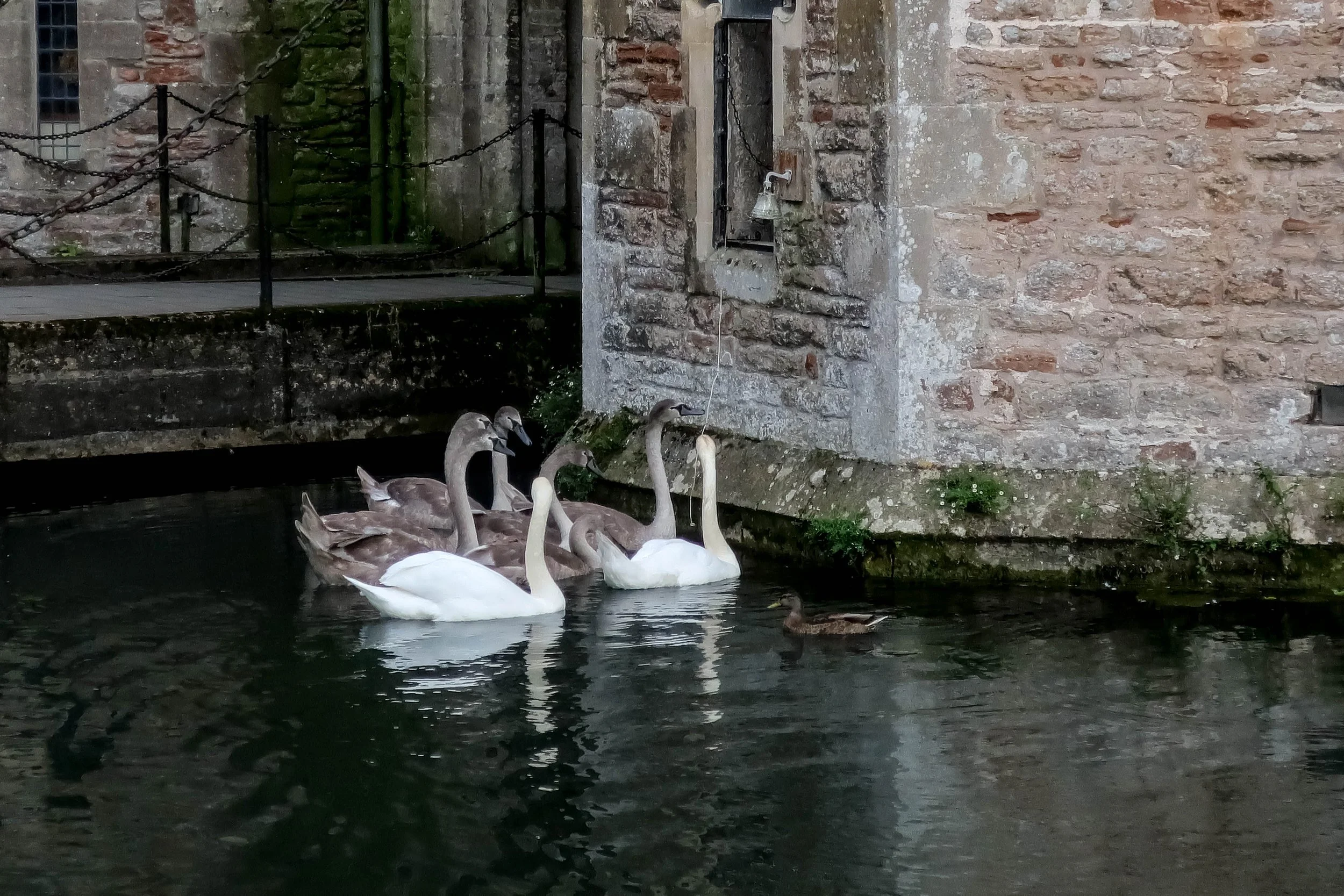
Swans ring bell for food. Niel Owen. CC BY-SA 2.0.
Vilnius, Lithuania: A City of Everyday Coexistence
While Wells celebrates its swans through centuries-old practices, swan sightings in Vilnius are much more subtle. Highly respected in Baltic folklore and literature, these swans glide through the Neris River in the heart of Lithuania, making nests for themselves and their cygnets along the riverbanks. Walking the city’s parks and riverwalks are some of the best ways travelers can spot these swans. However, swans here are not solely confined by the water’s edge, as they occasionally venture into the city on their own adventurous strolls. Local drivers are accustomed to exercising caution, a useful piece of advice for any travelers who may not expect these large birds to wander through streets. In Vilnius, swans are a part of everyday life.
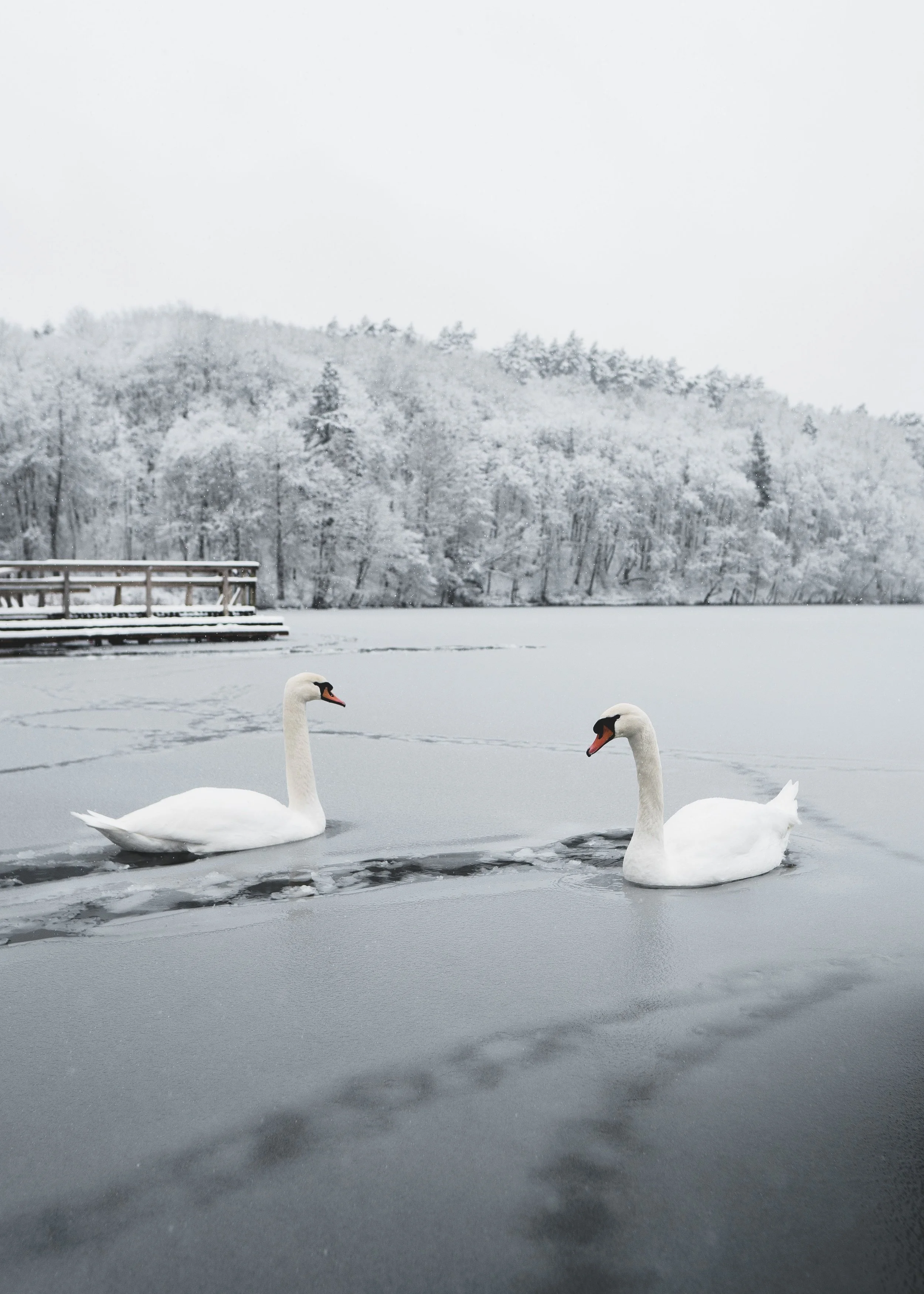
Two swans in Vilnius, Lithuania. Arturas Kokorevas. Pexels.
Abbotsbury, England: A Village of Swan Husbandry
Along the Dorset Jurassic Coast, Abbotsbury is a more reserved town known almost entirely for its swannery and gardens. Swan husbandry, or the care and management of swans and their habitat, at the Abbotsbury Swannery started around the 11th century. Today, the lands have been cared for by the Strangways family for 15 generations. For travelers interested in observing swans and taking in the salt air rolling in from Chesil Beach, Abbotsbury is a good place to start. Visitors can walk among one of the world’s oldest managed swan colonies while overlooking the coast.
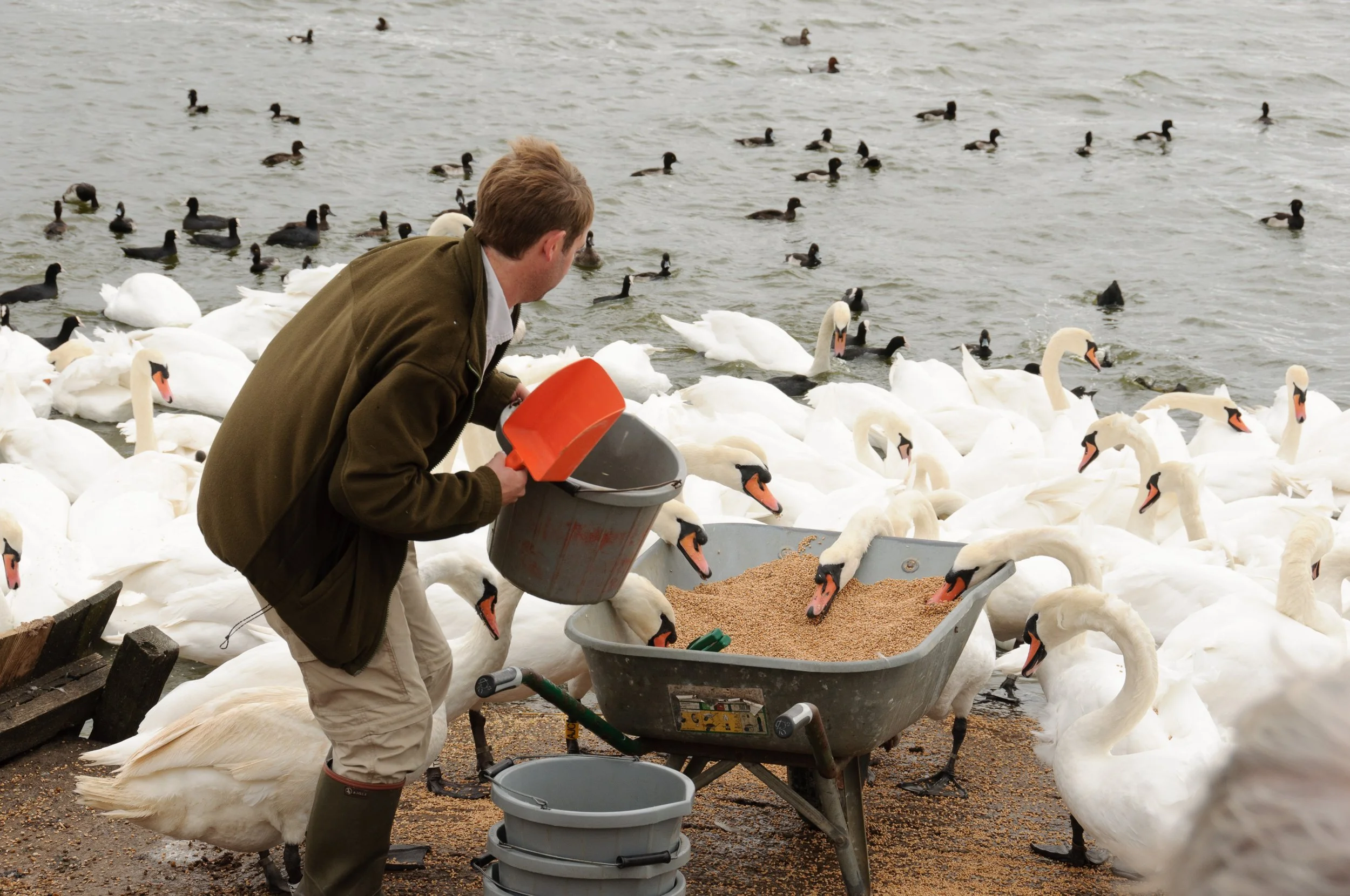
Swan handler feeding swans on the beach at Abbotsbury Swannery. Richard Gillin. CC BY-SA 2.0.
Bruges, Belgium: A City of Swans
Although Bruges is one of Belgium's most visited cities, many travelers miss the legend behind its famous avian residents. Known informally as the "City of Swans," Bruges pairs the famous attractions of massive stone towers and stained-glass windows with its floating population of protected birds.
According to local lore dating back to the 1400s, after the unfair execution of a city administrator named Pieter Lanchals, whose surname translates to "long neck" and whose coat of arms featured a swan, the town was royally decreed to keep swans on its waterways for eternity as an act of penance. Today, the city officially celebrates and protects its swans, which glide gracefully along the canals and Minnewater, the Lake of Love. Taking a canal cruise or strolling around Minnewater offers travelers a view of Bruges from an interactive, swan-centered perspective.

Peaceful scene of swans near a canal in historic Bruges, Belgium, under a clear blue sky. Ahmet Azakli. Pexels.
Swans are a living mirror into European history. They are part of customs that have endured throughout years of war, urban transformation and changing monarchies. Europe’s swans offer people a new way to experience the continent, one that rewards slowing down and paying attention to quiet traditions that are still alive today.
TRAVELING THERE:
The Bishop’s Palace (Wells, Somerset) is a medieval castle surrounded by 14 acres of gardens. It offers visitors outdoor theater, woodland trails and the famous resident swans who ring the Gatehouse bell for food.
Go Vilnius (Vilnius, Lithuania) offers extensive guides to the capital’s green areas and river paths, pointing out key areas along the Neris River for bird-watching.
Abbotsbury Swannery (Dorset, England) is the only site in the world where travelers can walk through a colony of nesting mute swans. It is open seasonally for feeding demonstrations and coastal strolls.

Mia Gooch
Mia a student at the University of North Carolina at Chapel Hill, majoring in Media & Journalism with a double minor in Education and Social & Economic Justice. She’s passionate about informal education and creating fun experiences where people of all ages can explore new perspectives and develop new skills. When she’s not in the classroom, she loves contemporary dance classes, spending time with friends and family, baking, and being outdoors!