
By Kate Dawson
Governments make promises, and communities must live with the consequences when those promises fail. Social Watch exists in the space in between.

Post-election protests. Jelger Groeneveld. CC BY 2.0.
Social Watch is an international network of citizens’ organizations. The network is dedicated to eradicating poverty, discrimination and holding governments and international institutions accountable for their social development commitments.
Formed in 1995, the Social Watch global network demonstrates how grassroots beginnings can successfully hold governments accountable. It coordinates local activist groups known as “watchers” across over 80 countries to document whether the country is upholding its promises.
The network publishes annual report synthesizing findings from the local grassroots communities as a tool for diplomatic advocacy at the United Nations.
Social Watch is important because it bridges the gap between high-level international promises and local reality. It gives citizens a voice to keep accountability present when global commitments to end poverty and discrimination are often ignored. Governments frequently sign international treaties that are not followed at home. Social Watch monitors these promises from the ground up, which forces leaders to answer for their political inaction.
The network elevates data gathered by local activists directly to the United Nations, giving small and marginalized communities a global platform that would be difficult to achieve alone.
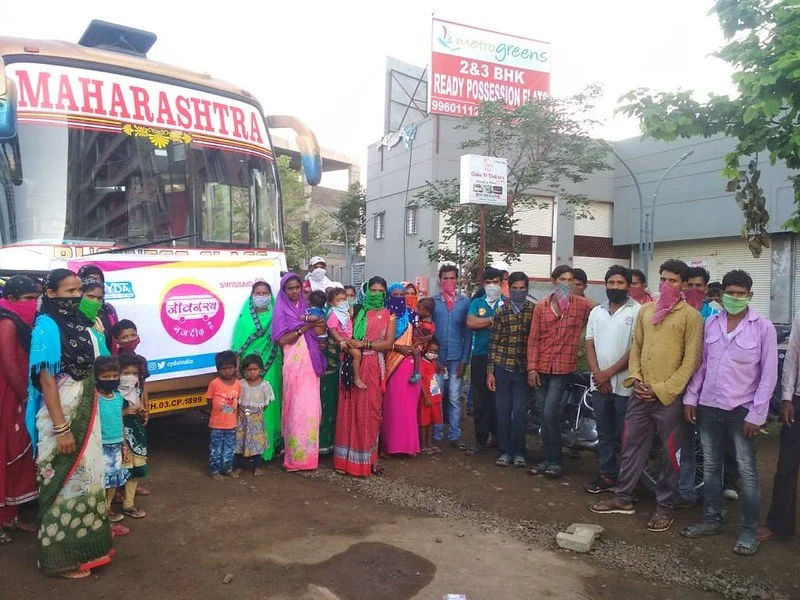
A group of migrants gathered awaiting aid. Jeevan Rath. CC BY-NC-SA 2.0.
Additionally, Social Watch is critical for exposing hidden inequalities. Traditional economic metrics such as gross domestic product, or GDP, hide inequality.
This problem is highlighted in the Nordic paradox. The Paradox is a phenomenon in which even highly progressive nations conceal their structural inequalities, such as persistent gender wage gaps in high-employment economies or hidden areas of social exclusion.
Even model countries have these hidden inequalities. Countries including Denmark, Sweden and Norway consistently top global indices for social mobility, gender equity and public welfare. However, they also report high rates of gender-based violence. While these countries are frequently used as benchmarks for their high levels of gender equality, Social Watch coalitions can help draw attention to these contradictions.
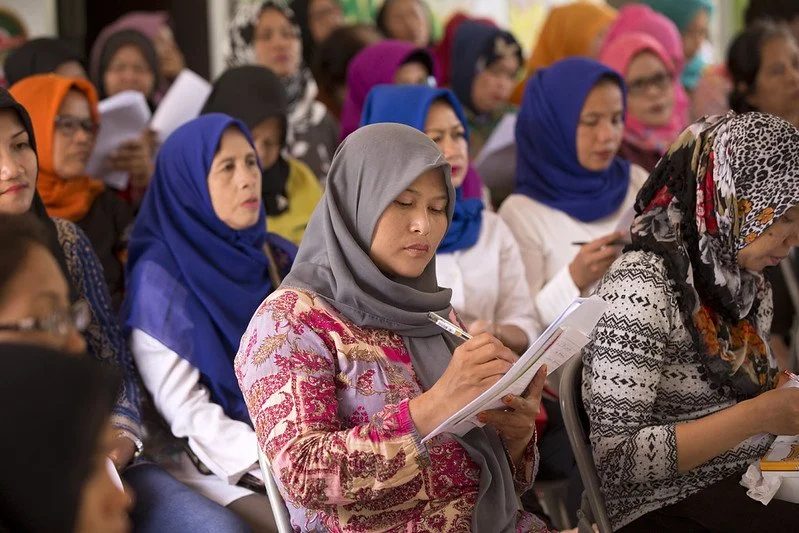
UN Women’s community meeting. UN Women, Ryan Brown. CC BY-NC-ND 2.0.
Individuals should support Social Watch’s structure because it protects public resources, fights for gender equality and strengthens local democracies. Exposing inequality is only one part of Social Watch’s work. The other is proving that accountability can fix broken systems.
For example, a partner of India’s Social Watch branch, the Centre for Youth and Social Development, had significant success with community-led monitoring. The Public Distribution System, or PDS, in India was originally designed to provide subsidized grains to low-income households. The PDS suffered from a leakage, with grains being stolen, diverted to the open market or simply lost to spoilage.
Nearly 28% of subsidized grain never reached the families it was meant to feed, which resulted in significant economic losses.
Local groups tracked grain quality, quantity and delivery patterns. Within two years, leakage dropped to nearly zero. The improvement was not driven by new technology or sweeping legislation. It was driven by communities backed with data, thanks to Social Watch.
By bridging the gap between global promises and local action, Social Watch ensures that the fight for a fairer world remains rooted where it matters most: in the community.
GET INVOLVED:
People do not need to be international policymakers to apply Social Watch’s strategies. Local communities can audit local commitments by identifying social progress, gender equity or climate goals a city council or state government has pledged to uphold. By collecting local metrics, individuals can transform the data into infographics or reports that highlight transparency.
Additionally, there are ways to connect existing civic groups with the Social Watch network by joining a national coalition. Social Watch has members and coalitions in over 80 countries.
Education is critical, and Social Watch’s published indexes, such as the Gender Equity Index and the Basic Capabilities Index, can be used to support local advocacy work.

Kate Dawson
Kate is a student at the University of North Carolina at Chapel Hill, double majoring in Public Policy and Journalism. Her passion to share stories and love for environmental justice inspires her writing. She hopes to change the world by empowering others.