
By Amy Schrier
The GX Conference goes to Cambodia for 2026.
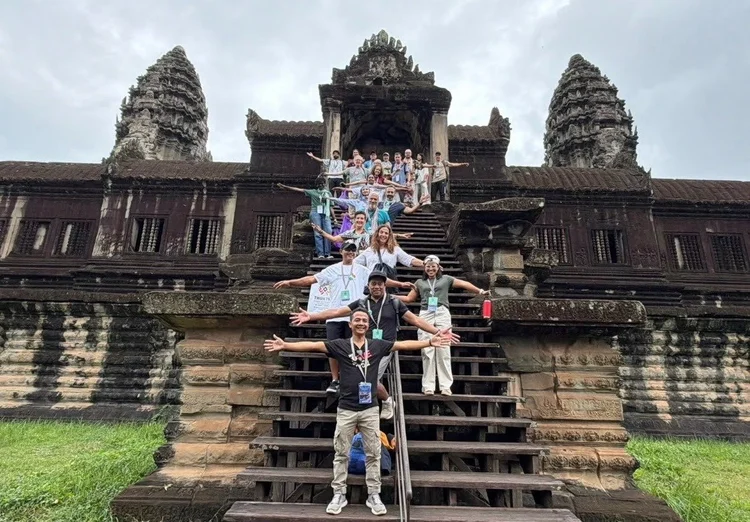
A group of GX participants at Angkor Wat. Courtesy of G Adventures.
This September, I attended my first GX World Community Tourism Summit, a dynamic travel conference and experience hosted by G Adventures and attended by travel changemakers from around the world. Held in connection with UN World Tourism Day, the six-day experience brought together more than 600 travel journalists, content creators, travel industry experts, sustainable tourism leaders and social-action figures.
The journey began in Phnom Penh with the “Festival Fair,” an opening event at Wat Phnom, a historic Buddhist temple and one of Cambodia’s most famous landmarks, and continued with visits to community tourism projects across Cambodia, from Phnom Penh to Siem Reap. It culminated on Sept. 27, World Tourism Day, with a full-day conference centered around one big question: Can travel change the world?
Much of the week focused on G Adventures’ approach to community tourism. The company works closely with its nonprofit partner, Planeterra, which supports locally led enterprises around the world that provide social benefits through training, education, women's empowerment, environmental initiatives and other programs. Planeterra helps these organizations build their capacity and connects them with G Adventures and other tour operators that incorporate visits into their itineraries.
What Planeterra has achieved to date is no less than impressive. By the end of 2025, it had integrated 276 community tourism projects into travel itineraries, facilitated more than 120,000 traveler visits to these partners and generated over $2.3 million in revenue for the participating communities. By bringing travelers directly to these organizations, tour operators create a steady stream of customers and income. The idea is simple: use tourism not just to see a place, but to direct more of its economic benefits into the hands of the people who actually live there.
Community Tourism in Action
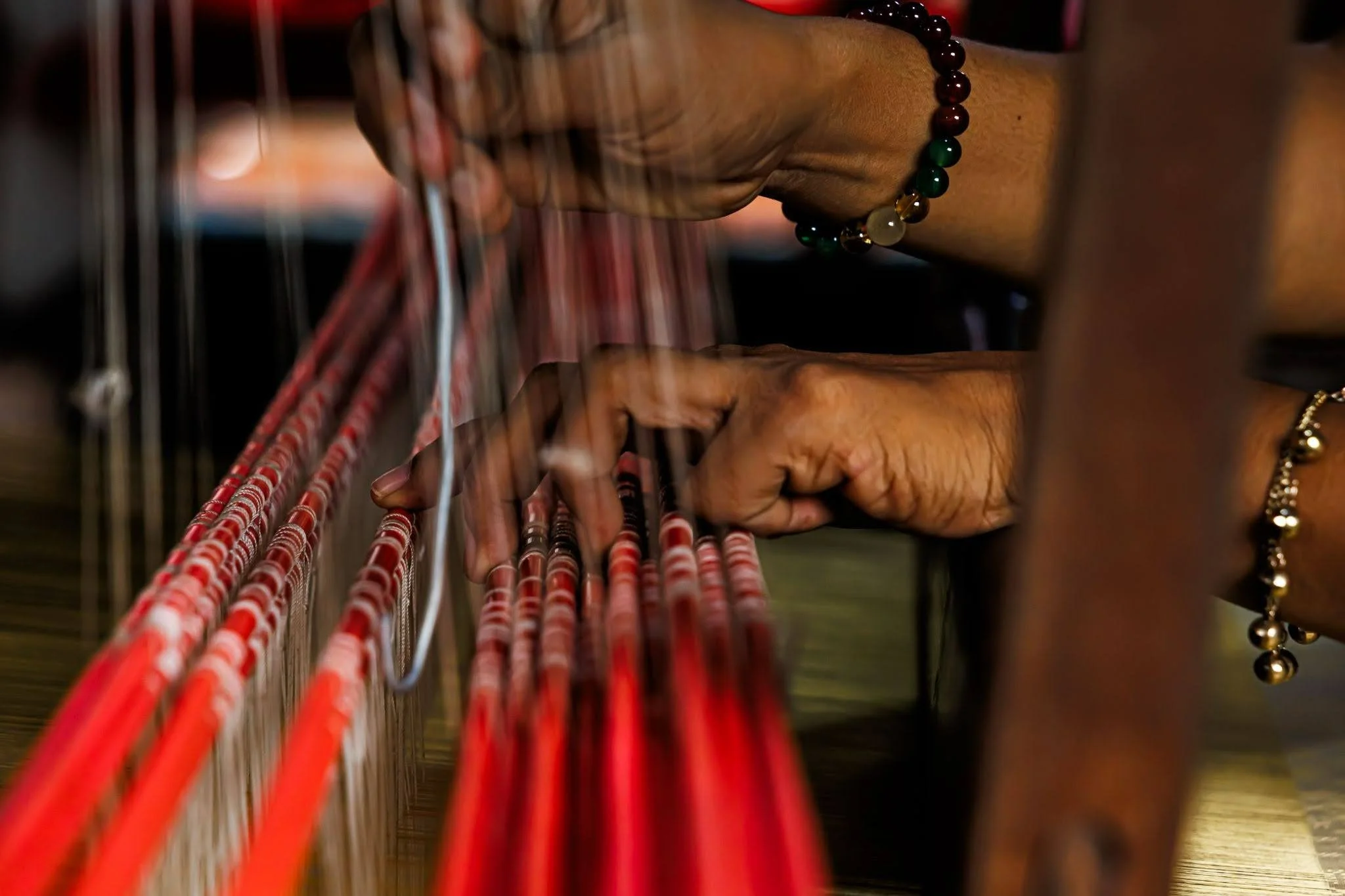
Weaving at Silk Island. Courtesy of G Adventures.
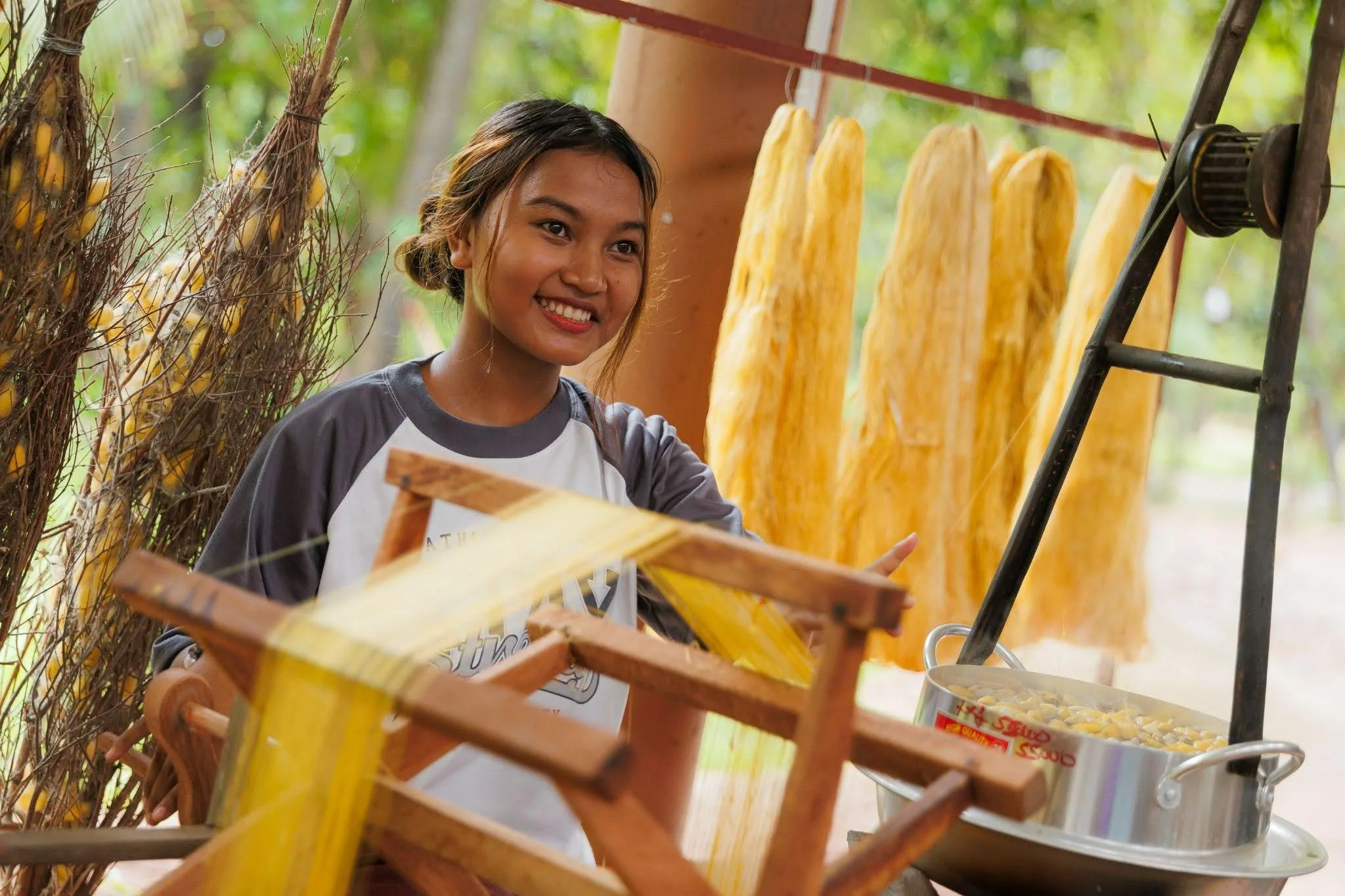
A weaver at Silk Island. Courtesy of G Adventures.
During GX, we visited several of these social enterprises.
Our first was the Silk Island Community Centre. More than 300 women earn income through the enterprise, including weavers working at the center and artisans working from their homes. Traditional silk weaving provides valuable income for women in a rural community while helping preserve a Cambodian craft passed down through generations.
We watched the women work at their looms, learned about the silk-making process and purchased their work; the same kind of experience G Adventures travelers have when visiting community enterprises on regular tours.
We also visited Kampong Phluk Floating Village, about an hour from Siem Reap, exploring the community by boat. Here, houses are built on towering 30-foot stilts to accommodate the dramatic rise and fall of water levels between the rainy and dry seasons. Residents rely on boats for nearly everything, from visiting neighbors to reaching schools, medical clinics, temples and food markets.
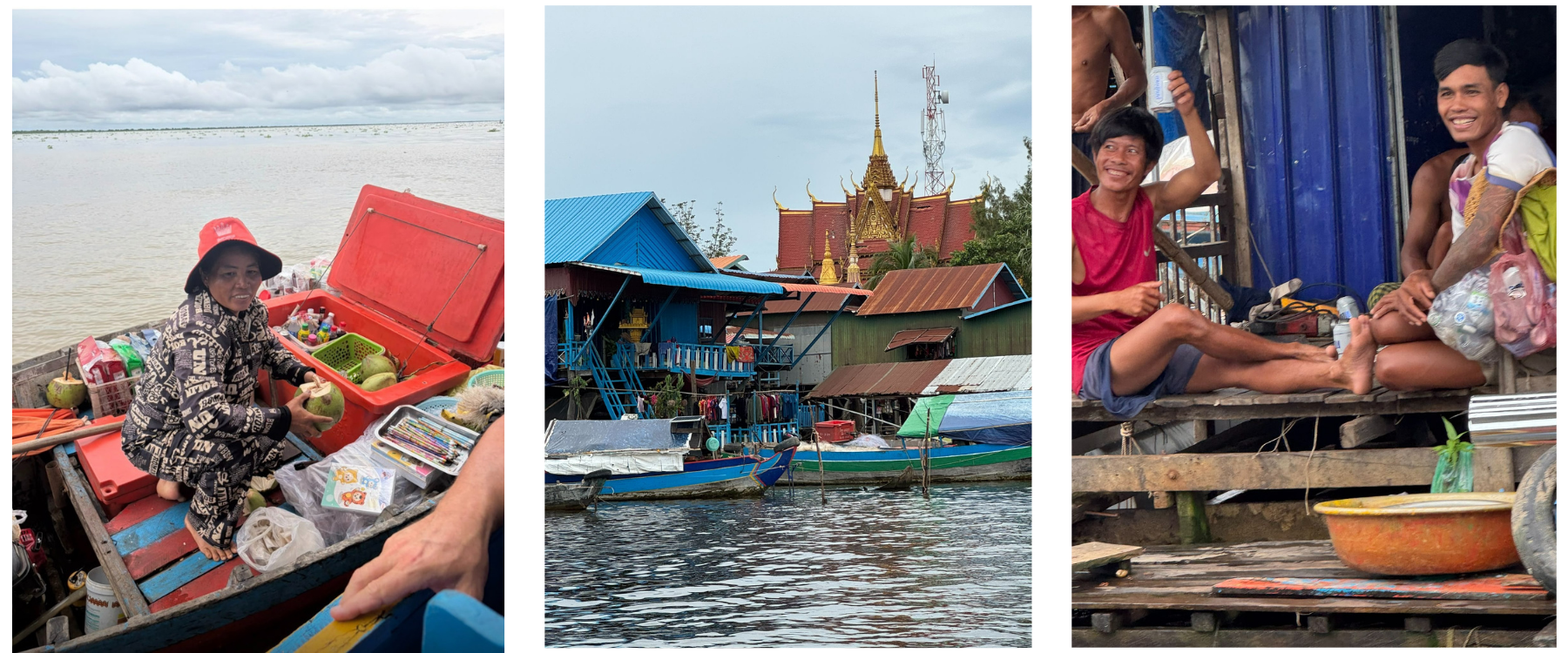
Houses and residents in Kampong Phluk. Amy Schrier.
Tourism has become an important source of income for the community, bringing visitors to experience this unusual way of life. We also learned about a local environmental initiative in which young people visit homes to educate residents about plastic pollution and organize monthly waterway cleanups. The program, organized by the NGO Bamboo Shoots Foundation, offers an example of how community education and environmental stewardship can help protect the waterways on which residents depend.
We also visited SPOONS Cambodia, a restaurant and hospitality-training program in Siem Reap that provides disadvantaged young adults with vocational training. They have helped over 600 young adults launch hospitality careers, and 100% of restaurant profits support its training program. Our entourage ate a meal there, giving us an idea of how a small-group tour can contribute: travelers enjoy Cambodian food, learn about the organization’s social mission and, simply by eating lunch, drive income to the program.
The last social program we visited was perhaps my favorite.
In Cambodia, the tuk-tuk, a small motorized vehicle carrying several passengers, is one of the primary forms of local transportation. Driving them has traditionally been an overwhelmingly male occupation. Tuk Tuk Lady Driver, founded by Cambodian entrepreneur Kim Sokleang, is changing that.
A single mother of two, Sokleang began driving to support her children and eventually created an organization that provides other women with opportunities to earn independent incomes. Planeterra has provided the group with training and mentoring and connected it with travelers who need their services.
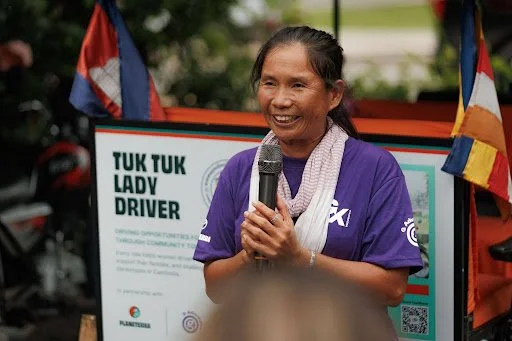
Kim Sokleang, Founder of Tuk Tuk Lady Driver. Courtesy of G Adventures and Lucas Kschischang.
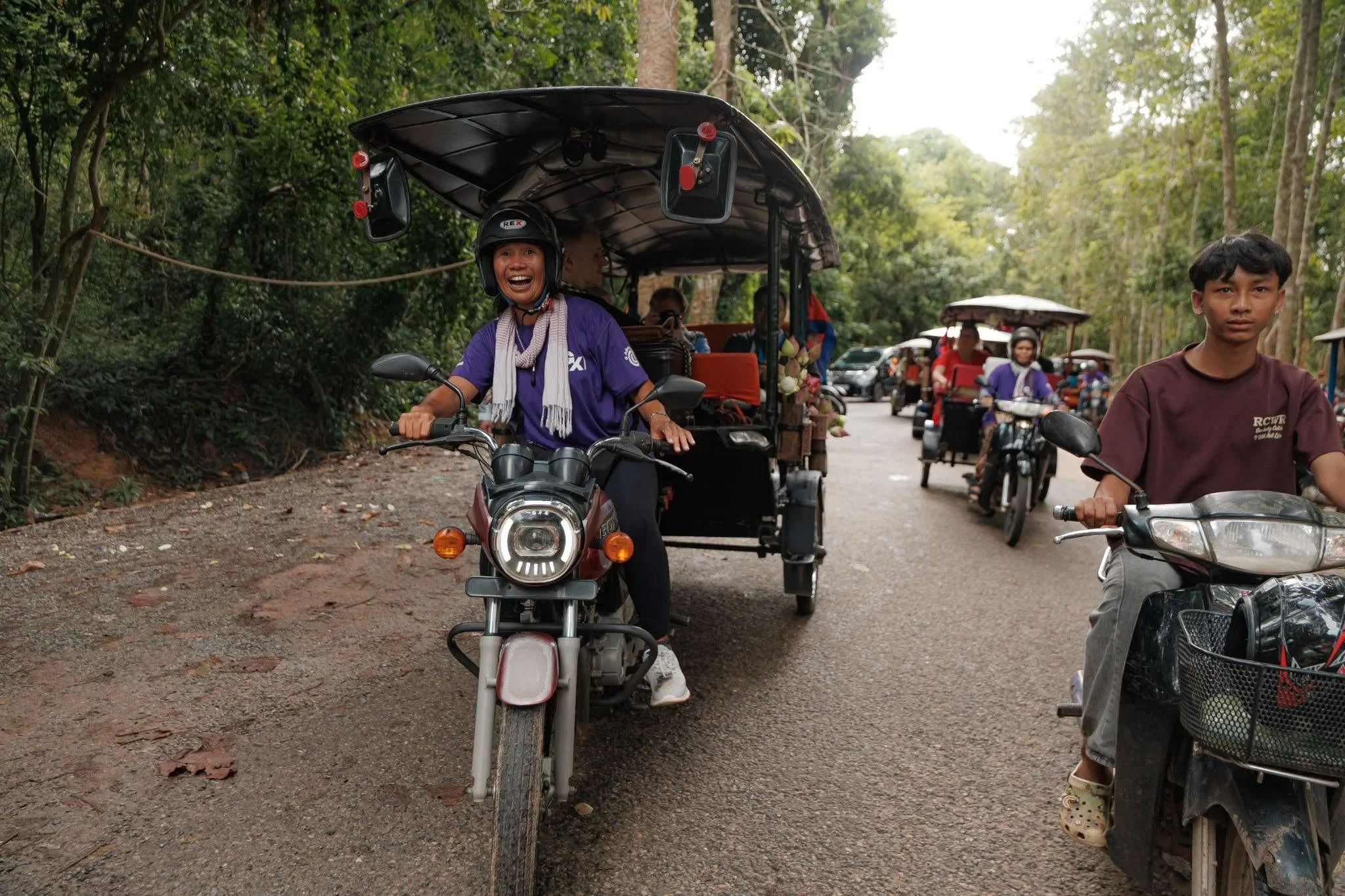
At 4 a.m. one morning, women from Tuk Tuk Lady Driver transported us through the darkened streets of Siem Reap to watch the sunrise at Angkor Wat, just as the women transport travelers on regular G Adventures tours. Later we heard Sokleang speak. She was so moved discussing the opportunities tourism had created for her and the other women drivers that she was almost brought to tears. It was community tourism in its most basic form: travelers need transportation; local women provide it; tourism creates employment.
Who Really Benefits From Tourism?
These programs provide evidence that tourism can drive positive change in local communities. But the question is more complicated than that.
Tourism has increasingly come under criticism for overtourism, rising housing costs, pressure on local resources, environmental degradation and the commercialization of cultures. Indigenous and other local communities can sometimes become something travelers come to photograph and observe rather than people who have a meaningful say in how tourism develops around them.
Then there is the environmental cost of travel itself. UN Climate Change reports that tourism is responsible for approximately 8% of global greenhouse-gas emissions, according to a 2022 study.
So it is a legitimate question: Is tourism ultimately a positive or negative force for local communities?
The economic argument for tourism is enormous. Travel and tourism contribute trillions of dollars to the global economy each year. In Cambodia alone, tourism receipts totaled approximately $3.6 billion in 2024.
But how much of that money actually remains in the communities travelers visit?
This is known as tourism leakage, money spent on a trip that ultimately flows out of the destination through foreign-owned hotels, tour operators, airlines, imported goods and other international businesses. UN Trade and Development has estimated that leakage in developing countries can average between 40% and 50% of gross tourism earnings.
That is what makes the community-tourism model particularly interesting. It intentionally creates opportunities for more tourism spending to reach local businesses, guides, drivers, artisans and social enterprises.
Planeterra is now attempting to measure whether this approach actually works. At GX, the organization unveiled its new Community Positive Framework, designed to create a community-informed method for defining and measuring tourism’s impact. Rather than allowing travel companies alone to decide what constitutes “positive tourism,” the initiative will ask communities themselves what positive impact looks like.
It will be fascinating to see what they discover, and whether those findings change the way travel companies operate.
Experiencing Cambodia
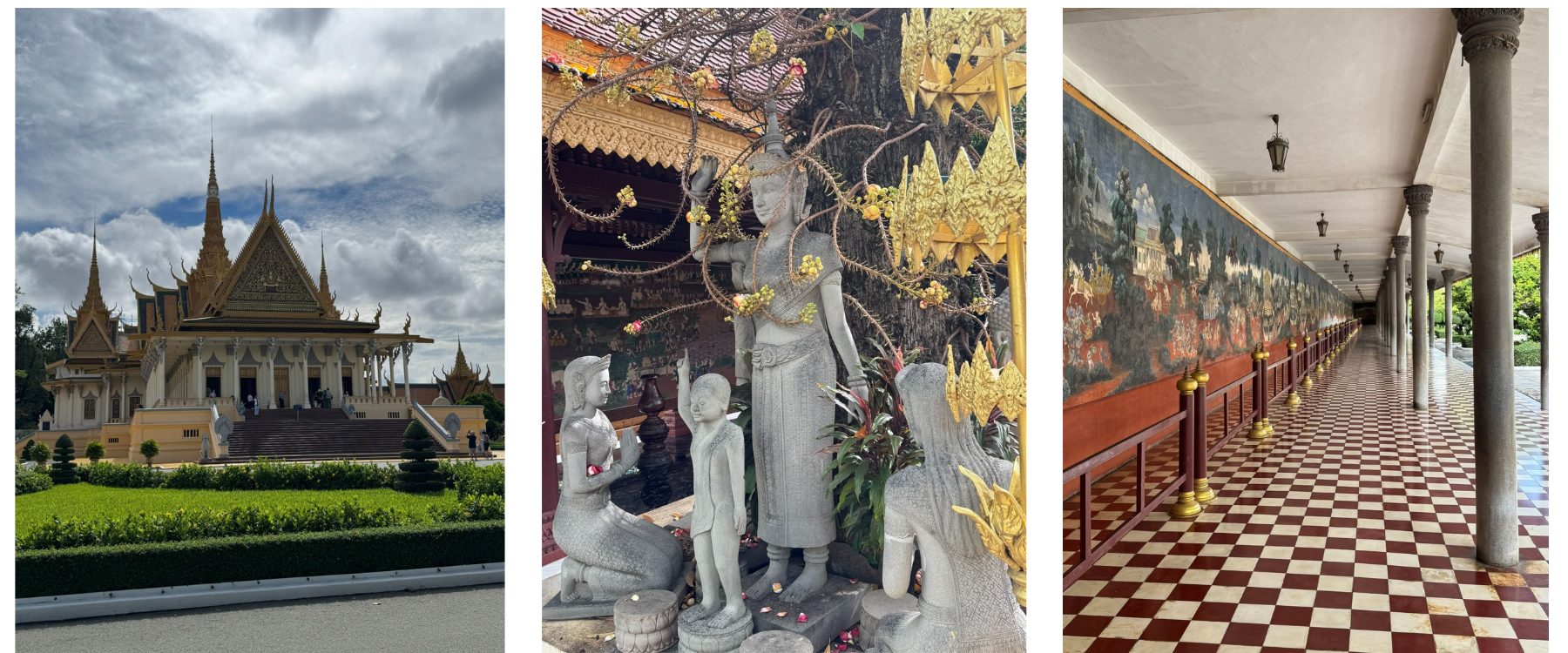
Royal Palace, Phnom Penh. Amy Schrier.
The GX experience went far beyond learning about community tourism. It also brought us to some of Cambodia’s most extraordinary places.
In Phnom Penh, we visited the Royal Palace, whose construction began in the 1860s and is still the official royal residence in Cambodia’s constitutional monarchy, and the adjoining Silver Pagoda, named for the thousands of silver tiles covering its floor. We traveled by boat along the Mekong to Silk Island and eventually made the long journey north toward Siem Reap.
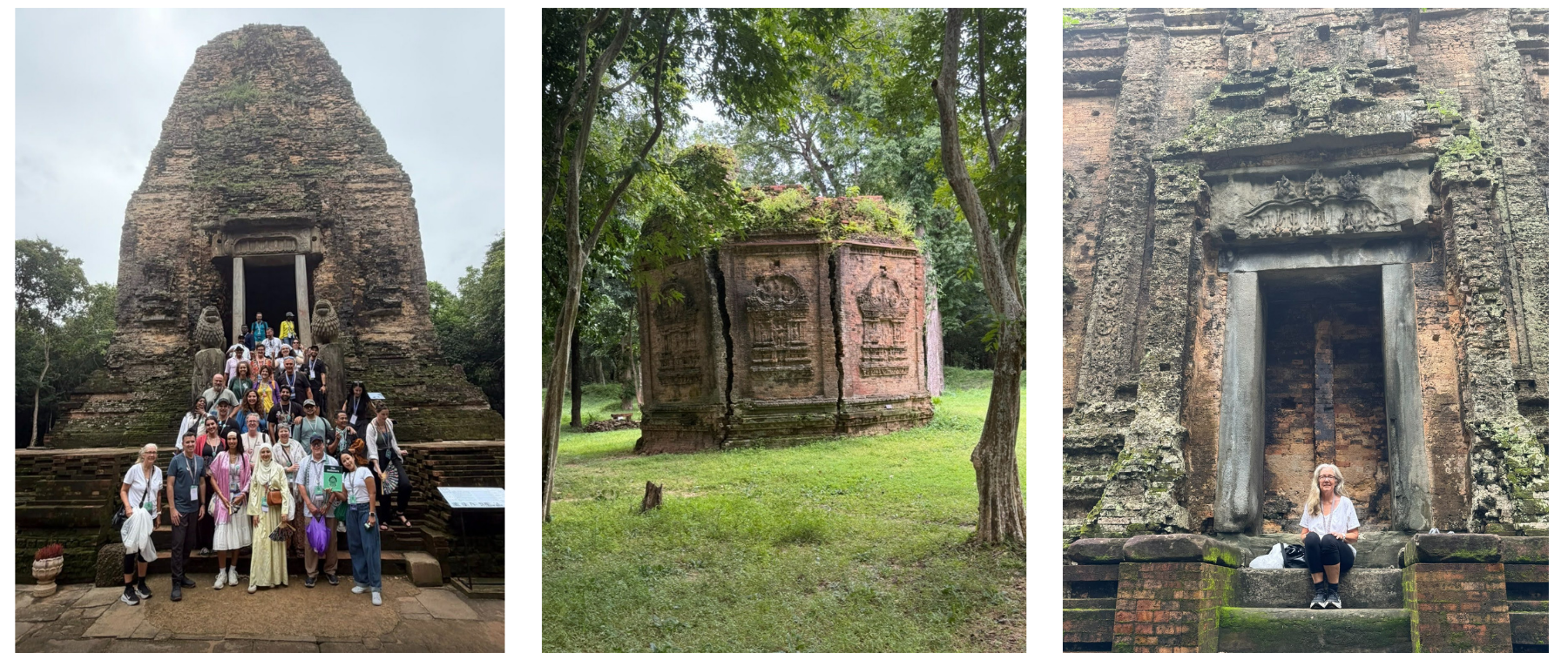
Left: Sambor Prei Kuk. Courtesy G Adventures. Middle and Right: Sambor Prei Kuk. Amy Schrier
Along the way, we stopped at Sambor Prei Kuk, a UNESCO World Heritage site that was once Ishanapura, capital of the Chenla Empire in the seventh century. Its more than 100 ancient temples helped lay the foundations for the later Khmer architectural style that reached its extraordinary height at Angkor.
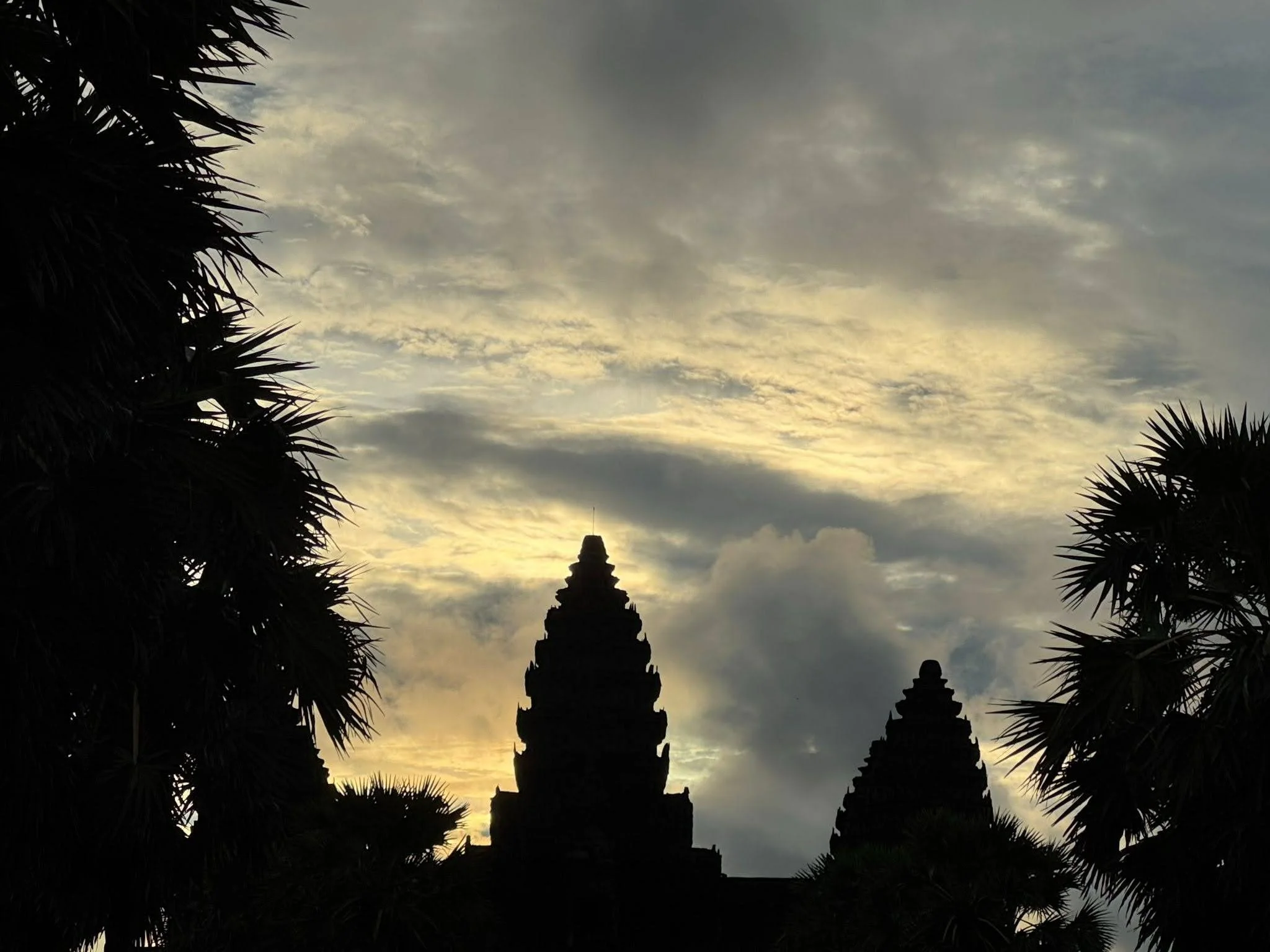
Angkor Wat at sunrise. Amy Schrier.
Then came Angkor Wat.
We rose at 4 a.m. and traveled by tuk-tuk through the darkness to arrive before sunrise. Built in the early 12th century under King Suryavarman II, Angkor Wat covers roughly 400 acres and is considered the largest religious monument in the world. It took 300,000 workers and 6,000 elephants to build it. Originally constructed as a Hindu temple, it gradually became Buddhist and remains an active religious site today.
The culmination of the trip was extraordinary, with a closing celebration overlooking Bayon Temple. The ancient structure was illuminated in G Adventures’ signature purple as hundreds of GX participants, along with Cambodian dignitaries, gathered for Asian food, drinks and traditional Khmer performances. It was unlike any party I had ever attended.
Can Travel Change the World?
The final day was devoted to the World Community Tourism Summit, with talks from changemakers and travel leaders from around the world.

Bruce Poon Tip and Dan Christian recording the Travel Trends Podcast. Amy Schrier.
It began with G Adventures founder Bruce Poon Tip being interviewed live by Dan Christian, founder and host of the Travel Trends Podcast. Bruce founded G Adventures in 1990 and has since built it into a global small-group travel company with community tourism at the center of its philosophy. He explained the motivation for holding the event in Cambodia, “Cambodia is one of those places where your tourism dollars can make a meaningful difference.” He spoke about travel as an opportunity for learning and cultural exploration, and his emphasis on showing travelers how to be “explorers not tourists.” One of his comments in particular stayed with me: “If you seek the comforts of home, stay home.” Lastly, he spoke about how travel can be a path toward peace, “if everyone traveled, they would, like when you come here to Cambodia… you see the humanity here. They have a different religion, they have a different belief system but we are connected and we share this beautiful world of ours.”
The theme of responsible travel continued with Australian travel writer Nina Karnikowski, author of “Go Lightly” and “The Mindful Traveller,” who spoke about lessons learned during a lifetime of travel. When visiting communities, she emphasized, don't simply arrive, photograph people and leave. In Ethiopia, she learned the value of first saying hello and sharing a cup of tea. “Chase meaning, not the perfect shot.” She also cautioned travelers about wildlife tourism: “When animals are used for entertainment, most likely there is suffering behind it.”
Perhaps most interestingly, she spoke about questioning the assumptions we carry with us. Western travelers can arrive in communities with fewer material possessions and modern conveniences and assume that people must be unhappy. She described meeting women in Papua New Guinea and talking about the anxieties many Westerners live with: money, stress, appearance and fitness. Their response? “We know how lucky we are.” When traveling, sometimes the most important moments come when our assumptions are turned upside down. And, she reminded us, carrying a reusable water bottle does not cancel out all the environmental consequences of flying around the world.
G Adventures launched “How to Travel Your Heart Out,” in partnership with Nina, a responsible-travel guide offering 35 practical suggestions covering wildlife, Indigenous communities, photography, social media, environmental responsibility and supporting local economies.
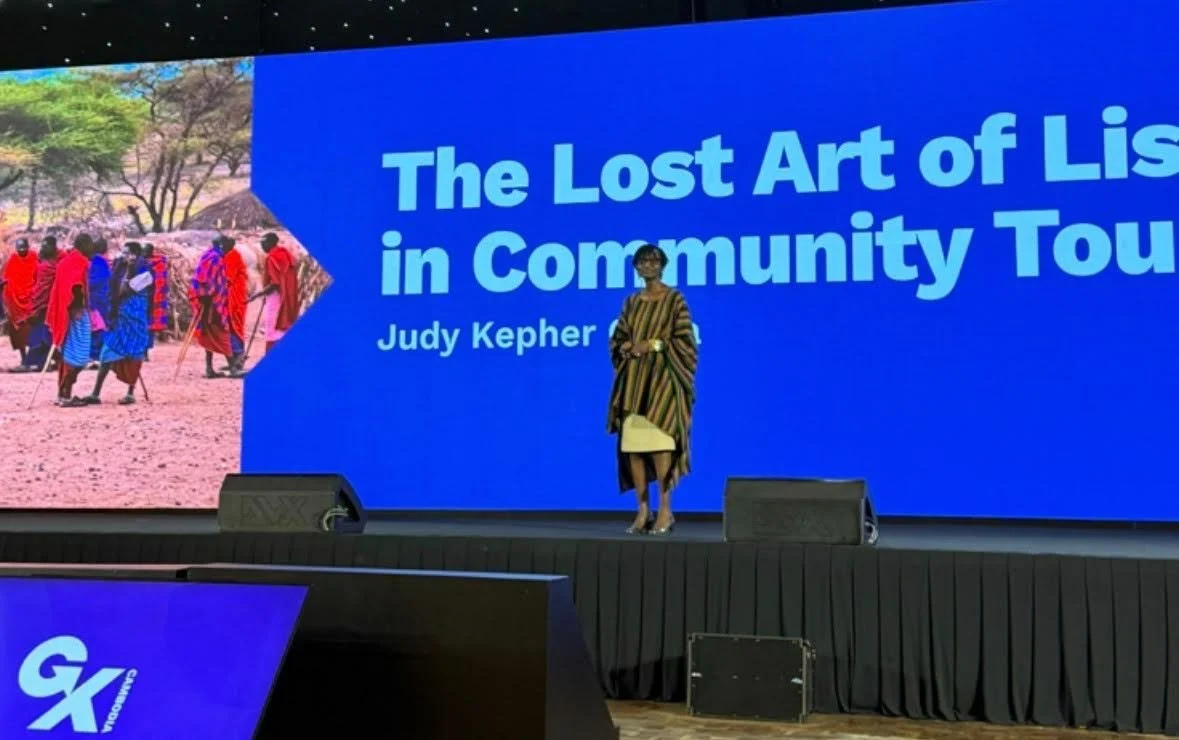
Judy Kepher Gona. Amy Schrier.
Another highlight was the announcement of G Adventures’ newest global ambassador, Kenyan sustainable-tourism leader Judy Kepher Gona. Gona has spent more than two decades working at the intersection of tourism, conservation and community development. Her work emphasizes a deceptively simple idea: tourism projects need to listen to the communities affected by them rather than arriving with predetermined ideas about what those communities need. She joins prior Global Ambassadors Tony Wheeler, co-founder of Lonely Planet; the late Dr. Jane Goodall; and Delfin Pauchi Uhigua, an Indigenous spiritual leader and medicine advisor from Ecuador’s Amazon region.
G Adventures also previewed Bazaar, a new digital platform expected to launch in spring 2027 around what the company calls “micro-community travel.” The concept turns the traditional process of choosing a tour somewhat upside down. Instead of selecting only by destination and departure date, travelers will be able to discover trips based on the people they want to travel with and shared interests, from photography and music to fitness and identity. Rather than first asking “Where do I want to go?” travelers can ask, “Who do I want to experience the world with?”
Planeterra President Jamie Sweeting also announced that Project 300 had passed its halfway point, with 160 community tourism enterprises now incorporated into G Adventures itineraries. Also highlighted was Trees for Days, through which more than 6.7 million trees have been grown on behalf of G Adventures travelers, one tree per traveler per day.
So, Can Travel Change the World?
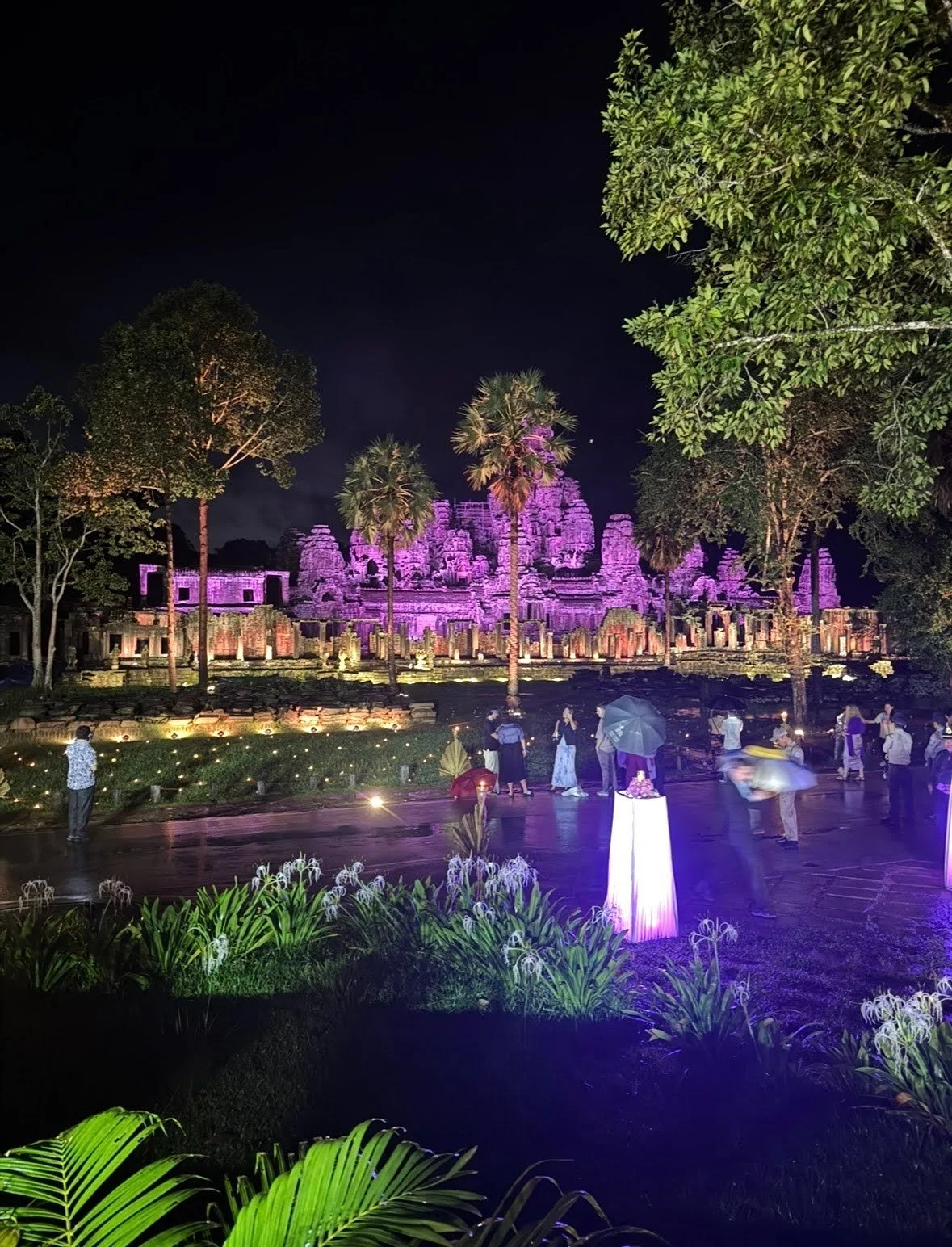
Bayon Temple, GX closing party. Amy Schrier.
Over six days in Cambodia, the answer increasingly seemed to be yes, but perhaps not simply because we travel.
Travel changes the world depending on how we travel, where our money goes, how we interact with the people whose homes we are visiting, what we demand from travel companies and whether communities themselves have a meaningful voice in deciding what tourism looks like. In Cambodia, we experienced some of those possibilities firsthand, and had an amazing time doing it. I met changemakers from Kenya, Morocco, Spain, Argentina, Canada, the United Kingdom, South Africa and many other places. We shared ideas, traveled together, learned about each other’s work and formed connections that will outlast the six days we spent in Cambodia.
Hopefully, many of them will continue. And perhaps we will reconnect when GX heads to Brazil in September 2027.
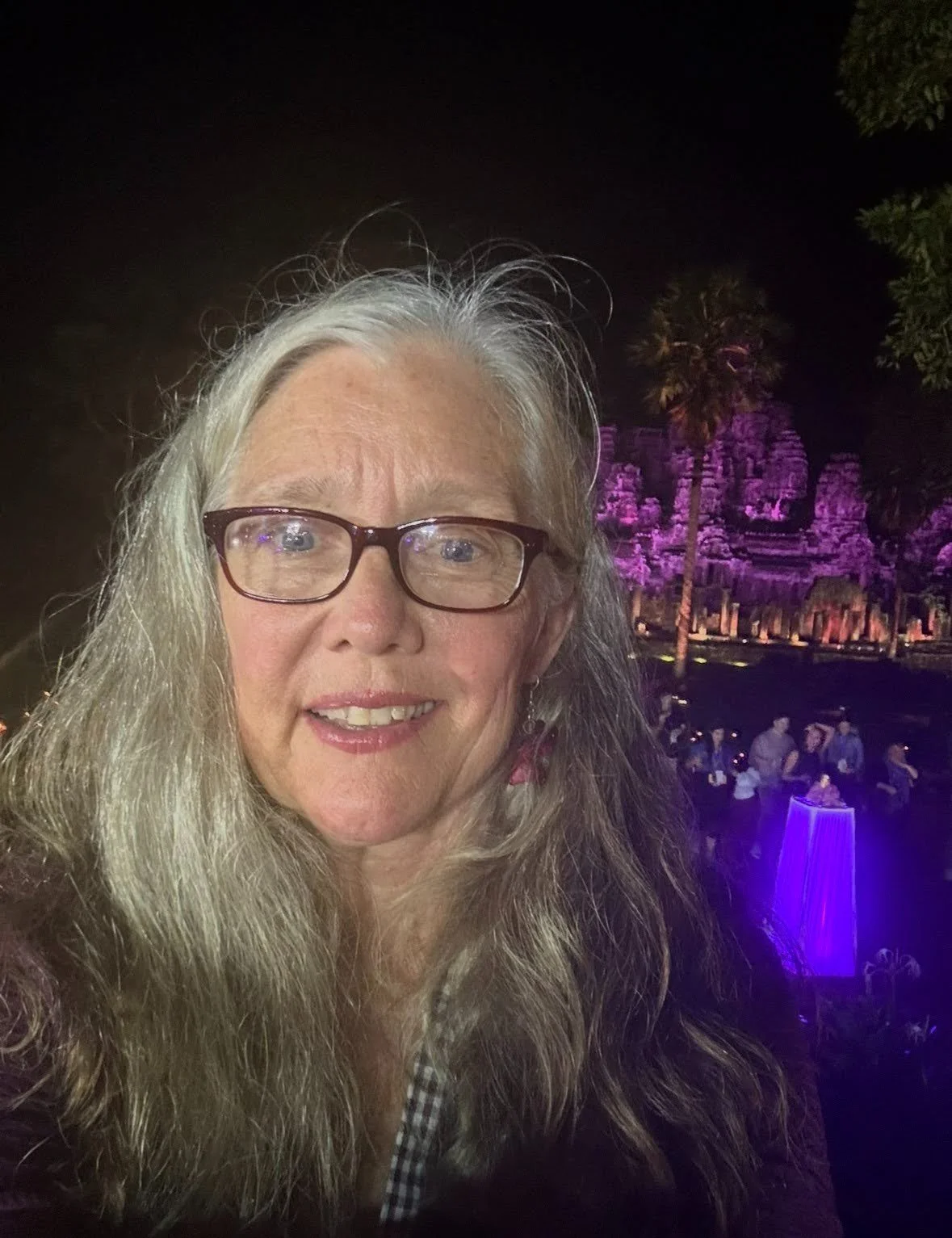
Amy Schrier:
Amy is founder and CEO of CATALYST PLANET. An entrepreneur, editor and lifelong traveler, she has traveled to over 40 countries as well as founded three media ventures in the travel and social action space.