
By Julia Sassaman
Global heat waves claim an estimated 489,000 lives each year while rising temperatures intensify wildfires, floods and tropical cyclones.

Extreme heat warning issued in New Jersey, U.S., in July 2026. Famartin. CC BY-SA 4.0.
June 2026 ranked as the second hottest June ever recorded globally, surpassed only by June 2024. Average global temperatures reached 1.49 C (2.67 F) above preindustrial levels, nearing the 1.5 C threshold that many nations pledged to avoid over the long term under the Paris Agreement. The past 11 years have been the warmest ever, fueled largely by human-caused climate change and global emissions.
Rising temperatures, extreme heat and heat waves can worsen preexisting health conditions and chronic illnesses, particularly among children, older adults and people with cardiovascular disease, diabetes or asthma. Heat stress also raises the risk of heat stroke, dehydration, fatal accidents and the spread of infectious diseases.
As the leading cause of weather-related mortality worldwide, heat stress was associated with approximately 489,000 deaths each year, according to a study published in The Lancet Planetary Health journal. More than half of these deaths occur in Asia (52.1%), followed by Africa (25.87%), Europe (14.3%), and the Americas (7.29%).
In Asia, warming occurs at twice the speed of the global average, particularly in its northern and central regions. Research published in Frontiers in Environmental Health estimated that one day of extreme heat in India could produce up to 3,400 deaths. The same study found that a five-day heat wave could result in 30,000 nationwide deaths. During May 2026, temperatures in Banda, Uttar Pradesh, climbed to 48 C (118.4 F), negatively affecting public health, local businesses and agriculture.
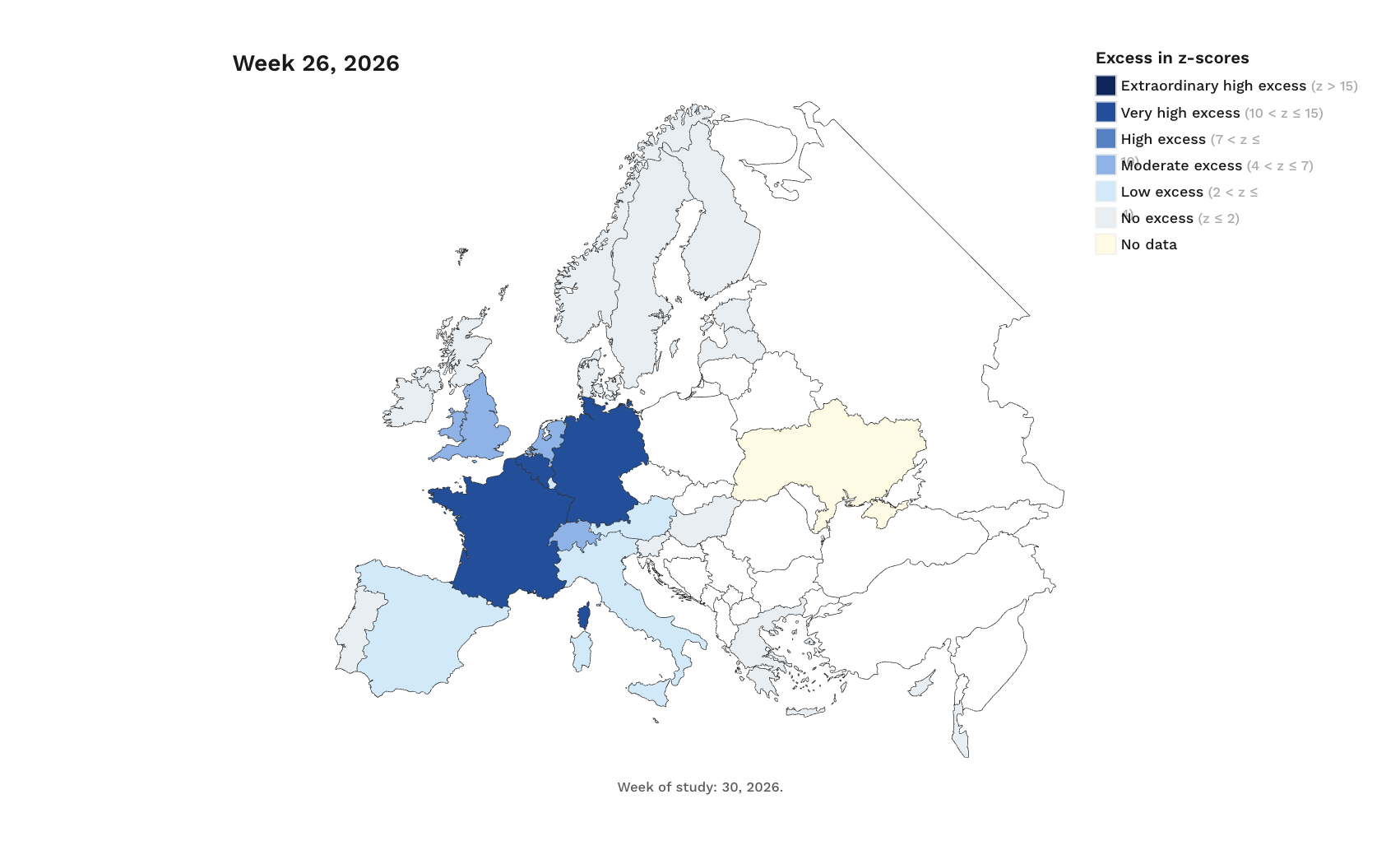
Excess mortality data during week 26 of 2026. EuroMOMO.
Europe is also experiencing record heat waves, with June 2026 marking the warmest June on record. Temperatures exceeded 40 C (104 F) in France, Spain, Hungary, the Czech Republic, Poland, Austria and Germany. Between June 22 and 28, EuroMOMO reported approximately 10,650 excess deaths across Europe, many of them associated with the ongoing heat wave.
Beyond heat stress, extreme heat creates hotter and drier conditions that increase wildfire risk. In June and July 2026, widespread wildfires were observed across Canada, France, Italy, Portugal, Greece and Spain. Homes and ecosystems were destroyed, thousands were evacuated and wildfire smoke posed additional risks to respiratory health.
Also in June, the EU’s Copernicus Marine Service recorded the highest sea-surface temperatures yet, averaging 21.0 C (69.8 F). Hotspots developed across the Mediterranean, the central North Atlantic, and the equatorial Pacific, affecting more than 80% of the world’s oceans.

Super Typhoon Bavi approaching Southeast Asia, with peak winds up to 290 kph (180 mph). NASA Earth Observatory, Michala Garrison. NASA.
Climate Central linked Super Typhoon Bavi’s rapid intensification to the unusually warm conditions of the Pacific Ocean. The storm affected the Northern Mariana Islands, Guam, the Philippines, China and Taiwan. Bavi was the second typhoon of this magnitude to hit Guam and the Northern Mariana Islands after Super Typhoon Sinlaku in mid-April. Repeated climate disasters have made rebuilding difficult for residents, and many remain without shelter or power.
Across parts of Cote d’Ivoire, Ghana, Togo and Nigeria, heavy, persistent rainfall has overwhelmed communities. Between June 20 and 22, rainfall triggered flooding across coastal areas, with rainfall totals reaching up to 140 millimeters. Flooding damaged drainage systems and infrastructure, disrupted communities and caused fatalities across West Africa.
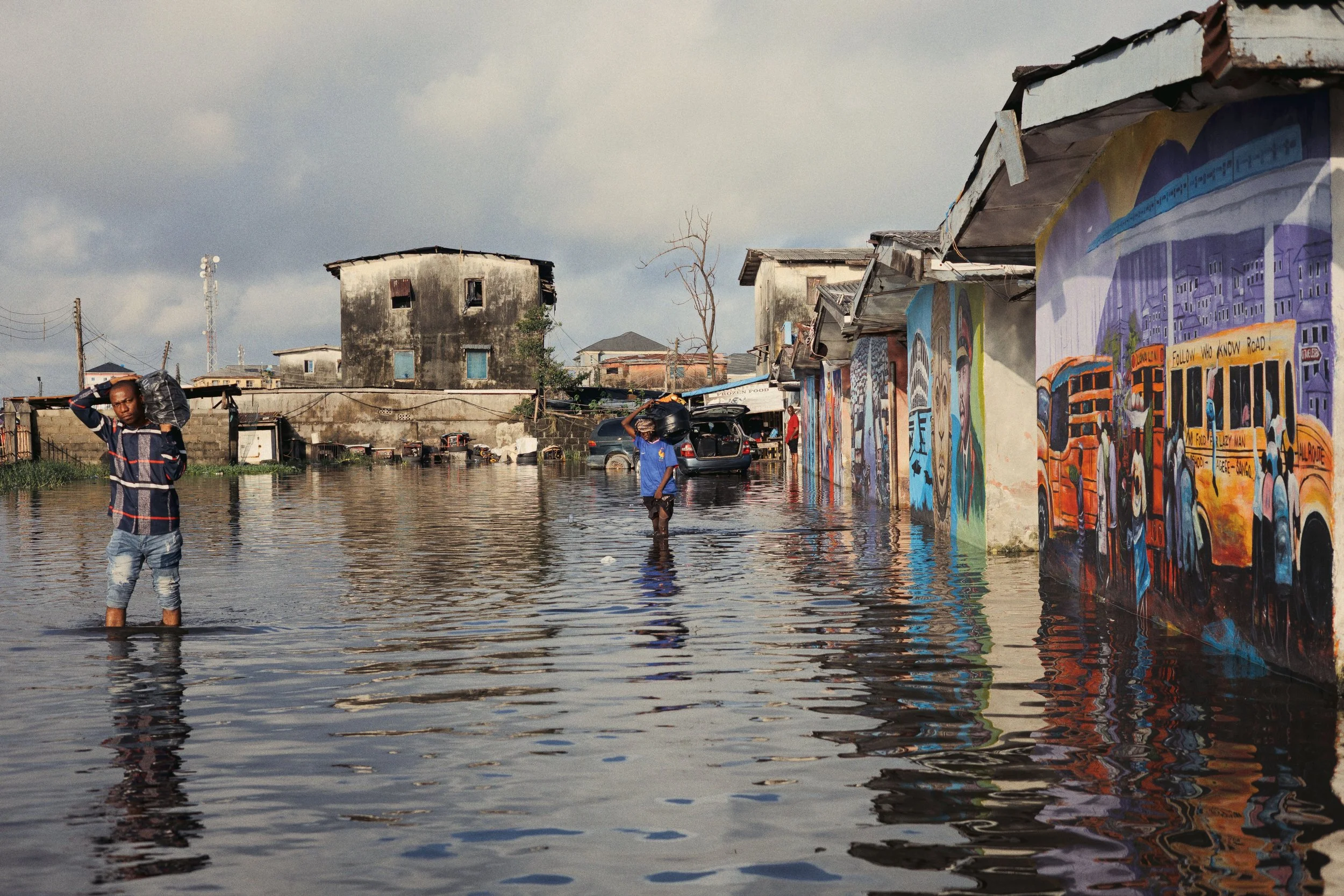
Flooding in Lagos, Nigeria, in July 2026. Ben Iwara. Pexels.
Friederike Otto, a professor of climate science at Imperial College London, believes cutting emissions is essential to limiting extreme weather. “Adapting to these now common events is critical, but so is reducing emissions much further and faster, to allow us time to keep up with the changes we’ve already put into motion,” Otto said.
Another climatologist at Imperial College London, Joyce Kimutai, emphasized the role of international cooperation. She added that nations such as Togo, Cote d’Ivoire and Ghana should receive support from industrialized nations, which bear greater responsibility for the climate crisis.
The effects of extreme heat and global warming are visible worldwide. Communities face extreme weather, ecosystem destruction and worsening public health. Climate experts recommend stronger international cooperation and lower emissions to address the crisis. In the meantime, heat-related deaths, wildfires, tropical cyclones and flooding remain realities of rising global temperatures.

Julia Sassaman
Julia is a fourth-year student at the University of Michigan studying political science and international studies. She recently studied abroad in Geneva, Switzerland, researching post-conflict tourism and international human rights law. After graduation, she hopes to move to Europe to pursue a career centered on global human rights. In her free time, she enjoys painting, baking, journaling, and reading.