
By Suzy Song
Here are four must-see sites in Bhaktapur, Nepal, commonly known as the “City of Devotees” and rich with Newar culture.
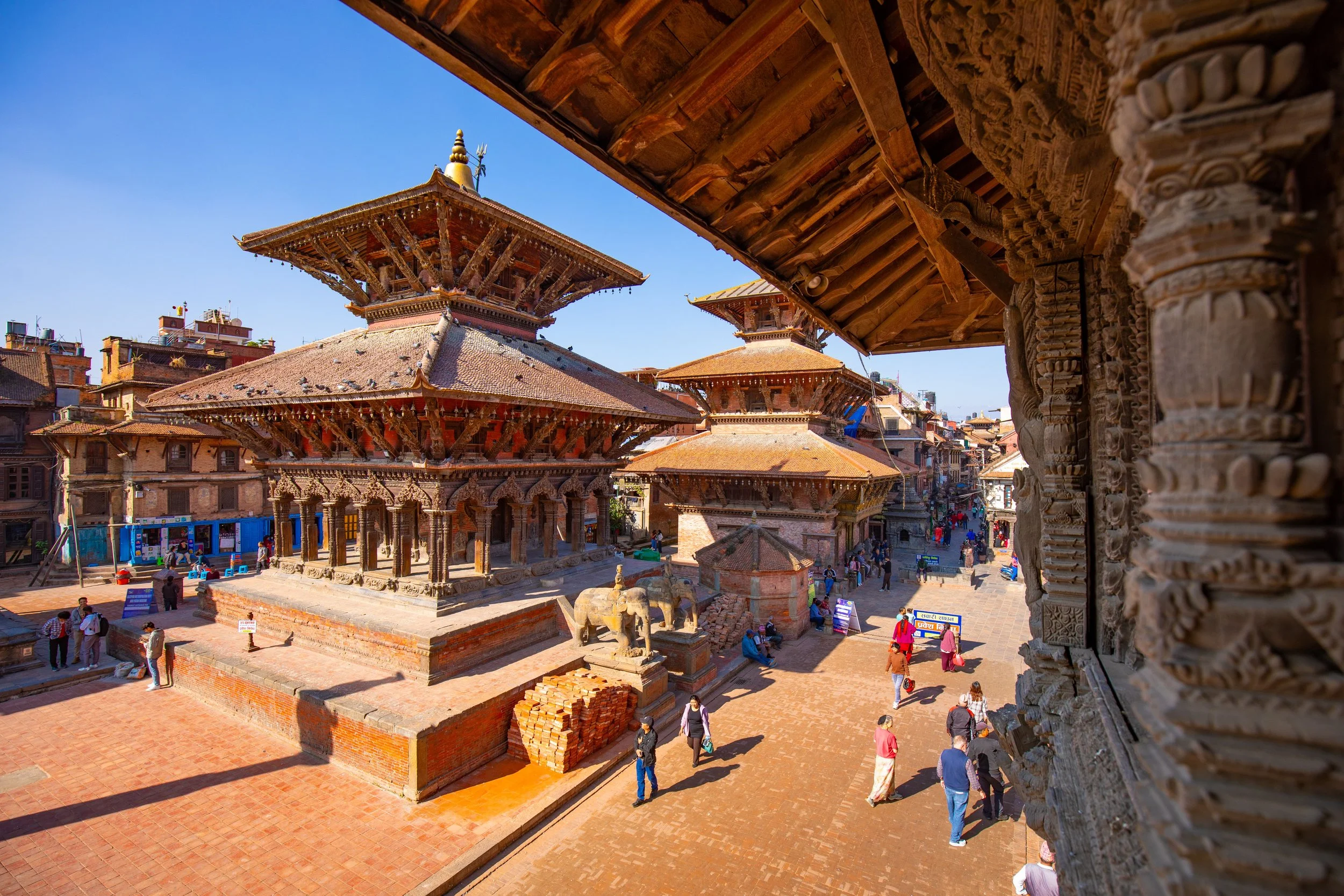
Ancient temples and monuments seen in Nepal’s Bhaktapur city. Volker Meyer. Pexels.
Located in the Kathmandu Valley of Nepal, Bhaktapur, an ancient city and part of the Kathmandu Valley UNESCO World Heritage Site, stands as the prime cultural landscape of the Newari community and its historic culture. Just 8.7 miles east of the capital and known as the “City of Devotees,” Bhaktapur functions as a museum for the preserved medieval, spiritual and cultural wonders of the Newar people.
Nepal’s cultural, artistic and trade history would be incomplete without the invaluable contributions of the Newar people. As an Indigenous ethnolinguistic people of Kathmandu, their celebrated craftsmanship, architecture and unique syncretism of Hinduism and Vajrayana Buddhism make the unique city stand out as a sacred and culturally vibrant hub representing not just localized Newari ways of life, but a monumental aspect of Nepal’s collective identity. With Bhaktapur attracting thousands of travelers each year, here are four must-visit attractions should you find yourself as one.
1. Durbar Square: Home of Royalty

Tourists explore Bhaktapur’s Durbar Square. Mehmet Turgut Kirkgoz. Pexels.
In the city’s heart lies Durbar Square, a royal square acclaimed for its sophisticated architecture and former palace of the Hindu Malla dynasty. Here, the most prestigious ceremonies took place, such as monarch coronations. This royal distinction is reflected in the square’s original marvelous scale: 99 courtyards, 172 temples and 172 rest homes for Hindu and Buddhist pilgrims. A testament to the Newar people’s notable woodworking abilities, the palace itself is marked by wooden windows and panels with intricate, traditional carvings.
Although the 2015 7.8-magnitude earthquake in Nepal caused severe damage to the square’s many historic structures, restoration efforts have brought back much of the square’s unique heritage, though just a handful of courtyards still stand. Regardless, Durbar Square’s Palace of 55 Carved Windows, Golden Gate and historic temples are sites not to miss should you want to fully immerse yourself in the ancient heart of Bhaktapur.
2. Nyatapola Temple: Grand Devotion
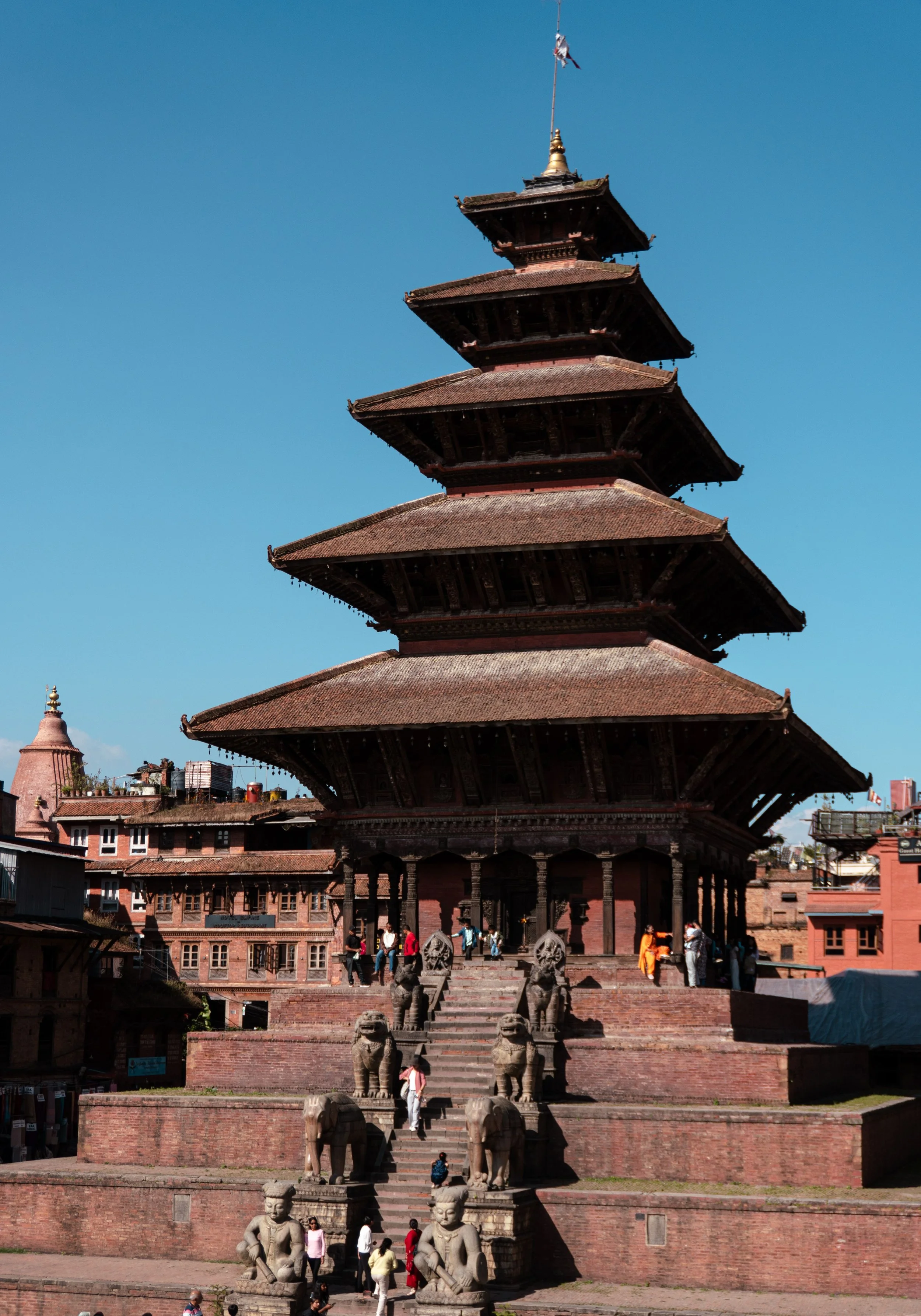
Bhaktapur’s tallest monument, Nyatapola Temple, seen on a sunny day. Saugat Shrestha. Pexels.
As the tallest monument in Bhaktapur, the 108-foot-tall Nyatapola Temple rests grandly in Taumadhi Square, just a minute’s walk away from Durbar Square. A pagoda-style temple commissioned by King Bhupatindra Malla in 1702, Nyatapola Temple is dedicated to the Newar Hindu and Vajrayana Buddhist goddess Siddhi Lakshmi. Representing divine femininity and enlightenment, she protects people by repelling evil and negativity.
The temple takes its name from its five tiers, with the Newari word “Nyatapole” translating to “five stories,” and according to the national Nepal Tourism Board, the steps leading to the temple contain “statues of strong protectors—wrestlers, elephants, lions, griffins, and goddesses. Each statue is said to be ten times stronger than the one below it.” Further highlighting Siddhi Lakshmi’s figure are the 108 wooden struts that support the structure, each of which has incarnations of the goddess. For an unforgettable, high-point view of the city, tourists can climb to the top of this proud heritage site.
3. Dattatreya Square: An Ancient Walk Through Bhaktapur
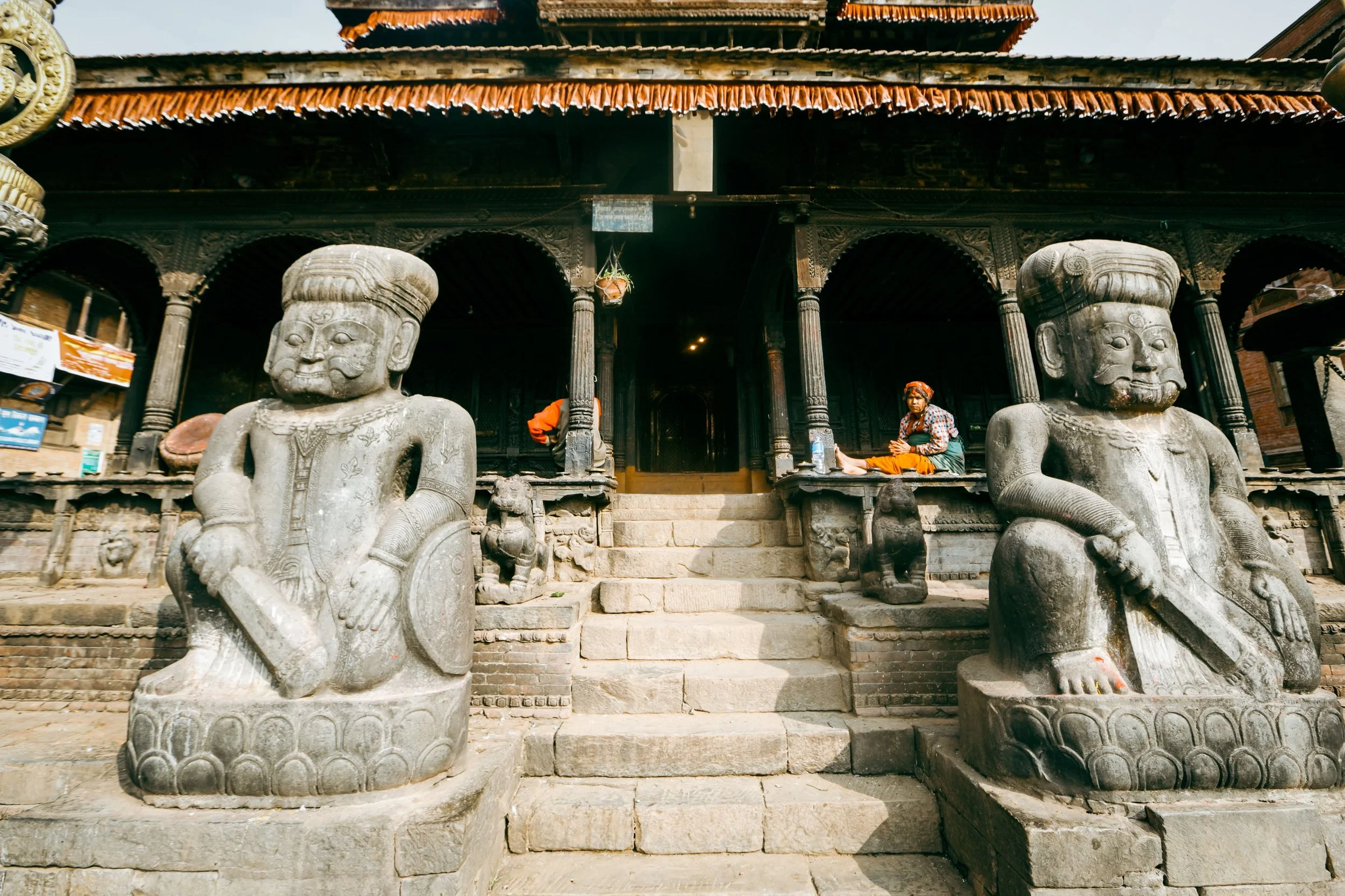
Two stone statues act as guards to Dattatreya Temple, located in the ancient Dattatreya Square. Mehmet Turgut Kirkgoz. Pexels.
Although a simple stroll down any road in Bhaktapur will give visitors a meaningful, historically captivating experience, a trip to Dattatreya Square is incomparable. As the oldest of the city’s four major squares, it offers travelers a unique glimpse into some of the city’s most historic temples and monuments. Most notably, it houses the Dattatreya Temple, a three-story pagoda-style temple established by King Yaksha Malla during his reign from 1428 to 1482 AD. The Dattatreya Temple is Nepal’s only temple dedicated to Lord Dattatreya, a Hindu deity representing the combined form of three Hindu gods: Brahma, Vishnu and Shiva. Like the Nyatapola Temple and countless others in the city, the Dattatreya Temple embodies the prodigious carvings and artistic style of Newari culture. Something that particularly stands out about the Dattatreya Temple is a tall pillar featuring an idol of Garuda. In Nepal, a pillar of this height supporting Garuda’s idol is rare.
4. Peacock Window: A Woodworking Gem
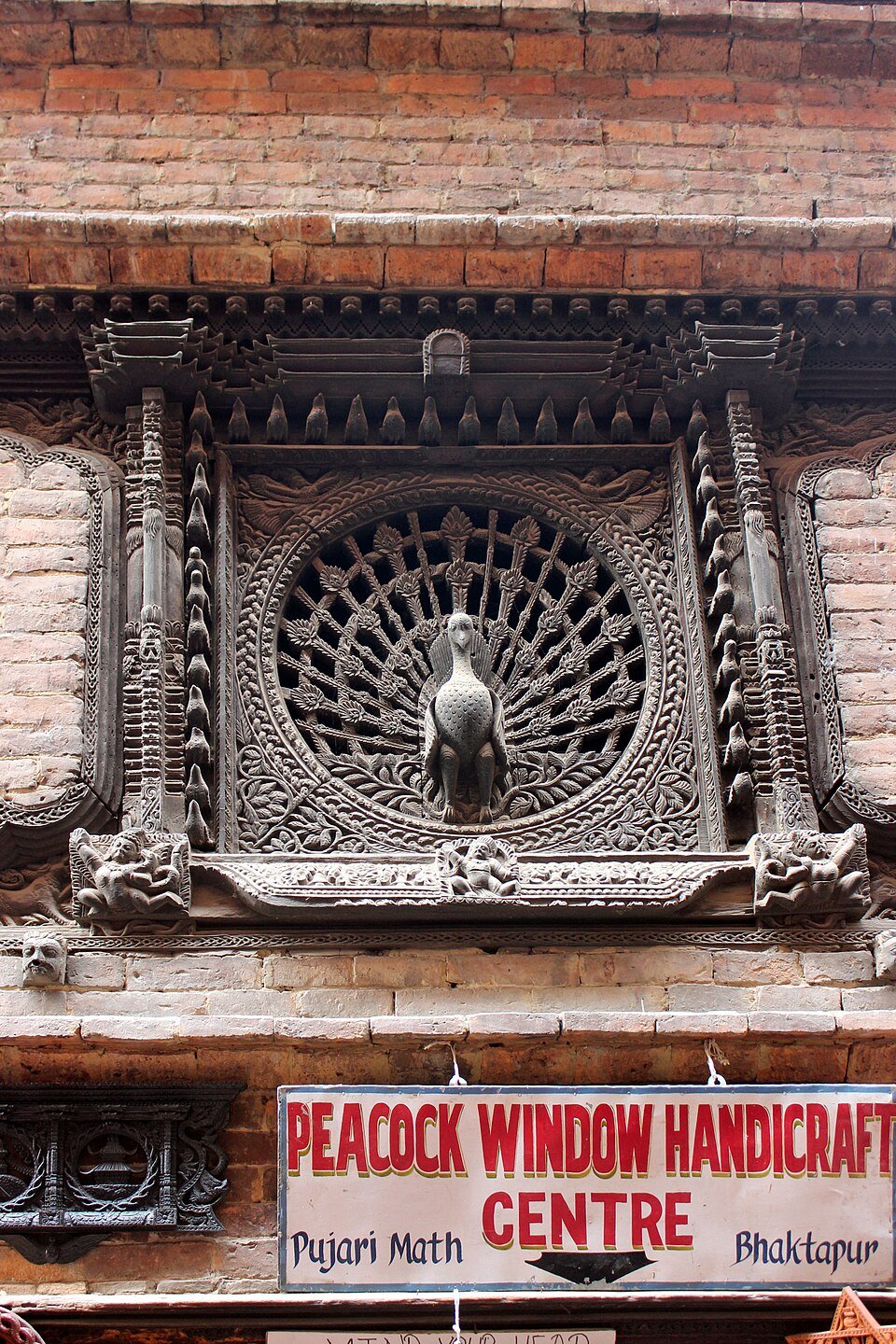
Peacock Window, located in a small alley in Bhaktapur. Maesi64. CC0.
Just off Dattatreya Square, the Peacock Window is a 15th-century world-famous piece of carved wood regarded as the city’s primary artistic symbol. With elaborate feather, ornamental and floral patterns, the “Mona Lisa of Nepal” shows delicacy combined with precision to cement itself as arguably the most treasured demonstration of the Newari people’s charming medieval record of woodworking. In Newari culture, the peacock symbolizes beauty, prosperity and divine protection, with the Peacock Window specifically demonstrating vigilance, poise and the letting in of light. The window is located in a small alley, but its repute as a national spiritual treasure transcends any physical boundaries.
Through the reflected fusion of historic arts, religion and mythology, Bhaktapur embodies a Newari heritage growing increasingly vibrant and reinforced across generations. With centuries-old practices and beliefs alive in each corner, Bhaktapur is living proof that history is a constant present.

Suzy Song
Suzy Song is a sophomore at Tufts University, majoring in International Relations on a pre-law track. Passionate about human rights, international law, and global institutional studies, she hopes to bring meaningful discussions on social justice to corporate fields in the future. From Canada’s Pacific Northwest, she loves travelling, hiking, and vintage film and music.