
By Azhar Kantayeva
A journey through Izmir Province reveals centuries of history, distinctive architecture and the everyday charm of Aegean life.
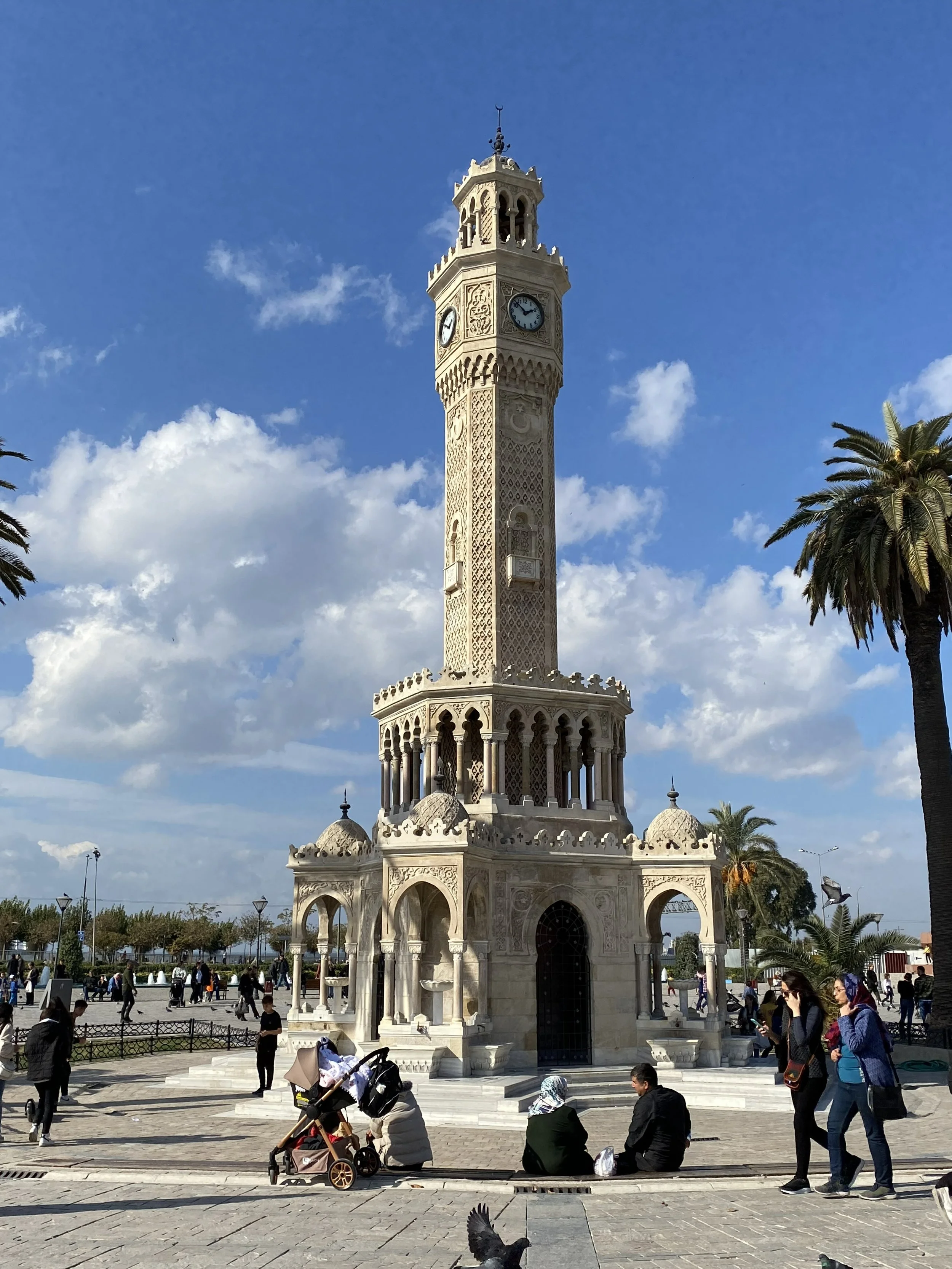
Izmir Clock Tower. Azhar Kantayeva.
Along Turkiye’s western coast, facing Greece across the Aegean Sea, lies Izmir Province, a region known for its ancient ruins, seaside towns and rich cultural heritage. Among its destinations are Ephesus, an ancient city that became one of the Roman Empire’s major commercial centers, and Cesme, a coastal town popular for its beaches, seafood and summer atmosphere. Although both belong to the same province, they offer visitors very different experiences.
Having visited both places, I had the opportunity to explore this part of Turkiye firsthand. Walking through the marble streets of Ephesus, I saw the remains of buildings that once stood at the center of Roman life. In Cesme, I experienced the region from another perspective, surrounded by the Aegean Sea, waterfront restaurants and local traditions. Nearby Alacati, a town known for its historic stone houses and narrow streets, adds another stop to a journey that brings together archaeology, culture and coastal life.
Ephesus: Discovering Life in an Ancient Roman City
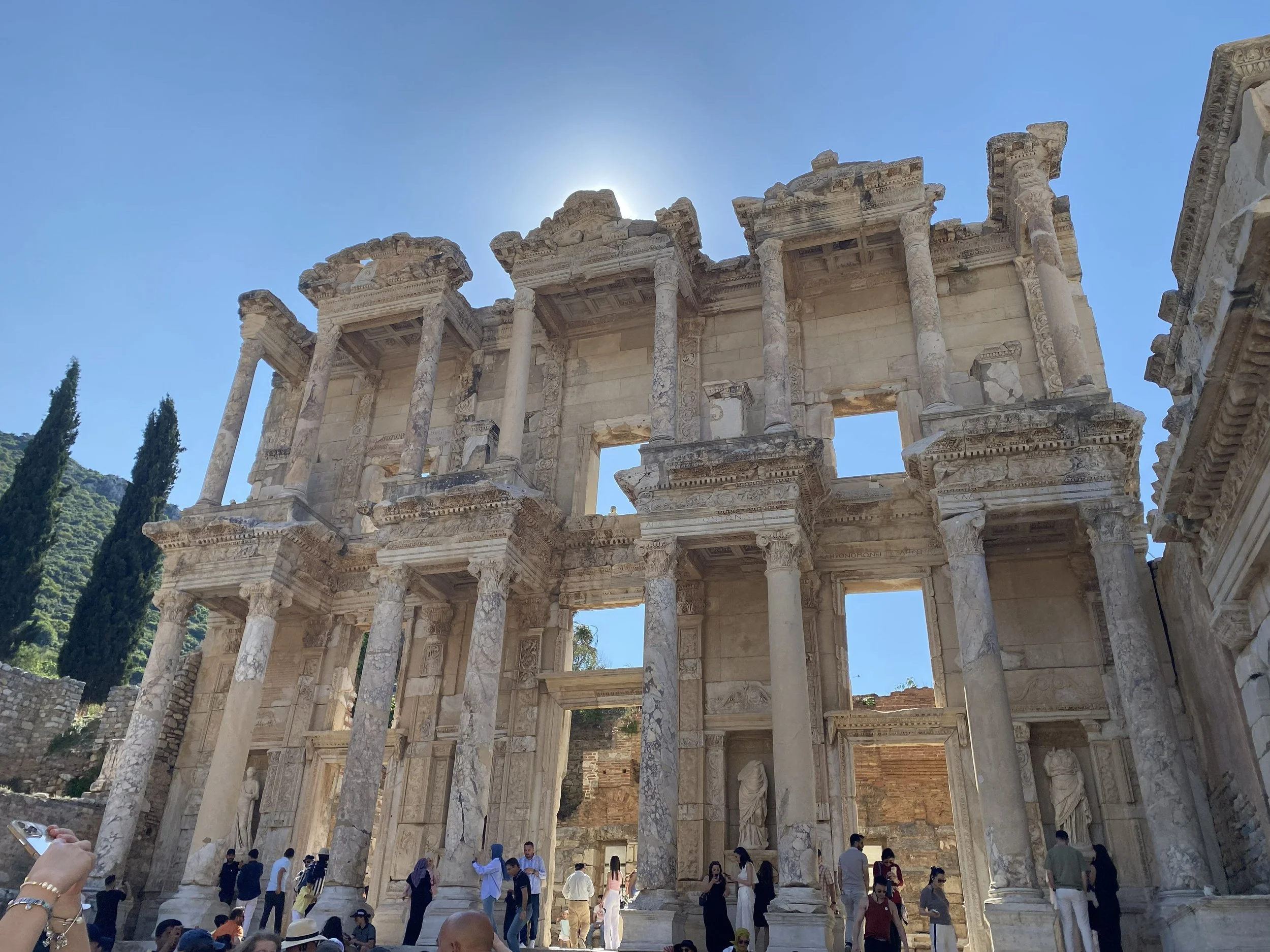
Library of Celsus, Ephesus, Izmir. Azhar Kantayeva.
Walking through Ephesus, visitors pass the remains of temples, public buildings and homes that once belonged to one of the Roman Empire’s major cities. Unlike archaeological sites where only isolated monuments survive, Ephesus preserves much of its ancient street layout, allowing travelers to imagine how people lived, worked and gathered nearly 2,000 years ago.
Located near Selcuk, approximately 50 miles south of central Izmir, Ephesus developed into an important center of commerce, religion and culture. Its position near the Aegean Sea connected the city to trade routes across the Mediterranean, bringing merchants, goods and ideas from different regions.
One of its most recognizable landmarks is the Library of Celsus, built in the second century CE to honor Roman senator Tiberius Julius Celsus Polemaeanus. Its reconstructed facade features tall columns, decorative carvings and replicas of statues representing wisdom, knowledge, intelligence and virtue. Although the original building suffered damage over the centuries, the surviving structure remains an important example of Roman architecture.
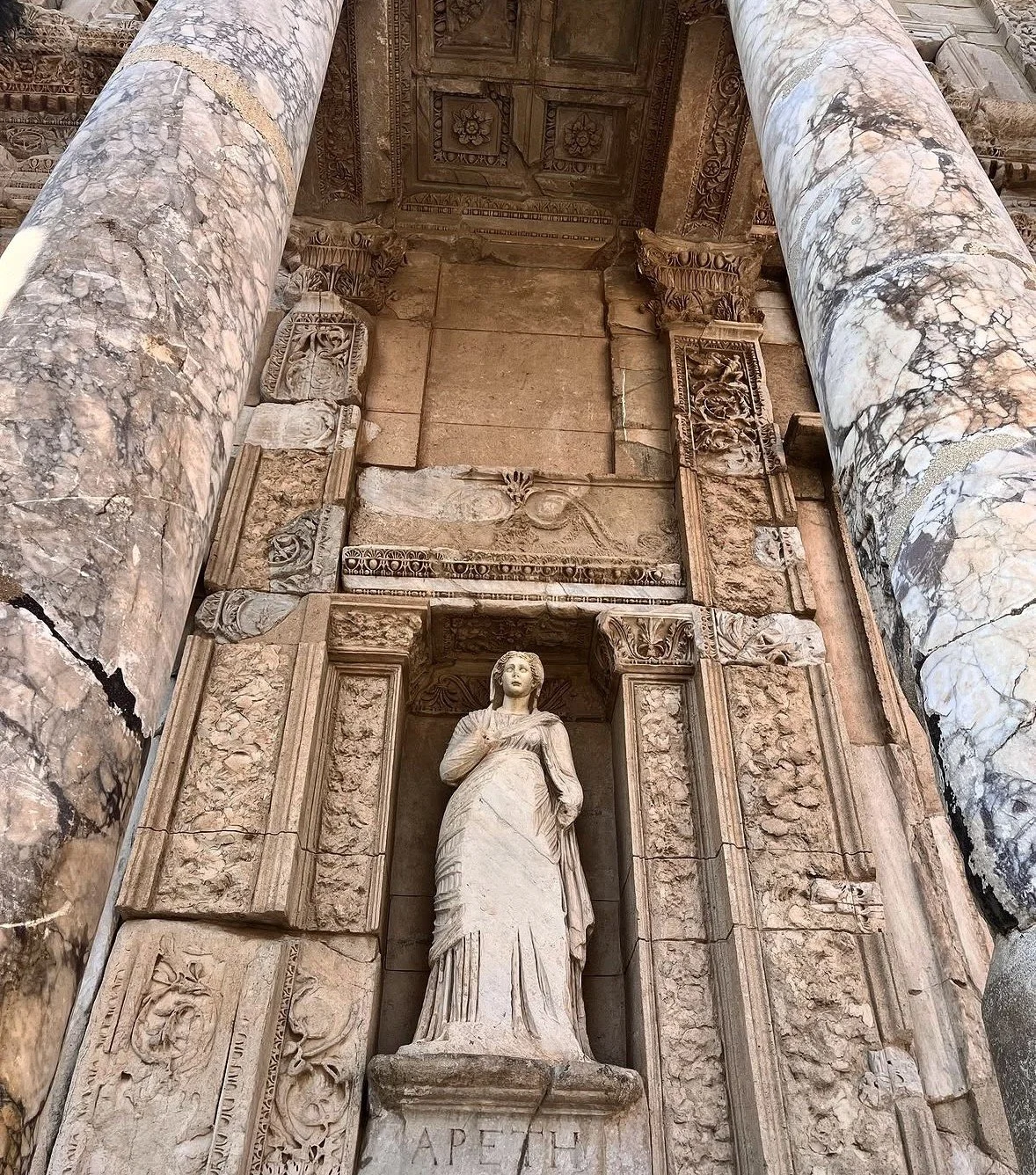
A replica of the statue representing virtue on the facade of the Library of Celsus in Ephesus. Azhar Kantayeva.
Nearby, the Great Theatre demonstrates the scale of public entertainment in the ancient world. Built into a hillside, it could accommodate approximately 25,000 spectators who gathered for performances and public events. Standing among its rows of stone seats offers a sense of the city’s former size and importance.
Beyond these famous monuments, the Terrace Houses provide a closer look at everyday life. Their preserved mosaics, wall paintings and heating systems reveal the living conditions of wealthy Roman families. These details show that Ephesus was not simply a center of political and religious activity but also a place where residents developed their own lifestyles and traditions.
The ancient city was added to the UNESCO World Heritage List in 2015. Nearby, visitors can also see the remains of the Temple of Artemis, one of the Seven Wonders of the Ancient World. Although little of the original structure survives, its history reflects the religious significance of the region.
Cesme: More Than a Summer Beach Destination
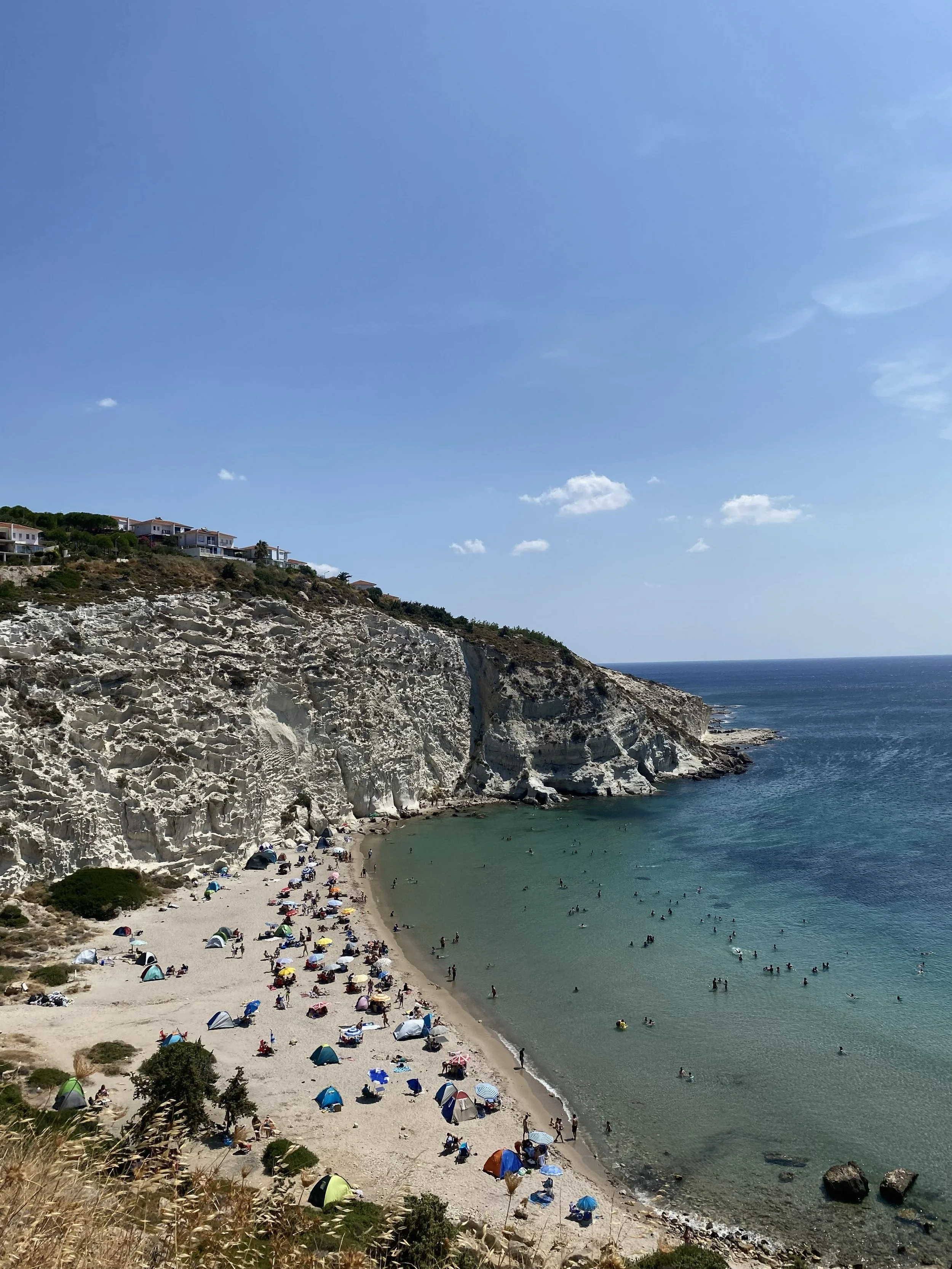
Kali Beach, Cesme. Azhar Kantayeva.
Approximately 50 miles west of Izmir, Cesme occupies a peninsula extending into the Aegean Sea. Known for its clear waters and sandy coastline, the town attracts visitors seeking beach holidays, water sports and local cuisine.
Ilica Beach is among its most popular locations, with shallow waters and a long stretch of sand. Altinkum Beach offers another swimming destination, while Aya Yorgi Bay is known for its beach clubs and sheltered coastline. During summer, these areas become gathering places for visitors from across Turkiye and abroad.
However, Cesme’s identity extends beyond tourism. Overlooking the harbor stands Cesme Castle, built in the early 16th century during the reign of Ottoman Sultan Bayezid II. Originally constructed to protect the port, the fortress now houses a museum displaying archaeological objects and historical exhibits. Its elevated position also provides views across the town and the surrounding coastline.
The harbor area offers a closer look at Cesme’s daily life. Fishing boats share the waterfront with yachts, while restaurants and small cafes line the nearby streets. In the evenings, visitors gather along the marina to enjoy the sea breeze and explore the town center.
Local cuisine is another important part of the experience. One of Cesme’s best-known specialties is kumru, a toasted sandwich made with sesame-covered bread and fillings such as cheese, tomatoes and sausage. Mastic, an aromatic resin traditionally produced in the wider Aegean region, is another distinctive flavor used in ice cream, desserts and sweets.
For more active travelers, the peninsula offers opportunities for sailing, diving and boat excursions. Its coastline includes both busy beach areas and quieter bays, allowing visitors to choose between entertainment and relaxation.
Alacati: A Town Shaped by History and Local Culture
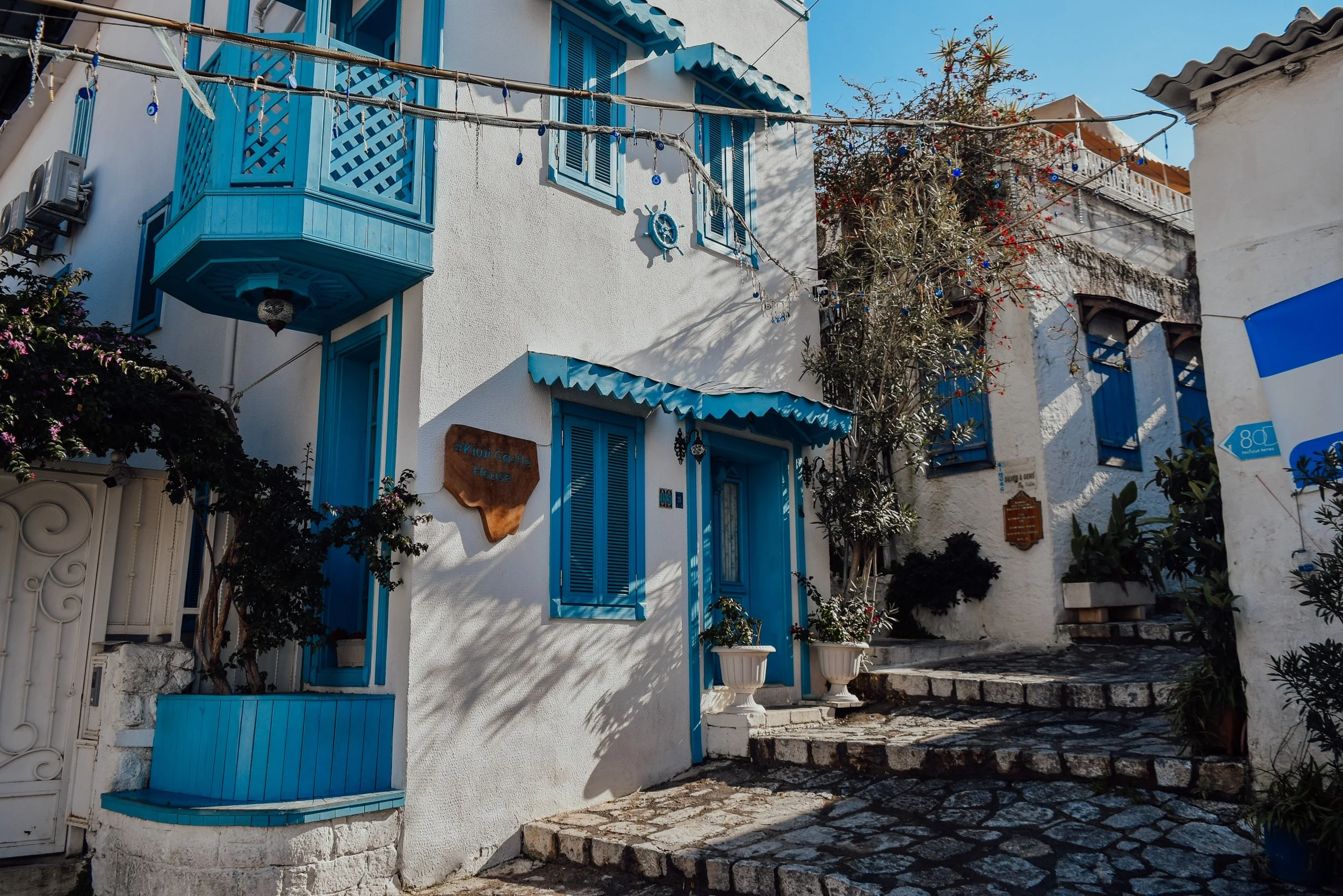
Local houses in Alacati. Azhar Kantayeva.
A short drive from central Cesme leads to Alacati, a town whose traditional stone buildings and narrow streets have made it one of the region’s most recognizable destinations.
During the 19th century, Alcati developed as an agricultural settlement where vineyards, olive production and local trade supported the economy. Its architecture reflects the influence of the Greek-speaking communities that once lived in the area, alongside the wider Ottoman history of the region.
Today, many historic houses have been restored and converted into boutique hotels, cafes and independent shops. Their stone walls, wooden shutters and flower-covered entrances have helped preserve the town’s distinctive appearance, even as tourism has expanded.
Alacati’s windmills are another reminder of its agricultural past. Once used to grind grain, several have been restored and remain important local landmarks.
Food also plays a central role in the town’s cultural identity. Restaurants serve traditional Aegean dishes prepared with olive oil, seasonal vegetables and local herbs. Visitors can explore small markets, discover handmade products or stop at a cafe for Turkish coffee.
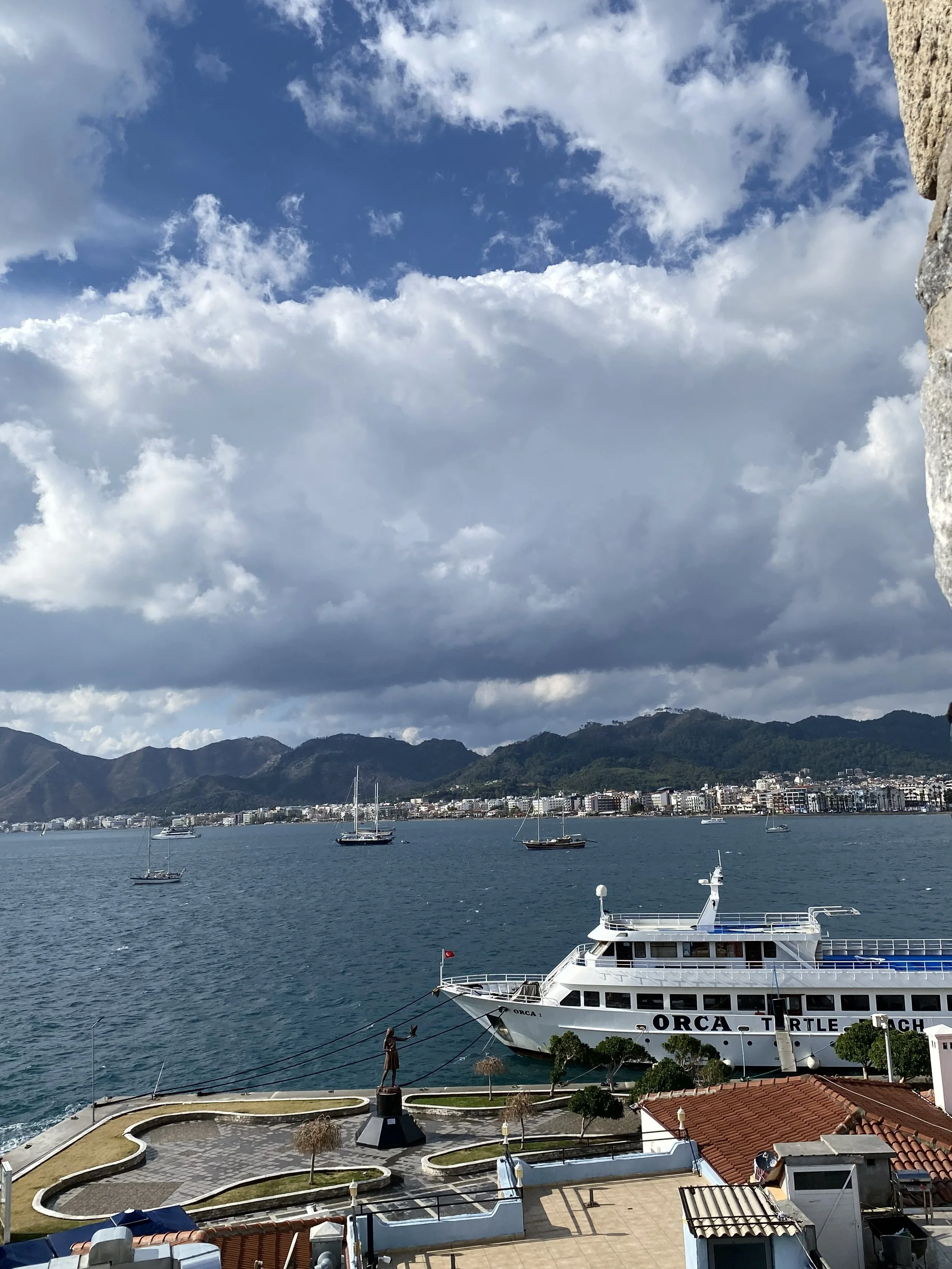
A view of the harbor, boats and coastline. Azhar Kantayeva.
Outside the town center, Alacati has developed a reputation for windsurfing. Its bay offers steady winds and relatively shallow waters, attracting both experienced athletes and beginners. Windsurfing schools provide lessons, making the sport accessible to visitors who want to try something beyond traditional beach activities.
Although Alacati becomes particularly busy during the summer, spring and autumn offer a quieter opportunity to explore its streets and appreciate the town’s architecture.
A Journey Worth Taking
Some places are best understood not through photographs or travel guides but by experiencing them in person. What makes a journey through Izmir Province memorable is the freedom to explore at your own pace, whether that means spending an extra hour among ancient ruins, trying a local dish for the first time or discovering a quiet street away from the crowds. Having visited the region myself, I believe its greatest appeal lies in these unexpected moments.

Azhar Kantayeva
Azhar is International Relations student at Dokuz Eylül University in Türkiye and an emerging writer with a passion for journalism, travel, culture, and global affairs. She has experience writing about international issues, destinations, and cultural perspectives. Alongside her studies and writing, she works as an English and Turkish teacher. Her work is driven by curiosity, cultural exchange, and a desire to connect people through stories.