
History
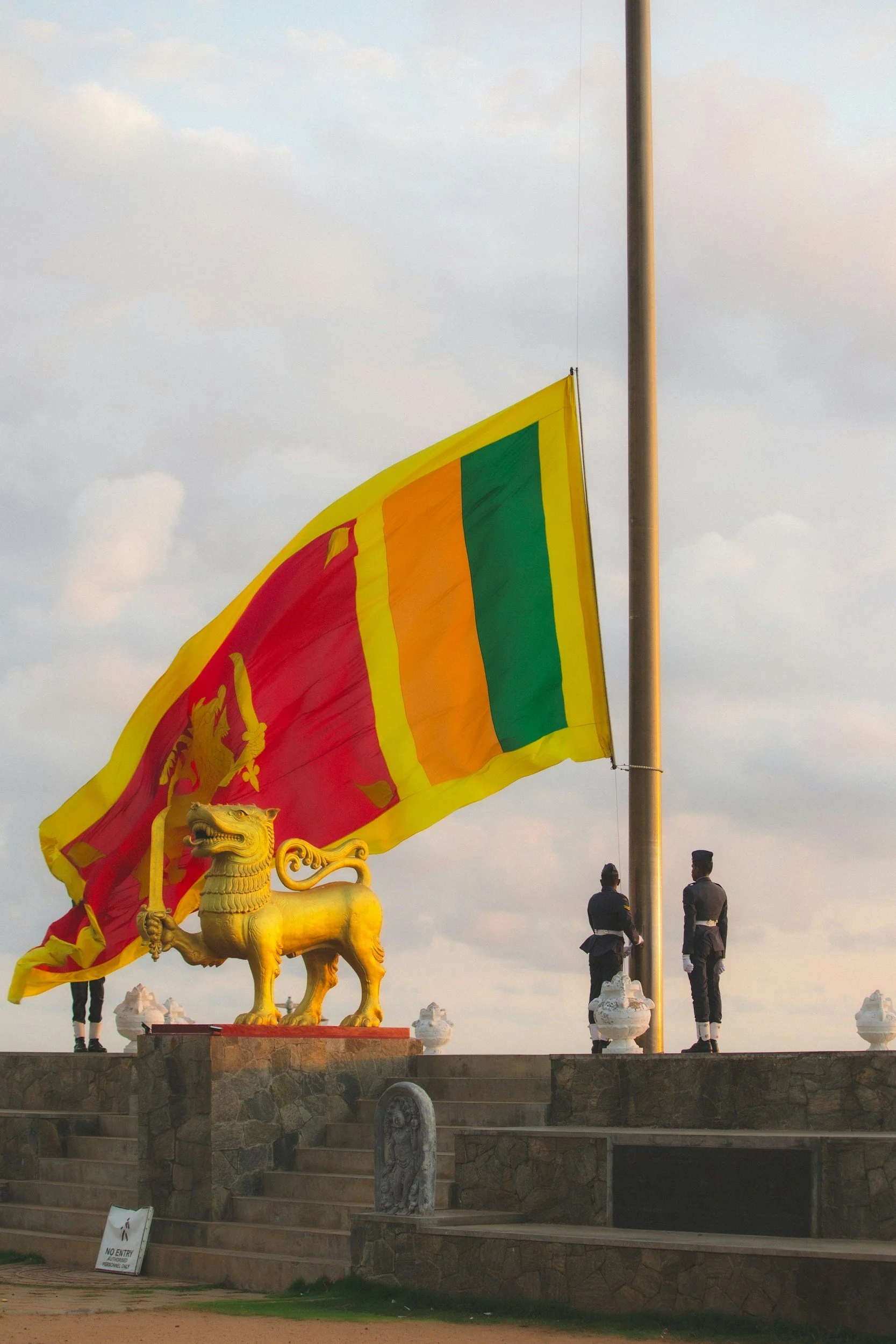
Sri Lanka has a complex political history tainted by conflict, oppression, terrorism and struggle. Much of the modern-day bureaucratic and political structure is a product of colonial influence - most notably the British, who occupied the island from the late 1700s until Sri Lanka’s independence in 1948. Independence Square in Colombo is a national monument that commemorates Sri Lanka’s independence from British colonial rule, and National Day is celebrated every year on February 4th, marked by a military parade and processions across the island.
Most recently, Sri Lanka’s political landscape was shaped by a 25-year civil war that was fought between the Liberation Tigers of Tamil Eelam (LTTE) and the Government of Sri Lanka between 1983 and 2009. The LTTE were a militant separatist organisation that fought for an independent Tamil state in the north of the island, which was formed in response to decades of government policies that oppressed and undermined the Tamil minority.
Sri Lankan Tamils are native to the north of Sri Lanka, in Jaffna and the surrounding region, with strong ties to Tamil Nadu in South East India. During the British colonial period, the British brought many additional Tamils from India to work on plantations, a large number of whom spoke English, the official language of British Ceylon, and disproportionately occupied highly coveted jobs within the Civil Service. This solidified the existing caste system, as social identities evolved into administrative categories, establishing a rigid hierarchy structure both bureaucratically and socially.
Upon independence from the British Empire, the Sinhalese majority made efforts to balance the interests of elites from both communities, but eventually introduced stronger policies that imposed Sinhalese interests and suppressed the Tamil community. This manifested in the form of the Sinhala Only Act, which replaced English with Sinhala as the official language of Ceylon, excluding Tamil.
What followed was decades of policies that continued to suppress the Tamil minority, which exacerbated the divide within and between communities, until the eventual outbreak of a full-blown civil war in 1983 when the LTTE launched an ambush on the Sri Lankan Armed Forces in the Jaffna Peninsula. Violence spread throughout the country, including to Kandy, where Sinhalese rioters looted and attacked Tamil-owned businesses and homes across the country in what was known as Black July. This is generally agreed as the event that triggered the Civil War.
While the Civil War ended in 2009, its legacy remains. It is estimated that over 100,000 Sri Lankans lost their lives during the Civil War, including an estimated 40,000 civilians during the final months of the conflict. Many Sri Lankans still remain displaced today and Northern provinces have fallen significantly behind their southern, predominantly Buddhist counterparts. Political influence in these regions still largely focussed on local Tamil-led organisations. Transitional justice and accountability for war crimes continue to fuel local and international discussions, particularly amongst the Tamil diaspora in countries such as Canada, the U.K, and Australia.

Members of the Tamil diaspora community gathered opposite 10 Downing Street.
Politics
More recently, Sri Lanka has faced economic and political turbulence that has shaped the current parliamentary structure. In 2022, President Gotabaya Rajapaksa and his government were overthrown following the Aragalaya (“The Struggle”), a series of mass protests in response to poor economic policies and corruption. This anti-establishment movement evolved into a political narrative focussed on removing the corrupt political class. The figurehead of this movement was Anura Kumara Dissanayake, a left-wing Marxist-influenced politician from a humble background outside of Sri Lanka’s capital city.
AKD won the Presidential election in 2024 on an anti-corruption mandate and his party, the National People’s Power (NPP), performed exceptionally well in the parliamentary elections that followed. The NPP is a left-wing coalition that incorporated the Janatha Vimukthi Peramuna (JVP), who had a complicated history of violence and insurgency in the 1970s and 1980s. The election of AKD and the NPP signalled a marked shift in the population, whose anger towards the established elites overshadowed the party’s troubled past and united both Tamil and Sinhalese voters in many areas.
Sensitivities
Sri Lanka’s civil conflict remains a collective trauma for many people who lived through an intense period of island-wide violence, loss and destruction. Discussing the conflict openly is uncommon and unlikely to be initiated by hosts when talking about their country. It also remains a divisive topic as perspectives on military action and the journey towards peace is perceived very differently by different ethnic groups. Areas such as reconciliation and transitional justice remain highly tense and debated in national politics.
If you build a relationship with a guide or host and you want to ask questions about their experiences, approach it very cautiously and ensure that questions remain neutral and without biases. If they are willing to discuss it, they will share their views. If you sense hesitation or an absence of detail, it is better to move on.
Some Sri Lankans also hold romantic views about the British Empire, and will often casually refer to the colonial period as a more stable and functional time for Sri Lanka. The most common reference point is around the British-built railways. If you are travelling from Europe and are ethnically European, you are likely to experience this misinterpretation of a harrowing period in Sri Lankan history. While it is not your job to challenge their perspective, you may feel uncomfortable allowing it to go unnoticed.
Depending on the nature of the interaction, it may be best to let it slide. If you have a good relationship with the person initiating this discussion and you feel comfortable, sensitively signalling that you understand an independent Sri Lanka is far better off than under colonial rule may be enough to nudge the conversation towards modern rather than historical pride.
Safety
Sri Lanka is a very safe and welcoming country for solo travellers. People are welcoming and friendly, and are slowly becoming more familiar with overseas tourists. Some young people will be forward with foreign tourists, asking for photos and shaking hands, while others may be more reserved. Remain self-aware and respectful in all interactions, but strike a sensible balance between openness and privacy to avoid any excessive attention or harassment.
Tourists are well looked-after by police and officials, though there are rare cases of some officers exploiting tourists and local businesses for bribes. If you encounter this, avoid confrontation and seek support from guides, hotel staff or shop-owners.
Respect local customs and religious sites. Remove shoes and cover shoulders when required. Do not take photos with your back to statues of the Buddha, or any disrespectful photos when on the grounds of temples or cultural sites.