
By Caleb A. Yamamura
An Emblem of Spain’s Rich Multicultural History.
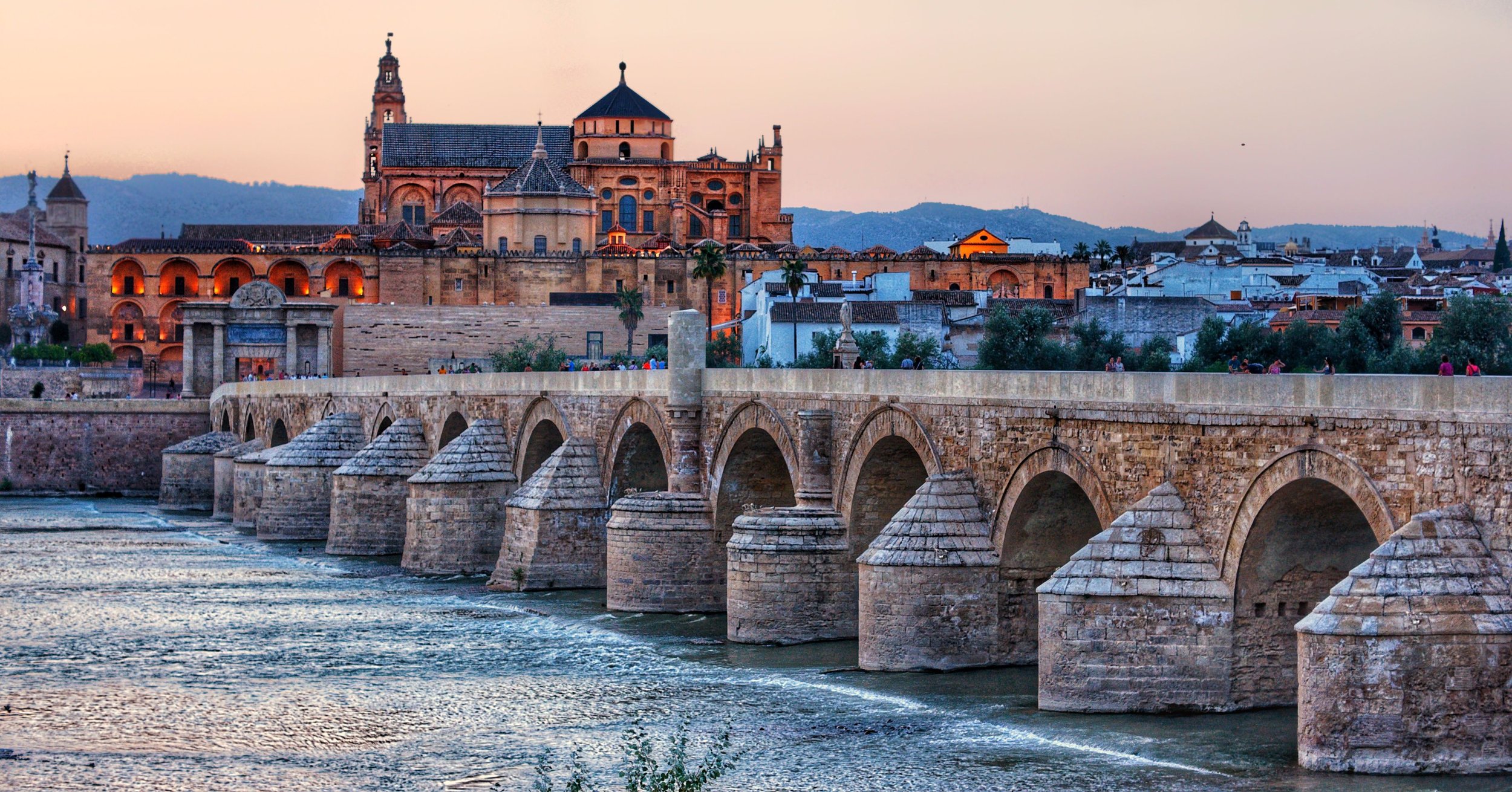
The Great Mosque-Cathedral of Cordoba, pictured beyond a first-century B.C. Roman bridge. Antonio Guirado Rivas. Pexels.
The Great Mosque-Cathedral of Cordoba, or Mezquita-Catedral de Cordoba, represents the rich multicultural history of Spain and the Iberian peninsula. The building itself transitioned from a mosque to a cathedral in the 13th century, and its architecture reflects Islamic design alongside Roman, Visigothic and later Christian influences. Importantly, the Mosque-Cathedral is not just a historical site but an active place of worship for the Catholic Church. A 2003 decision by the Catholic Diocese of Cordoba prohibits any act of Muslim worship on Mosque-Cathedral grounds. This is enforced to such an extent that guards will follow noticeably Muslim individuals to prevent any act of prayer.
In 2014, the Mosque-Cathedral was temporarily renamed Cordoba Cathedral, removing the mention of mosque from the name, though this was quickly reverted.
Both the Catholic Church in Spain and the Vatican have actively refused to budge on permitting Muslim worship, and the Spanish government has not moved against this decision. Groups like Junta Islamica Espana, or the Islamic Council of Spain, and other Muslim activists and tourists have petitioned the Church and even the Spanish government over this decision, but to no avail.
These policies represent a denial of the history behind both the building and the city itself.
Built on the bank of the Guadalquivir River in southern Spain, the city itself is steeped in diverse religious history. Cordoba has passed through many cultures, all of which have left their mark upon it. Cordoba was likely originally a Carthaginian settlement, seized by the Romans around 152 B.C., who later turned it into a provincial capital. Then, the Christian Visigoths took the city in A.D. 572, followed by the Muslim Umayyads in A.D. 711. Finally, the Castilians took it in A.D. 1236.
Under Roman rule, it is believed that the site of the Mosque-Cathedral was originally a temple to the Roman god Janus. The Germanic Visigoths would turn it into a church, the Muslim invasions turned it into a mosque and finally the Castilians transitioned that mosque into the cathedral it is today.
Cordoba would later become the capital of the Caliphate of Cordoba, one of the major states of Al-Andalus. The name Al-Andalus is the origin of the current name of the southern region of Spain, Andalusia. Al-Andalus encompassed the majority of the Iberian peninsula, and was prominent from the eight century invasions to beyond the 11th century.
The Mosque was built to demonstrate the power and wealth of Al-Andalus, and was central in demonstrating the nation's grandeur. Its hypostyle halls filled with columns, orange grove, prayer halls and centerpiece mihrab, the prayer niche which points in the direction of Mecca, are beyond gorgeous.
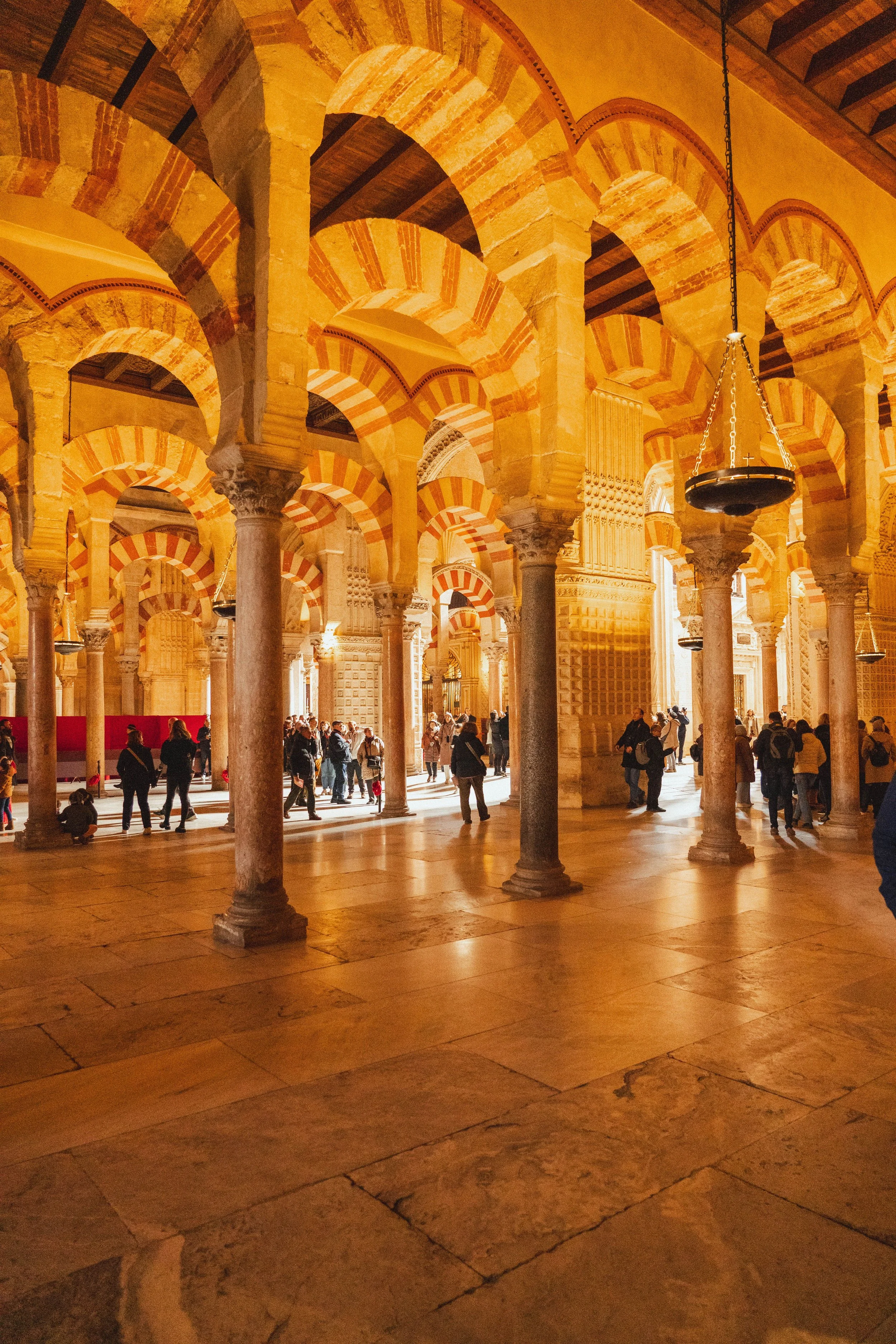
Hypostyle halls in the Mosque-Cathedral. Joan Costa. Pexels.
But what is most fascinating about the Mosque is not just its outward beauty, but rather the details and context of its construction. Characteristic of Western Islamic architecture is the use of horseshoe arches in its construction, which also appeared in earlier Visigothic and Christian architecture. In fact, the very construction of the building using stone and brick is a holdover from Roman and Visigothic construction methods.
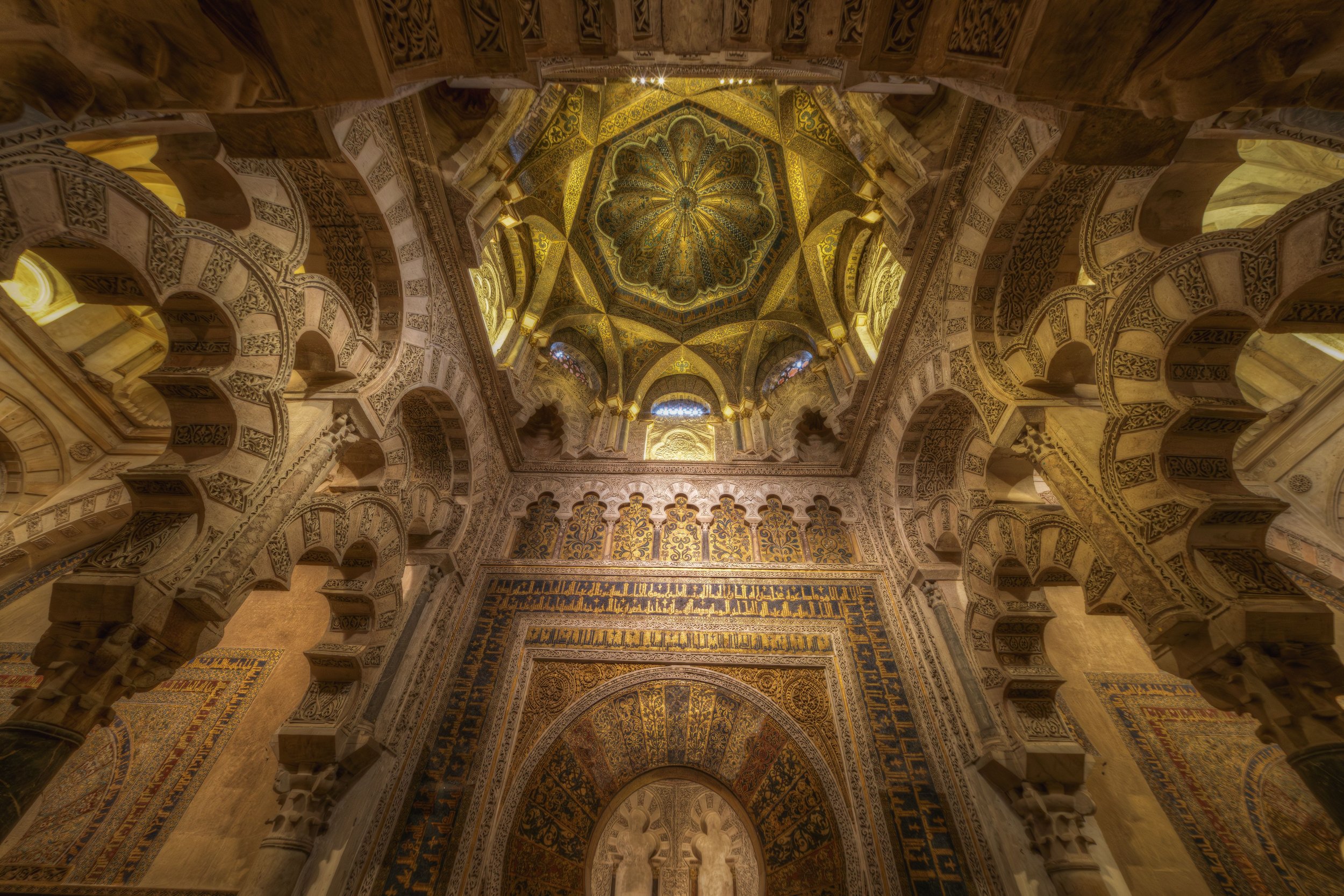
Horseshoe arches and the mihrab. Rino Adamo. Pexels.
This mixture of architectural styles is not unique to the Mosque-Cathedral, and can be found all over the historic sections of Cordoba. It is symbolic of Spain’s rich multicultural history, not just in the different civilizations the city passed between but also in the periods when Christians, Jews and Muslims lived side by side and engaged in profound cultural exchange.
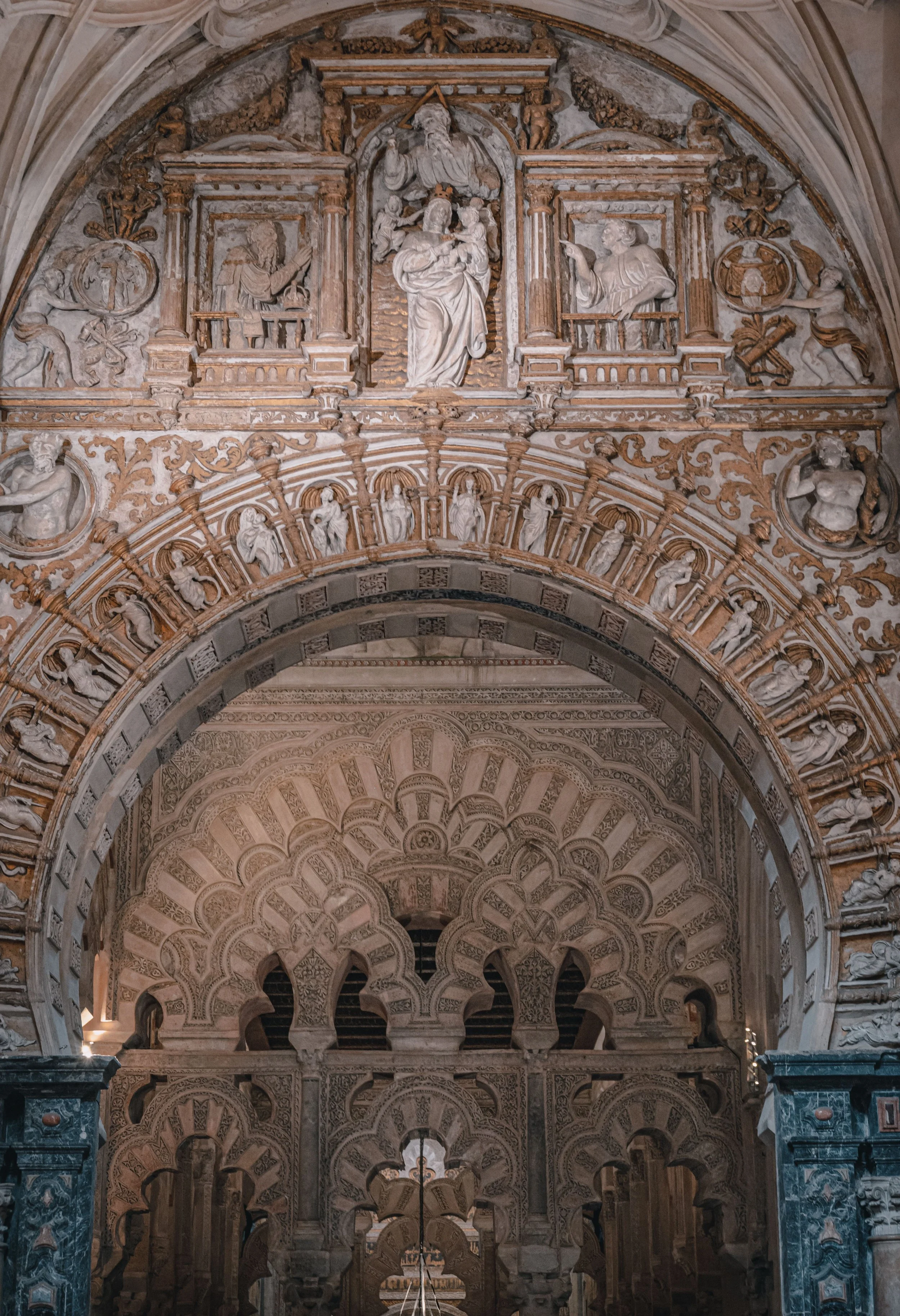
Christian Iconography inside the Mosque-Cathedral. Zekai Zhu. Pexels.
Indeed, Cordoba was a historical site of learning where people of all three religions came together and studied, some of which took place in the Mosque. It is that period between the eight and 11th centuries when many great advances in science, technology and the arts were made.
Notably, Al-Andalusia University near Seville aims to revive part of this educational legacy, as the first Islamic university in Spain in centuries.
Cordoba was not just a site of learning but also a site of commerce and a melting pot of cultural practices. This cultural intermixing and collaboration were largely due to the periods of religious tolerance in Al-Andalus.
Though such intermixing significantly reduced after the Christian Reconquista ended, with Muslims expelled and Jews persecuted, the truth of this history cannot be denied. Unfortunately, it often is, especially by Christian supremacists or Islamophobes who, through historical revisionism, depict the Reconquista as a holy war that expelled the Muslims from Iberia. Such narratives are tied to anti-Islamic sentiment or used in the context of migrant issues.
The Reconquista was the period between A.D. 722 and 1492 when Christian kingdoms such as the Castilians sought to retake Iberia under the pretense that they descended from the long-defeated Visigoths. They would ultimately prove successful, resulting in modern Christian Spain.
However, the Reconquista was not one continuous conflict but rather a long series of sporadic conflicts, usually broken up by long periods of peace. Mutually beneficial cultural and material exchange transpired during such peace, which complicates narratives that simplify the nature of Islamic presence in Spanish history.
The restrictions against Muslim prayer, the refusal to reverse them, and the attempted erasure of the Mosque-Cathedral’s history as a mosque are further examples of the effort to minimize the role of Muslims in Spanish history. Doing so is a denial of the rich multicultural history the Mosque-Cathedral, like the city and country where it stands, is steeped in.
If one decides to visit the beautiful city of Cordoba and the Mosque-Cathedral, acknowledging its history and the current issues would deepen the significance of such a visit.

Caleb A. Yamamura
Caleb is from New York City, and is currently an undergrad at Vassar College, majoring in History and Psychology. He is also an avid traveler, having visited countries on each continent with his family (save for Antarctica… of course). He has a profound love for learning about the world, its cultures and people, and is happy to have the opportunity to share what he has learned about.