
By Kathleen Shepard
A beautiful place to snorkel and scuba dive, Palau also faces human trafficking concerns.
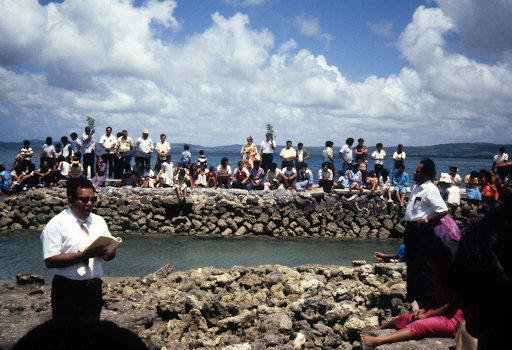
Gathering on the Shore. Dennis S. Gibbs. CC BY-NC 2.0.
Housing over 300 islands, nine of which are inhabited, the island nation of Palau is the ultimate getaway destination. Its location along a part-barrier, part-fringing reef leaves over 217 miles of land and ocean to snorkel, hike and explore.
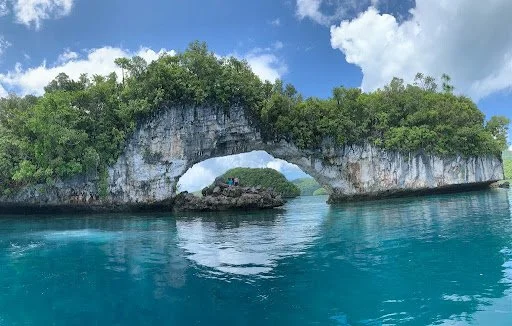
Rock Islands, Koror, Palau. Historygirlie. CC BY-NC 2.0.
But an influx of foreigners for tourism and job opportunities can also create vulnerabilities for money launderers and traffickers to exploit.
According to the U.S. Department of State, the governance of Palau is classified as Tier 2 in its Trafficking in Persons Report, meaning that the country’s political powers have not fully met the minimum standards for the elimination of trafficking among their citizens and foreigners.
The United Nations Office on Drugs and Crime’s Multiple Systems Estimation estimates that for every one trafficking case reported annually in Palau, between three and five cases go undetected. Annually, over 100 to 200 cases go unaddressed.
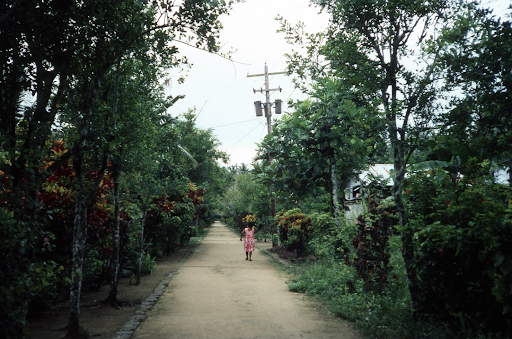
Trail in Palau. Dennis S. Gibbs. CC BY-NC 2.0.
The trafficking issue lies in the vulnerability of Palau’s foreign workers. Frequently traveling from the Philippines, Bangladesh, Nepal and China, migrants make up one-third of Palau’s population. With limited access to the language, debt from recruitment fees and limited legal protections, they face great risks of manipulation and coercion.
Offenders use Palau as a transit point, shuttling drugs, labor and sex from Asia to the US, Australia and New Zealand. Then victims may be exploited in forced labor in agriculture, fisheries, domestic service sectors and, most recently, Palau’s illicit online gambling industry.
How? Traffickers pose as recruitment or migration agencies. According to a 2023 UNODOC report, many of Palau’s trafficking victims, especially Filipino workers, signed contracts with fraudulent recruitment agencies promising the wage amounts necessary to leave the country. Once these workers arrived in Palau, usually to Koror, they were forced to sign different contracts offering lower pay and worse working conditions. Now without the money to return to their home country, they labor for half the pay and, often, are sexually exploited.

Airai State Inauguration Day, 1981. Dennis S. Gibbs. CC BY-NC 2.0.
Limited information is available surrounding these criminal organizations, but such groups appear to have ties in Singapore, Cambodia, Guam and Macau.
Palau’s government also does not have a formal visa pre-approval process for foreign workers, making fraudulent recruitment difficult to detect.
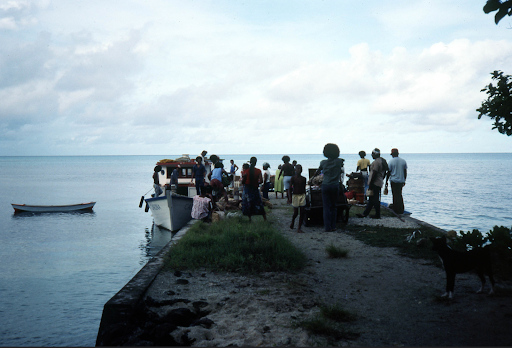
Locals on Palau’s Shore. Dennis S. Gibbs. CC BY-NC 2.0.
Tourism areas can also be sites of trafficking, although migrant workers face substantially greater vulnerability.
According to UNODC, “much of the sexual exploitation (often of women and girls) occurs in big cities or] tourist hotspots.” Usually, these victims are East Asian women tricked into sex trafficking under the guise of waitressing jobs. Regardless, because of the prevalence of trafficking operations among tourist hotspots, tourists, especially women, should remain wary.
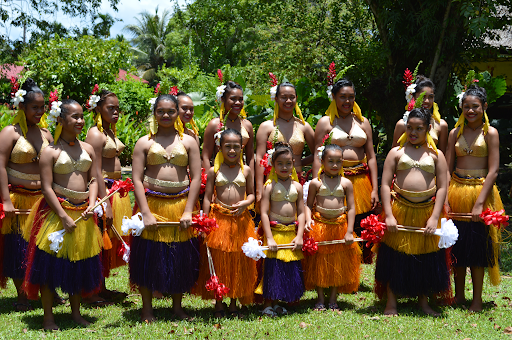
Palau Women's Conference 2013. UN WOMEN Pacific. CC BY-SA 2.0.
Palau’s Anti-Human Trafficking Unit investigated 13 cases of forced labor and sex trafficking according to the U.S. Department of State’s 2025 Trafficking in Persons Report. But it prosecuted none.
In February 2026, Palau’s government also commemorated the month of February for anti-human trafficking awareness. President Surangel S. Whipps Jr. reiterated that all residents must help to support prevention efforts. From April 20-24, 2026, the Republic of Palau hosted a five-day workshop with the Palau National Police Force, discussing how to further support migrant workers and tourists.
These included bolstering the Anti-Human Trafficking Unit’s national strategies for awareness campaigns, increasing trafficking investigations with the International Organization for Migration in Medalaii, Palau, publishing questionnaires for labor compliance officers, funding victim assistance with the Micronesia Legal Services Corporation and issuing court-ordered restitution.
However, finding consistent support to implement these services continues to be a challenge.
TRAVELING THERE:

On the Water, Palau. Mark Kenworthy. CC BY-NC-SA 2.0.
Whether traveling to Palau for personal or work-related reasons,, there are a couple ways to enjoy your trip to Palau and keep yourself safe.
First, ensure all important travel documentation and identification are in your possession at all times. Your partner or employer never has the right to take them without your permission. Be cautious if an employer or recruiter attempts to retain your passport or other identification. Also protect your personal space, food and drinks, especially within public settings.
Second, be wary of your employers abroad. Look out for suspicious or grooming behaviors. If you are traveling for work, confirm your employer’s address, pay, housing arrangements and contract terms beforehand.
Third, keep important numbers and contact information on your person at all times. That way, you can arrange communication for where you are staying with a trusted individual. Bank account access and medication access are also vital.
Fourth, be cautious with strangers. Don’t post your location and travel plans while you’re there. Be wary of hotels, restaurants and nightlife venues as people are commonly trafficked within heavily touristed areas.
Fifth, know the addresses of the local bank, the embassy of your home country, the police department and the local hospital. Do not appear lost, distracted or fatigued when traveling alone.
Lastly, always have a ticket home in your name and in a safe place.
GETTING INVOLVED:
To support Palau’s local authorities, reach out to the Palau Anti-Human Trafficking Unit. Ask about volunteering with it or within their Ministry of Justice.
You can also inquire about its local needs through the International Organization for Migration, Palau. They’re always looking for funding and monetary assistance. Your contributions can aid victim shelter, legal counseling and protective services.
For more information, visit the International Organization for Migration’s website.

Kathleen Shepard
An English and Art History Major at Boston College, Katie loves all things writing, culture, and travel. When not canyoneering across the Swiss Alps, snorkeling in the Galápagos, or photographing wildlife throughout Botswana, you’ll find her documenting about it in her latest story. She believes that every place is uniquely, wonderfully beautiful, and she’s grateful to be a travel and social action writer for CATALYST PLANET. Whether it be promoting a new trail or advocating for what matters, she hopes to continue making her words count!