
By Suzy Song
The Cambodian Genocide carried out by Pol Pot’s Khmer Rouge left a challenging legacy for survivors and the nation’s infrastructure.
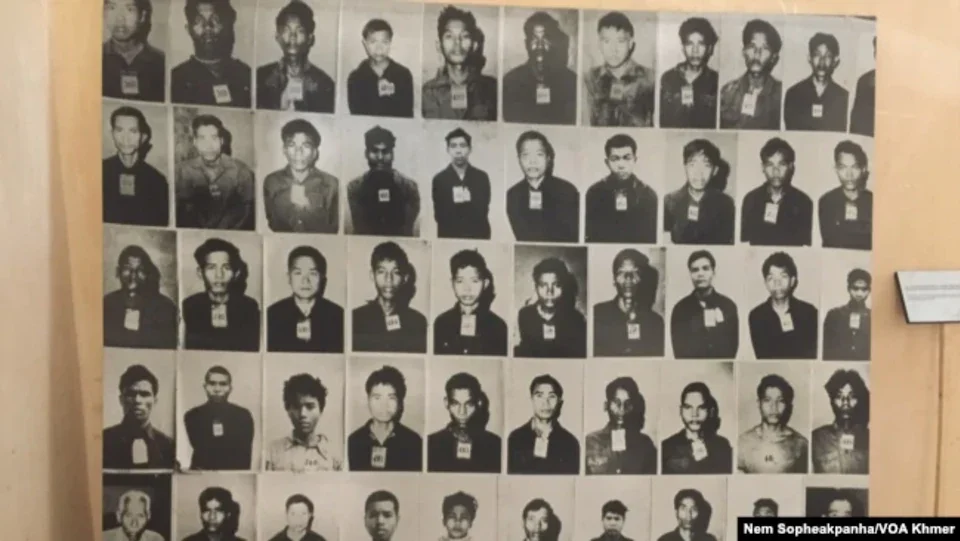
Victims of the Cambodian Genocide remembered in the Tuol Sleng Genocide Museum. Nem Sopheakpanha. CC0.
In the backdrop of the Vietnam War, civil war and discontent with Cambodia’s pro-West Lon Nol administration, Marxist dictator Pol Pot led the Khmer Rouge party in capturing the capital and seizing absolute power over the country. Initially unbeknownst to many, the Khmer Rouge’s rule from 1975 to 1979 would prove to be one of the most brutal, devastating and detrimental events in the Southeast Asian nation’s history.
Upon gaining control of Cambodia, the Khmer Rouge renamed the country “Democratic Kampuchea” with the aim of “resetting” Cambodian society and culture to “Year Zero.” In the eyes of Pol Pot, Cambodian citizens had become “tainted” by the capitalist influence of America and needed to be re-engineered into a new Cambodian “master race” denoted by an agrarian communist system run by rural peasants. While the Khmer Rouge claimed that they would turn the country into a Maoist-based utopian paradise, the regime would go on to execute a genocide that resulted in the deaths of up to 3 million people, approximately 25% of the whole population.
Believing that cities and city dwellers were corrupted by Western capitalist ideology and were a threat to the Khmer Rouge’s vision, the party persecuted the country’s most educated. While all non-rural residents were forcibly relocated into agrarian communes in the countryside, doctors, lawyers, engineers, teachers, military personnel and other individuals of higher socioeconomic status were specifically targeted. Alongside the educated, internal political opponents and certain religious and ethnic communities, such as the Vietnamese, Chinese, Buddhist and Cham Muslim communities, were also disproportionately targeted.
In dismantling formal urban residential and educational structures, Pol Pot’s intentions were to have his potential enemies enter a “re-education” program that encouraged a collective lifestyle through communal living and mandatory propaganda lectures. Those in this program were categorized based on how trustworthy the Khmer Rouge deemed them to be, with “new citizens” being able to move up the ranks to finally become “full rights citizens.” However, barely any citizens ever moved up, and those who resisted this forced lifestyle were murdered in the Killing Fields, sites across Cambodia where the Khmer Rouge executed and then buried civilians. Approximately 20,000 mass grave sites exist. For those who remained in the communes, extensive forced labor and starvation caused mass suffering and many further deaths.
Children in programs were separated from their families because the Khmer Rouge saw their vulnerability to indoctrination as an essential asset to fortifying and sustaining the party’s power. The state taught children that anyone with values and beliefs contrasting those of the Khmer Rouge were enemies whom they were to kill.
From December 1978 to January 1979, communist Vietnam carried out a full-scale military invasion of Phnom Penh, Cambodia’s capital city, to establish a Vietnamese occupation and overthrow the Khmer Rouge. Subsequently, the United Nations Transitional Authority in Cambodia supervised Cambodia's political transition and 1993 elections.. Pol Pot’s death before trials commenced meant he never faced punishment for the brutality he inflicted, and it brings to relevance the difficulties contemporary Cambodia has faced in dealing with the genocide’s persistent, lasting legacy.
The Khmer Rouge’s abolition of the formal education system and persecution of education severely weakened Cambodia’s human capital. The genocide perpetuated long-term struggles regarding adult literacy and a lack of human resources, which has only further challenged the complex process of reforming educational institutions. The devastation of professional fields has also pushed Cambodia into an economy that is gravely dependent on garment exports, tourism and allied nations, making it highly vulnerable to foreign shocks and volatile global market trends.
As survivors continue to navigate and grapple with trauma, their descendants also share struggles in experiencing PTSD and depression. Even though intergenerational trauma is rampant across the country, mental health services are inadequate. With this, many are left to deal with trauma in private or total silence.
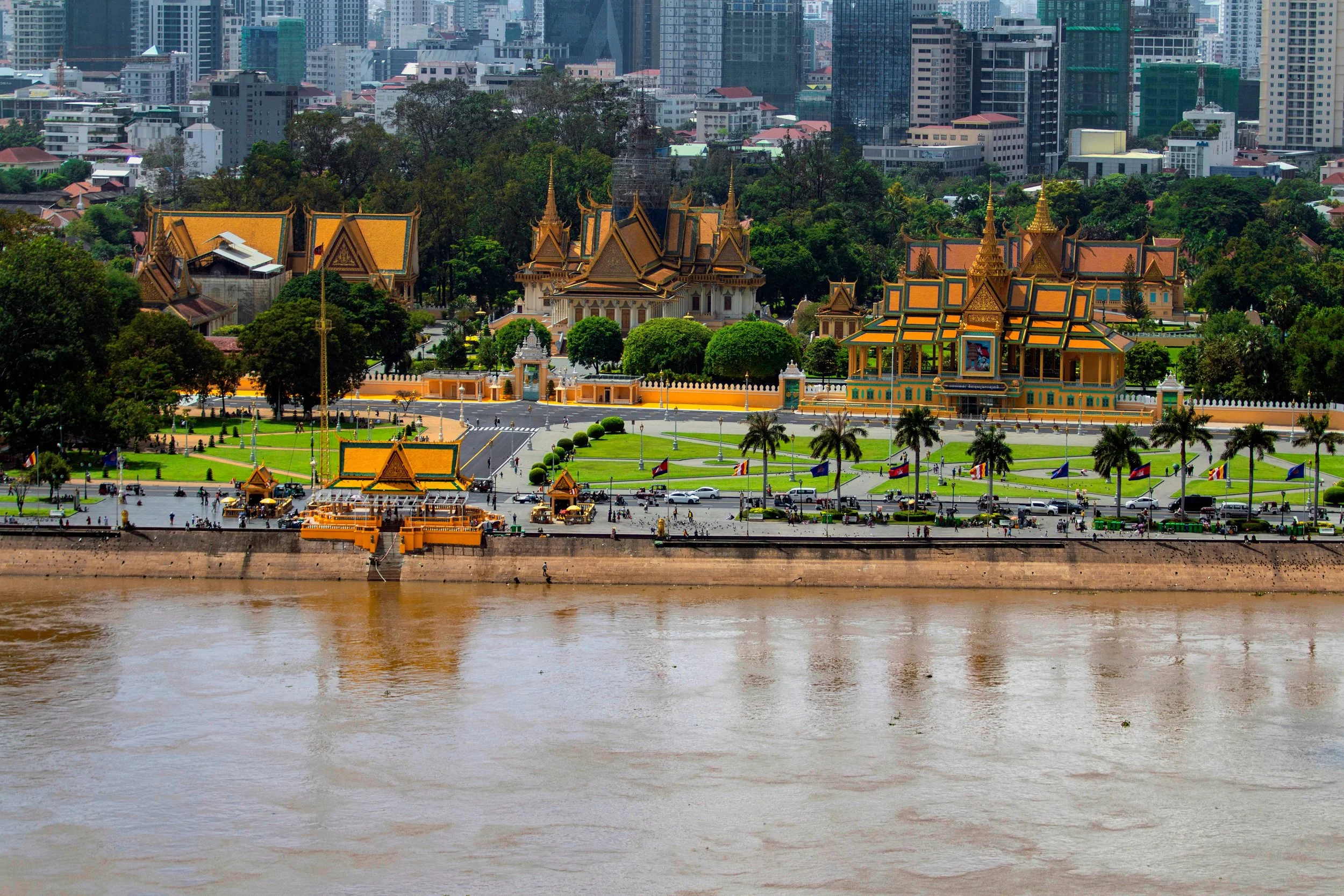
Contemporary view of the Royal Palace in Phnom Penh, Cambodia. Piseth Mao. Pexels.
Arguably one of the most concerning consequences of the genocide’s legacy is the politicization of historic memory. Many modern-day leaders have used the genocide as a means to promote nationalism and undermine critiques. Combined with the fact that many rural locals live alongside unprosecuted former Khmer Rouge cadres, the question of whether national reconciliation can be genuinely achieved is significant. When historical memory continues to be politically manipulated, justice is incomplete and complicit members are allowed to live peaceful lives, how can reconciliation be truly legitimate when the past it seeks to come to terms with still lives on in the present? At the core of addressing the Khmer Rouge’s legacy, priority must be given to understanding and listening to survivors in the efforts to alleviate intergenerational trauma and ensure accurate, continued education of this chapter in Cambodian history.
TRAVELING THERE:
Tuol Sleng Genocide Museum
Phnom Penh
The memorial site for the S-21 center. Formerly a secondary school, the Khmer Rouge turned the site into “Security Office 21,” an internment camp where the regime detained and interrogated an estimated 20,000 civilians. As a remembrance site today, Tuol Sleng Genocide Museum encourages meaningful reflection on the very grounds where mass-injustice took place.
Choeung Ek Genocidal Center
Dangkao, a southern district of Phnom Penh
A site that functioned as a Killing Field. An estimated 17,000 civilians, including children, were murdered at Choeung Ek. Many remains of civilians who were executed remain on display at the memorial site. Each year, May 20 sees Khmer Rouge survivors and Cambodian civilians come to Choeung Ek to honor victims and acknowledge the tragic events that took place at the location.
Former M-13 Prison
Kampong Chhnang province
A secret prison lying in the Cambodian jungles, M-13 operated under the Khmer Rouge’s interrogation system, specifically acting as a training ground for brutal methods used in S-21. Today, the land is largely overgrown, but it does not lose its significance in remembering victims and survivors.

Suzy Song
Suzy Song is a sophomore at Tufts University, majoring in International Relations on a pre-law track. Passionate about human rights, international law, and global institutional studies, she hopes to bring meaningful discussions on social justice to corporate fields in the future. From Canada’s Pacific Northwest, she loves travelling, hiking, and vintage film and music.