
By Mia Gooch
Illegal gold mining is threatening the livelihoods of Indigenous communities and rainforest ecosystems across the Brazilian Amazon.

A deforested area in the Brazilian Amazon, with exposed ground contrasting against the surrounding rainforest. Vinicius Mendonca/Ibama. CC BY-SA 2.0.
Illegal gold mining is devastating Indigenous lands in the Brazilian Amazon, stripping protected forests to unearth precious metals and minerals. Miners, known as garimpeiros, leave the landscape vastly different than when they first arrived. Tropical rainforests are reduced to cratered ground, with sunken soil leached of minerals. Toxic contaminants from erosion and chemical processing stream through rivers, polluting freshwaters. Bulldozers and hydraulic mining tools carve their way through tree roots and riverbanks, leaving behind a scarred terrain without vegetation.
Many of these lands are protected areas, inhabited and respected by Indigenous groups, yet they have been slowly destroyed through illegal mining for decades.
At the base of Serra Pelada in 1979, a historic gold discovery sent eager garimpeiros scrambling to the Brazilian Amazon in hopes of finding wealth and success. As these searches continued, diamonds and battery metals joined gold as precious commodities found in the Amazon’s soil, and garimpeiros sought to profit from these finds. However, many of them operated without approval from the Brazilian government. In efforts to halt unlawful mining, the government intervened with military action, but the profits from these commodities were so great that the unlicensed mining operations continued. Some workers took to expanding with heavy machinery to continue large-scale operations, avoiding government punishments through organized crime. This fueled the modern-day issue of smuggling in the Brazilian Amazon.

A young boy working in the gold mines in Serra Pelada, Brazil. Paulina Aguilera. CC BY-NC-SA 2.0.
As smugglers trade and profit, the land and its Indigenous people continue to see their cultural practices and their quality of life diminished. The voices of Indigenous communities are not often amplified by the media amid the chaos of illegal mining, yet they are forced to shoulder the consequences of material smuggling.
One of these tribal groups is the Yanomami, native to the Amazon River Valley of northwestern Brazil. Although they have historically lived in Brazil’s largest protected reserve, their territory has been seriously harmed by illegal gold mining throughout the past decades. By 2023, an estimated 20,000 garimpeiros were illegally operating inside Yanomami territory.
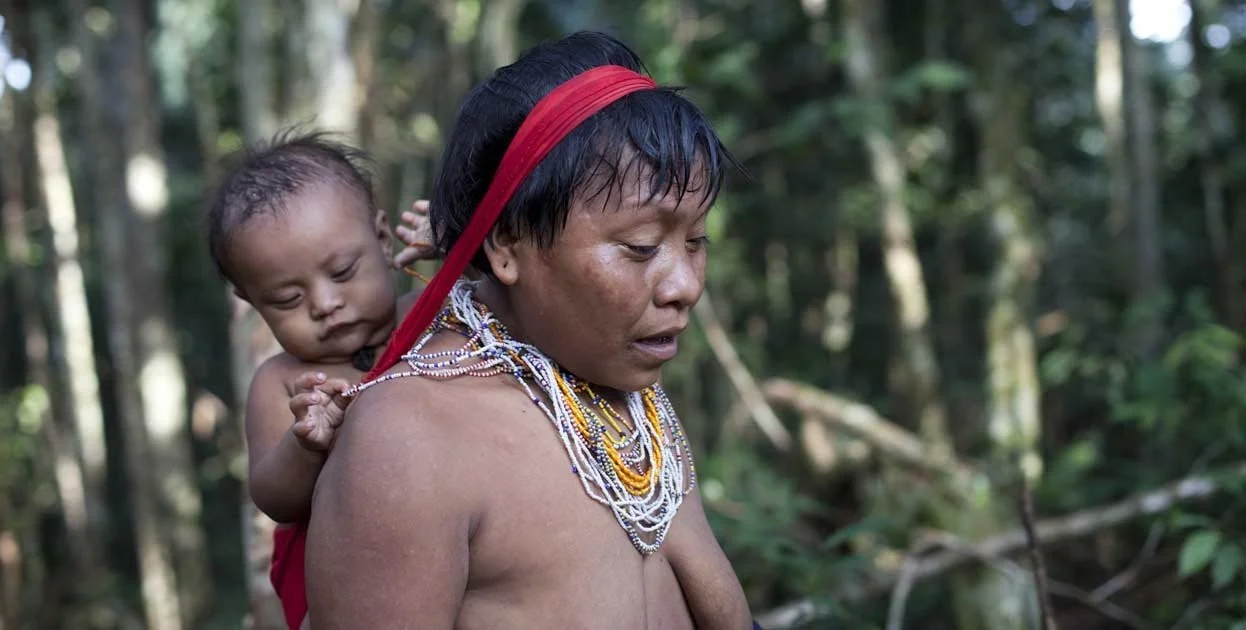
A Yanomami mother with her child in the Brazilian Amazon. Sam Valadi. CC BY 2.0.
This physical and cultural invasion reflects the humanitarian crisis that is stretching across Amazonian regions, into other Indigenous communities such as the northern Yekwana community and the Kayapo Territory. These tribal groups, and their thousands of acres of rainforest, are constantly under attack by illegal mining and its profiteers.
The environmental stress caused by illegal gold mining is extreme. Public health scholar Paulo Cesar Basta, a leading researcher on the Yanomami health crisis, says that “mercury contamination is at the root of the health crisis.” Mercury used during the mining process pollutes freshwater ecosystems, spoiling fish and disrupting cultural practices. A 2024 study found 84% of Yanomami people tested had mercury levels above safe limits, largely due to unauthorized mining, and all fish sampled were contaminated.
In addition to chemical poisoning, mining pits carved into topsoil are gradually filled with stagnant water, creating breeding grounds for mosquitoes and encouraging the spread of malaria. The encroachment of illegal miners into remote regions has encouraged the spread of infectious diseases, including COVID-19, among nearby communities.
Beyond these environmental impacts, illegal mining is also associated with the brutal exploitation and malnourishment of women and children. Women and children in mining-affected communities are subjected to forced labor and sexual violence, while access to medical care remains limited.
For Brazil’s Indigenous communities, these impacts are profoundly personal. A Yanomami leader urged world leaders to pay attention to this issue, saying, “May all of you turn your eyes to us! We have been suffering along with the forest… Just as the forest is devastated, so are we. Why are we damaged? We’ve been devastated by mining. We are all going through this all over our land, we want to open your eyes. They have wiped us all out.”
GET INVOLVED
Amazon Watch: Amazon Watch works alongside Indigenous peoples to protect the Amazon rainforest and defend Indigenous rights by supporting campaigns against illegal mining and other environmental threats. Donations help support community-led conservation efforts and legal advocacy for those affected by mining and environmental destruction.
Rainforest Foundation US: Rainforest Foundation US partners with Indigenous organizations throughout the Amazon to protect ancestral lands and monitor illegal mining and deforestation. Donations support conservation and Indigenous-led monitoring initiatives.

Mia Gooch
Mia a student at the University of North Carolina at Chapel Hill, majoring in Media & Journalism with a double minor in Education and Social & Economic Justice. She’s passionate about informal education and creating fun experiences where people of all ages can explore new perspectives and develop new skills. When she’s not in the classroom, she loves contemporary dance classes, spending time with friends and family, baking, and being outdoors!