
Claire Park
How Native American culture influenced American society and the ways their contributions remain embedded in everyday life.
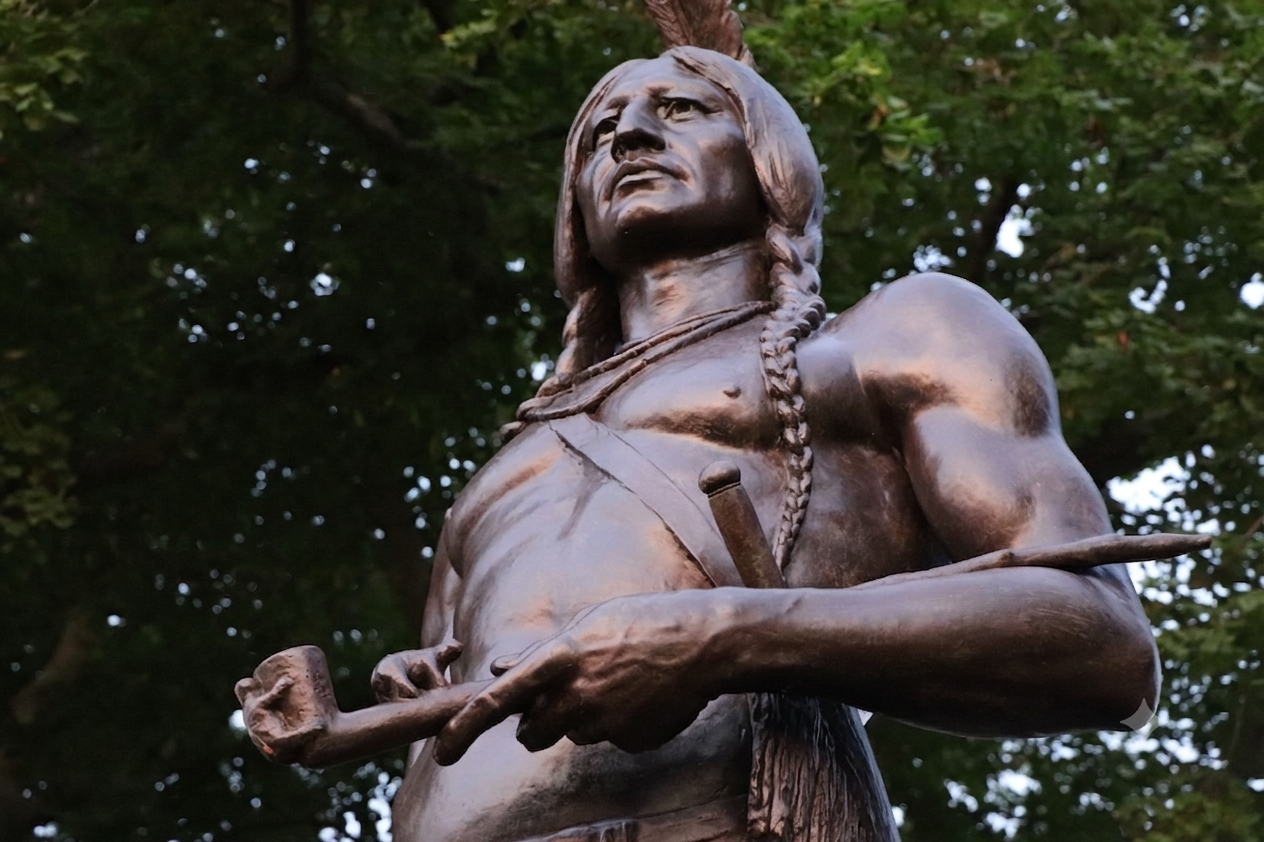
Statue commemorating Native American influence on America. Craig Picariello. Pexels.
Every American is taught the history of the nation’s founding through stories of victories, such as winning the American Revolution, expanding west, building one of the most extensive transcontinental railroad lines and the subsequent boom in economic prosperity. But that history also includes some major injustices, including the United States’ treatment of Native Americans.
Many of America’s successes were built on these injustices. Colonists’ broken promises of respecting Native American sovereignty and driving them onto reservations allowed the opportunity for white Americans to homestead, build their railroads and establish the United States among the great nations. However, as settlers developed the country’s institutions, not all of the emerging culture was influenced by their former European ties. The foundations of America were heavily built on the same Indigenous cultures and traditions that colonists sought to eradicate.
For starters, America’s own system of government was modeled after the Iroquois Confederacy’s democratic ideas. The Iroquois Confederacy, also known as the Haudenosaunee Confederacy, comprised six nations that formed a multistate government while each nation maintained its own governance, serving as a model of federalism and participatory government. Furthermore, the confederacy’s constitution, the Great Law of Peace, inspired the Founding Fathers’ concepts on balancing power, state sovereignty and democratic representation.
Because early settlers moved into Indigenous lands, the crops native to the Americas not only became integrated into the diets of Americans but also transformed cuisines around the world through earlier European colonization and trade. Whether taken by force or by Indigenous people sharing their farming techniques, foods like corn, tomatoes, peppers, squash, beans, nuts, peanuts and potatoes were transported beyond the Americas to shape Spanish, Italian, Thai and other European and Asian cuisines.
Even the English Americans speak has Native American contributions. Indigenous languages inspired the naming of numerous cities, rivers and over half of U.S. states. These include states like Alabama and Ohio, cities such as Seattle, Milwaukee and Miami, and rivers like the Mississippi River and Potomac River. Not only are major landmarks named after Native American terminology, but many words Americans use in their everyday speech are from Indigenous culture. For example, countless animals, such as caribou, chipmunk, racoon and skunk, are all derived from Native American languages. Additionally, words like caucus, persimmon and toboggan are terms with Indigenous roots.
Many of the games and outdoor activities Americans partake in also have roots in Indigenous cultures across the Americas, including canoeing, snowshoeing, kayaking, lacrosse, relay races, tug of war and ball games. Kayaking, specifically, was a survival practice in harsh climates, allowing hunters to track marine animals and navigate freezing coastal waters to sustain their communities.
Reflecting on this knowledge, it’s important to understand that the history of America cannot be separated from the history of Native Americans. It is through their tribes, traditions and culture that the United States emerged; their influence is something we should never forget, and their prominence within our society is something we shouldn’t fail to recognize.

Claire Park
Claire Park is a sophomore at the University of California, Berkeley, studying English and Media Studies with a minor in Music. Her experience writing lifestyle content for UC Berkeley's The Daily Californian newspaper has inspired her to expand her scope to the realm of travel, pursuing her aspirations of becoming a travel journalist. When not writing, Claire can be found singing, reading romance books, journaling at the beach, or acquiring a sweet, caffeinated beverage.