
By Ellie Chase
Tips and tricks for hiking Guatemala’s most famous hike; here’s what to know before hiking an active volcano.
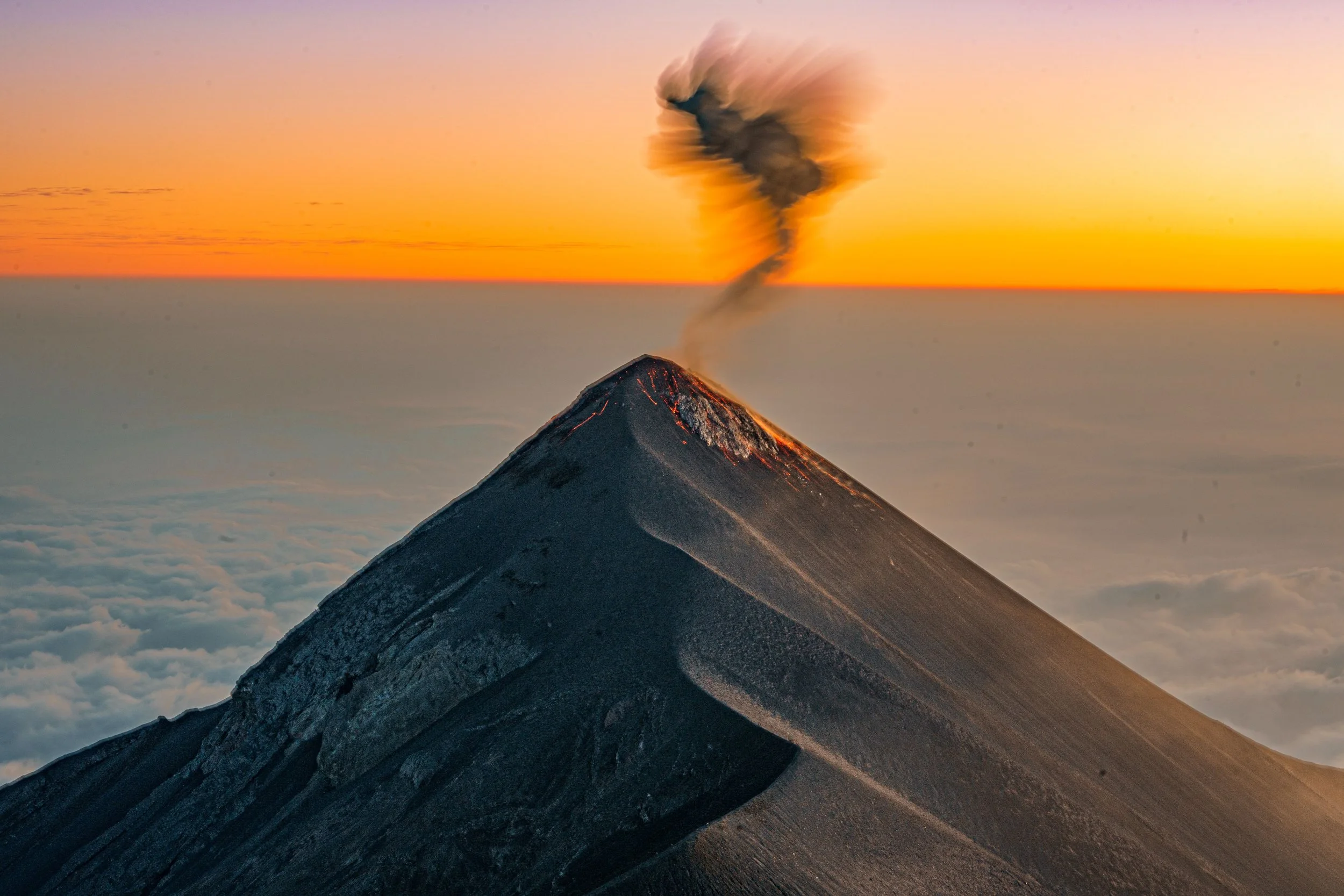
Volcan Fuego erupting at sunrise. Diego Giron. Pexels.
Some destinations capture your attention long before you arrive.
When booking my flight to Guatemala, there was one thing at the top of my bucket list: climbing Volcan Acatenango to view the infamous Volcan Fuego. Trekking through cloud forests and summiting to see an active volcano explode right before your eyes seemed otherworldly. I had to experience the wonder of Fuego for myself.
The anticipation grew as I drove down the cobbled streets into Antigua, catching sight of the towering volcanoes that surrounded the mountain city. From the rooftop of my hotel, I could actually see Fuego erupting far in the distance.
Standing at 3,976 meters, or 13,045 feet, Acatenango is part of the Sierra Madre mountain range and the Central American Volcanic Arc, formed by the subduction of the Cocos Plate beneath the Caribbean Plate. Its twin, Fuego, is one of Central America’s most active volcanoes and has had 79 major eruptions since 1524. It is known for its strombolian explosions, which occur every 5-10 minutes.
Climbing Acatenango was truly a once-in-a-lifetime experience for me. But do not be misled; just because it is a popular hike does not mean that it’s an easy one. Here are my tips, and things I would’ve done differently for your summit push on Acatenango.
Do your research
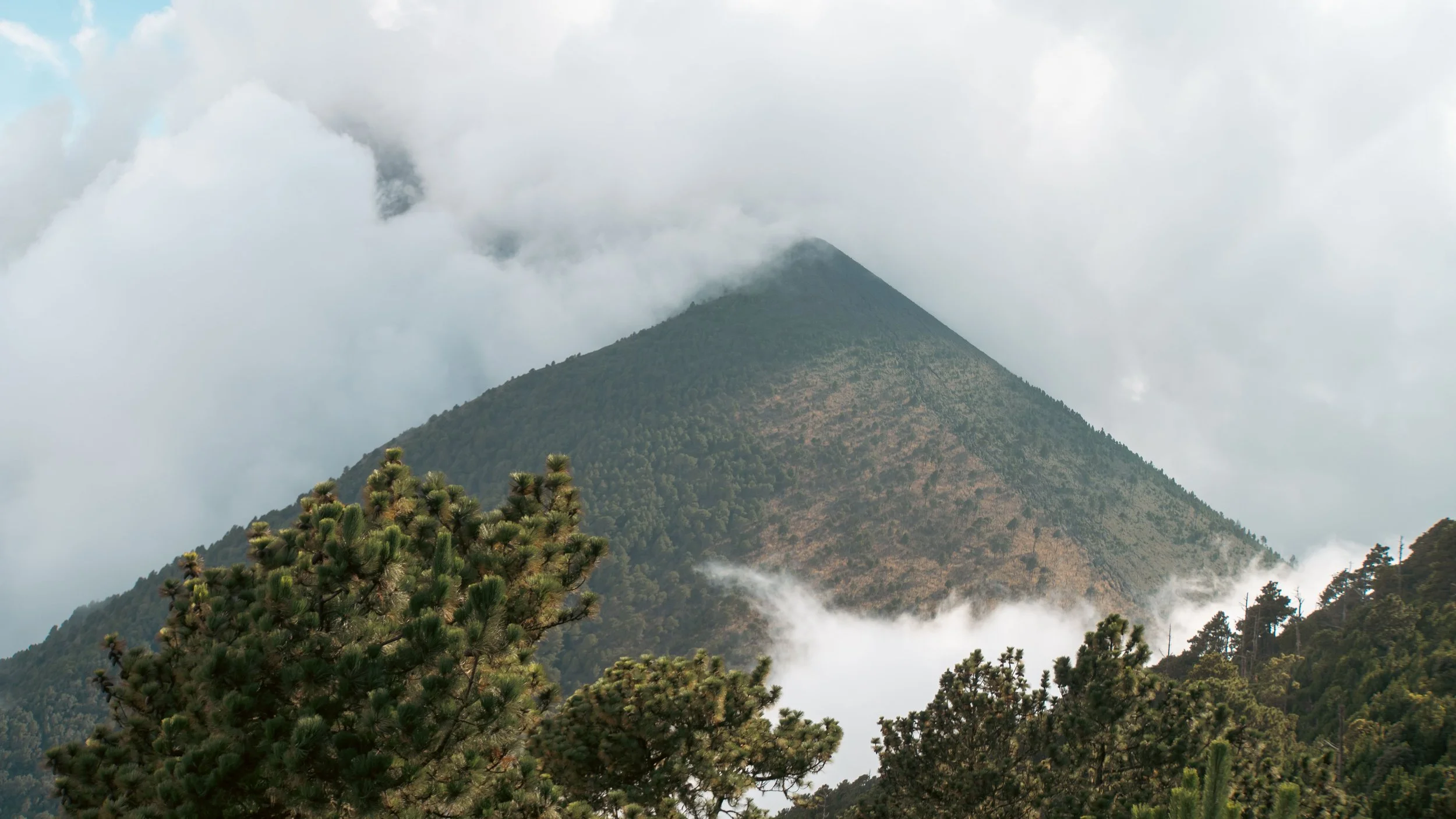
View of Volcan Acatenango through the clouds. Domenico Bertazzo. Pexels0.
The first thing you will want to decide is whether to make the trek in one or two days. With my limited time in Guatemala and confidence from years of challenging hikes, I opted for climbing Acatenango in one day, allowing for more time to explore the city of Antigua. While this was manageable, I do not recommend this option for less experienced hikers, and I learned later on from my guide that 95% of travelers opt to do the climb over the course of two days.
There are pros and cons to either choice. Doing the trek over two days is easier and offers a unique experience. On the first day, you hike up to base camp and get to sleep with an incredible view of Fuego. In the dark of the night, you can see the red lava of Fuego’s eruption and spend quality time with fellow adventurers. Early in the morning, hikers are woken up to make the summit push on Acatenango, where you can experience sunrise above the clouds before hiking back down. This option will take about 24 hours in total, and likely 8 to 11 hours of hiking. However, being a more popular option comes with much larger crowds, and hikers can be joined by over a thousand other travelers at sunrise on the summit.
For travelers in a time crunch or hoping to avoid the crowds, completing the trek in one day may be a better option. In this case, you begin the journey at about 6 a.m. and hike all day to reach the summit and return to the base. It took me about 6.5 hours of moving time, but closer to 8 hours total, and the average for hikers is an 8-12 hour day. While very challenging, I had a very tranquil experience, seeing only a few other hikers going up, and getting to enjoy the trails and views at my own pace. When I reached the summit, it was only my guide, myself and the other two people I was traveling with exploring the peak and watching Fuego’s explosion.
Being able to experience the hike and final view on my own made the long day well worth it for me. However, given the chance to do it again, I would do the two-day journey to see the volcanoes in the dark and at sunrise. Again, note that this is a very challenging hike and requires a high fitness level and experience with long hikes or multiday treks. I would recommend opting for the two-day hike if you are concerned about your fitness level, as it gives you the chance to break up the mileage and elevation over two days.
The other thing you need to consider is whether or not to do the hike with a guide. As a traveler who very rarely hires guides, I would recommend one for this hike. Though the trail is incredibly easy to follow, the beginning of the trek involves crossing some local farms, and it was easier and more ethical to let the local guide navigate access fees and avoid confusion or unfair bartering. It’s also fascinating to learn more about the history of the area, get a local’s perspective and make the most of your experience with an expert. I didn’t see any unguided hikers.
Hiking logistics
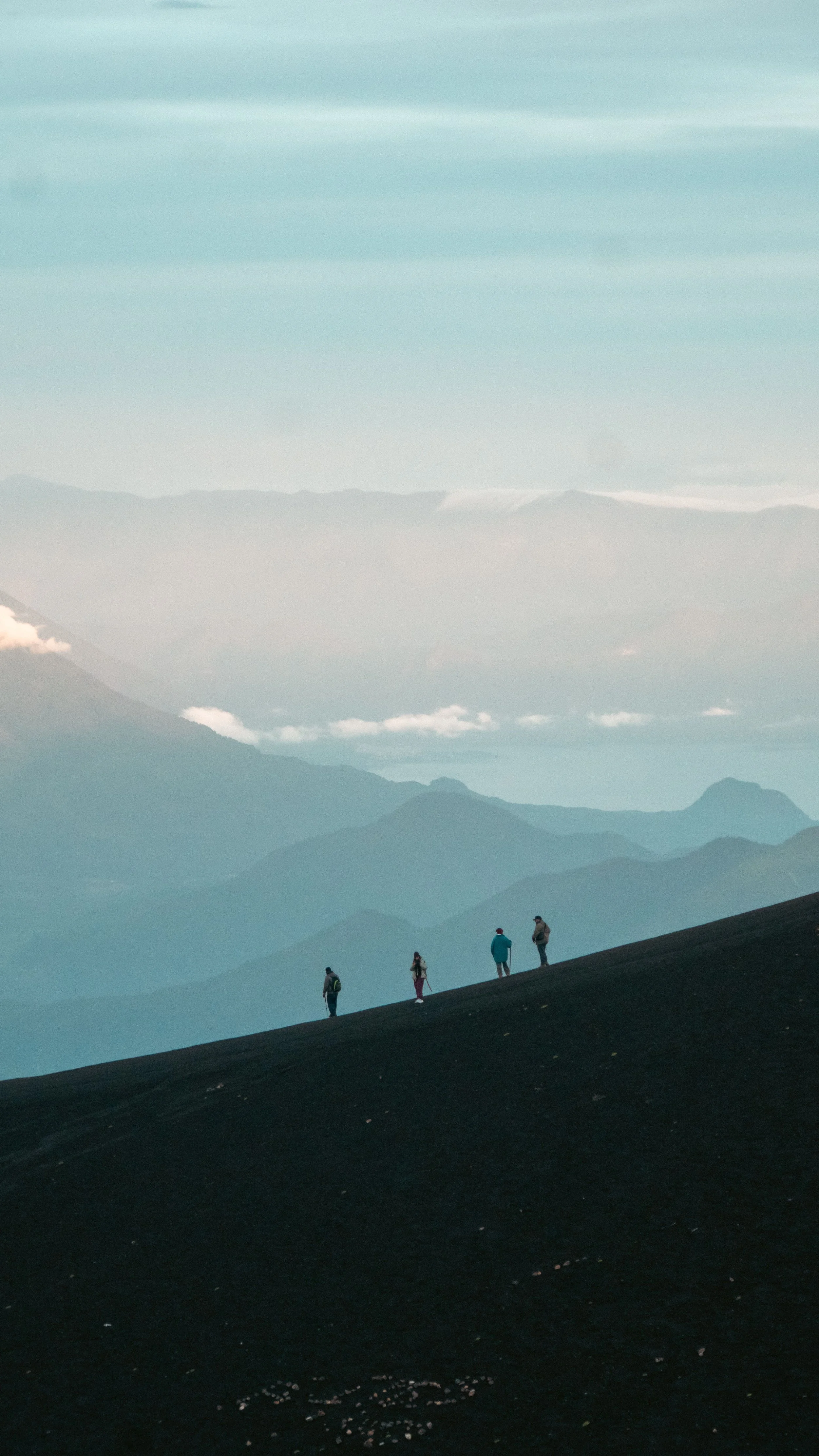
Hikers descending Volcan Acatenango summit. Domenico Bertazzo. Pexels.
There is no easing yourself into this trail. While there are various trail options, the longer one that I opted for gains 5,000 feet of elevation in only five miles. While this is still manageable mileage and elevation gain for experienced hikers, I found the terrain of the trail significantly added to its challenge. Most of the route is covered in loose volcanic scree and ash, which makes it difficult to navigate your footing and requires extra energy with every step.
Because of the ashy landscape, expect to have all clothing covered in dust by the end of your hike. I would recommend bringing a buff or bandana to cover your face, and sunglasses to protect your eyes. The wind is strong on the summit and can blow the ash around quite a bit.
Bring lots of food and three liters of water. Trekking poles can definitely help to navigate the slippery downhill terrain as well. Another important consideration is the five different weather zones that you will be hiking through. The trail begins on farmland, moves into cloud forest, then high-altitude pine forest, alpine scrub and into the summit volcano zone. As you ascend, there are noticeable changes in temperature, humidity and wind, so it is important to bring layers to prepare for all weather conditions.
Although the hike is strenuous, the views and experience are well worth the challenge. The views from the trail are stunning, offering an outlook above the clouds where you can see countless volcanoes in the distance. One of my favorite parts of the experience was the friendly local dogs on the trail. Don’t be surprised if they accompany you along your hike; one dog followed me all the way to the summit!
TRAVELING THERE:
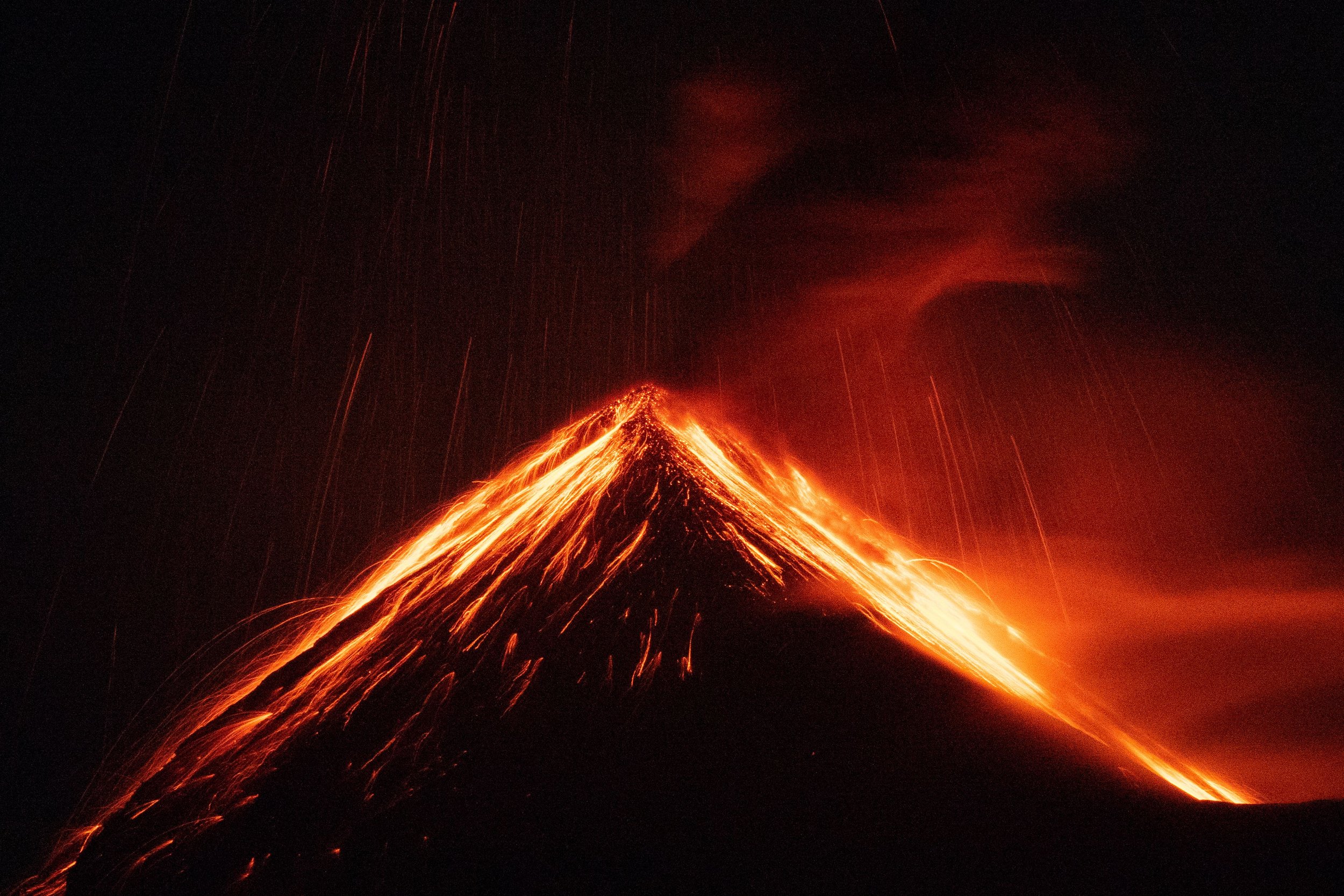
Volcán Fuego erupting in the night. Diego Girón. CC0.
When choosing a guide, I would highly recommend Trek Guatemala. This is the touring company that I went with, and they offer small groups, expert guides and various ways to experience Acatenango. Their tours average at about $100 for the day trek, and $250 for the two-day trek. This includes a van that picks you up from your hotel, and drives the hour journey to the volcanoes, a guide with years of knowledge and experience, as well as lunch and food for the whole journey. Prices vary widely based on group size, so if you are willing to spend a little extra money for a more personalized experience, I highly recommend Trek Guatemala. Other top tour companies include family-owned V-Hiking Tours or eco-friendly OX Expeditions. All of these companies are known for their quality tours and for being environmentally friendly.
Despite the large amounts of tourism, Acatenango remains spectacular. However, littering by hikers causes trash buildup on trails that damages the ecosystem. Pack in and pack out, or participate in weekend cleanups with the trail guides. Also, make sure to stay on the established trail; taking shortcuts accelerates erosion on the loose volcanic soil.
Ellie Chase
Ellie is a second-year journalism student at the University of Colorado Boulder. She loves to travel and has visited 29 countries. When she's not in class or booking her next trip, Ellie likes going rock climbing or bagging another Colorado 14ner. She hopes to be able to combine her love of travel and her love of storytelling to report on stories across the world.