
By Cove Johnson Rabidoux
Hundreds of petrochemical facilities reside along the Mississippi River, and local Black communities bear the consequences.
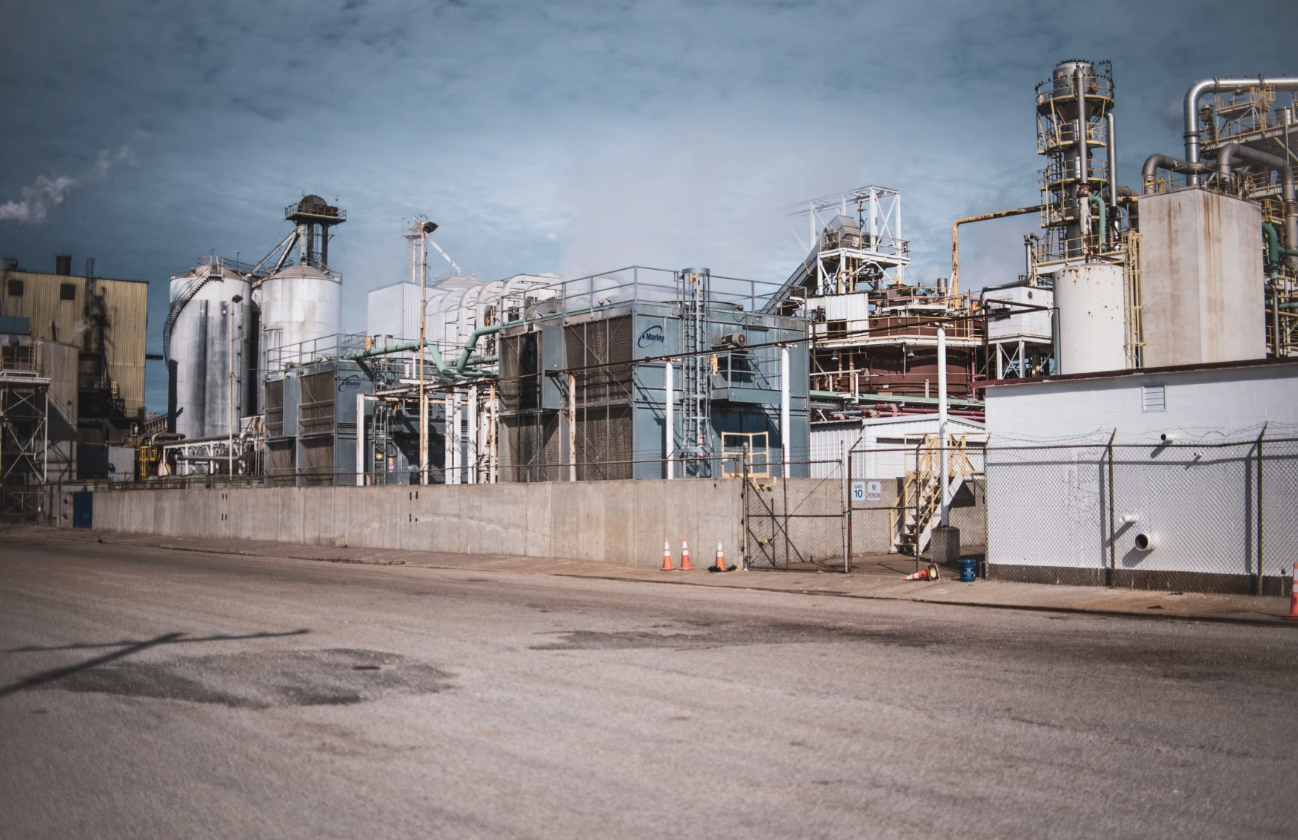
Industrial plant among blue sky. Brixiv. Pexels.
For many Louisianans living along the Mississippi River, petrochemical plants are an ordinary part of the landscape. After all, the region is home to more than 200 different chemical and fossil fuel production plants.
But this high concentration of industry has earned the region a morbid nickname: “Cancer Alley.” The name comes from the fact that residents in this area face extremely high estimated cancer risks, in some cases nearly 50 times the EPA’s acceptable risk threshold. These risks fall disproportionately on Black residents, who make up around 40% of the local population, making the region a prominent example of environmental racism.
The Alley stretches 85 miles between Baton Rouge and New Orleans. Along this stretch of the Mississippi River, dozens of petrochemical facilities release pollutants into the surrounding environment. Many of these pollutants are known to cause cancer, raising concerns about the long-term health of the people who live nearby.
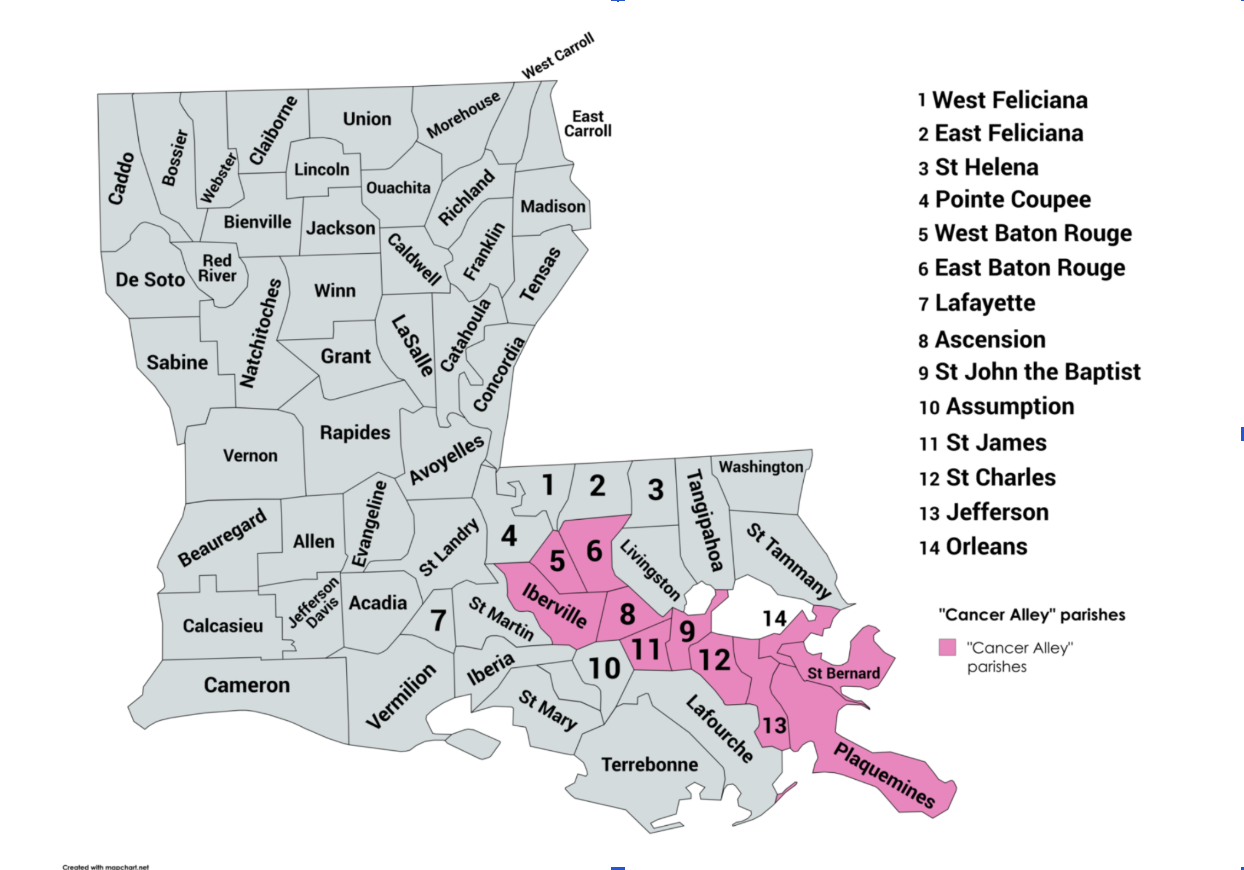
Map of Louisiana’s Cancer Alley. Patapsco913. CC BY-SA 4.0.
One such pollutant is ethylene oxide, a gas used in sterilization products. Exposure to ethylene oxide is extremely harmful as it significantly increases the risk of different cancers, mainly breast and lymphoid cancers. Despite these harms, research published in the Proceedings of the National Academy of Sciences found multiple ethylene oxide-producing facilities in Cancer Alley.
For people who have spent their entire lives in these communities, avoiding exposure can be nearly impossible. As a result, it may not be a surprise that so many residents experience some type of health complication. “Out of every 10 houses, there’s a prospect of one or two people that have died of cancer,” said Terry Frazier, a local hospital receptionist.
However, the health effects of living near these facilities go beyond cancer. Residents of Cancer Alley often report a variety of symptoms, such as headaches, miscarriages, skin irritation and respiratory problems.
In a 2019 survey, the University Network for Human Rights found that over 40% of the residents they surveyed experienced frequent coughing and tended to have sore throats, among other health conditions. Ultimately, this can cause children to miss school, adults to miss work and residents to lose sleep over respiratory stress.
One resident told Human Rights Watch that “we’re dying from inhaling the industries’ pollution. I feel like it’s a death sentence. Like we are getting cremated, but not getting burnt.”
These health risks are not distributed equally across the region. Around 40% of the population in local communities are Black, compared to the national average of around 14%, meaning Black residents are disproportionately exposed to the pollution produced by the industry.
Many researchers argue that this is not a coincidence and that Cancer Alley is a prime example of environmental racism.
Coined in the 1980s by civil rights leader Dr. Benjamin F. Chavis Jr., environmental racism refers to the disproportionate placement of environmental hazards in minority communities.
“There is a real link and correlation between [cancer and] historical public policies like redlining, which consisted of discriminatory housing and lending practices that forced marginalized communities into specific zip codes that happened to be within close proximity of carcinogenic waste sites,” Adjoa Kyerematen wrote for the National Minority Quality Forum.
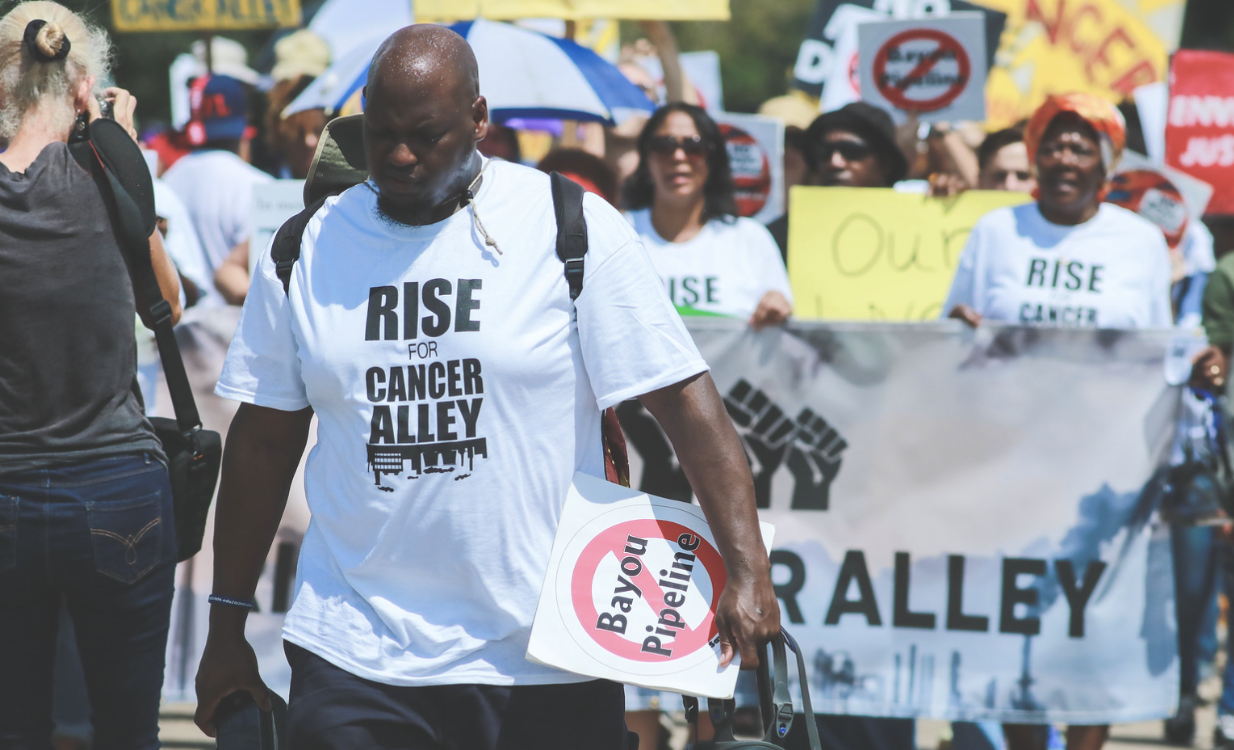
Rise for Cancer Alley Protesters. 350.org. CC BY-NC-SA 2.0.
With Cancer Alley mainly comprising Black residents, environmental racism can be used to explain the prominence of petrochemical facilities. Facilities often treat the region as a “sacrifice zone” where health implications are ignored as residents are deemed less important than the industry’s economic benefits.
This type of racism can also make it more difficult for residents to receive adequate protection. As a result, residents argue that existing regulations don’t do enough to protect those living near industrial plants.
The state of Louisiana and the Louisiana Department of Environmental Quality have consistently failed to address the health effects of petrochemical plants and enforce pollution standards. In fact, Louisiana has some of the loosest air and pollution standards in the country.
In response, residents have spent decades protesting the petrochemical industry's expansion. One of the most notable examples occurred in St. James Parish, where residents continue to organize against a proposed plastics manufacturing facility known as the Sunshine Project. In February 2026, groups sued over another extension of its air permit.
However, facilities continue to expand in the region, and pollution continues to spread. So, the fight isn’t over. As fossil fuel researcher Antonia Juhasz put it, “It’s long past time for governments to uphold their human rights obligations and for these sacrifices to end.”
GET INVOLVED:
Contribute to Rise St. James to battle petrochemical expansion in the region. Spread awareness of Cancer Alley on social media. For more information on the toxic materials in Cancer Alley, read this report by the University Network for Human Rights.

Cove Johnson Rabidoux
Cove is an English student at the University of California, Los Angeles. Her writing can be found in the Daily Bruin, The Teen Magazine, Piece of Cake Magazine, and other publications. In her free time, she enjoys reading and traveling.