
By Kate Dawson
Explore the landscapes, traditions and sustainable journeys that make Laos Southeast Asia’s quiet standout.
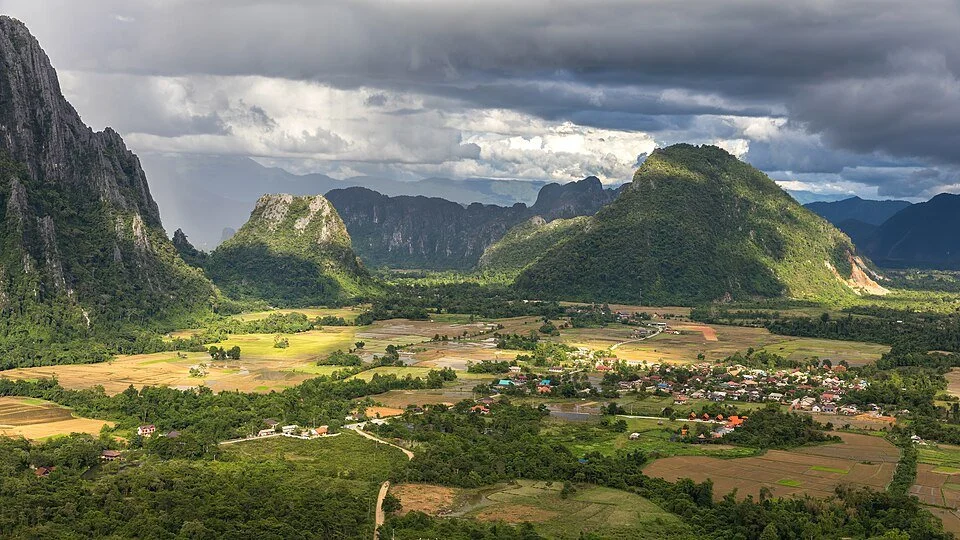
Mountain landscape in Laos. Basile Morin. CC BY-SA 4.0.
Laos is one of Southeast Asia’s most tranquil nations, where the Mekong River makes its way through mountains, forests and temples across a landscape that feels both ancient and alive. For travelers, Laos’s appeal is in the immersion: a chance to experience a combination of culture, nature and community at a pace that reflects the Lao philosophy of bo pen nyang, which means “no worries, no rush.”
The country is deeply shaped by a long arc of foreign domination. First, Siam absorbed fragmented kingdoms in the late 18th and early 19th centuries. Later, France established the French Protectorate of Laos in 1893. They helped establish the borders that still define the country today. Under French rule, Laos became part of French Indochina, reshaping the country with colonial administration while the rural heartlands remained untouched.
Laos’s cultural identity is shaped by 50 officially recognized ethnic groups, each with their distinct traditions, textiles and spiritual practices. In cities like Luang Prabang, a UNESCO World Heritage site, monks walk in early-morning alms ceremonies while French colonial facades line the quiet streets.
In rural areas, village life is centered around farming, weaving and communal festivals that highlight how closely culture is connected to the land. Laotian cuisine is shaped by seasonality and simplicity, with sticky rice steamed in bamboo baskets, herb-bright larb and foraged vegetables.
What makes Laos special for travelers is its sense of authenticity. Laos is a rarity in Southeast Asia, a region transformed by rapid development. Forests continue to cover much of the country, rivers remain central to daily life and slow tourism helps keep the country feeling discoverable.

Kuang Si Falls. Basile Morin. CC BY-SA 4.0.
The limestone karsts of Vang Vieng, the waterfalls of the Bolaven Plateau and the 4,000 islands of Si Phan Don offer striking landscapes that can be explored by kayak, bicycle or foot rather than by tour bus.
Sustainability is not just a trend in Laos, but a national priority. The country has embraced ecotourism as a way to protect biodiversity while supporting rural communities. National parks such as Nam Et-Phou Louey have guided wildlife experiences tailored to minimize impact and fund conservation. Community-based tourism programs in Nong Khiaw and the Nam Ha Protected Area give travelers the chance to stay in villages, learn local crafts, and contribute directly to livelihoods.
Eco-lodges have shown shifts toward green hospitality with increasing reliance on solar power, filtered water stations and low-impact building materials.
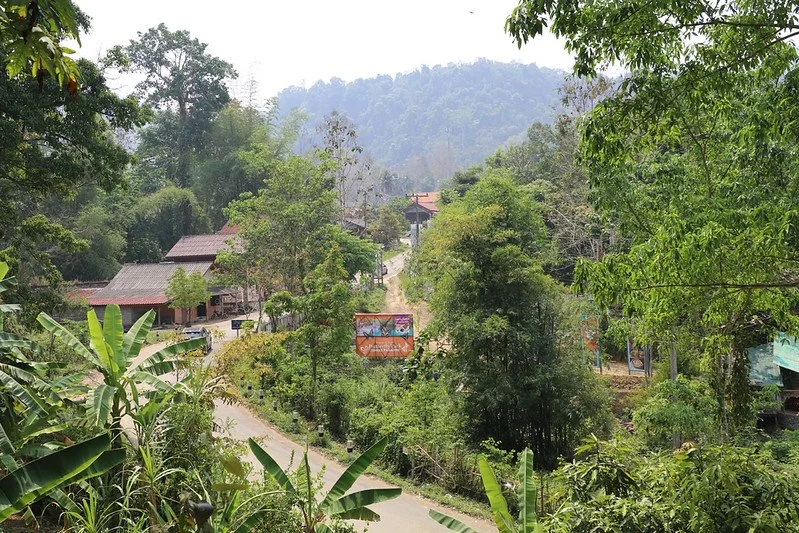
Jungle village near Kuang Si Falls. Terry Feuerborn. CC BY-NC 2.0.
Travelers are encouraged to follow a similar ethos, integrating low-impact practices ranging from using refillable water bottles to dressing respectfully at temples. These practices help preserve the cultural and environmental integrity that makes Laos so compelling.
Eating at family-run stalls supports local economies, while choosing ethical elephant sanctuaries and community-run treks ensures tourism strengthens rather than strains the places visited.
Laos is not a destination for hurried itineraries. It rewards those willing to slow down, listen and engage. Whether drifting along the Mekong at sunset, sharing a meal in a village homestay or hiking through forests where gibbons call at dawn, travelers find that the country’s greatest luxury is its stillness.
Laos offers a rare experience where culture, nature and sustainability coexist, and visitors are welcomed into the balance rather than allowed to disrupt it.
TRAVELING THERE:
If planning a trip to Laos, it is recommended to visit from November to February. The weather is cool and dry during this time, compared with June to October, when the country sees heavy monsoon rains.
Loose, breathable clothing is a great way to stay cool in the heat while also dressing modestly in sacred temples and villages.
National parks are at the center of Laos’s identity, but they are often far from major cities. Consider booking ecotours for the Nam Nern River Safari, Kuang Si Falls and many of the Nam Ha Protected Area treks. Eco Tours Laos is a great way to support local guides, enjoy a small group size and explore beyond the traditional trails into a more authentic view of village life and nature.
If travelers choose to lodge, there are many sustainable options to select from at a good price range. Nam Et-Phou Louey offers community homestays that often include multi-day trek packages. In Champasak, The River Resort focuses on green stays with its riverside rooms, solar-heated water and organic dining.
Travelers can expect to spend between $10 and $25 per day on food. The local markets are relatively cheap and are a great way to dive into the cultural melting pot Laos proudly displays.

Kate Dawson
Kate is a student at the University of North Carolina at Chapel Hill, double majoring in Public Policy and Journalism. Her passion to share stories and love for environmental justice inspires her writing. She hopes to change the world by empowering others.