
By Joseph Morales
Indigenous voices are telling the truth about the Thanksgiving holiday while honoring centuries of resilience and living culture.
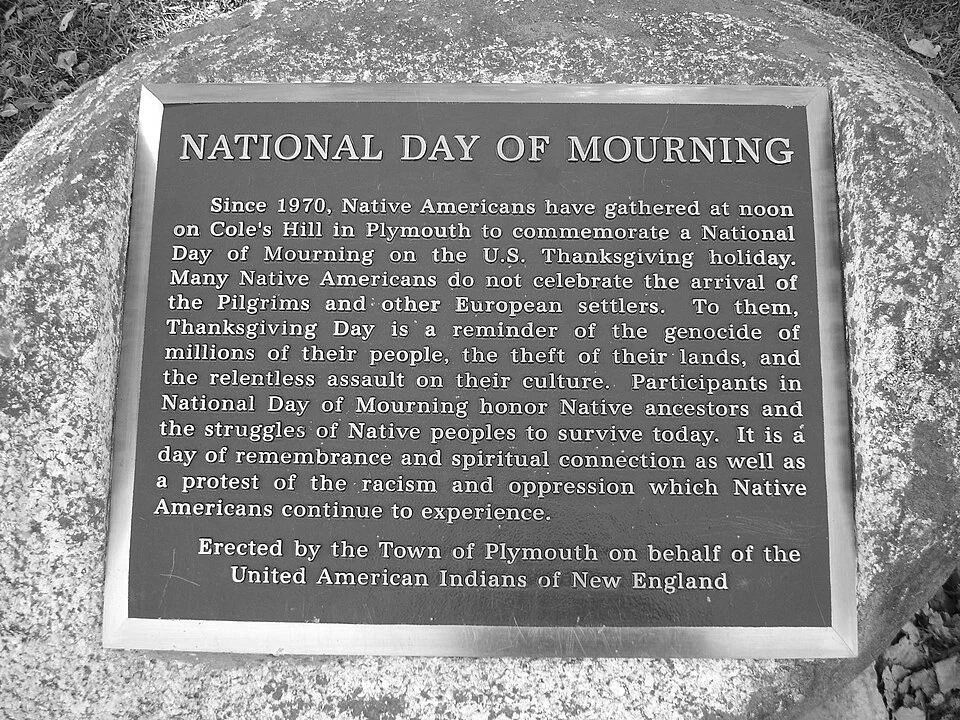
A plaque in Plymouth, Massachusetts, marks the annual National Day of Mourning honoring Indigenous history. Melissa Doroquez. CC BY-SA 2.0.
Every November, millions of Americans gather around their tables to celebrate an origin story of friendly Pilgrims and Wampanoag sharing a peaceful harvest in 1621. Yet, for Indigenous nations and communities across the United States, this origin story is far from the truth.
It is a censored narrative that erases a brutal reality of colonization and land theft. Today, Indigenous activists, educators and communities are actively dismantling and reshaping history to tell a more truthful story. Since 1970, Native people and allies have gathered in Plymouth, Massachusetts, on Thanksgiving Day to observe the National Day of Mourning, honoring Indigenous ancestors and protesting the erasure of their ongoing struggles.
The mainstream Thanksgiving narrative was shaped by romanticized ideas of Pilgrims and Native Americans in 19th- and early 20th-century paintings. It became a national holiday in 1863, proclaimed by President Abraham Lincoln to celebrate unity during the turmoil of the Civil War, rather than to commemorate a peaceful harvest.
Over the decades, this holiday strayed even further from the truth. The myth of the “First Thanksgiving” became a foundational piece of American culture, incorporated into memorials, countrywide celebrations and school curricula.
In the Smithsonian’s National Museum of the American Indian’s Native Knowledge 360 section, Paula Peters, Mashpee Wampanoag, recalls learning the story of the “First Thanksgiving” in her first-grade classroom.
“I remember the teacher talking about Thanksgiving…She said they had this great Thanksgiving feast together. And unfortunately, after that, all of the Indians died of a horrible plague… I told her that it's not true. They're not all gone, because I am a Wampanoag.”
This erasure extends beyond the Wampanoag to all Indigenous people. A holiday built around a myth for the American people leaves out the truth of the first civilizations that were always here. Gatherings and harvests are not new to Native American people; they have been taking place since long before the first settlers arrived and long before the so-called “First Thanksgiving.”
Today, Indigenous leaders and communities are speaking out about this injustice. One idea is reclaiming the truth through traditional foods. Chef, forager and Indigenous food advocate Sean Sherman of the Oglala Lakota Sioux Tribe shares how people can rethink this holiday.
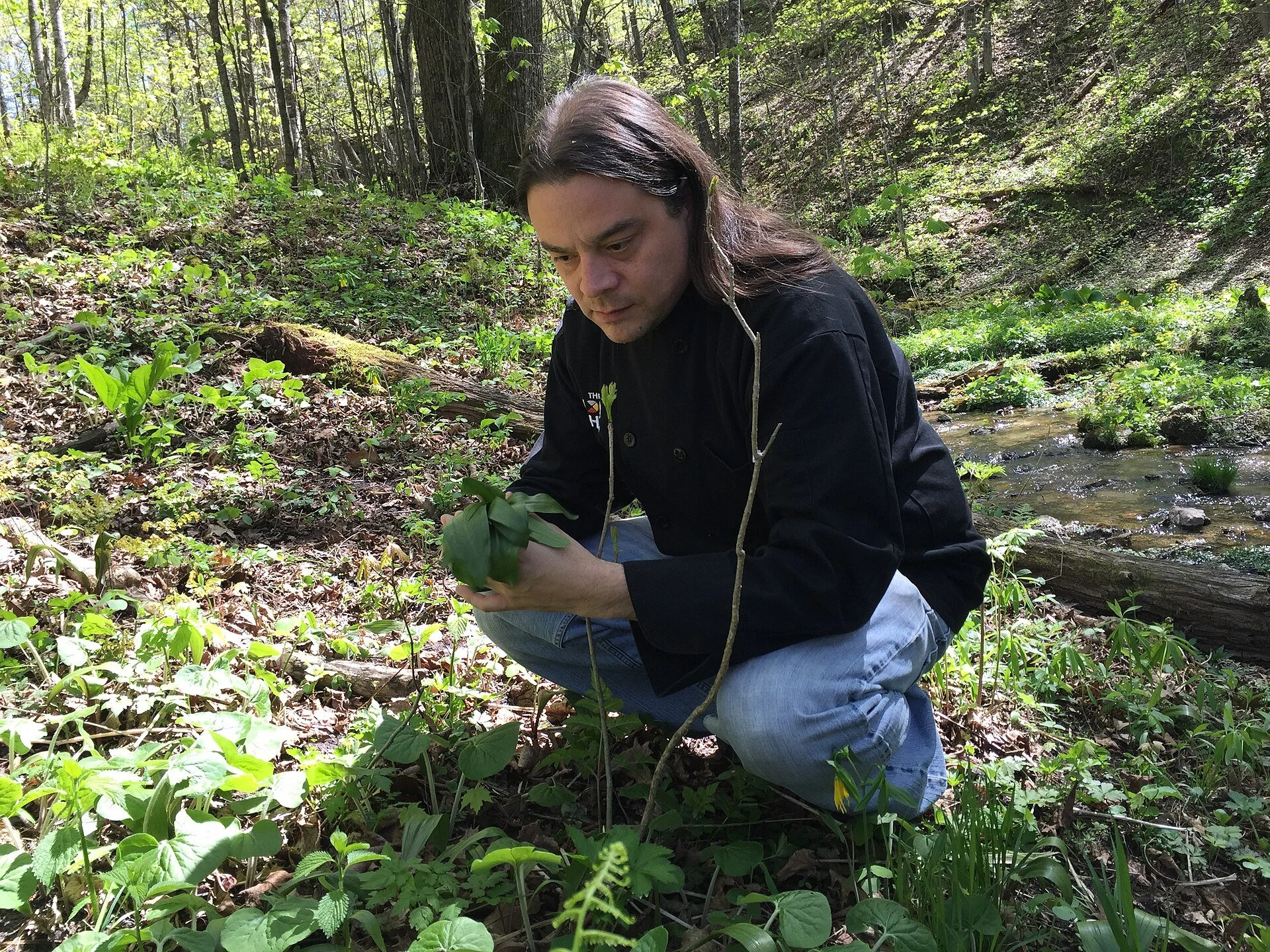
Oglala Lakota chef and forager Sean Sherman gathers wild ramps outdoors to highlight traditional Indigenous foods. DThompson1313. CC BY-SA 4.0.
In a 2018 Time essay, Sherman urges society to shift its focus and perspectives.
“And so on this holiday, and any day really, I urge people to explore a deeper connection to what are called “American” foods by understanding true Native-American histories, and begin using what grows naturally around us, and to support Native-American growers. There is no need to make Thanksgiving about a false past. It is so much better when it celebrates the beauty of the present.”
Moving forward, sharing the real history of this holiday is essential to honoring the first peoples of this land. By choosing historical truth over folklore, Thanksgiving can become an opportunity to recognize Indigenous resilience, history and living cultures rather than a constantly fictionalized story from the past.
Joseph Morales
Joseph Morales is an enrolled member of the Tohono O’odham Nation and an English major at Arizona State University. Through his education he has built years of experience in digital media and tribal journalism, focusing on representation and community storytelling.