
By Joseph Morales
The global surge in demand for lithium used in electric vehicle batteries is driving mining corporations onto Indigenous lands.
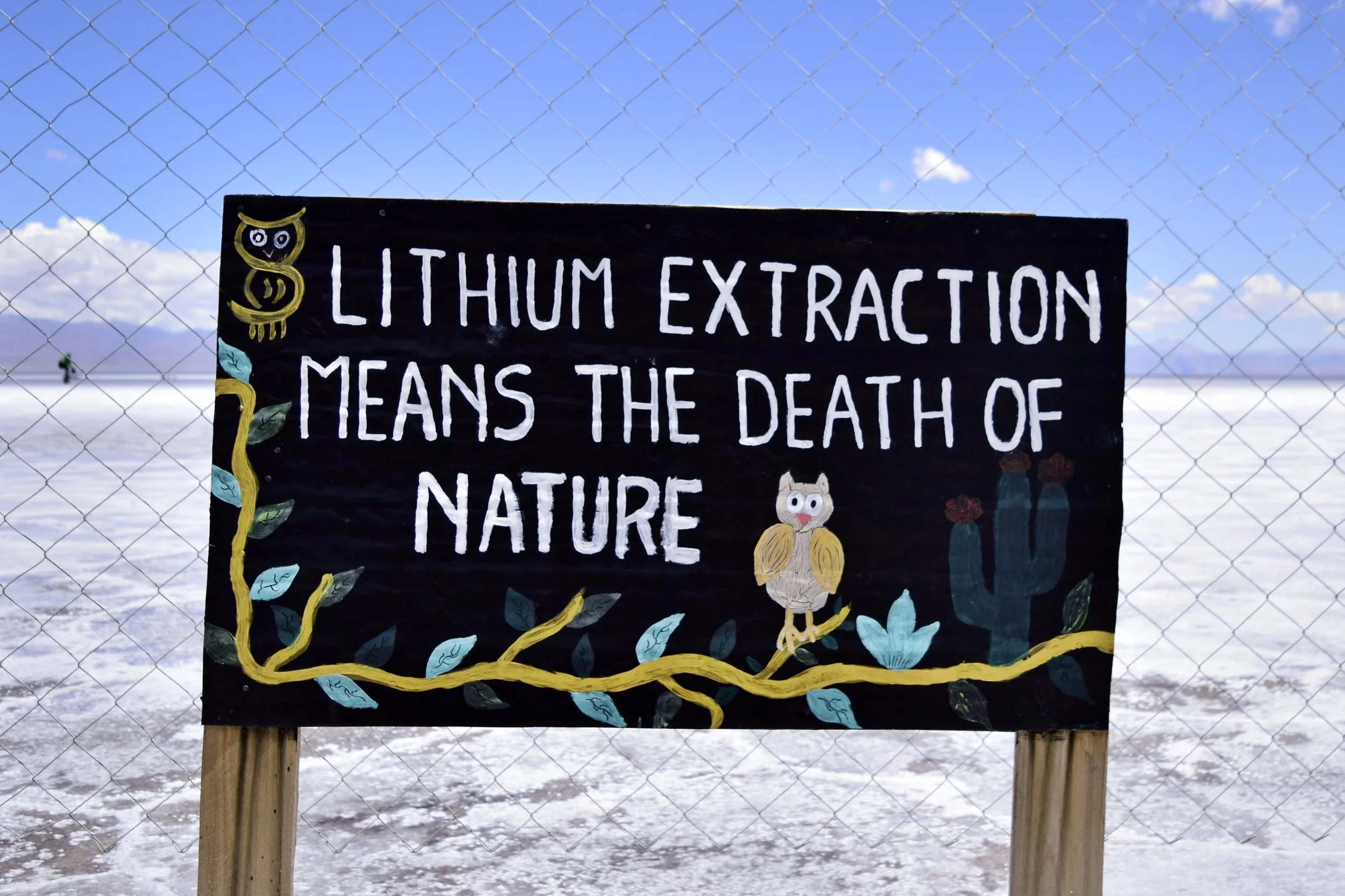
Lithium mining protest sign against extraction in Salinas Grandes, Argentina. Luisfff2812. CC BY 4.0.
As governments and corporations rush to secure supply chains for these minerals, clean energy transition projects in the Global North and Global South are increasingly fast-tracked at the expense of Indigenous sovereignty, sacred sites and fragile water systems.
Frontline communities and human rights advocates refer to this pattern as "green colonialism," which is the practice of displacing environmental burdens and industrial impacts onto Indigenous nations in the name of global climate action.
The Andean salt flats spanning Chile, Argentina and Bolivia are known as the "Lithium Triangle.” This region holds more than 50% of the world’s known lithium brine deposits.
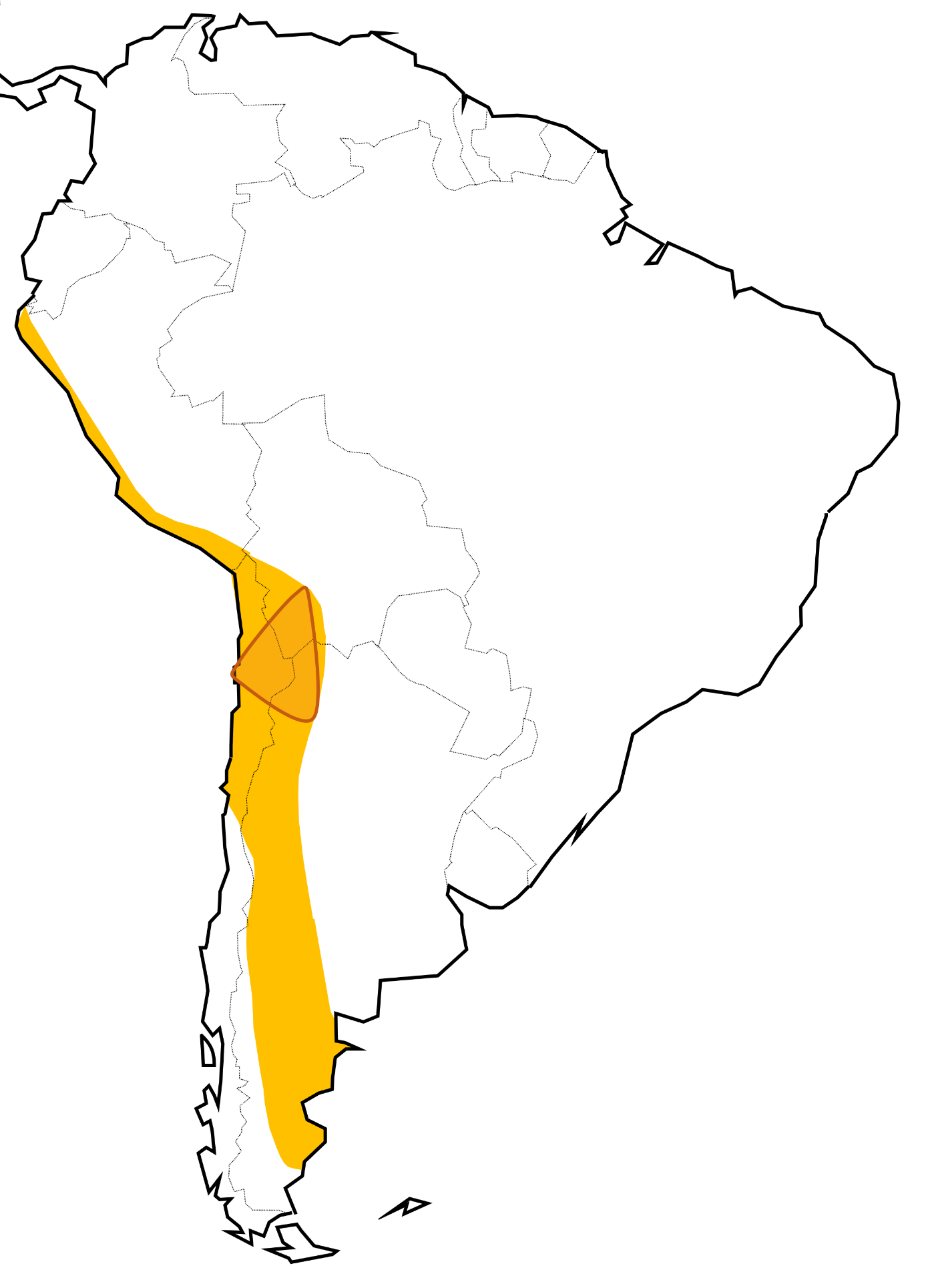
Map of the Lithium Triangle region in South America. Mamayuco. CC BY-SA 4.0.
In the Atacama Desert, one of the driest places on Earth, mining operations run by corporations like SQM and Albemarle pump millions of gallons of lithium-bearing brine into giant evaporation ponds daily.
For local Atacameno, or Likanantai, Quechua and Aymara communities, brine extraction directly affects freshwater security.
The heavy withdrawal of underground fluids contributes to the drying of vital wetlands, reducing agricultural capacity and threatening endemic species like flamingos.
Indigenous governance bodies, including the Consejo de Pueblos Atacamenos, have pushed back through legal appeals and public protests, calling for strict limits on industrial water usage and recognition of communal land rights. “We are here to defend our territory from the great mining invasion that exists,” said a community member in a conversation with the Plurinational Andean Salt Flat Observatory.
South America’s salt flats supply today’s global battery boom, and the efforts to establish domestic supply chain independence are bringing the quest for critical minerals directly to North America.
This shift brings the exact same extractive dynamics to the U.S. In northern Nevada lies one of the largest lithium deposits on Earth, offering a preview of how domestic green energy mandates can mirror foreign resource exploitation.
Already, federal agencies have approved the open-pit Thacker Pass lithium project, operated by Lithium Americas. Known to the Northern Paiute and Western Shoshone peoples as Peehee Mu'huh, or "Rotten Moon,” the pass holds historical and spiritual significance as the site of an 1865 massacre in which the U.S. federal cavalry soldiers killed dozens of Indigenous people.

Lithium evaporation ponds at Silver Peak, Nevada, the only active U.S. lithium mine. Earth Observation General Coordination. CC BY-SA 2.0.
The project involves large-scale open-pit mining and chemical processing that uses thousands of tons of sulfuric acid daily.
Despite legal challenges filed by tribal members and environmental groups, construction moved forward after federal courts declined to block development.
“The Thacker Pass mine stands as a warning of the risks Indigenous peoples face unless mining for lithium and other minerals is done responsibly and in a rights-respecting manner,” said Abbey Koenning-Rutherford, an Aryeh Neier fellow with the American Civil Liberties Union.
Ultimately, as Western governments deploy massive subsidies to reshore battery manufacturing, they risk importing the very same tactics of foreign resource exploitation onto home soil.
In this push for domestic critical minerals such as lithium, Indigenous communities once again stand on the front lines, bearing the immediate brunt of environmental destruction, water depletion and threats to their sovereign land rights in the name of the global energy transition.
Joseph Morales
Joseph Morales is an enrolled member of the Tohono O’odham Nation and an English major at Arizona State University. Through his education he has built years of experience in digital media and tribal journalism, focusing on representation and community storytelling.